
Stunning Split Rail Fences Photos to Elevate Your Connecticut Property in 2026
A split-rail fence is more than just a boundary marker; it’s a timeless piece of the American landscape that blends rustic charm with practical function. From the rolling hills of Tolland County to the historic streets of Hartford, this iconic fencing style offers a unique look that complements Connecticut's varied architecture and enhances property appeal. For those considering the broader impact of a property's appearance, exploring the benefits of professional real estate photography can offer further insights into how visual elements contribute to property value.
But how do you choose the right style for your property? This visual guide is designed to help. We've compiled a gallery of split rail fences photos showcasing seven distinct applications, each with a detailed analysis of its pros, cons, and best uses. You'll discover how different materials, rail counts, and modern adaptations can meet specific needs, from defining a front yard to safely containing pets and livestock. As you explore these examples, you'll gain practical, actionable insights to help you envision the perfect fence for your home, all explained in simple terms. We'll break down the thinking behind each choice, giving you the knowledge to make an informed decision with confidence.
1. Classic 2-Rail Cedar Split-Rail Fence in Residential Setting
The 2-rail cedar split-rail fence is a lasting symbol of American heritage, offering a simple yet elegant way to define property lines without blocking views. This style consists of two horizontal rails fitted into pre-cut holes in vertical posts. Its low height and open design make it a popular choice for homeowners in Connecticut who appreciate a rustic look that feels both traditional and unobtrusive. The natural properties of cedar make it an excellent choice for our local climate.
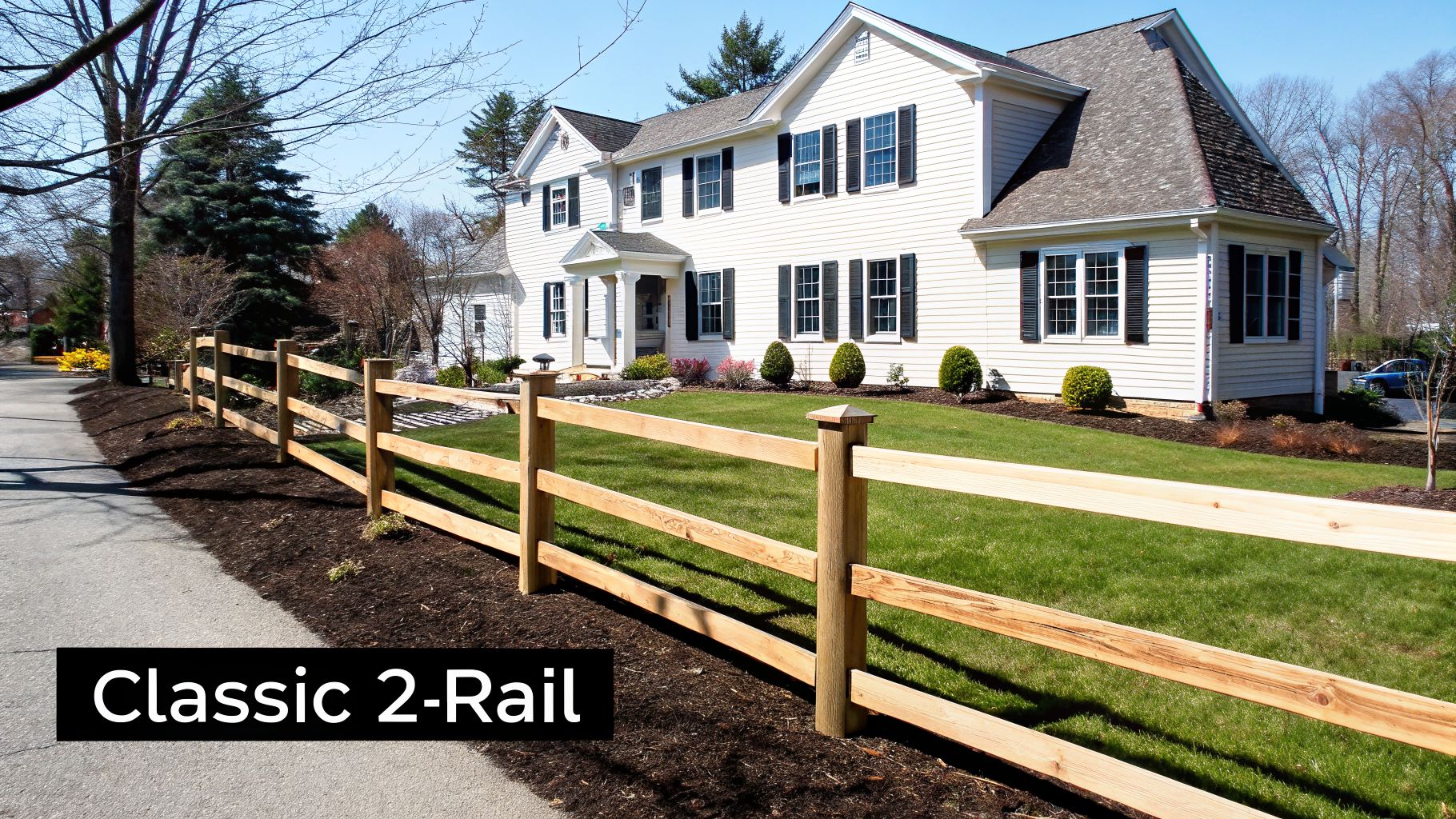
This fence design is frequently seen defining the front yards of colonial homes in Litchfield County and marking the boundaries of large residential lots in the Connecticut River Valley. Its timeless appeal allows it to blend seamlessly with both historic and modern architectural styles.
Strategic Analysis & Actionable Tips
The success of a 2-rail fence lies in its material and installation. Choosing the right wood and ensuring proper setup are critical for a long life, especially with Connecticut's winter freezes and thaws.
- Material Selection: Always opt for cedar over pine. Cedar contains natural oils that make it resistant to rot, decay, and insect damage, which is a significant advantage in our damp climate. You can explore a variety of cedar options and see project examples to understand the benefits.
- Maintenance: To preserve the wood's strength and rich color, apply a quality water-based sealant every two to three years. This simple step helps prevent cracking and splitting caused by sun and moisture.
- Installation for Climate: Professional installation is key. Posts must be set at least 36 inches deep to get below the frost line. This prevents the posts from pushing out of the ground during winter, ensuring the fence remains stable and level for years.
Key Insight: The 2-rail fence is primarily a decorative and boundary-marking solution. For homeowners concerned with containing pets or keeping out wildlife like deer, a 3-rail or 4-rail split-rail fence, often with added wire mesh, would be a more practical choice.
2. 3-Rail Split-Rail Fence for Equestrian and Agricultural Use
The 3-rail split-rail fence is a taller version of the classic design, providing a more substantial barrier ideal for containing horses and livestock. By adding a third horizontal rail, the fence's height and strength are increased, offering a secure enclosure that maintains the iconic rustic appearance popular in rural settings. This style is a favorite among Connecticut's equestrian community, from Tolland County to the horse farms in Glastonbury and Bolton.
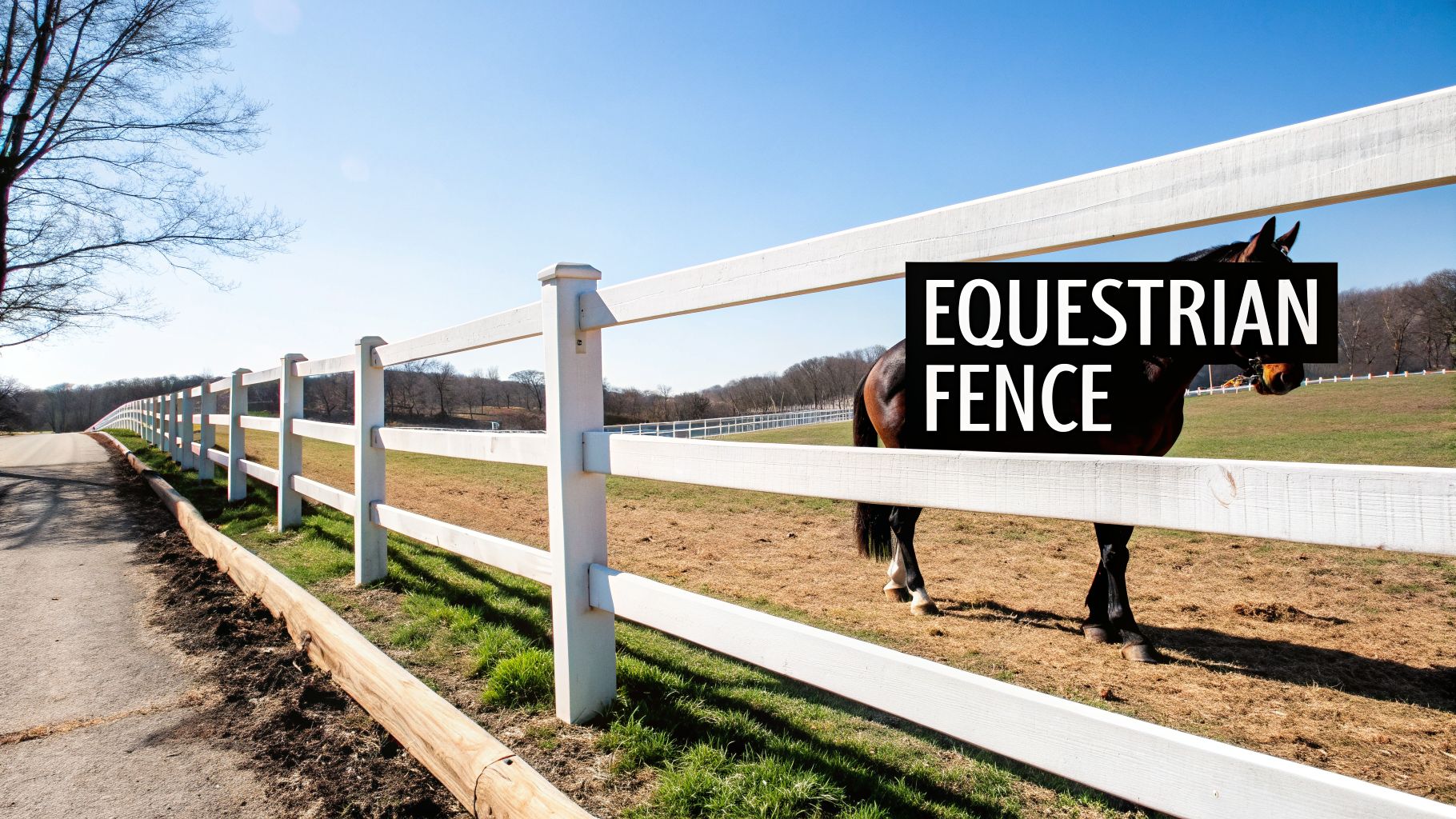
This fence style is a common sight at horse farms and equestrian centers throughout Middlesex and Tolland Counties. Its balance of security and visibility makes it the perfect solution for creating safe paddocks and defining property lines on large agricultural plots without using industrial-looking fencing. The design effectively contains animals while preserving the open, countryside landscape.
Strategic Analysis & Actionable Tips
For agricultural use, a fence is a critical piece of equipment, not just a boundary marker. Durability and safety are the top priorities, requiring careful planning around materials, installation depth, and ongoing maintenance to protect valuable animals.
- Material Choice: For high-traffic areas like gates or feeding spots, consider using pressure-treated pine for the rails. While cedar is rot-resistant, pressure-treated wood offers superior durability against the physical wear caused by large animals leaning or chewing.
- Installation for Durability: Posts must be set at least 36 to 48 inches deep to withstand pressure from animals and to counter the ground freezing and thawing common in Connecticut winters. This depth ensures the fence remains upright and secure, which is critical for animal safety.
- Height & Spacing: The fence height should be appropriate for the specific livestock. For horses, a height of 4.5 to 5 feet is standard to discourage jumping. The spacing between rails is also important to prevent animals from getting their heads or legs trapped.
- Regular Inspections: Given the safety implications, a professional inspection should be scheduled annually. Check for loose rails, splintered wood, or unstable posts that could be a hazard to animals. You can explore different post and rail options to find the most suitable material for your specific needs.
Key Insight: While a 3-rail fence is a strong visual and physical barrier, containing particularly determined or valuable livestock may require an additional layer of security. A discreet interior line of electric fencing can be added without changing the fence's appearance, providing an extra measure of containment.
3. Rustic Weathered Split-Rail with Aged Patina in Pastoral Landscape
The weathered split-rail fence celebrates the beauty of natural aging, where wood is intentionally left untreated to develop a distinguished silvery-gray color over time. This approach appeals to Connecticut homeowners who desire a truly authentic, low-maintenance fence that looks as if it has been part of the landscape for generations. Its organic character allows it to blend perfectly with the natural environment, creating an established and timeless feel.
This style is a hallmark of rural properties in New London County and coastal estates in Guilford and Madison. It is also frequently used to mark the boundaries of nature preserves and historic properties, where its rustic appearance complements the surrounding heritage and scenery without adding a modern element.
Strategic Analysis & Actionable Tips
Embracing a weathered look is a conscious design choice that prioritizes natural beauty over a pristine, uniform finish. The key is to start with materials that can withstand the elements gracefully while minimizing upkeep.
- Material Selection: Choosing a naturally rot-resistant wood like cedar is critical for this style. Cedar's natural oils protect it from decay and insects, ensuring it ages beautifully into a silvery gray rather than rotting away, which is essential in Connecticut's varied climate.
- Maintenance: While this style is low-maintenance, it isn't "no-maintenance." Conduct an annual inspection of posts, especially at the ground level, and rail connection points to check for any significant weakening or loss of structural strength.
- Aesthetic Pairing: Enhance the rustic look by pairing the fence with native Connecticut plantings such as black-eyed Susans, Joe Pye weed, or native grasses. This creates a cohesive and environmentally friendly landscape design.
Key Insight: The weathered look is a long-term strategy. For property owners who prefer this look but are concerned about longevity, documenting the fence's condition at installation provides a valuable baseline to monitor the rate of natural aging over the years.
4. Split-Rail Fence with Wire Mesh Infill for Pet Containment
For homeowners who love the rustic look of a split-rail fence but need to keep pets in, a hybrid solution with wire mesh is an ideal choice. This practical adaptation preserves the open, traditional look of a split-rail fence while creating a secure barrier. The wire mesh is installed on the interior side of the fence, effectively closing the gaps between rails to safely contain dogs, chickens, or other small animals without sacrificing the fence's charming character.
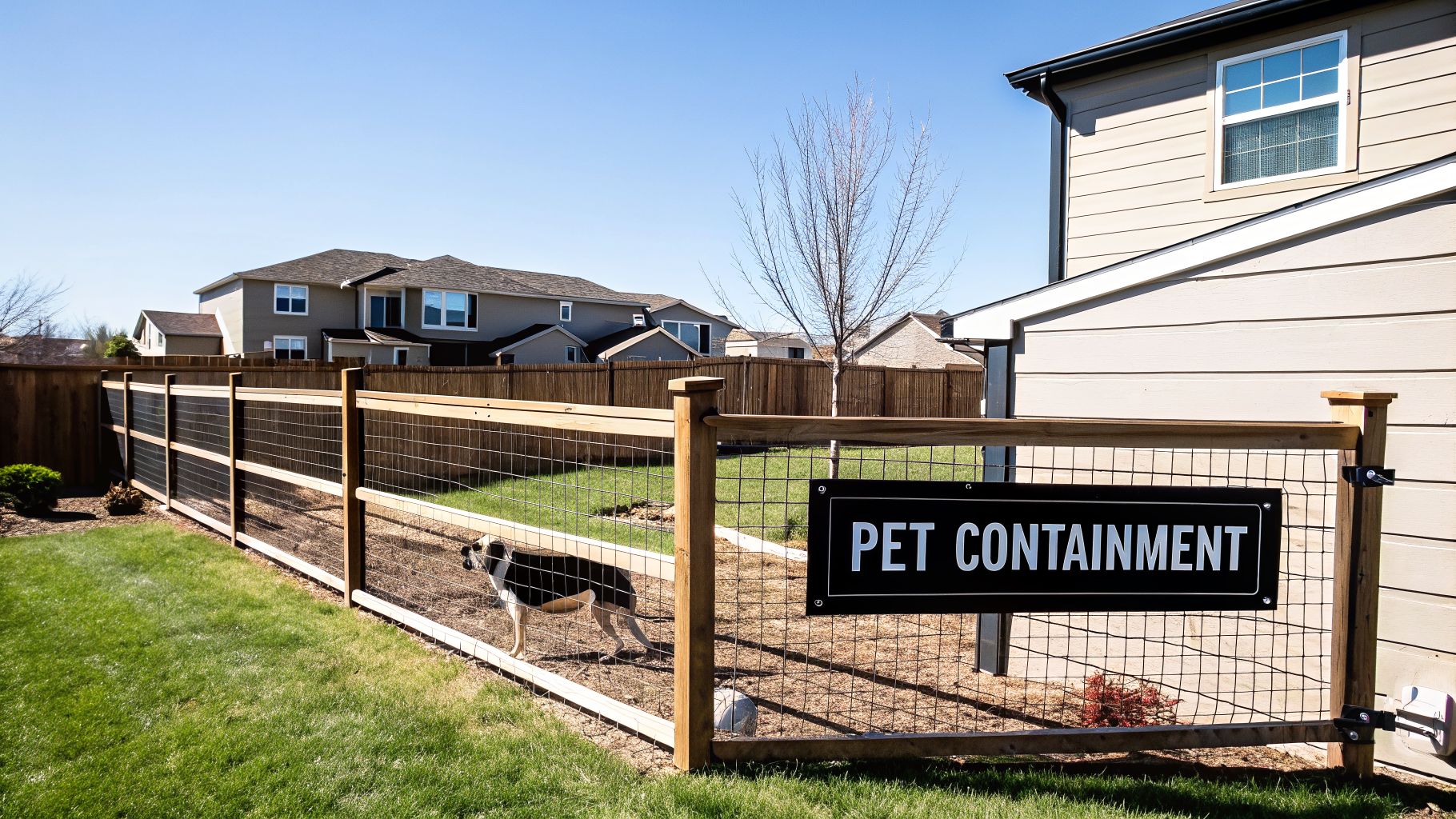
This style is frequently seen across Hartford County suburbs and residential properties in Wallingford and Durham, where families need to balance appearance with the practical needs of pet ownership. It’s also a common and effective addition for existing split-rail fences when a new pet joins the family, providing a cost-effective security upgrade.
Strategic Analysis & Actionable Tips
The effectiveness of this hybrid fence depends on choosing the right materials and using proper installation techniques to ensure both pet safety and fence durability, especially in Connecticut's humid climate.
- Material Selection: Always choose galvanized or, even better, vinyl-coated wire mesh. The coating provides a critical layer of protection against rust, which is essential for durability in our damp seasons.
- Installation for Containment: For dogs prone to digging, the mesh should be buried at least 6 to 12 inches below the ground. This simple step creates an underground barrier that effectively prevents escape.
- Mesh Gauge: Select the mesh thickness based on the animal you need to contain. A smaller, tighter-weave mesh is necessary for small animals like rabbits or chickens, while a larger, standard welded wire is often sufficient for medium to large dogs.
- Safety Measures: A professional installer will ensure all cut wire edges are capped or properly finished. This crucial detail prevents sharp points that could injure pets or people.
Key Insight: A professionally installed wire mesh system is designed to be as unnoticeable as possible. When correctly attached to the posts and rails, the mesh tends to visually fade into the background, allowing the classic look of the split-rail fence to remain the primary feature of your landscape.
5. Modern Split-Rail with Composite or Vinyl Rails in Contemporary Settings
The modern split-rail fence offers a fresh take on a classic American design by replacing traditional wood with advanced composite or vinyl materials. This approach preserves the iconic, open-view silhouette while delivering superior durability and minimal maintenance. This option is gaining popularity among Connecticut homeowners who admire the rustic form but prefer a modern, hassle-free material. Its clean lines and consistent finish make it an ideal choice for contemporary properties.
This fencing style is frequently seen in newer developments across Berlin and Durham, as well as in communities with homeowners' associations in New Haven County that require a uniform, low-maintenance look. It's also a perfect match for modern homes in coastal towns like Guilford and Madison, where the material must withstand salt air and humidity.
Strategic Analysis & Actionable Tips
The primary advantage of composite or vinyl is long life with almost no upkeep, but successful installation depends on understanding the material's unique properties. Proper planning ensures the fence not only looks great but also performs well for decades in Connecticut's variable climate.
- Material Verification: Before committing, always check the manufacturer's warranty. Reputable composite and vinyl products should offer at least a 15-year warranty against defects like peeling, cracking, or fading. We can help you navigate the best options.
- Color and Texture Matching: Request material samples to compare against your home's siding, trim, and landscaping features. This ensures the fence color and finish complement your property's overall design.
- Plan for Temperature Changes: Composite and vinyl materials expand and contract with temperature changes. A professional installer accounts for this by leaving precise gaps at connection points, preventing the rails from buckling or warping during hot Connecticut summers.
- Total Cost of Ownership: While the initial investment for composite or vinyl can be higher than wood, calculate the long-term savings. You eliminate the recurring costs of staining, sealing, and replacing rotted sections, making it a cost-effective choice over the life of the fence.
Key Insight: A modern split-rail fence is an excellent solution for homeowners who want the timeless look without the work. For those weighing the pros and cons of these materials, you can learn more about vinyl fencing options to see if it aligns with your property goals and budget.
6. Split-Rail Fence Bordering Wooded Properties and Natural Preserves
Using a split-rail fence to border wooded properties and natural preserves is a thoughtful approach to marking a boundary. This application is about respecting the landscape, creating a clear boundary line that blends with the natural environment rather than clashing with it. Its open design allows for crucial sunlight to pass through and unimpeded movement for smaller wildlife, maintaining the ecosystem's balance. This simple style is a staple in Connecticut's forested regions, from rural Tolland County to properties near preserves in northern New Haven County.
This method is frequently used to mark the edges of residential lots that are next to state forests like Meshomasic or to define conservation areas. For landowners, it provides a clear, low-impact visual cue of where their property ends and the wild begins, without putting up a solid barrier. This makes it a preferred choice among those who value both property definition and environmental preservation.
Strategic Analysis & Actionable Tips
Successfully installing a fence in a natural, wooded setting requires careful planning to ensure it lasts and causes minimal disruption to the environment. The focus is on precision and material durability against the constant presence of moisture and vegetation.
- Boundary & Site Prep: Before any work begins, a professional survey is essential to establish the precise property line. Plan the installation for the dormant season, typically late fall or winter, to reduce disturbance to surrounding plants and wildlife.
- Post Placement & Material: Design the fence line to work around existing large trees, maintaining a clearance of at least 20 feet from trunks to avoid major root conflicts. In the moist, rich soils of a forest floor, using pressure-treated posts is critical for preventing early rot and ensuring a stable foundation.
- Long-Term Maintenance: The proximity to nature means regular inspections are necessary. Schedule annual walk-throughs to check where plants are beginning to grow on the rails, as constant contact can trap moisture and speed up decay. Trim back overgrowth as needed to keep the fence clear.
Key Insight: The main purpose of a split-rail fence in a wooded setting is to mark a boundary, not provide security or containment. Its strength lies in its ability to blend in, respecting the very environment it is meant to define. This approach protects the visual and ecological value of the property.
7. Painted or Stained Split-Rail Fence in Colonial/Historic Neighborhoods
For homeowners in Connecticut's historic districts, a painted or stained split-rail fence offers a way to blend traditional rustic form with a refined, period-appropriate finish. This approach involves applying a high-quality wood stain or exterior paint, often in white, black, or dark green, to a classic split-rail structure. This finish provides a polished look that complements the stately architecture of colonial homes, elevating the fence from a simple boundary marker to a key design element.
This style is a hallmark of preserved neighborhoods in towns like Wethersfield, Guilford, and Durham, where maintaining historical consistency is a priority. The clean lines of a white painted fence against the backdrop of a colonial-era home provide a curated look that unfinished wood cannot match. It’s a deliberate choice that signals a commitment to historical accuracy and property upkeep.
Strategic Analysis & Actionable Tips
A finished fence requires a different approach than a natural one, focusing on surface preparation, material choice, and long-term maintenance planning. The goal is a durable finish that protects the wood and enhances the property's historic character.
- Color and Guideline Compliance: Before selecting a color, always check with your local historic district commission or homeowners' association. Towns like Berlin and Madison often have specific guidelines for exterior finishes to maintain neighborhood character.
- Surface Preparation is Crucial: For a lasting finish, the wood must be properly prepared. This involves a thorough cleaning or power washing, allowing the wood to dry completely, and light sanding to ensure the paint or stain adheres properly.
- Choose the Right Product: Use a high-quality, 100% acrylic latex exterior paint or a premium oil-based stain designed for fences. These products offer superior flexibility and UV protection, which is critical for handling Connecticut’s seasonal weather changes.
- Budget for Maintenance: Painted fences, especially white ones, require more upkeep. Plan for touch-ups every one to two years and a full repaint every five to seven years. Factoring these ongoing costs into your initial budget is essential.
Key Insight: While adding a layer of protection, paint and stain also create a maintenance schedule. A stain often requires less prep work for reapplication than paint, as it fades rather than peels. Consider the long-term commitment when choosing between the two finishes for your split-rail fence photos and projects.
7-Example Split-Rail Fence Photo Comparison
| Style / Example | Implementation Complexity 🔄 | Resource Requirements ⚡ | Expected Outcomes ⭐ / 📊 | Ideal Use Cases | Key Advantages 💡 |
|---|---|---|---|---|---|
| Classic 2-Rail Cedar Split-Rail Fence | Low — simple 2-rail construction | Moderate — cedar/white oak, standard labor | ⭐ High visual appeal; 📊 Open sight lines; moderate lifespan with maintenance | Front yards, estates, suburban/rural homes | Timeless curb appeal; cost-effective vs. other fence types |
| 3-Rail Split-Rail for Equestrian & Agricultural Use | Medium — heavier rails, deeper posts, greater height | High — more wood, stronger posts, higher labor | ⭐ Very effective for livestock containment; 📊 Increased durability if maintained | Horse farms, equestrian centers, rural livestock operations | Superior animal containment while preserving rustic look |
| Rustic Weathered Split-Rail with Aged Patina | Low — standard build, no finishing required | Low — unfinished cedar preferred; lower upfront material cost | ⭐ Authentic aged appearance; 📊 Lower maintenance but shorter lifespan | Pastoral landscapes, coastal estates, nature preserves | Low-maintenance look; sustainable (no chemical treatments) |
| Split-Rail with Wire Mesh Infill for Pet Containment | Medium — additional mesh fastening and concealment work | Moderate — wire mesh (galvanized/vinyl), extra labor for secure fastening | ⭐ High containment for small/medium pets; 📊 Preserves split-rail look with functional security | Pet owners, suburban backyards, fence retrofits | Retains classic look while providing reliable pet containment |
| Modern Split-Rail with Composite or Vinyl Rails | Medium — special handling for materials, allows for temperature changes | High — premium materials (30–50% more), lower lifetime maintenance | ⭐ High durability and low upkeep; 📊 Long lifespan (20–30+ years) | Contemporary homes, HOAs, busy homeowners seeking low maintenance | Minimal seasonal upkeep; rot- and warp-resistant; long-term value |
| Split-Rail Bordering Wooded Properties & Preserves | Medium — careful siting, post placement around plants | Moderate — pressure-treated posts, possible surveying costs | ⭐ Defines boundary with minimal impact on the ecosystem; 📊 Allows light/air flow, wildlife passage | Wooded lots, conservation areas, forest-edge properties | Low environmental footprint; visually unobtrusive boundary marking |
| Painted or Stained Split-Rail in Historic Neighborhoods | Medium — standard build plus surface preparation and finishing | Moderate–High — quality exterior paint/stain and periodic repainting | ⭐ High historic/period appeal; 📊 Protected wood when maintained; recurring maintenance needs | Historic/colonial districts, homes requiring period-appropriate aesthetics | Enhances curb appeal and compliance with historic guidelines; extends wood life when properly maintained |
From Inspiration to Installation: Key Takeaways for Your Connecticut Fence Project
Throughout this gallery of split rail fences photos, we've explored the remarkable adaptability of a timeless American design. From the classic two-rail cedar fence that gracefully outlines a suburban lawn to a rustic, weathered fence that blends into a pastoral landscape, the visual evidence is clear: there is a split-rail style for every Connecticut property. The key to a successful and lasting installation lies not just in choosing a look you admire, but in understanding how that look translates into practical, long-term performance right here in our state.
This article has moved beyond simple imagery to provide a strategic blueprint. We analyzed how a three-rail design offers superior containment for equestrian properties, and how adding wire mesh transforms an open-boundary marker into a secure enclosure for pets. We've also seen how modern composite materials can deliver the split-rail aesthetic without the traditional maintenance, a crucial consideration for busy homeowners and property managers. Each photo serves as a starting point, a visual prompt to consider your own needs for privacy, security, and style.
Synthesizing Inspiration into a Practical Plan
The journey from a collection of split rail fences photos to a finished project on your property requires careful thought. Remember the critical factors we've discussed that are particularly relevant to Connecticut residents:
- Material Resilience: Our four-season climate, with its humid summers and freezing winters, demands materials that can withstand moisture, temperature swings, and pests. Professional-grade cedar, pressure-treated pine, and high-quality composites are your best defense against early aging and decay.
- Purpose-Driven Design: Before settling on a style, define your fence’s primary job. Is it purely decorative, meant to contain a large dog, or designed to meet local pool code with specific height and spacing requirements? Your answer will guide decisions on rail count, post spacing, and the potential need for mesh.
- Harmonizing with Your Environment: The most successful fences complement their surroundings. A stained split-rail fence can honor the character of a historic New England neighborhood, while a simple, unadorned cedar fence perfectly borders a wooded lot, creating a seamless transition from manicured lawn to natural landscape. Integrating your fence into the larger design of your property creates a cohesive and intentional look. For further inspiration on how split-rail fences can be integrated into a larger design, you might explore a complete backyard makeover project.
Ultimately, a split-rail fence is more than a boundary; it’s a design element that adds value, character, and functionality to your property. By thoughtfully selecting materials and a design that aligns with both your visual taste and practical needs, you ensure your investment is not only beautiful but also built to endure the unique challenges of the Connecticut climate for years to come.
Ready to bring your vision to life with a professionally installed fence that stands the test of time? The team at Connecticut Fence Works, LLC specializes in translating inspiration from photos into durable, expertly crafted realities for homeowners and businesses across the state. Visit our website to browse our local project portfolio and request your free, no-obligation estimate today.