
Residential Fence Repair Near Me: A Homeowner’s Guide to Local Pros
It’s a familiar story. You’re mowing the lawn or pulling into your driveway and you spot it: a leaning post, a cracked panel, or a gate that just won’t close properly. Before you even start searching for "residential fence repair near me," taking a few minutes to assess the situation yourself can make all the difference. Understanding the problem helps you have a more productive conversation with a contractor and get a realistic sense of the project.
How to Read the Signs: A Guide to Diagnosing Fence Damage
Here in Connecticut, our fences take a beating from heavy winter snows and humid summers. But not every issue is a major problem. The trick is learning to tell the difference between a quick fix and a serious structural problem. Let's walk through how to give your fence a proper, safe inspection.
Start with a Walk-Around
First, get the big picture. Take a slow walk along the entire fence line—from both inside and outside your yard. Don't focus on the small details just yet. Instead, look for large-scale patterns.
- Leaning Sections: Is an entire portion of the fence tilting? This almost always points to an issue underground, like a failed concrete footing or a post that has rotted through at the base.
- Wavy Lines: Look down the length of the fence. Does it run in a straight, clean line, or does it look wavy and uneven? A "wavy" fence suggests multiple posts have shifted over time, often due to frost pushing them out of the ground.
- Widespread Wear: Take note of any significant peeling paint, mildew, or discoloration across large areas. While sometimes just a cosmetic issue, this can hint at deeper moisture problems, especially with wood fencing.
Seeing these kinds of widespread problems usually means it's time to call a professional. For a deeper dive into specific symptoms, it can be helpful to learn how to diagnose common repair issues before you get your hands dirty.
Get Up Close and Personal
Once you've done your visual sweep, it's time for a more hands-on inspection. This is where you’ll pinpoint the exact points of failure.
Give every fence post a good, firm push. A healthy post will not move much at all. If you feel a significant amount of give or a wobble, you've likely found a critical problem. The cause is usually a cracked concrete base or, most commonly, a post that has rotted away right at ground level. This isn't something you want to postpone fixing.
Next, look closely at the fence material itself. On a wood fence, check for soft spots, splintering, or tiny holes that could indicate rot or insect damage. For vinyl fences, look for small cracks, paying close attention to the areas around screws and post connections. Those small fractures can easily become major breaks in the next big storm.
Expert Insight: The most vulnerable spot on any fence post is right where it meets the ground. This area combines moisture, air, and soil, creating the perfect environment for wood rot and pests. Always pull back any mulch, leaves, or grass to get a clear look at the base of each post.
Let's be honest, weather is usually the main culprit. In our experience, the majority of repair calls come after a major weather event. In fact, industry data shows that around 65% of all residential fence repairs are a direct result of damage from wind, snow, or falling tree limbs. This really highlights why having a trusted local professional is so important for homeowners in our area.
To help you get started, we've put together a simple checklist to guide your inspection.
Quick Damage Assessment Checklist
Use this checklist to identify common fence problems by material type and understand their likely causes.
| Fence Material | Common Signs of Damage | Potential Cause |
|---|---|---|
| Wood | Soft/Spongy Spots, Splintering, Discoloration at Base | Rot, Insect Damage, Moisture |
| Vinyl/PVC | Cracks (especially near screws), Yellowing, Chalky Film | UV Damage, Impact Damage, Age |
| Chain Link | Sagging Fabric, Bent Top Rails, Rust Spots | Ground Shifting, Impact, Failed Fasteners |
| Aluminum | Bent or Dented Pickets/Rails, Loose Sections | Impact from Mowers/Vehicles, Improper Installation |
| All Types | Wobbly Posts, Leaning Sections, Misaligned Gates | Failed Concrete Footings, Frost Heave, Rot at Ground |
This simple walkthrough gives you a solid foundation of knowledge. You'll be able to clearly describe the issue when you call for help and have a much better understanding of the solutions a professional might propose. To see how we handle these exact problems, check out the fence repair options at Connecticut Fence Works. With this groundwork done, you’re ready for the next step: deciding if this is a job you can handle yourself or if it's time to call in an expert.
DIY Fixes Versus Calling A Professional
So, you’ve walked the fence line and have a good idea of what you’re dealing with. Now for the big question: is this a job you can tackle yourself, or is it time to look up "residential fence repair near me" and call in a professional?
Making the right call here is about more than just money—it's about saving yourself time and frustration. Let's talk about when it makes sense to roll up your sleeves and when you're better off leaving it to an expert.
Scenarios Perfect For A DIY Repair
Some fence problems are genuinely minor and make for a great weekend project. If you're comfortable with basic hand tools and have a bit of patience, you can absolutely handle small, isolated issues. It's satisfying work and saves you the cost of a service call.
You can probably handle these yourself:
- Replacing a Single Damaged Picket: Got a cracked or rotted wood picket? Swapping one or two out is pretty straightforward. You'll just need a pry bar, hammer, a saw for any custom cuts, and new pickets that match your fence.
- Tightening Loose Gate Hardware: If your gate is sagging just a little or the latch feels wobbly, the fix is often as simple as tightening the screws on the hinges and latch. For a bit more sag, you might even get by with an inexpensive turnbuckle and cable kit from the hardware store.
- Cleaning Mold or Mildew: That green or black film on your vinyl or wood fence? That's usually just surface-level growth. A good scrub with a specialized deck cleaner or even a simple water-and-vinegar mix will often take it right off.
The key here is being honest about your own skills and the tools you have. A simple-looking repair can turn into a much bigger headache if you're not careful.
This decision tree gives you a quick visual guide for thinking through whether a problem is cosmetic, structural, or needs a professional.
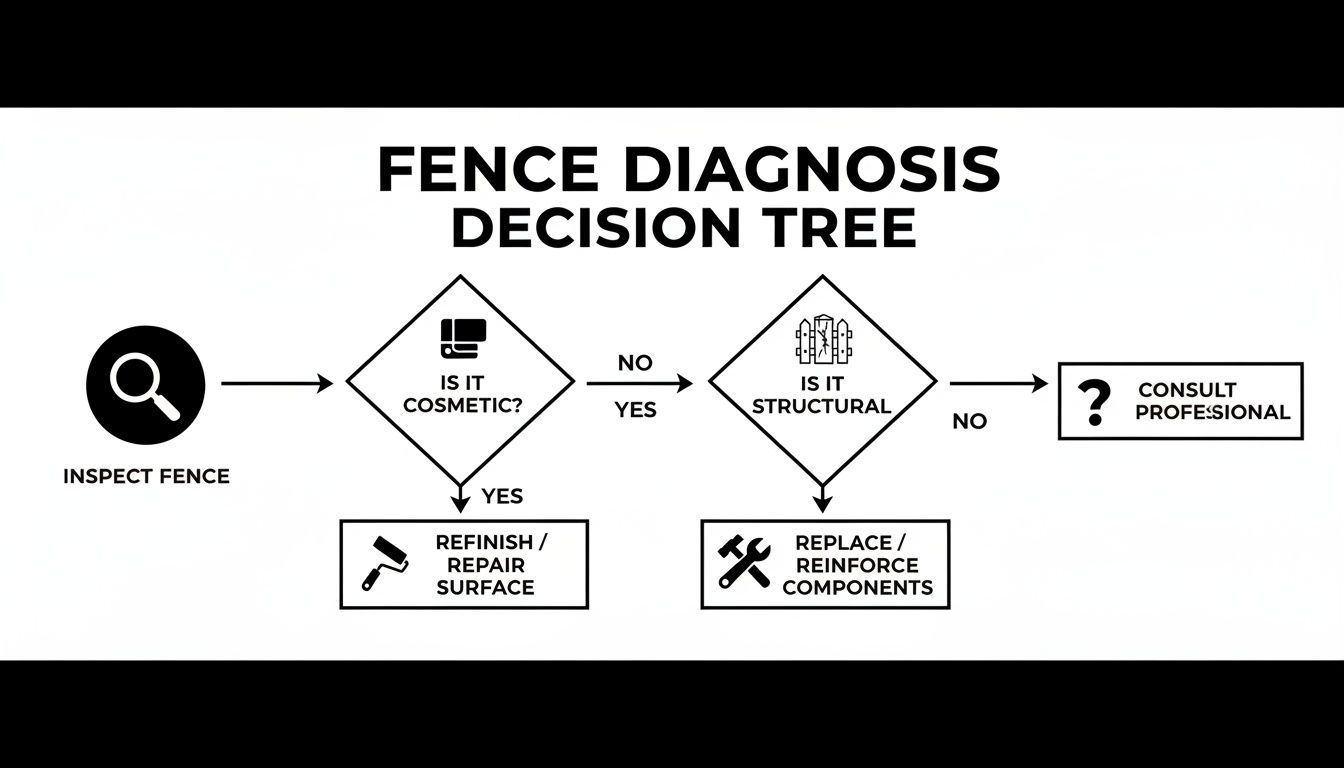
As you can see, cosmetic fixes are often manageable. But once you get into structural problems—like leaning posts—you're almost always better off calling in a professional.
Red Flags That Signal You Need A Professional
While we appreciate a good DIY project, some issues are clear signs that it's time to bring in someone with the right equipment and experience. Trying to tackle these bigger problems can lead to a failed repair, further damage, or even injury.
A common mistake we see is a homeowner trying to "patch" a rotting post at ground level. This rarely works. A professional will always replace the entire post and set it in a new concrete footing, which is the only way to guarantee a long-term, stable repair.
These are the non-negotiable signs that you should hire a professional fence company:
- Wobbly or Leaning Posts: This is the biggest one. A post that moves in the ground means the footing has failed or the post has rotted through below the surface. We have the specialized tools to remove the old concrete, dig a proper hole, and set a new post that won't move.
- Widespread Panel Damage: If a big storm dropped a branch and took out a whole section of your fence, a pro is your best bet. We can source matching materials and replace the entire section so it blends perfectly with the existing fence line.
- A Severely Sagging Gate: A gate that drags heavily on the ground usually points to a bigger problem than loose hinges. More often than not, the posts holding the gate are leaning. Resetting a gate post is heavy-duty work that requires real precision.
- Damage Across More Than 25% of the Fence: As a rule of thumb, if more than a quarter of your fence is damaged, you've reached a tipping point. Patching it piece by piece might end up costing more than a partial replacement. A professional can give you an honest assessment of extensive repairs versus replacement, helping you make the smartest long-term investment.
For these larger jobs, calling a professional ensures the work is done right the first time, restoring the safety, security, and appearance of your property.
How To Find And Vet The Best Local Fence Companies

When your fence is failing, a quick search for "residential fence repair near me" can feel overwhelming. It’s easy to get lost in search results, but finding a truly reliable contractor is about more than just picking the first name you see. You need to do a little homework to separate the seasoned pros from operators with just a truck and a hammer.
The demand for quality fence work is high. The U.S. fence construction industry is projected to reach $20.4 billion by 2026, and here in Connecticut, we’re in one of the country’s busiest markets. Our harsh New England weather means there's a constant need for expert repairs, which unfortunately also attracts some less-than-reputable operators.
Starting Your Search For A Contractor
The best way to start is by asking around. Talk to neighbors, friends, and coworkers who have had fence work done. A personal recommendation from someone you trust is invaluable. Local online neighborhood groups can also be great resources for honest, firsthand feedback.
Once you have a few names, it's time to do some online research. Go beyond the star ratings and read what people are actually saying.
- Look for patterns in the positive reviews. Do customers mention things like good communication, showing up on time, or leaving the job site clean?
- See how the company handles negative feedback. A professional response that tries to solve the problem is a good sign.
- Check out their website. A legitimate company will have a portfolio of their work, a clear service area, and easy-to-find contact information.
If you want to dig deeper into the online search process, this guide on how to find a contractor online the smart way offers some excellent tips for checking credentials.
Vetting Your Shortlist And Getting Quotes
With your shortlist ready, it’s time to make some calls. You’re looking to get at least three different quotes to compare them fairly. Remember, this isn't just about getting a price—it's an interview. You’re evaluating their professionalism from the very first conversation.
The most important step? Always confirm the contractor is fully licensed and insured. Ask to see their certificates for General Liability and Workers' Compensation. This is non-negotiable, as it protects you from any liability if an accident happens on your property.
When an estimator comes to your home, observe their process. A true professional will perform a thorough inspection, listen to your concerns, and clearly explain what needs to be done. This is your opportunity to ask the tough questions.
Essential Questions to Ask a Fence Contractor:
- How long has your installation crew been working together?
- What specific materials do you plan to use for my repair?
- Do you offer a warranty on the labor and the materials?
- What's the estimated timeline from start to finish?
- How do you handle cleanup and debris disposal?
A confident, straightforward answer to these questions speaks volumes. For instance, knowing about the crew gives you insight into their experience and stability. We believe that transparency is key, which is why we invite you to learn more about the Connecticut Fence Works team and what drives our work.
By comparing the answers you receive, you'll be able to see who offers genuine value and peace of mind, not just the lowest price.
What Does Fence Repair Actually Cost in Connecticut?
When a storm rolls through or you notice a section of your fence starting to sag, one of the first questions on your mind is always the same: "What's this going to cost me?" Budgeting for home repairs shouldn't be a guessing game, and while there’s no one-size-fits-all answer, we can break down the factors so you can set a realistic budget.
The final price on an estimate is a combination of a few key things: the materials needed, how complex the job is, and the time it takes for a crew to do it correctly. Let's look at what a professional estimator considers when they assess the damage.
The Main Drivers of Your Repair Bill
A repair quote isn’t just a number pulled from thin air. It’s a careful calculation based on the specifics of your fence and the problem at hand.
Here’s what really affects the cost:
- Fence Material: This is a big one. The cost to fix a classic wood fence is very different from repairing a modern vinyl or aluminum one. A few wood pickets are fairly inexpensive, but a full vinyl panel or a bent aluminum rail will have a higher material cost.
- The Extent of the Damage: Swapping out a single warped board is a quick, straightforward fix. On the other hand, a leaning fence post is a much bigger job. That repair involves digging out a broken concrete footer, setting a new post perfectly, and pouring a new foundation. The more involved the damage, the more labor and materials are required.
- Labor and Site Accessibility: A major part of any quote is the cost of labor. Is your fence on a steep, rocky hill? Is it wedged between the garage and a row of hedges? If the crew has to work around obstacles or in a tight spot, it simply takes more time and effort, and the labor cost will reflect that.
These three factors are the foundation of any estimate you'll get. Understanding them helps you see exactly where your money is going.
Don't Forget About These "Hidden" Costs
Beyond the obvious parts and labor, a few other things can appear on the final invoice. A good contractor will always walk you through these possibilities upfront, but it pays to be aware of them from the start.
Keep an eye out for these potential additions:
- Debris Removal: Hauling away the old, damaged fence parts isn't always part of the base price. Getting rid of old concrete footers, splintered wood, or cracked vinyl panels often has a separate disposal fee.
- Matching Old Materials: If your fence has a few years on it, finding an exact match for the style, color, or weathering can be a challenge. Sometimes, this means ordering custom materials or replacing a slightly larger section to ensure the repair doesn't stand out.
- Specialized Equipment: Let's say a big tree limb came down and took out a whole section of your fence. The crew might need specific equipment to lift the heavy branches or break up and remove large concrete footings, which can add to the project's cost.
The most common "surprise" cost we see homeowners run into is a rotted post. From the surface, it just looks like a simple lean. But a professional repair means digging several feet down, removing the entire broken concrete footer, setting a new post, and pouring hundreds of pounds of fresh concrete. It’s far more involved than just propping the old post back up.
The key is finding a partner who gives you a clear, comprehensive quote that accounts for these realities. If you're curious about the different types of fences we install and maintain, you can see all the residential fencing options from Connecticut Fence Works.
Estimated Repair Costs For Common Fence Issues
To give you a better idea of what to expect, we've put together a table with some ballpark figures for common fence repairs here in Connecticut. This should help you frame your budget, but remember that only a formal, on-site quote can give you a precise number for your unique situation.
| Type of Repair | Fence Material | Estimated Cost Range (Labor & Materials) |
|---|---|---|
| Replace 1-3 Broken Pickets or Boards | Wood | $150 – $350 |
| Replace One Cracked or Damaged Full Panel | Vinyl | $250 – $450 |
| Reset One Leaning Post (New Concrete Footer) | Any Material | $300 – $550 |
| Repair a Sagging Gate (Hardware & Alignment) | Wood / Vinyl | $200 – $400 |
As you can see, a small cosmetic fix can often be handled for a few hundred dollars. But when the damage hits the structural core of the fence—like the posts—the cost goes up to reflect the serious labor and materials needed for a fix that will actually last.
How to Prepare for Your Fence Repair
So, you’ve picked your contractor and you’re ready to get your fence fixed. Excellent. Now, a little prep work on your end can make a huge difference in how smoothly the actual repair day goes.
Think of it this way: when a repair crew arrives at a clean, accessible site, they can get straight to work. This simple effort on your part helps them work safely, protects your property, and keeps the project on schedule.
Clear the Work Zone
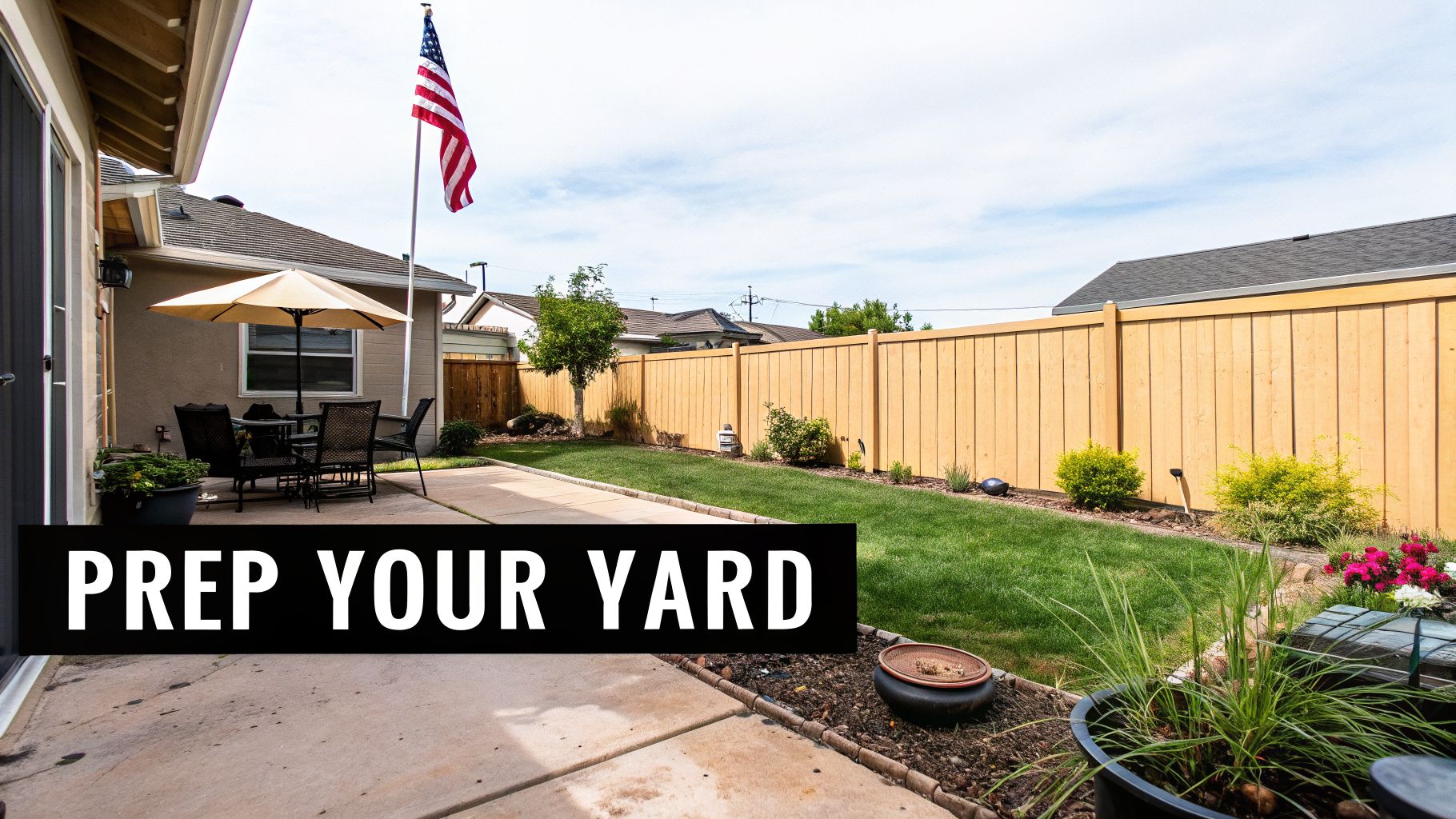
First things first, the crew needs room to work. The most important thing you can do is clear the area around the damaged fence. A professional crew needs a clear path to move, set up tools, and handle materials without tripping over your patio furniture.
We recommend clearing a space at least three to five feet wide on both sides of the fence line that's being repaired.
Here’s a quick checklist of things to move:
- Grills, fire pits, and patio furniture
- Potted plants, garden decorations, and kids' toys
- Lawnmowers, hoses, and other yard tools
- Any vehicles parked near the fence
Getting these items out of the way keeps them from getting covered in dust or accidentally damaged. More importantly, it gives the team a safe, open space to do their job correctly.
Talk to Neighbors and Secure Your Pets
A quick chat with your neighbors can go a long way, especially if the fence is on a shared property line. Just giving them a heads-up about the repair date and time is a simple courtesy that prevents any surprises. It's particularly important if the crew might need to step onto their property to complete the work.
On repair day, the safety of your pets is a top priority. With new people, loud tools, and the gate potentially being open, it's a stressful and unsafe environment for them. Please keep all pets secured safely indoors or in a completely separate, enclosed area for the entire time the crew is on-site.
This is the best way to prevent a scared pet from escaping and allows our team to focus entirely on the job without any distractions.
Handle the Final Logistics
A few last-minute checks will help the day go off without a hitch. While any professional crew comes prepared, making sure the site is ready for them prevents unnecessary delays.
- Provide Clear Access: Double-check that any gates are unlocked so the crew can easily move between their truck and the backyard.
- Mark Utility Lines: This is a big one. If the repair involves any digging—like setting a new post—you are required to have underground utilities marked. Simply call 811 (the national "Call Before You Dig" number) a few days beforehand. It’s a free service that marks buried gas, water, and electric lines, preventing dangerous and expensive accidents.
- Access to Power & Water: It's always a good idea to ask your contractor if they’ll need to use an outdoor electrical outlet or water spigot. Making sure they’re accessible can speed things up, especially if they're mixing concrete on-site.
By taking these few steps, you're setting the stage for an efficient, high-quality repair. It’s a small investment of your time that pays off by ensuring your search for "residential fence repair near me" ends with a fantastic, stress-free result.
Common Questions About Fence Repair
Over the years, we’ve talked with hundreds of Connecticut homeowners about their fences. A few key questions always seem to come up as they weigh their options. Getting clear on these points can make the whole process feel less overwhelming, whether you’re just beginning your search for "residential fence repair near me" or getting ready for our crew to arrive.
Here are the straightforward answers to the questions we hear the most, based on our experience working right here in Connecticut.
Is It Better To Repair Or Replace My Fence?
This is usually the first thing people ask, and for good reason. It all comes down to the extent of the damage versus the long-term cost.
A good rule of thumb we use is the 25-30% rule. If more than a quarter of your fence has significant damage—think widespread rot, multiple broken sections, or several leaning posts—a full replacement is almost always the smarter financial move. Constantly making repairs on a failing fence can feel like a money pit, and you’ll likely end up spending more in the long run.
On the other hand, if the damage is isolated, a targeted repair is the perfect solution. A few split pickets on a wood fence, one vinyl panel that was hit by a stray baseball, or a simple loose gate are all great candidates for a straightforward fix. The fence's age and material also matter. A 20-year-old wood fence with failing posts is probably at the end of its life, but a newer vinyl fence with a single point of damage is definitely worth repairing.
Our Professional Advice: The real test is the condition of your fence posts. They are the backbone of the entire structure. If the posts are solid but the panels or pickets are damaged, a repair makes perfect sense. If the posts themselves are rotted, shifting, or broken, you're dealing with a fundamental structural failure, and it’s time to start thinking about replacement.
Can My Fence Be Repaired During Winter In Connecticut?
Absolutely. Many homeowners think fence work stops when the ground freezes, but that’s not the case for most repairs.
The type of fence you have is the biggest factor:
- Vinyl, Aluminum, and Chain Link: Cold weather really doesn't impact repairs on these materials. We can swap out a cracked vinyl panel or fix a bent aluminum rail just as effectively in January as we can in July.
- Wood Fences: Replacing boards or rails is no problem in the winter. The only real challenge comes when we need to replace a post, which means digging in frozen ground. As professionals, we have the right equipment to handle it safely and efficiently.
In fact, scheduling your repair in the off-season can be a smart move. Our schedule is often more flexible, meaning we can get to your project faster than in the busy spring and summer rush. So don't put off calling for a residential fence repair near me just because it's cold out.
How Can I Prevent Future Fence Damage?
Once your fence is back in great shape, a little preventative care goes a long way in protecting your investment.
For wood fences, moisture is the number one enemy. The single best thing you can do is apply a quality stain or sealant every few years. This simple step creates a barrier that keeps water from seeping in, which is what leads to rot and attracts insects.
For vinyl and aluminum fences, the upkeep is much simpler. Just give them a good wash with soap and water periodically to remove the dirt, mildew, and grime that builds up over time. It’s also a good habit to walk your fence line after a big storm to spot any new issues right away.
And for any type of fence, keep an eye on your landscaping. Trim back tree branches that hang over the fence to prevent them from falling and causing impact damage. Just as important, make sure soil, mulch, and leaf piles aren't packed against the base of your posts. This traps moisture right where you don't want it and can dramatically speed up decay.
Ready to get your fence back in top shape? The team at Connecticut Fence Works, LLC combines expert craftsmanship with clear, dependable service to solve your fence problems for good. From a single wobbly post to more extensive storm damage, we have the experience to handle it all. Request your free, no-obligation estimate today and let's get your project started.