
Your Guide to Connecticut PVC Fence Options in 2026
When you're looking for a new fence, the world of PVC fence options is much larger than you might expect. It’s no longer just about the classic white picket fence. Modern vinyl fencing has evolved into a versatile, durable solution with a wide range of styles, colors, and textures to suit any property.
Choosing the Right PVC Fence for Your Connecticut Home
Deciding on the perfect fence can feel like a major undertaking, but there's a good reason why so many Connecticut homeowners are turning to vinyl. It represents the ideal intersection of durability, style, and low maintenance.
Think of it as the modern solution to traditional fencing problems. Forget about annual staining, battling rot, or worrying about pests. For anyone who wants a "set it and forget it" fence that still adds significant curb appeal, PVC is an excellent long-term investment.
This guide will serve as your roadmap. We’ll walk through all the PVC fence options available, explaining everything in simple terms so you can make a choice you’ll be happy with for years to come—one that enhances both your home’s security and its charm.
Your Guide to PVC Fence Styles
First, let's get familiar with the main categories of vinyl fencing. Each style is designed for a different purpose, whether you're trying to create a private backyard retreat or simply wish to frame your property with a touch of elegance.
To see these styles in action, check out our gallery of completed residential fence projects and see how they look in real Connecticut yards.
To help you narrow down your choices, we've put together a quick guide to the most common PVC fence styles we install. This table breaks down what each style is best for and its most notable feature.
Quick Guide to Popular PVC Fence Styles
| Fence Style | Primary Use | Key Feature |
|---|---|---|
| Privacy Fence | Total seclusion for backyards and pools | Solid panels that block sightlines completely. |
| Semi-Privacy Fence | Screening with airflow and light | Spaced boards or lattice tops for partial visibility. |
| Picket Fence | Defining boundaries and curb appeal | Classic, charming look that doesn't obstruct views. |
| Post-and-Rail Fence | Enclosing large or rural properties | Rustic, open design ideal for a country feel. |
This should give you a good starting point for determining which direction to go.
A great fence does more than just define a boundary; it frames your home and becomes a true extension of your living space. With today’s high-quality PVC, you're not just buying a fence—you're investing in decades of performance and beauty with virtually zero upkeep. That long-term value is precisely why vinyl's popularity continues to grow, with the market expected to expand substantially in the coming years.
Exploring the Most Popular PVC Fence Styles
Once you’ve settled on vinyl for its durability and low maintenance, the enjoyable part begins: choosing a style. This is where you can truly define your property's character. Think of it less as simply picking a fence and more like choosing the perfect frame for your home; the right one enhances everything around it, from curb appeal to how you utilize your yard.
Let's walk through the four main styles you’ll find in Connecticut. Each one has a distinct personality and purpose, and understanding the differences is key to making a choice you'll be satisfied with for years to come.
Total Seclusion with Privacy Fences
A privacy fence does exactly what its name implies. It's constructed with interlocking tongue-and-groove panels to create a solid, gap-free barrier. This is your go-to option when you want to build a true sanctuary in your backyard.
This style is overwhelmingly the most popular choice for homeowners who want to:
- Create a private oasis: Perfect for relaxing or hosting backyard gatherings without feeling exposed to the neighborhood.
- Secure a pool area: A solid fence not only meets local safety codes for pools but also keeps your family's swim time completely private.
- Dampen neighborhood noise: While it won't create total silence, a solid fence can noticeably reduce noise from a busy street or nearby neighbors.
Essentially, a full privacy fence establishes a clear boundary and transforms your yard into a personal retreat. For many people, that complete seclusion is the ultimate luxury.
The Happy Medium: Semi-Privacy Fences
What if you want to screen your yard but don't want to feel completely walled off? That's where a semi-privacy fence is the ideal solution. It’s the perfect compromise, offering an excellent balance between enclosure and openness.
These designs use small, strategically placed gaps between the vertical boards. This obstructs the direct line of sight, so your yard feels private, but it still allows for welcome airflow and sunlight. It’s similar to having your window blinds tilted just right—you get privacy without being in complete darkness.
This flowchart can help you see how your main goal—privacy or boundary—points you toward the right style.
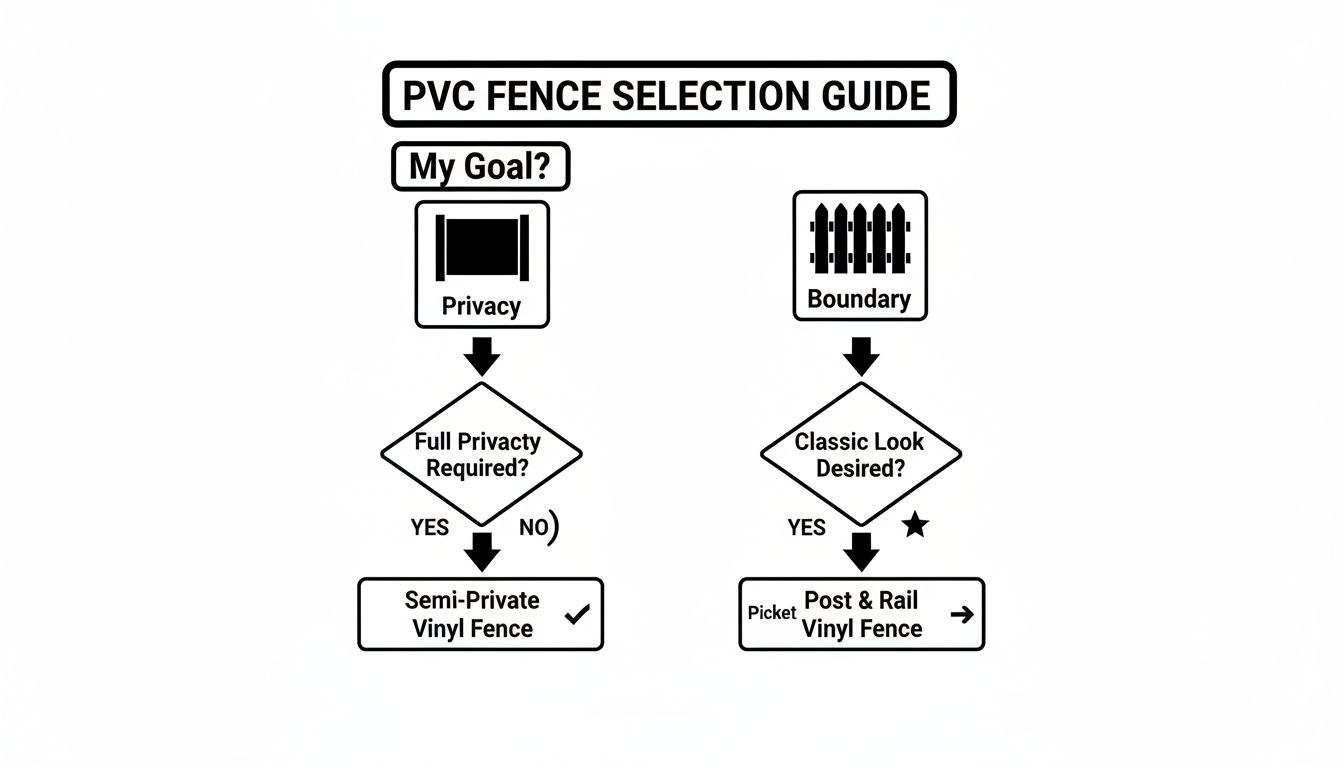
As you can see, identifying your primary motivation is the quickest way to narrow down your options and find the perfect fit.
Timeless Charm with Picket Fences
There's a reason the picket fence is a staple in American landscapes. It's the classic choice for defining your property and adding traditional charm without sacrificing your view. With its signature spaced pickets, it creates a boundary that feels friendly and welcoming, not imposing.
A vinyl picket fence gives you that timeless, picture-perfect look of painted wood but completely frees you from the demanding maintenance of scraping and repainting every few years.
This style works beautifully in front yards, where it can frame your home and garden, or as a way to keep children and pets safely contained in the back. Its clean lines complement almost any home, from historic Colonials to modern farmhouses. If you'd like to see the full range of options, take a look at our comprehensive guide to vinyl fences and gates.
Rustic Appeal with Post and Rail Fences
If you have a larger property or are aiming for a more rustic, pastoral look, the post-and-rail fence is a fantastic option. This simple, open design consists of two, three, or four horizontal rails running between sturdy posts, mimicking the look of traditional farm fencing.
Opting for PVC post-and-rail gives you that country aesthetic without any of the classic wood-related issues. You’ll never have to deal with splinters, rot, or insects. It's an exceptionally durable choice for:
- Marking the boundaries of a large property.
- Containing horses or other large animals.
- Adding a simple, decorative border to a spacious lot.
While PVC offers these incredible styles, looking at other options like modern glass panel fence systems can sometimes provide inspiration. Ultimately, the best fence is the one that perfectly marries your practical needs with the look you want to achieve for your home.
Customizing Your Fence with Colors and Textures
If you hear "vinyl fence" and immediately picture a plain, white enclosure, it’s time for an update. One of the biggest advancements in PVC fence options has been the incredible expansion of colors and textures. You’re no longer limited to a one-size-fits-all choice; you can now find a finish that genuinely complements your home’s architecture, siding, and trim.
The days of only having white and perhaps a basic tan are long gone. While classic white will always have its place, the modern palette has grown to meet the demand for more sophisticated, personalized designs.
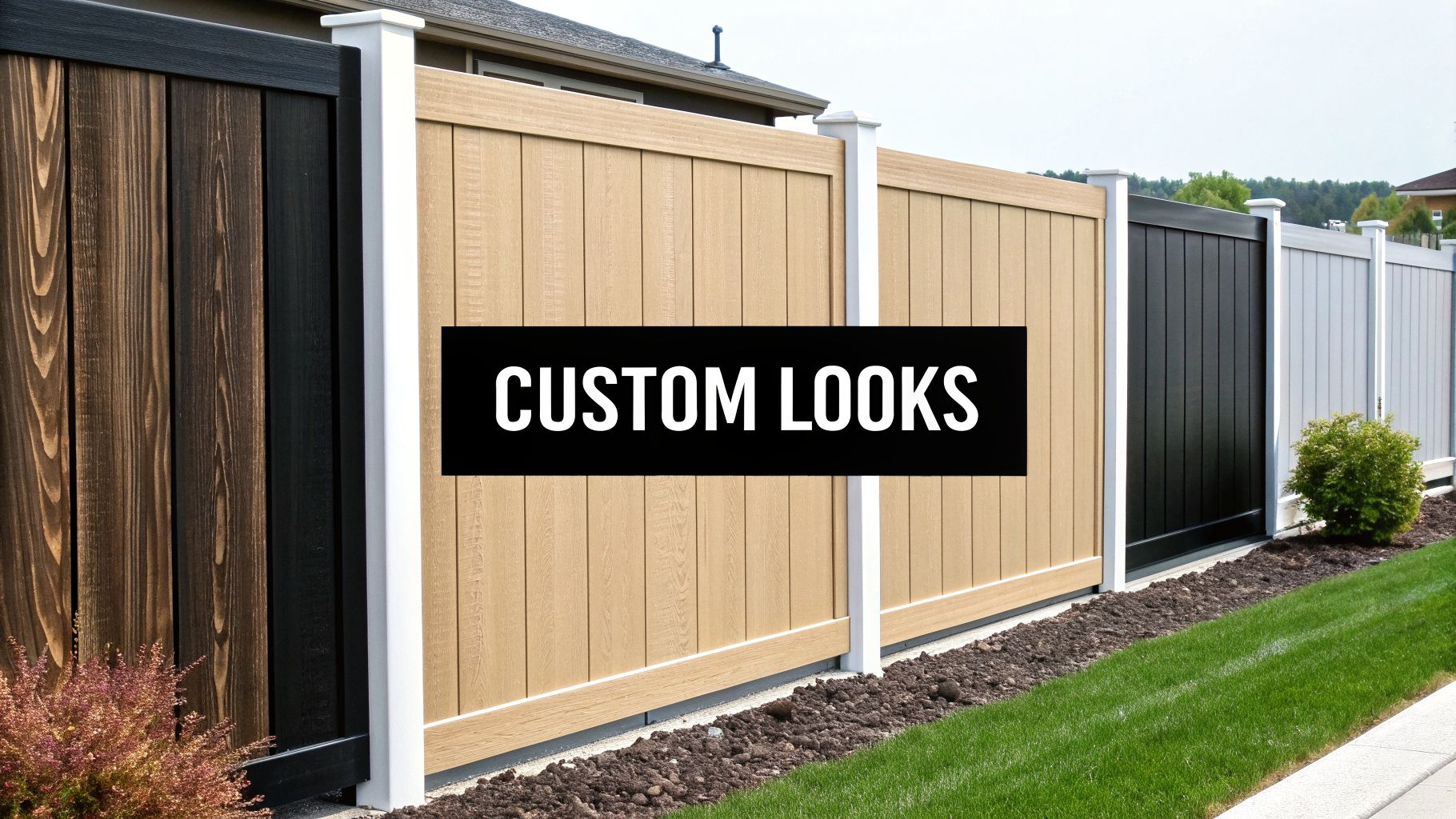
The Modern Vinyl Color Palette
Today’s PVC fences are available in a spectrum of stylish colors that can significantly boost your curb appeal. And this isn't a surface-level paint job that will chip or peel away. The color is integrated directly into the vinyl itself, ensuring it looks just as good years from now.
- Classic White: It’s a timeless, crisp look that makes any property feel bright and defined. A classic for a reason.
- Neutral Tans and Beiges: These warm, earthy tones like Clay, Sand, or Almond offer a softer alternative to white, blending beautifully with natural landscaping.
- Sophisticated Grays and Blacks: For a modern or even dramatic statement, dark colors are surging in popularity. A gray or black fence provides a striking contrast that can create a high-end, contemporary feel.
Choosing the right color is all about creating a sense of harmony. A dark gray fence might perfectly accent the stonework on a classic Connecticut home, while a warm tan could beautifully tie into a colonial’s brick facade.
Your fence shouldn't just be a barrier; it should be an accessory for your home. Modern color and texture options allow you to treat your fence as a key design element, much like you would choose exterior paint or new shutters.
The Look of Wood Without the Work
The true game-changer in PVC fencing, however, is the development of incredibly realistic woodgrain textures. If you love the rich, organic look of wood but dread the thought of staining, sealing, and replacing warped boards, these textured finishes are the answer.
Advanced manufacturing processes now emboss the vinyl with grain patterns that mimic popular woods like cedar, oak, or redwood. From just a few feet away, it’s often difficult to tell it isn't real wood. You get the best of both worlds: the timeless beauty of a wood fence with the practically maintenance-free durability of vinyl.
These textured options are perfect for:
- Achieving a rustic post-and-rail look with modern materials.
- Bringing warmth and character to a full privacy fence.
- Matching the aesthetic of homes in wooded or natural settings.
Personalizing with Decorative Additions
Beyond the panels themselves, you can customize your fence with a whole range of decorative touches. These details might seem small, but they can make a huge impact, turning a standard fence into a truly unique feature.
Consider adding a few final touches:
- Lattice Tops: Adding a section of decorative lattice to the top of a privacy fence breaks up the solid wall, adds character, and allows a bit more light and air to flow through.
- Decorative Post Caps: Don’t settle for a standard flat cap. Swapping it for a more ornate style, like a simple pyramid or something more elaborate, gives your fence a polished, complete look.
By combining the right style, color, and texture, and then finishing it off with unique caps or accents, you can design a fence that is truly your own. To see how these choices come together in the real world, you can explore a gallery of custom fence installations and get inspired.
What Separates a Good Fence from a Great One
When you are shopping for a new PVC fence, it is easy to assume all white vinyl is the same. From a distance, most new panels look nearly identical. However, the real differences—the ones that determine whether your fence will last five years or thirty—are in the manufacturing and composition of the material.
How a fence withstands Connecticut's demanding seasons comes down to its core components. It’s about the quality of the vinyl, the built-in sun protection, and the strength of its internal structure.
It All Starts with 100% Virgin Vinyl
The most critical element of a long-lasting PVC fence is the vinyl itself. Top-quality fences are always made from 100% virgin vinyl. This means the PVC compound is pure and new, without any recycled plastics or inexpensive fillers mixed in.
Why does this matter so much? Cheaper fences often contain reground or recycled materials to lower the price. While it might sound eco-friendly, it creates a weaker product that can turn brittle and crack under stress.
Think of it like baking a cake. You get a perfect result every time using fresh, high-quality ingredients. If you start mixing in old or unknown ingredients, you risk a product that crumbles. Virgin vinyl ensures a consistent, strong, and predictable result.
Sunscreen for Your Fence: The Power of UV Inhibitors
Even the best vinyl needs protection from the sun. High-end PVC contains a powerful blend of UV inhibitors that are mixed in during the manufacturing process. These additives act like a permanent, high-SPF sunscreen for your fence.
Without proper UV protection, the sun's rays will slowly degrade the vinyl, causing it to yellow, fade, and become chalky to the touch. Eventually, it gets brittle and weak. A quality fence will include titanium dioxide (TiO2), a premium UV blocker that keeps your white fence bright white and your colored fence rich and true. Here in Connecticut, with our intense summer sun, this isn't a luxury—it's a necessity.
The Hidden Skeleton That Prevents Sagging
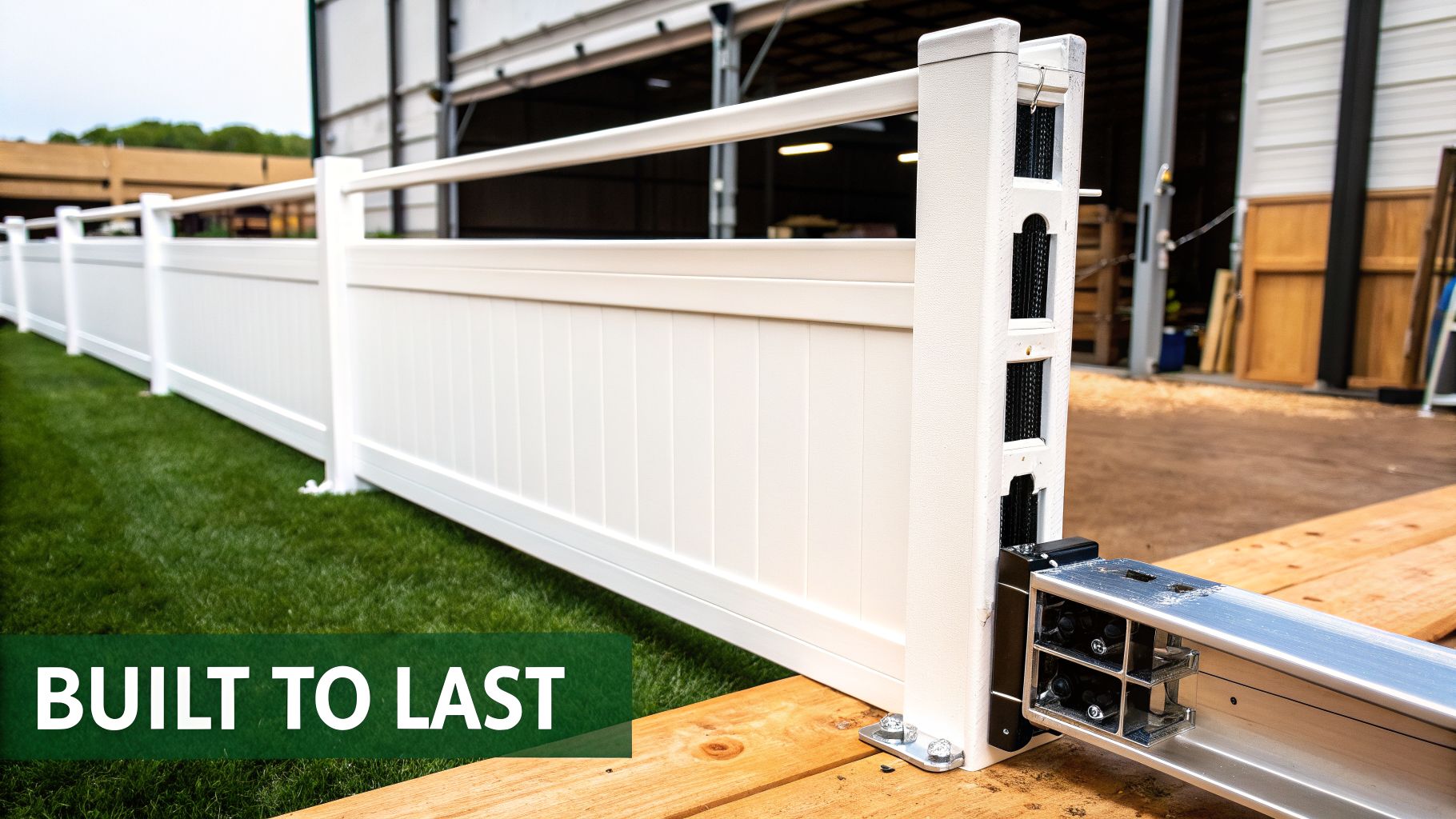
What you don't see is often what matters most. A fence's internal reinforcement is its skeleton, giving it the strength to resist sagging and withstand physical force, from stray soccer balls to heavy winds.
A great vinyl fence has internal aluminum reinforcements tucked inside the posts and, crucially, inside the bottom rail of every single panel. The bottom rail bears the weight of the pickets, and without that aluminum support, it will eventually sag, giving your fence an unattractive, bowed appearance.
This is especially important in Connecticut. Our freeze-thaw cycles cause the ground to heave, putting enormous pressure on fence posts. A hollow vinyl post will bend and shift, but a post with an internal aluminum I-beam can handle that stress, keeping your fence line perfectly straight for decades. When you get a quote, always ask about the internal reinforcement—it’s the hidden detail that makes all the difference.
PVC Fence Quality Checklist
To help you make an informed decision, we've put together a checklist of what to look for when comparing PVC fence products. Don't hesitate to ask your contractor these specific questions.
| Quality Factor | What to Look For | Why It Matters in Connecticut |
|---|---|---|
| Vinyl Composition | 100% virgin vinyl; ask for manufacturer specs. Avoid products with "reground" or recycled content. | Ensures the fence won't become brittle and crack during our harsh winters or under summer sun. |
| UV Protection | A high concentration of titanium dioxide (TiO2) for UV resistance. | Prevents yellowing, fading, and chalking from direct, intense summer sun exposure. |
| Wall Thickness | Thicker post and rail walls (e.g., 0.135" to 0.150" for posts). | Provides superior impact resistance and overall structural durability. |
| Bottom Rail Reinforcement | An internal aluminum I-beam or channel inside the bottom rail of every section. | This is non-negotiable. It prevents the rail from sagging under its own weight over time. |
| Post Reinforcement | Aluminum reinforcement or the option to fill posts with concrete for high-stress areas. | Resists bending and shifting caused by our notorious frost heaves and strong winds. |
| Interlocking Panels | Tongue-and-groove pickets that lock together for privacy styles. | Creates a stronger, more wind-resistant panel and eliminates gaps for true privacy. |
A great fence is an investment in your home. By looking past the surface and focusing on these key structural components, you can ensure your new fence not only looks fantastic on day one but continues to perform beautifully for years to come.
Navigating Gates, Heights, and Local Fence Codes
You can pick the perfect fence style and color, but the project isn't truly a success until the practical details are addressed. Choosing the right gate and ensuring everything complies with local regulations are two areas where homeowners can encounter problems. Getting these elements right from the start is what separates a beautiful, functional fence from a long-term headache.
A gate is the most frequently used part of your fence. It serves as both an entrance and a security feature. It must work flawlessly every single day. We always ensure PVC gates perfectly match the fence style—whether it's privacy, picket, or post-and-rail—for a seamless, integrated look. Your choice will typically come down to two main options.
Gate Styles and Essential Hardware
A single-walk gate is your everyday point of entry, usually measuring 3 to 4 feet wide. It's what you’ll use to let the dog out, access the garden, or welcome guests into your backyard.
A double-drive gate, on the other hand, is built for larger access needs. It’s made of two separate panels that open from the center, creating a wide clearance of 10 to 12 feet. This is essential if you need to move a vehicle, riding mower, or boat into the backyard.
No matter which style you choose, the hardware truly defines its longevity. This is one area where you should not compromise on quality. We insist on stainless steel hinges and latches because they won't rust and seize up over time. And if your fence is for a pool, Connecticut law requires self-closing hinges and a lockable latch—it’s not optional, it's a critical safety mandate.
A gate that sags, drags, or refuses to latch isn’t just an annoyance—it's a security failure. Investing in professional-grade hardware from the beginning ensures your gate swings smoothly and locks securely for years, providing you with reliable access and real peace of mind.
Understanding Fence Height Standards
Fence height is a major decision. It dictates your level of privacy and security, but your personal preference must align with what your town permits.
There are a few common standards, each serving a distinct purpose:
- 4-Foot Fences: This is the classic height for front yards and property borders. It’s tall enough to keep small children and pets safely contained without creating a visual barrier, preserving an open, neighborly feel.
- 6-Foot Fences: When privacy is the goal, this is the industry standard. A 6-foot fence creates a true backyard sanctuary, completely blocking sightlines for pools, patios, and outdoor living areas.
- Taller Fences: You’ll sometimes see fences at 8 feet or even taller, but this is typically for commercial properties or unique situations. In a residential setting, it almost always requires a special permit and a compelling reason.
Connecticut Pool Codes and Local Zoning
This is where having a local expert on your side becomes absolutely invaluable. Connecticut enforces a strict, statewide "BOCA Pool Code" to prevent accidental drownings. These aren't suggestions; they are non-negotiable laws for any fence enclosing a pool.
Key pool code requirements include:
- Minimum Height: The fence must stand at least 48 inches (4 feet) tall.
- Gate Operation: All gates must be self-closing and self-latching. The latch itself must be on the pool side of the gate, at least 54 inches from the ground, to keep it out of a child's reach.
- Climb-ability: The fence surface cannot offer easy handholds or footholds. For picket styles, this also governs the maximum spacing between pickets.
On top of the state pool code, every town in Connecticut has its own zoning ordinances for fences. These local rules can dictate everything from the maximum allowed height and how far the fence must be set back from your property line to whether a permit is required. What is perfectly acceptable in one town could result in a violation notice in the next.
Trying to navigate this maze of regulations on your own is a significant risk. The worst-case scenario? Being forced by the town to tear down a brand-new fence. Partnering with an experienced local contractor who builds in your area every day is the smartest move you can make. We know the specific codes for your town, handle the entire permit process, and guarantee your fence is built correctly and legally from day one.
The Surprising History of the Modern Vinyl Fence
The crisp, clean vinyl fence commonly seen throughout Connecticut has a more interesting history than you might imagine. Its journey began not in a home improvement store, but in a French science lab in the 19th century, starting as an accident that eventually led to one of the most trusted materials for the American home.
The story starts with a material we now know as polyvinyl chloride, or PVC. Its accidental discovery is credited to French chemist Henri Victor Regnault in 1835, who found that a strange white solid had formed inside a flask of vinyl chloride he had left exposed to sunlight. For a deeper dive, check out the origins of vinyl fencing on FenceAll.com.
For nearly a century, however, this new substance was considered a brittle, useless material with no practical application.
From Lab Accident to Building Staple
The real breakthrough arrived in the early 20th century. Scientists discovered that by adding certain plasticizers and stabilizers, they could transform that fragile powder into an incredibly flexible and durable material. This innovation finally unlocked PVC’s commercial potential.
By the mid-1900s, PVC was proving its durability in some of the harshest environments imaginable. Its first major success was underground, where it became the material of choice for plumbing and drainage pipes. It was clear that PVC wouldn't rust, rot, or break down, even when buried in wet soil for decades.
This was the ultimate field test. If PVC could survive years buried in damp earth, it could certainly handle a frosty New England winter above ground.
The Rise of the Modern Vinyl Fence
Even with that success, it wasn't until the 1980s that manufacturers began to apply this technology to residential fencing. They took the lessons learned from PVC's industrial uses and applied them toward creating a fence that looked just like a classic painted wood fence, but without any of the demanding upkeep.
The result was revolutionary at the time: a fence that would never need painting, was impervious to rot and insects, and could be cleaned with just soap and water. This combination of timeless curb appeal and modern, low-maintenance performance is exactly why PVC fencing quickly became a staple for homes across the country. It serves as a great reminder that sometimes, a simple scientific accident can change our backyards for the better.
Common Questions About PVC Fences in Connecticut
If you're considering a PVC fence for your Connecticut home, you likely have some questions. It’s a significant investment, and you want to be sure you're making the right choice. We hear the same questions from homeowners all over the state, so we’ve put together some straightforward answers based on our years of experience.
How Long Does a PVC Fence Really Last in Our Climate?
You can realistically expect a professionally installed, high-quality PVC fence to last 20-30 years, and often even longer. The key is starting with a superior product—one made from virgin vinyl that contains UV inhibitors. This is what protects the fence from becoming brittle during our harsh freeze-thaw cycles and prevents the sun from causing yellowing and fading in the summer.
Unlike wood, a vinyl fence will not rot from our damp springs, warp in the summer humidity, or be damaged by termites. When you consider these factors, it is a smart, long-term investment for your property.
What’s Involved in Cleaning a Vinyl Fence?
Honestly, not much. This is an area where vinyl fencing truly excels. For most of the year, a quick spray with a garden hose is all that is needed to wash off dust, grass clippings, and spring pollen.
If you find a stubborn spot or see a little mildew forming on a section that is always in the shade, it’s still an easy fix. A soft brush and a simple solution of mild dish soap and water will take care of it in minutes. You can say goodbye to the yearly weekends spent sanding, scraping, and staining that a wood fence requires.
Will a New PVC Fence Actually Increase My Property Value?
In our experience, yes, it certainly can. A clean, crisp fence line gives a property a finished, well-maintained appearance that adds immediate curb appeal. It sends a strong signal to potential buyers that the home has been cared for.
A well-chosen and properly installed PVC fence can notably increase your property value. It delivers a powerful combination of enhanced curb appeal, added privacy and security, and the significant benefit of low maintenance—a major selling point for any future homebuyer.
Think of it from a buyer's perspective: seeing a beautiful, durable fence means there's one less expensive project they will have to tackle themselves. That peace of mind often translates directly to a higher perceived value and a stronger offer.
Can a PVC Fence Be Installed on a Sloped Yard?
Absolutely. Handling slopes is a normal part of the job for any experienced fence installer. We have two main techniques to ensure the fence follows the contours of your land perfectly.
- Racked Installation: This is often the preferred method. We adjust the fence panel itself so the rails follow the angle of the ground. It creates a smooth, flowing line that looks natural.
- Stepped Installation: For steeper grades or by customer preference, we can install the panels in a stair-step pattern. Each panel is set slightly lower than the one before it, creating a different but equally professional look.
A good contractor will walk your property with you, assess the grade, and explain which method will work best to give you a secure and visually appealing result.
Ready to explore the best PVC fence options for your Connecticut property? The team at Connecticut Fence Works, LLC provides expert guidance and flawless installation. Contact us today for a free, no-obligation estimate!