
8 Elegant Picket Fence Decor Ideas for 2026
If you’re standing at the curb looking at your front yard and thinking the fence feels flat, you’re not alone. Many homeowners like the shape and function of a picket fence, but once it’s installed, they realize it needs landscaping, color, lighting, or detail work to feel finished. That is where picket fence decor matters. The right choices make the fence look intentional instead of just necessary.
A classic picket fence has deep roots in American residential design. The white picket fence grew out of colonial America in the 17th and 18th centuries, when settlers adapted the French piquet into boundary fencing. What began as a practical barrier later became a visible sign of affluence, then spread more widely as manufacturing made picket fences easier to produce and install in the 19th century, eventually becoming a symbol of middle-class prosperity in the United States, as described in this history of the white picket fence. That history still explains why homeowners reach for this style today. It feels welcoming, orderly, and familiar.
In Connecticut, though, appearance is only half the job. Freeze-thaw cycles, humidity, snow load, and wet springs all punish weak materials and rushed installations. Good picket fence decor has to survive that reality. These eight ideas focus on looks, but also on what holds up in New England yards.
1. Classic White Picket Fence with Flower Beds
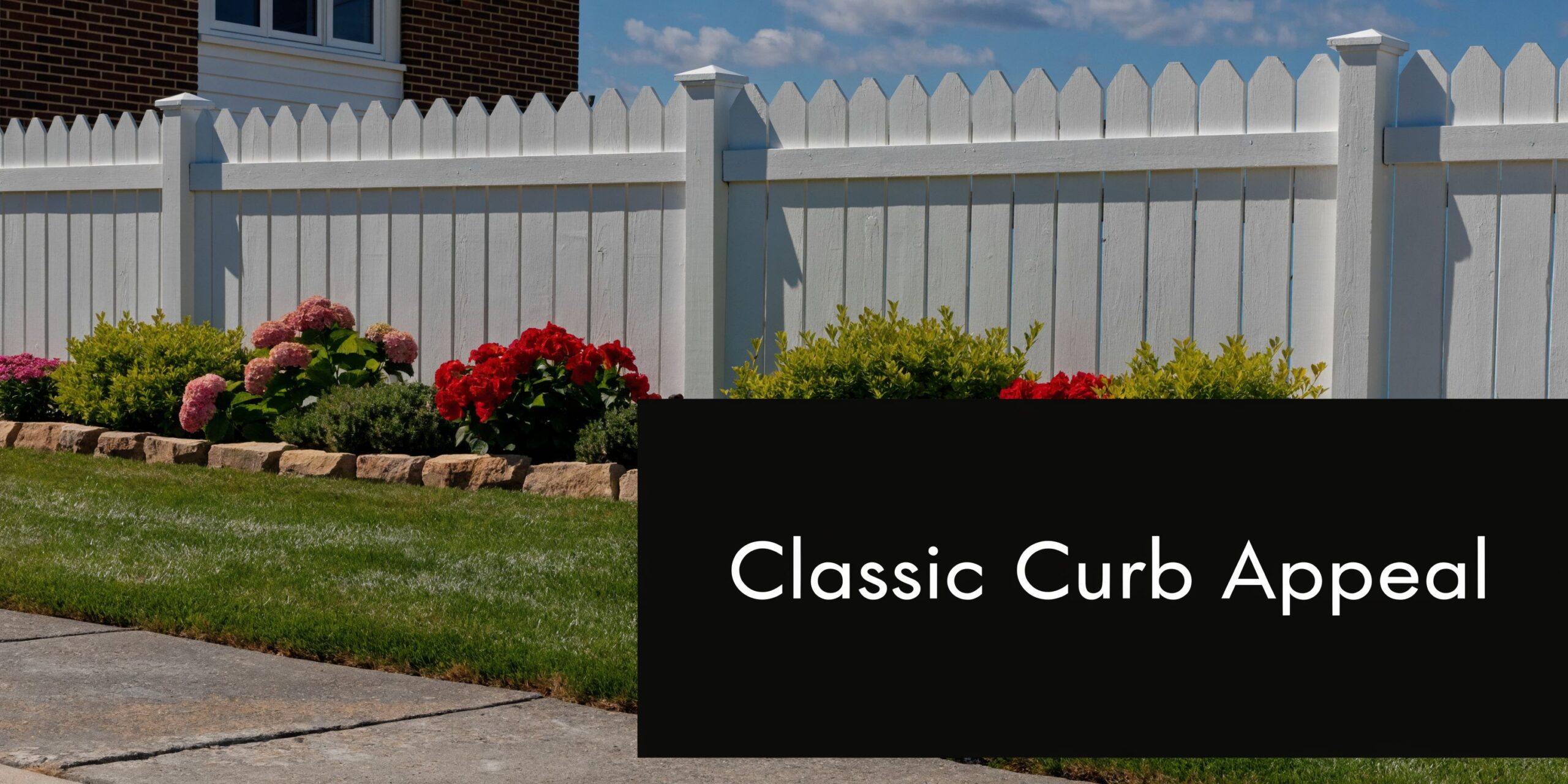
This is the standard for a reason. A white picket fence with a planted border softens the line of the yard, adds seasonal color, and keeps the property looking open from the street.
The mistake I see often is planting too much, too close, too fast. Homeowners love the cottage look, then a few growing seasons later the fence disappears behind overgrown shrubs. Picket fence decor works best when the fence stays visible.
Keep the fence visible
Use low, layered planting. Start with flowers and compact perennials nearest the fence, then step taller plants farther back into the yard. That preserves the rhythm of the pickets and prevents a crowded look.
A classic picket fence is most attractive when the landscaping frames it rather than hides it. This is especially true in front yards, where the fence should define the property without blocking sightlines.
Keep plantings below the top rail or near the lower half of the pickets in key street-facing areas. You want color around the fence, not a hedge swallowing it.
Vinyl is often the practical choice for this look in Connecticut. An overlooked maintenance angle in New England is material durability. One Lowe’s-related market summary notes that vinyl picket fences can last 20 to 30 years with minimal upkeep, while wood is often cited at 10 to 15 years and requires more routine sealing in damp climates, with additional discussion focused on winter durability and moisture concerns in the Northeast in this New England picket fence durability overview.
For inspiration, browse completed fence projects in the Connecticut Fence Works gallery. It helps to look at real front-yard layouts before choosing plant spacing.
2. Decorative Picket Fence with Custom Finials and Post Caps
A decorative top detail changes how a picket fence reads from the street. On the right house, finials and post caps give the fence a finished, built-in look instead of a basic perimeter line.
This approach works best where the fence is close to the sidewalk or front walk and the top profile stays in view. In Connecticut neighborhoods with Colonials, Capes, and older Victorian homes, I usually treat these details like exterior trim. They should support the architecture, not compete with it.
Match the ornament to the architecture
Victorian-style homes can carry turned post caps, acorn finials, or other more detailed shapes. Colonial and Cape-style homes usually look better with a quieter profile, such as a simple New England cap or a modest point. On newer homes with clean lines, flat caps and a consistent picket top often look sharper than anything ornate.
A reliable rule is to match the fence detail level to the trim and porch details already on the house. Decorative brackets, formal columns, and layered moldings give you room for more visible fence accents. If the house is plain, keep the fence plain too.
Material choice matters here more than homeowners expect. Fancy caps with poor fit can trap water, loosen in freeze-thaw cycles, and stain around the fasteners. Wood can look excellent, but it needs tighter maintenance discipline in our climate. Vinyl and cellular PVC trims hold up better if you want the decorative look without adding another repainting job to your list.
It also helps to concentrate the ornament where it earns its keep. Use more decorative caps at the gate, entry walk, or corner posts, then keep the line posts simpler. That keeps the budget under control and prevents the fence from looking busy.
Homeowners who want a mixed-style look often borrow ideas from ornamental fence and gate designs from Connecticut Fence Works. That crossover works especially well when a picket fence meets a gate opening and needs a little more presence.
Before you order custom pieces, check spacing, projection, and local code concerns around gates or pool areas. Sharp finials and oversized caps are not the right choice everywhere. A decorative fence should still be safe to brush past, easy to maintain, and proportionate to the house.
3. Picket Fence Planters and Window Boxes Integration
Planters attached to or placed directly along a picket fence can make a small yard feel intentional quickly. This works especially well in side yards, patios, and narrow frontages where there is not enough room for a full planting bed.
It is one of the easiest forms of picket fence decor to change with the seasons. Spring annuals, summer herbs, fall mums, and winter greens all give the same fence a different personality.
Don’t overload the fence
The design looks light and charming when the containers stay light too. Heavy boxes, saturated soil, and poor mounting hardware can rack a fence section out of alignment over time.
Use corrosion-resistant hardware and attach planters only where the fence system can support the load. If you are using a vinyl fence, avoid drilling randomly into visible faces without a plan. Hidden brackets or freestanding planters just in front of the fence are often smarter.
A few combinations that usually work:
- Herbs near kitchen paths: Rosemary, thyme, parsley, and basil are practical where you pass daily.
- Trailing flowers for soft lines: Petunias or similar spillers break up rigid picket spacing.
- Evergreen accents for winter: Small seasonal containers keep the fence from looking bare after frost.
This style is especially useful on urban or suburban lots where lawn area is limited. The fence becomes part of the garden instead of just the edge of it.
What does not work is treating every panel like a display wall. If every section has boxes, baskets, hooks, and signs, the fence starts looking cluttered. Leave visual rest between decorated areas so the eye can still read the fence line.
4. Painted Picket Fence with Ombre or Gradient Color Effects
A gradient-painted picket fence gets attention fast, especially in February when the garden is flat and the color has to carry the whole view. In Connecticut, that is the ultimate test. A finish that looks charming in peak summer can feel overly bright once the leaves drop and snow reflects extra light back onto the fence.
This approach works best on shorter, intentional stretches. Garden enclosures, a side-yard divider, or the run leading to a gate usually handle color well. Long perimeter fences are harder to execute because even a good gradient can start to feel repetitive across a large span.
Keep the color shift controlled
The strongest results usually come from narrow color families. Tonal blues, muted greens, warm grays, and weathered coastal shades fit New England homes better than sharp rainbow transitions in most settings. The fence should support the house, not compete with it.
Older neighborhoods need extra care here. Historic district rules, HOA standards, and even close neighbor sightlines can limit what makes sense. I always advise homeowners to look at the fence from the street, from inside the yard, and from upper windows before settling on a palette.
Wood is usually the best material for this treatment because it accepts custom paint well and can be repainted picket by picket if one area fades faster. The trade-off is maintenance. South-facing sections take more UV wear, lower rails catch splash-back, and freeze-thaw cycles in New England will expose weak prep work quickly.
Test sample colors on a few actual pickets, not just on a paint card. Check them in sun, shade, and on an overcast afternoon before you commit.
Execution matters more than the idea itself. If the transition is too abrupt, the fence reads as striped instead of blended. If you want a gradient, have the sequence mapped out panel by panel before the first coat goes on, and use exterior products rated for wood movement and moisture exposure.
One more practical note. Darker colors absorb more heat, which can shorten the life of lower-grade paint systems and make touch-ups more obvious over time. For pool areas or code-sensitive enclosures, keep the design secondary to compliance. Decorative paint should never reduce visibility through the fence or distract from gate hardware, latch access, or required safety features.
5. Picket Fence with Integrated Lighting and Ambient Effects

Lighting changes how a fence reads after sunset. During the day, the picket pattern defines the space. At night, the fence can guide movement, highlight a walkway, or frame a patio.
This is one of the most useful picket fence decor upgrades because it adds both atmosphere and function. On pool fencing, path enclosures, and entertaining areas, good lighting helps people use the yard comfortably after dark.
Use light as an accent, not a spotlight
Warm lighting usually flatters picket fencing better than cool lighting. You want a soft wash, not a row of glaring bulbs. Post cap lights work well for rhythm. Low fixtures nearby can graze the fence face and make the pickets stand out.
In commercial and HOA settings, decorative fence systems increasingly tie into outdoor living and property features. One market analysis notes the use of solar-lighted post caps as part of picket fence integration in shared and institutional spaces in this wood fencing market report.
For homeowners, the practical part is installation planning. If you know you want lighting, run conduit or choose compatible post caps before the fence goes in. Retrofitting always costs more effort and usually looks less clean.
A few smart uses:
- Entry emphasis: Light the gate posts first.
- Path guidance: Keep illumination low and even.
- Pool perimeter visibility: Prioritize safe movement over decorative sparkle.
What does not work is mixing too many fixture styles. A farmhouse fence with ultra-modern blue-white LEDs and oversized lantern caps often feels confused. Pick one lighting language and stay with it.
6. Picket Fence Screen or Trellis with Climbing Vines
A picket fence and climbing vine can be one of the best-looking combinations in a yard. The fence gives the plant structure. The plant gives the fence movement, softness, and seasonal change.
This works especially well where you want a semi-soft boundary instead of a crisp, formal edge. Garden rooms, side enclosures, and seating nooks benefit from it most.
Choose vines with discipline
The best vine is not always the fastest vine. Aggressive growers can twist pickets, trap moisture, and turn a nice fence into a maintenance problem.
Clematis and climbing hydrangea are common examples homeowners look at because they can add color or texture without overwhelming the structure as quickly as more aggressive choices. The key is to install support where needed and train the growth early.
The fence should not do all the structural work by itself. Add discreet horizontal support lines or a trellis section where the plant will concentrate. That keeps the pickets from carrying unnecessary strain.
This approach also overlaps with screened outdoor spaces. If you want a decorative boundary that also creates more enclosure around patios or utility areas, custom screens and enclosures from Connecticut Fence Works show how fencing can be adapted beyond a standard straight run.
The maintenance trade-off is real. Vines need pruning, and fences behind heavy growth are harder to inspect. In New England, trapped moisture is the enemy. Airflow matters.
Leave breathing room between the densest growth and the fence face. If the plant mats tight against every picket, drying time slows after rain and snowmelt.
Done well, this is some of the most attractive picket fence decor you can add. Done carelessly, it shortens the life of the fence.
7. Picket Fence with Integrated Seating or Bench Design
This is less common, but when the yard layout supports it, it can be excellent. A fence-backed bench can turn a blank perimeter into a destination. I like this most in garden corners, around play areas, near pools, and in small backyard rooms where every element needs to do more than one job.
The fence becomes backdrop, enclosure, and furniture at once.
Build it as a structure, not an accessory
A bench attached to a fence needs real support. Too many DIY versions bolt seat boards into fence rails. That is not enough for repeated use, wet conditions, and seasonal movement.
Use separate structural framing for the seating load, even if the bench visually ties into the picket fence. The fence can connect to it, but it should not be the only thing holding it up.
Residential fencing remains heavily driven by curb appeal, security, and boundary definition. A broader market summary of picket fencing describes residential demand as a primary driver and notes strong consumer preference for vinyl and composite materials because of durability and low maintenance in this global picket fencing market report. For seating zones, that low-maintenance mindset matters even more. Horizontal surfaces show wear faster than vertical fence faces.
A few practical design notes:
- Drainage first: Never trap mulch or wet soil against the seat base.
- Comfort matters: Slightly contoured or eased seat edges feel better than hard square cuts.
- Placement matters: Face the bench toward a garden bed, lawn, or entertaining area, not a blank wall.
This style works best when it is planned from the start. Retrofitting seating into an already-installed fence can be done, but the proportions are often awkward.
8. Picket Fence with Decorative Gate and Hardware Accents
On a snowy February morning in Connecticut, the gate gets tested before any other part of the fence. If it sticks, drops, or refuses to latch with gloves on, the decorative details stop feeling charming quickly.
The gate deserves more attention than the rest of the picket run because it handles movement, moisture, and daily wear all at once. A plain fence can look custom with a well-proportioned gate, quality hinges, and hardware that fits the house.
Start with operation, then choose the accents
Gate hardware should match both the architecture and the way the yard is used. Black powder-coated hardware suits many Colonials and farmhouses. A softer painted finish can work better on cottage-style homes. Strap hinges and thumb latches add character, but they also collect more moisture and need more upkeep than simpler hinge sets.
In New England, I pay close attention to seasonal movement. Frost heave, spring mud, and humidity can throw a gate out of alignment faster than homeowners expect. Leave proper ground clearance for snow and ice, use posts sized for the gate load, and make sure the latch still catches cleanly after the wood expands in summer.
Small details matter here. Post caps should shed water instead of holding it. Decorative hinges should be rated for exterior use, not just chosen for appearance. If the gate opens toward a walkway, check that the swing path stays clear of stone edging, planters, and drifted snow.
For pool areas, hardware selection also affects code compliance and child safety. Use self-closing hinges and a self-latching setup where local rules require them, and place the latch at the correct height for your town or inspector. Decorative ring pulls and oversized surface hardware can interfere with that function, so confirm the gate closes and latches on its own before approving the final look.
The best gates do two things well. They look intentional from the street, and they feel solid every time someone uses them.
Picket Fence Decor: 8-Item Comparison
| Item | 🔄 Implementation Complexity | ⚡ Resource Requirements | 📊 Expected Outcomes | Ideal Use Cases | ⭐ Key Advantages / 💡 Tips |
|---|---|---|---|---|---|
| Classic White Picket Fence with Flower Beds | Medium 🔄🔄 – standard install + landscaping | Moderate ⚡⚡ – cedar/vinyl, plants, labor | High curb appeal; modest privacy 📊 | Traditional front yards, cottage gardens, visible streetscapes | ⭐ Timeless curb appeal; versatile. 💡 Use vinyl for low maintenance; plant 18–24" flowers. |
| Decorative Picket Fence with Custom Finials and Post Caps | High 🔄🔄🔄 – custom detailing and precise install | High ⚡⚡⚡ – custom finials, skilled labor, longer lead times | Strong architectural statement; increased perceived value 📊 | Historic properties, corner lots, high-end homes | ⭐ Distinctive character and customization. 💡 Choose weather‑resistant finials; coordinate with home style. |
| Picket Fence Planters and Window Boxes Integration | Medium 🔄🔄 – mounting and irrigation considerations | Moderate ⚡⚡ – planters, hardware, possible irrigation | Enhanced seasonal color and texture; flexible impact 📊 | Small yards, urban properties, renters, cottage gardens | ⭐ Maximizes small spaces; seasonal variety. 💡 Use lightweight composite planters and drip irrigation. |
| Painted Picket Fence with Ombre / Gradient Effects | Medium 🔄🔄 – requires skilled painting techniques | Moderate ⚡⚡ – high‑quality exterior paints, professional painters | Highly distinctive visual impact; maintenance‑heavy 📊 | Contemporary homes, creative neighborhoods, social media–minded properties | ⭐ Bold, affordable aesthetic upgrade. 💡 Check HOA rules; use UV‑resistant paint; expect refresh every 3–4 years. |
| Picket Fence with Integrated Lighting and Ambient Effects | Medium‑High 🔄🔄🔄 – electrical planning and integration | High ⚡⚡⚡ – lights, solar or wiring, electrician for hardwire | Improved night ambience and security; high functional impact 📊 | Entertaining yards, poolside areas, pathways, modern outdoor spaces | ⭐ Extends evening use; energy‑efficient. 💡 Plan lighting during install; prefer warm 2700K LEDs; consider solar vs hardwired. |
| Picket Fence Screen or Trellis with Climbing Vines | Medium 🔄🔄 – supports and training required | Moderate ⚡⚡ – sturdy supports, plants, ongoing maintenance | Living, seasonal screen; partial privacy over time 📊 | Cottage gardens, heritage properties, pollinator‑friendly yards | ⭐ Natural beauty and habitat support. 💡 Select hardy CT‑zone vines; install strong horizontal supports and plan pruning. |
| Picket Fence with Integrated Seating or Bench Design | High 🔄🔄🔄 – structural engineering and carpentry | High ⚡⚡⚡ – reinforced posts, quality materials, custom build | Adds functional outdoor living space; high usability 📊 | Garden rooms, poolside entertaining areas, high‑end outdoor spaces | ⭐ Combines boundary with seating/function. 💡 Use rot‑resistant materials; ensure drainage and professional engineering. |
| Picket Fence with Decorative Gate and Hardware Accents | High 🔄🔄🔄 – custom gate design and precise alignment | High ⚡⚡⚡ – custom metalwork, premium hardware, specialist labor | Strong focal entry; significant curb and perceived value impact 📊 | Historic homes, estates, properties emphasizing architectural detail | ⭐ Architectural focal point and craftsmanship. 💡 Use stainless/powder‑coated hardware; coordinate finishes and schedule maintenance. |
Bring Your Picket Fence Vision to Life
A good picket fence does more than outline a yard. It sets the tone for the house before anyone reaches the front door. The best picket fence decor builds on that. It might be flowers that soften the base, post caps that echo the home’s trim, lighting that makes the fence useful at night, or a gate that gives the whole run a focal point.
The important part is choosing decor that fits the fence material, the property style, and Connecticut weather. That is where many projects go sideways. A beautiful idea on paper can become a maintenance headache if the plants hold moisture against the fence, the hardware rusts, or the design asks a decorative fence to do structural work it was never built to handle.
In New England, durability should always be part of the design conversation. Snow, wet springs, humid summers, and repeated freeze-thaw cycles expose shortcuts fast. That does not mean decorative fencing has to be conservative or plain. It means the details need to be chosen with intention. A simpler idea executed well usually outperforms a more complicated design with weak materials or poor installation.
If you are deciding between wood and vinyl, between a plain run and a more decorative gate, or between a planting-heavy look and a cleaner architectural one, start with how you want the fence to function day to day. Do you need pet containment, pool-code compliance, a front-yard border, or just a stronger first impression from the street? Once that answer is clear, the decorative decisions get easier.
This is also where working with an experienced local contractor helps. A Connecticut-based fence company sees the same soil conditions, the same winter movement, and the same common layout problems over and over. That local knowledge is useful when you are trying to build something that still looks good a few seasons from now, not just the week it is installed.
A well-designed picket fence should look right for the house, hold up in local weather, and make the property easier to enjoy.
If you’re ready to upgrade your yard with picket fence decor that looks good and holds up in Connecticut weather, contact Connecticut Fence Works, LLC for a free estimate. The company serves homeowners, businesses, HOAs, and property managers across central and southern Connecticut with decorative fence design, installation, and code-conscious layout guidance.