
Your Guide to Modern PVC Fence Options in Connecticut
A modern PVC fence provides the clean, timeless look of a perfectly painted wood fence but without the difficult maintenance. It’s a durable, versatile fencing solution that is quickly becoming a popular choice for Connecticut homeowners who want an option that is both beautiful and practical.
Why Homeowners Are Choosing Modern PVC Fencing
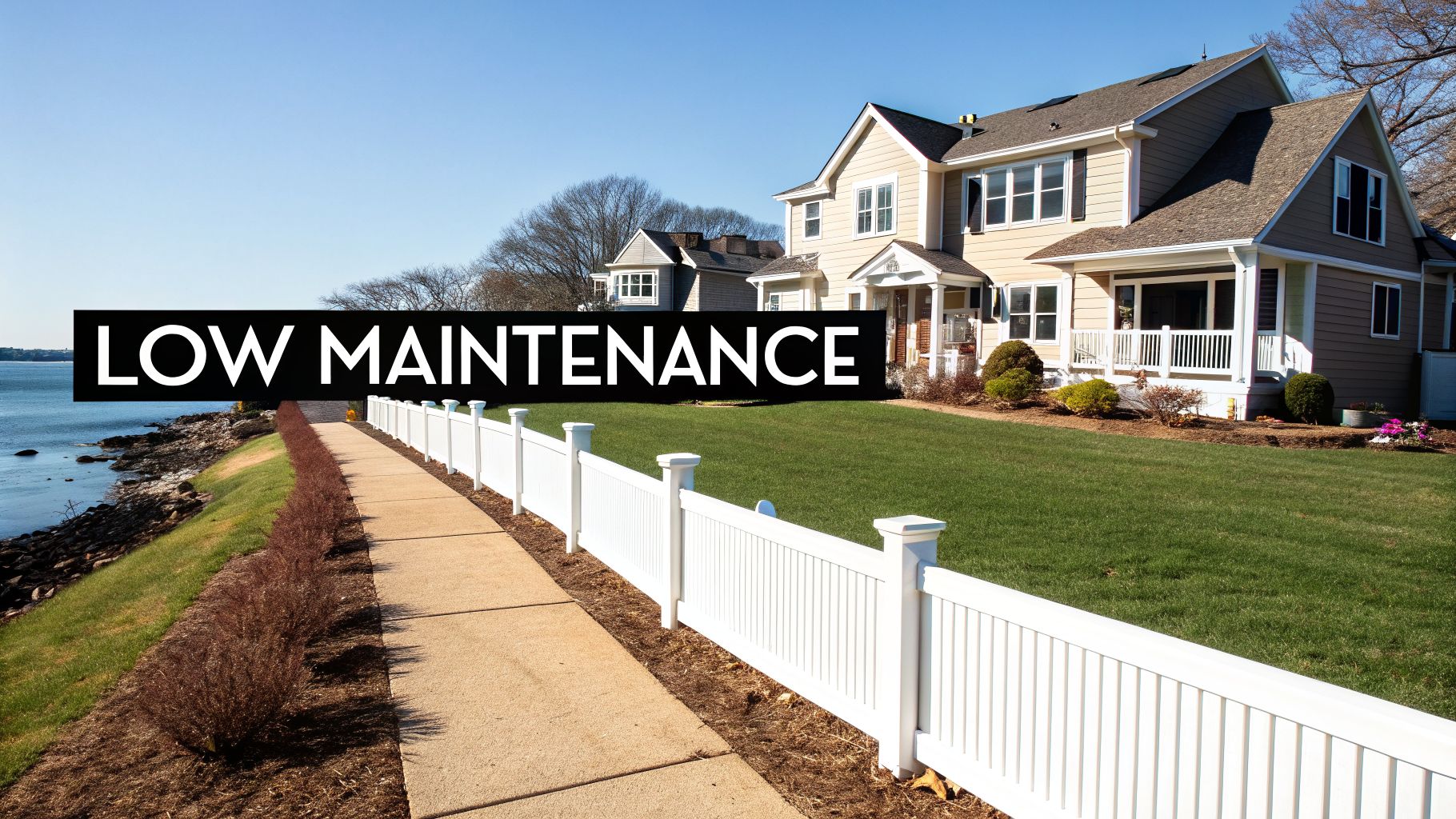
When you picture a classic New England home, a crisp white fence probably comes to mind. For years, achieving that look meant a frustrating cycle of scraping, sanding, and repainting a wood fence every few seasons. A modern PVC fence changes this by delivering that same classic beauty with very little effort.
So, what’s the secret? The material itself is Polyvinyl Chloride, or PVC—a high-strength, durable plastic designed for outdoor use. It is a high-performance material built to handle decades of sun, rain, and snow without rotting, warping, or peeling.
The Low-Maintenance Advantage
The biggest benefit for busy Connecticut homeowners is simple: you get the look of a brand-new fence on day one, and it stays that way for years. Wood is a constant target for moisture damage and pests, but PVC is a non-porous material. This means that insects have no interest in it, and water cannot penetrate it to cause damage.
The real value of a modern PVC fence is achieving the beautiful look of a traditional fence while avoiding the time and money spent on painting, staining, and future repairs.
This low-maintenance reality means your weekends are for enjoying your yard, not for working on your fence. All it ever needs is a simple wash with soap and water to look its best.
Modern Versatility for Every Style
Manufacturing has come a long way, transforming PVC from a basic, one-size-fits-all option into a truly versatile design element. You're no longer limited to just a standard white picket fence. Today's options cover a wide range of architectural tastes, allowing you to find the perfect match for your home's unique character.
Here are the key benefits driving its popularity:
- Exceptional Durability: Engineered to resist fading, cracking, and yellowing from UV exposure, a modern PVC fence is a lasting investment. It is more than capable of handling Connecticut’s demanding four-season climate, from humid summers to freezing winters.
- Aesthetic Flexibility: You can choose from a wide variety of styles, colors, and even textures. Options range from sleek privacy panels and contemporary horizontal designs to realistic woodgrain finishes that mimic natural cedar without the maintenance.
- Enhanced Property Value: A quality fence does more than just mark a boundary; it boosts curb appeal. A beautiful, long-lasting PVC fence is a major selling point for potential buyers, demonstrating a smart, low-maintenance home improvement.
Whether you own a coastal home in New London County or a classic colonial in Hartford County, a modern PVC fence is a smart and stylish way to improve your property’s security, privacy, and charm.
Exploring Popular Modern PVC Fence Styles
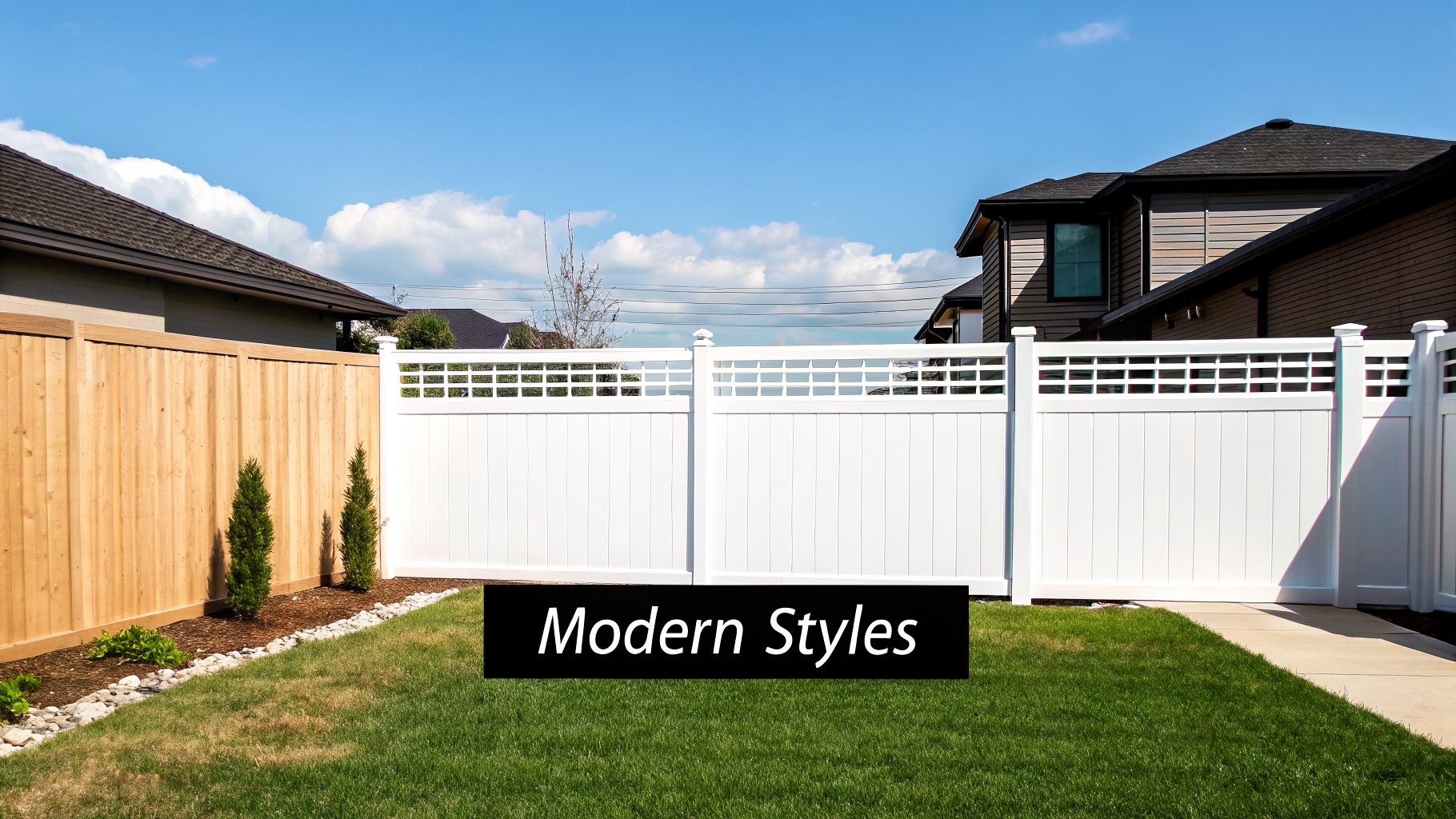
If you're picturing a plain white fence, it's time to update that image. Modern PVC fencing has expanded to include many design options that can completely redefine your property’s look and feel. Whether you’re trying to create a private backyard escape or add some sharp, architectural character, there’s a style that fits perfectly for any Connecticut home.
Determining what you want is the first step. A great fence does more than just mark a property line—it elevates your entire landscape. Let’s review the designs that are popular across the state.
Solid Privacy Fences
When you want your backyard to be your own personal sanctuary, a solid privacy fence is the ideal choice. These fences are built with interlocking tongue-and-groove panels, which means there are no gaps. This design is your best option for blocking views from the street or neighbors, reducing noise, and keeping children and pets safely contained.
For example, you can host a summer barbecue or simply relax on your patio without feeling like you’re on display. That’s the kind of peace of mind a solid privacy fence offers. Most are built to a standard height of 6 feet, creating an effective screen that turns your yard into a private oasis.
Semi-Privacy Styles
What if total seclusion feels a bit too enclosed? A semi-privacy fence strikes the perfect balance. These styles are designed with small, intentional gaps between the pickets or panels. This allows just enough light and air to pass through, making the space feel more open and less confined while still offering substantial screening.
A couple of popular semi-privacy options we often install are:
- Shadowbox Fences: This clever design alternates pickets on opposite sides of the rails. When you look at it straight on, it appears solid. But from an angle, you get a sense of depth and airflow. It’s a classic look for a reason.
- Lattice and Spindle Tops: You can add a decorative element to a standard privacy fence with a section of lattice or spindles along the top. It’s a great way to break up a solid wall of PVC, adding an elegant touch that makes the fence line feel more inviting.
These styles work wonderfully in front yards or along shared property lines where you want to set a clear boundary without completely shutting out the world.
Contemporary Horizontal Fences
Nothing says "modern" quite like a horizontal fence. In this style, the panels run parallel to the ground instead of vertically. This creates long, clean lines that have a powerful visual effect, making a property feel wider and more expansive. It’s a sleek, architectural look that’s a perfect match for contemporary and mid-century modern homes.
A horizontal PVC fence is more than just a boundary; it's a design statement. Its clean geometry can instantly modernize a home’s exterior and boost its curb appeal with a sharp, sophisticated edge.
This isn’t just a passing trend—it’s a smart design choice. The horizontal lines draw your eye across the landscape, which is why it's a favorite for homeowners aiming for a truly unique and polished outdoor space. To see how this and other styles might look on your property, check out our gallery of vinyl fence and gate options.
The New Look of PVC: Color and Texture
Perhaps the biggest advancement in modern PVC is the incredible variety of colors and textures now available. Classic white is always in style, but the selection has expanded to include some very sophisticated options.
- Colors: Earthy tones like gray, tan, and clay are incredibly popular. They offer a softer look that blends beautifully with landscaping, stone patios, and modern home siding.
- Textures: High-definition woodgrain finishes are a true game-changer. These designs capture the realistic look of natural cedar or stained wood but with none of the upkeep. You get all the warm, rustic charm of a wood fence without ever having to think about rot, staining, or splinters.
This expansion in style is a big reason the global vinyl fence market continues to grow, projected to hit a value of $2.5 billion by 2025. Homeowners want materials that last and look great without constant maintenance. You can dig deeper into this trend in the full market research report.
Comparing PVC, Wood, and Metal Fencing Materials
Choosing your fence material is a big decision. It shapes not just your property’s curb appeal, but also your budget and how you'll spend your weekends for years to come. To make the right call, you have to look at the three main options side-by-side: modern PVC, classic wood, and sleek metal. Each one offers something different, especially considering Connecticut’s demanding four-season weather.
Thinking about fence materials is a lot like choosing the best material for outdoor signs, where you’re weighing durability against appearance and cost. The same logic applies here, so let's examine how PVC, wood, and metal really compare on the things that matter most to homeowners.
To give you a clear, at-a-glance overview, here's a breakdown of how these materials stack up against each other.
Fence Material Comparison: PVC vs. Wood vs. Metal
| Feature | Modern PVC Fence | Wood Fence (Cedar/Pine) | Metal Fence (Aluminum) |
|---|---|---|---|
| Upfront Cost | Mid-Range | Low to Mid-Range | High |
| Lifetime Cost | Low | High (due to maintenance) | Mid-Range |
| Maintenance | Very Low (occasional washing) | High (staining, sealing, repairs) | Very Low (occasional washing) |
| CT Weather Durability | Excellent (won't rot, warp, peel) | Poor to Fair (vulnerable to moisture/rot) | Excellent (won't rust, very stable) |
| Pest Resistance | Immune to insects and pests | Vulnerable to termites, carpenter bees | Immune to insects and pests |
| Lifespan | 50+ years | 15-20 years (with constant care) | 50+ years |
This table gives you the highlights, but the real story is in the details of cost, durability, and the work involved.
Initial Cost vs. Lifetime Value
The initial price is where many homeowners start, but it's only a small part of the financial picture. A wood fence, especially one built from pressure-treated pine, almost always seems like the cheapest option at first. But that initial savings can be deceptive.
A modern PVC fence usually falls in the middle range, costing a bit more than pine but often less than premium wood like cedar. At the top end, you'll find metal fences, particularly those made from high-grade aluminum, which carry the highest initial price tag.
The real number to watch isn't the upfront price; it's the total cost of ownership. A PVC fence might cost more initially than basic wood, but it often saves thousands over its life by eliminating maintenance costs.
Consider this: over just ten years, the cost of staining, sealing, and replacing rotted boards on a wood fence can easily grow to 2-3 times its original price. That’s a significant, ongoing expense. This fact is a major reason why modern PVC has become so popular. If you're still drawn to the natural look, you can get a deeper financial breakdown in our guide on cedar fencing options.
Durability in Connecticut's Climate
Connecticut’s weather includes everything from high humidity and driving rain to deep freezes. How a material stands up to this is what separates good options from bad ones.
- Wood: As a natural product, wood is always susceptible to the elements. It soaks up moisture, which leads directly to rot, warping, and splitting. It’s also attractive to termites and other pests. Sealing it helps, but even with perfect maintenance, a wood fence will slowly decay over time.
- Metal (Aluminum): Aluminum is extremely durable. Because it does not rust, it resists moisture very well. It's strong and remains stable during temperature changes, though it can be dented by a heavy impact.
- Modern PVC: This is where PVC really stands out. It's a non-porous material, which means water can’t get in. It will never rot, warp, or peel. It’s also completely immune to insect damage. Good quality PVC, like the kind we use, is made with UV inhibitors that prevent the sun from fading or yellowing the finish, locking in the color for decades.
This incredible resilience is why you see PVC fences everywhere from backyard privacy projects in New London County to secure commercial lots in Tolland.
Maintenance: A Head-to-Head Look
Your free time is precious. The last thing you want is a fence that creates a list of chores every summer.
A wood fence is the most demanding option. To keep it from falling apart, you’re looking at a full staining or painting project every 2-3 years. It’s a lot of work and a constant drain on your budget.
On the other hand, both modern PVC and aluminum fences are the definition of low-maintenance. The entire care routine is a quick wash with a garden hose and maybe some mild soap once a year to remove dirt. That's it. You will never paint, stain, or seal a PVC or aluminum fence.
Homeowners have shown a clear preference. In 2023, the vinyl fence market was valued at over $2.92 billion and is on track to hit $9.6 billion by 2032. That explosive growth is happening for one simple reason: people want beautiful, durable fences that don't demand all their free time.
How to Budget for a Modern PVC Fence in Connecticut
So, you're considering a modern PVC fence and the big question is, "What will it cost?" Trying to establish a budget can feel challenging, but it gets much simpler when you know what factors contribute to the final price.
Let's break down the key factors that shape the cost of a PVC fence project here in Connecticut. This way, you can build a realistic budget and understand why this investment offers such incredible value over the long term.
The first and most significant part of any estimate is the linear footage. It’s simply the total length of the fence you need. A longer fence line requires more materials and more labor, so this is always our starting point.
Next, we look at the height and style. A tall, 6-foot privacy fence will naturally cost more per foot than a shorter 4-foot picket-style fence because it uses more raw material. Intricate designs, like those with a decorative lattice top or custom post caps, also add to the cost compared to a clean, simple panel.
Key Factors That Determine Your Fence Cost
Your property itself is a huge part of the equation. Installing a fence on a flat, clear patch of grass is a fairly straightforward job. But if your yard in Connecticut has steep hills, stubborn tree roots, or our famously rocky soil, the crew has to work harder and use different methods. That extra labor and specialized equipment will be reflected in the cost.
Here are the main variables we look at when building your quote:
- Total Linear Footage: The overall length of your fence is the single biggest factor.
- Fence Height and Style: Taller fences and more complex designs mean more material and labor.
- Number and Type of Gates: Every gate is an additional cost. A wide gate for your driveway will be more expensive than a standard walk-through gate for the backyard.
- Property Terrain: Slopes, rocks, and other obstacles require extra site preparation and installation time.
The shift toward materials like PVC isn't just a local observation; it's a massive global trend. The fencing market is on track to become a $38.4 billion industry by 2026. Here in the US, the market for plastic and composite fencing has already surpassed $1.2 billion. In fact, synthetic materials like PVC now account for a significant 60% of all new fence installations, largely because they simply don't rot. You can see more data behind this surge in popularity by checking out the latest fencing market growth report.
Understanding the True Lifetime Value
The initial price tag is important, but it's only half the story. A modern PVC fence is a long-term upgrade to your home, and that’s where the idea of lifetime value really comes into play.
A PVC fence is a one-time investment in your property that pays for itself over the years. By eliminating the constant cycle of staining, painting, and replacing rotted boards, it saves you both time and money.
For a professionally installed 6-foot PVC privacy fence, homeowners in Connecticut can typically budget between $70 to $80 per linear foot. For a 100-foot fence, that puts the initial investment right around $7,000 to $8,000. While a traditional wood fence might look cheaper at first, the costs of staining, sealing, and replacing warped or rotted sections add up year after year.
A PVC fence, on the other hand, has almost no ongoing expenses besides a simple wash now and then. This makes its total cost of ownership far lower over its potential 50-year lifespan. It’s a smart financial move that boosts your home's curb appeal and value without becoming a drain on your time or your wallet.
Navigating Installation and Local Connecticut Codes
A successful fence project depends on two things: a solid installation and following local rules. While a modern PVC fence is built to last, the quality of its installation truly determines its lifespan. Here in Connecticut, with our freezing winters and humid summers, a professional installation isn't just a good idea—it's essential.
Think of it as a two-part process. First, there's the technical side, making sure your fence is physically sound. Then there's the administrative side, ensuring everything is legal and up to code. A great fence project addresses both.
The Foundation of a Lasting Fence
In Connecticut, we deal with a cycle of freezing and thawing that can push fence posts out of the ground. This is known as "frost heave," and it’s the primary cause of a crooked fence line.
To prevent frost heave, every single fence post must be set in concrete below the frost line. For our region, that means digging down to a depth of 42 inches. This anchors the posts in stable soil that doesn’t shift, keeping your fence perfectly aligned for decades. It’s the single most critical detail in any professional installation.
Of course, before we even think about digging, we must handle the prep work:
- Property Line Verification: We always start by helping you locate your property pins. This ensures the fence is built exactly where it should be, preventing any future issues with neighbors.
- Utility Marking: It's the law. A call is made to Call Before You Dig (C811) to get all underground lines for gas, water, and electricity clearly marked. It’s a simple step that prevents dangerous and costly accidents.
Getting these details right from the start is what separates a smooth project from a stressful one.
The planning process also involves understanding the costs, which are directly tied to the project's scope. This flowchart breaks down the major factors that influence your final budget.
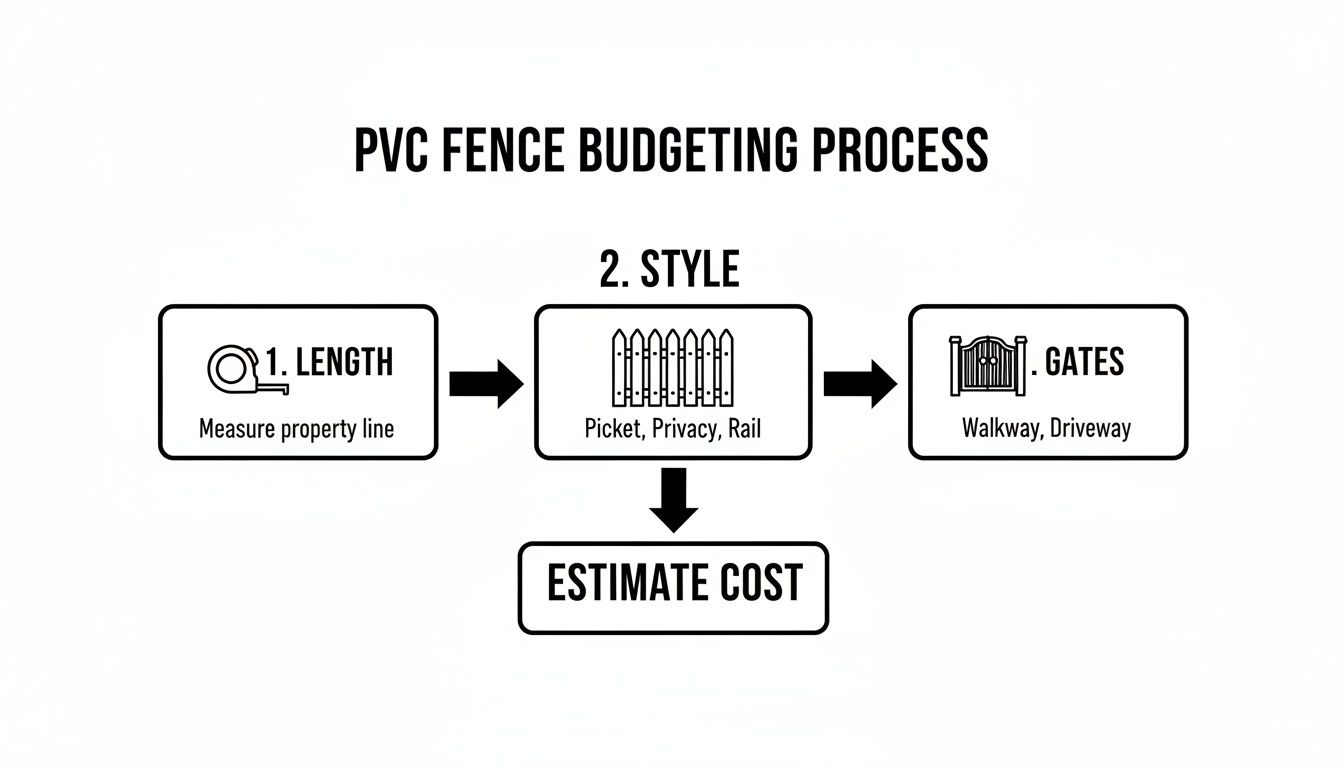
As you can see, the fence's total length, the style you choose, and the number of gates you need are the key ingredients that determine your overall investment.
Understanding Local Connecticut Zoning Rules
Every town in Connecticut has its own set of rules for fences, and these regulations can change dramatically from one town to the next. Trying to understand these codes on your own is often frustrating and confusing. This is where an experienced local fence contractor becomes your most valuable asset.
We have extensive experience with local regulations. Hiring a contractor who knows the details of your specific town—from setback requirements to specific height rules—is the best way to avoid costly mistakes and frustrating delays.
Some of the most common regulations we navigate for homeowners include:
- Height Limits: Most towns cap fence height at 6 feet for backyards and a shorter 4 feet for front yards.
- Setback Rules: You’ll likely need to install your fence a certain distance from property lines, sidewalks, or the road itself.
- Pool Codes: Fences around pools are a different matter. They have incredibly strict safety rules for height, gate latches, and picket spacing. You can learn more about Connecticut's pool fence codes to see just how detailed they are.
- "Finished Side" Rules: Many towns have an aesthetic rule requiring the "finished" or smooth side of the fence to face your neighbors.
A professional team handles all of this for you. When you work with an expert who understands the technical side of a PVC installation and the unique legal landscape of your Connecticut town, you're not just buying a fence—you're making a smart, secure, and hassle-free investment in your home.
You’ve settled on modern PVC for your fence, which is a great choice. But now comes the decision that will truly determine whether your project is a success or a source of future problems: choosing the right team to install it.
You can pick the most beautiful, durable PVC fencing on the market, but if the installation is poor, none of that matters. The quality of the installation is what ensures your fence will look fantastic and, more importantly, withstand everything a harsh Connecticut winter can deliver. A great contractor isn’t just an installer; they're your partner in making sure this investment pays off for decades.
The key is to find a true fencing specialist—not a general handyman who happens to build fences. A specialist is an expert in this work and understands every detail, from dealing with our state's rocky soil to knowing the specific building codes in your town.
Your Contractor Vetting Checklist
Once you start getting estimates, it can be tough to know who to trust. Use this simple checklist to compare companies with confidence. A true professional will have all this information ready for you; if a contractor hesitates, that’s a major red flag.
Here’s what to look for:
- Proper Licensing and Insurance: This is an absolute deal-breaker. Your contractor must have a current Connecticut Home Improvement Contractor (HIC) license, along with full liability insurance and workers' compensation. This protects you, the homeowner, from any financial responsibility if an accident happens on your property.
- A Strong Local Portfolio: Don't just take their word for it; ask to see their work. Specifically, look for examples of modern PVC fences they've installed in your area. Seeing is believing, and a solid portfolio is proof they have real-world experience and a history of successful projects right here in Connecticut.
- Positive Customer Reviews: Check out what other homeowners are saying on platforms like Google. Look for a pattern of high ratings and read the actual reviews. They provide honest insight into what it’s actually like to work with the company—their communication, their professionalism, and the final quality of their work.
- Clear, Detailed Written Estimates: A professional quote is never just a single number on a piece of paper. It should be a clear, itemized document breaking down the costs for materials, labor, gates, and any unique site preparation. This kind of transparency is what prevents unexpected fees later on.
The Specialist vs. The Generalist
It’s very important to understand the difference between a dedicated fence company and a general contractor who offers fencing as one of many services. A fencing specialist is an expert in one trade, and that focus makes all the difference.
A dedicated fence contractor brings specialized knowledge that a generalist simply can't match. They know the exact depth to set posts to get below the frost line in Connecticut's soil, and they are masters at navigating the specific zoning laws of your town.
A generalist might quote you a lower price, but that often comes at a hidden cost. They may not have the right tools, the best supplier connections for quality materials, or the deep expertise needed for a perfect installation. One post not set correctly or a misread setback regulation can lead to an unstable fence, costly repairs, or even a town order to tear it down.
On the other hand, a specialist like Connecticut Fence Works stands behind every single project, ensuring the job is done right from start to finish. Choosing a local, reputable business is the best way to guarantee your new modern PVC fence will not only look incredible but will also perform flawlessly for years to come.
Common Questions About Modern PVC Fencing
When Connecticut homeowners start seriously considering a modern PVC fence, a few questions almost always come up. It's a big decision, so getting clear, honest answers is the only way to move forward with confidence. Here are the things we get asked most often.
How Long Does a PVC Fence Really Last?
This is usually the first question, and for good reason. A high-quality PVC fence, installed correctly, will easily last 20 to 30 years. We’ve seen many go well beyond that. Unlike a wood fence that starts to break down from rot and insects after a few years in Connecticut’s wet climate, PVC is completely resistant to moisture and pests.
Its strength lies in its solid, non-porous design. It's engineered to handle decades of intense sun, heavy snow, and driving rain without failing. You're not just buying a fence; you're investing in a permanent, reliable boundary for your property.
Will the Color Fade or Turn Yellow?
We hear this one a lot, and it’s a valid concern based on older vinyl products. But modern PVC is a completely different material. Today’s best PVC is made with titanium dioxide (TiO2), a powerful UV inhibitor that’s blended right into the material itself.
Think of UV inhibitors as a permanent, high-SPF sunscreen for your fence. This technology reflects harsh sunlight, stopping the yellowing or fading that affected older vinyl products. Your fence holds its true, crisp color for decades.
This built-in protection means your white fence stays bright white, and colors like gray or tan keep their intended shade without looking washed-out or dull over time.
How Do I Clean and Maintain It?
Honestly, this is the best part. Owning a modern PVC fence means you can put away the scrapers, sandpaper, and stain. The upkeep is as simple as it gets.
Most of the time, you don’t have to do a thing. When pollen, dust, or dirt eventually build up, cleaning is a breeze:
- A quick spray with a garden hose is often all it takes.
- For stubborn grime, just use a soft cloth and some mild, soapy water.
- You can even use a pressure washer on a low, gentle setting—just don't use it at full power.
That’s it. A few minutes of light work once or twice a year will keep it looking like it was just installed.
Is PVC Fencing a Safe Choice for Children and Pets?
Absolutely. For families, safety is a top priority, and PVC is one of the safest fencing materials you can choose. It has a few key advantages over wood that parents and pet owners appreciate.
First, PVC is non-toxic and doesn't release any chemicals into your yard. More importantly, it will never splinter. This is a huge relief for anyone with small children or dogs who love to run and play along the fence line. There are no sharp edges, no jagged splinters, and no rusty nails to worry about—just a smooth, strong, and secure barrier.
Ready to see how a beautiful, low-maintenance modern PVC fence can transform your property? The team at Connecticut Fence Works, LLC provides expert guidance and flawless installation services across the state. Get your free, no-obligation estimate today and start planning the perfect fence for your home.