
Hiring a Local Fence Installer in Connecticut
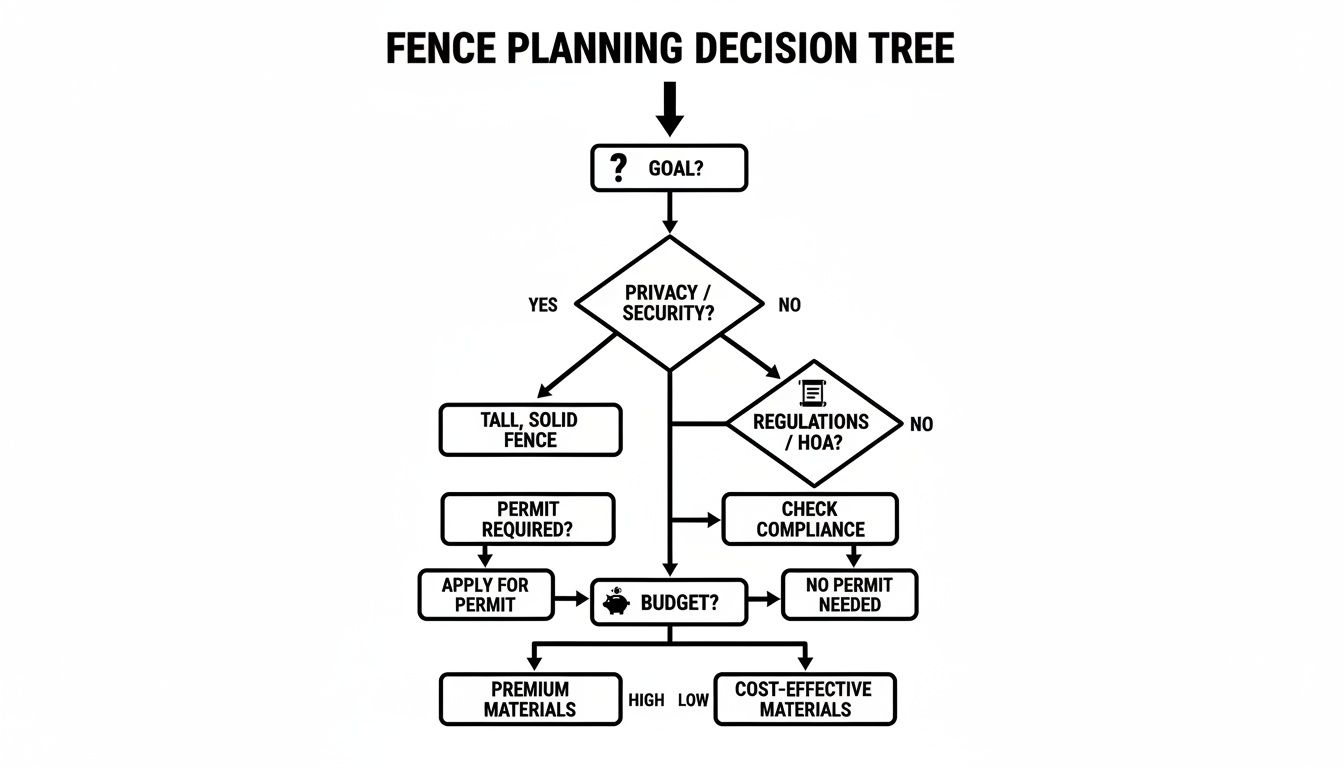
Before you call a local fence installer, the most important work happens at your kitchen table with a notepad and a clear goal. Many homeowners jump straight to getting price quotes without a solid plan. This can lead to a fence that doesn't fit their needs or budget.
Let's walk through how to create a plan so you can hire a contractor with confidence.
Defining Your Fence Project From Idea to Plan
A beautiful, functional fence is the result of careful planning before the first post hole is dug. Figuring out the specifics upfront is the best way to avoid surprise costs, issues with your town, or a finished product that isn’t quite right.
Think of it as creating a blueprint for your fence contractor. When you provide a clear vision, the quotes you receive will be for the exact same project. This makes it much easier to compare them fairly.
Clarify Your Primary Goal
First, ask yourself: what is this fence for? The "why" behind your project will guide your decisions on materials, height, and style.
For example, if your main goal is to keep a new puppy safe in the yard, you'll need a fence with no gaps at the bottom and a secure latch. That's a different project than a low, decorative picket fence meant to improve your home's curb appeal.
Your fence might serve one or several purposes. Are you trying to:
- Create Privacy? Build a backyard retreat where you can relax without feeling watched.
- Enhance Security? Keep children and pets safely on your property.
- Improve Safety? Meet local codes for a barrier around your swimming pool.
- Boost Aesthetics? Add a design element that matches your home's style.
- Define a Boundary? Simply mark where your property ends.
When you know exactly what you want the fence to do, it guides the entire project. This clarity helps a professional installer, like our team at Connecticut Fence Works, LLC, recommend the perfect solution for your home.
Navigate Local Rules and Regulations
Next is the part no one enjoys but everyone must follow: the rules. It's a common and costly mistake to assume you can build any fence you want. Most towns, and especially Homeowners' Associations (HOAs), have specific requirements.
Here in Connecticut, regulations can vary greatly from one town to the next. Across Hartford and Tolland counties, we see all kinds of local rules covering:
- Maximum fence height (which often changes for front, side, and backyards).
- How far your fence must be set back from property lines, sidewalks, or the road.
- Specific materials or styles that are not allowed.
Ignoring these rules can lead to fines or, in a worst-case scenario, being forced to tear the fence down. A good local fence installer will know the local codes and can guide you through the permitting process, saving you a great deal of trouble.
Create a Realistic Budget
Finally, let's talk about money. A common mistake is budgeting only for the cost of the fence panels you see at the store. The true cost of a professionally installed fence includes much more.
A realistic budget should cover materials, professional labor, gates and hardware, any necessary permit fees, and a contingency fund. We recommend setting aside an extra 10-15% for unexpected issues. You never know when you might encounter a buried boulder or challenging ground slope. Having that cushion turns a potential crisis into a small bump in the road.
How to Vet and Choose Your Fence Contractor
You've done your homework, defined your project, and now you have a shortlist of local fence installers. This next step—the vetting process—is where you separate a reliable company from one that might cause headaches and costly repairs.
Choosing a contractor is about more than finding the lowest price. You’re inviting a team onto your property and trusting them with a significant investment. You need to be confident in their skills, professionalism, and integrity. That means digging a little deeper to check their qualifications and asking the right questions.
First, Confirm the Non-Negotiables
Before you schedule a consultation, there are two crucial items you must verify. Here in Connecticut, any contractor working on your home must have a valid Home Improvement Contractor (HIC) license. This is the law, and it exists to protect you.
Just as important is proper insurance. A professional company will carry two key policies:
- General Liability Insurance: This covers your property in the unlikely event of accidental damage during the job.
- Worker’s Compensation Insurance: This protects you from being responsible if a crew member gets injured while working on your property.
Our advice? Do not consider a contractor who cannot or will not promptly show you proof of their HIC license and full insurance coverage. A legitimate business will have this information ready. Any hesitation is a major red flag.
Look for Signs of a Stable, Professional Business
A contractor's public presence can tell you a lot about their stability and how they operate. Do they have a professional website? Do you see positive reviews and photos of their recent work? These are signs of an established company that cares about its reputation. Understanding how a company presents itself online can be helpful; for example, this local SEO playbook for contractors explains how reputable businesses build a trustworthy digital footprint.
You've already put in the work to define your goals, understand the rules, and set a budget. This planning makes the vetting stage more effective.
With that foundation, you’re ready to evaluate contractors. The following checklist is a great tool to use during consultations to compare companies side-by-side.
Contractor Vetting Checklist
| Vetting Step | What to Look For | Red Flags to Watch Out For |
|---|---|---|
| Licensing & Insurance | A valid CT HIC number and certificates of liability and worker's comp insurance. | Hesitation to provide documents; expired licenses; excuses like "We're covered under…". |
| Online Presence & Reviews | A professional website with a portfolio; consistent positive reviews on Google, Yelp, etc. | No website; very few or mostly negative reviews; stock photos instead of real work. |
| Communication Style | Clear, prompt, and professional communication; answers questions thoroughly. | Vague answers; slow to respond; high-pressure sales tactics; pushes for an immediate decision. |
| Experience & Expertise | Detailed knowledge of local codes; specific examples of similar past projects. | Unfamiliarity with your town's rules; generic answers about installation challenges. |
| Materials & Hardware | Specifies high-quality materials and durable hardware (e.g., brand-name latches, heavy-duty hinges). | Uses generic or low-grade materials; avoids talking about the quality of small parts like hardware. |
| Quote & Contract | A detailed, itemized quote; a clear and complete contract. | A vague, one-line price; a "handshake deal" with no written contract; requests for large cash deposits. |
Using a simple checklist like this helps you stay objective and ensures you don’t forget to ask about important details during your meetings.
Ask Insightful Questions During the Consultation
When a potential installer visits your property, it’s your chance to evaluate their expertise and communication style. Move beyond "How much will this cost?" and ask questions that reveal what it’s really like to work with them.
Here are a few I always recommend:
- "Who will be on-site doing the work?" Are they full-time employees or subcontractors? An in-house team usually means better quality control and direct accountability.
- "How do you handle tricky spots, like slopes or large rocks?" An experienced installer will have a clear process for dealing with common New England terrain.
- "Can you tell me about the gate hardware you use?" It seems like a small detail, but their answer shows their commitment to quality. Good hardware prevents sagging and alignment problems for years to come.
Listen carefully to their responses. Are their explanations clear and confident, or do they give you vague answers? A contractor who willingly educates you is a partner who values transparency. To see how we operate, you can read more about the Connecticut Fence Works, LLC team and our owner-operated commitment to our clients.
Comparing Fence Materials and Project Costs
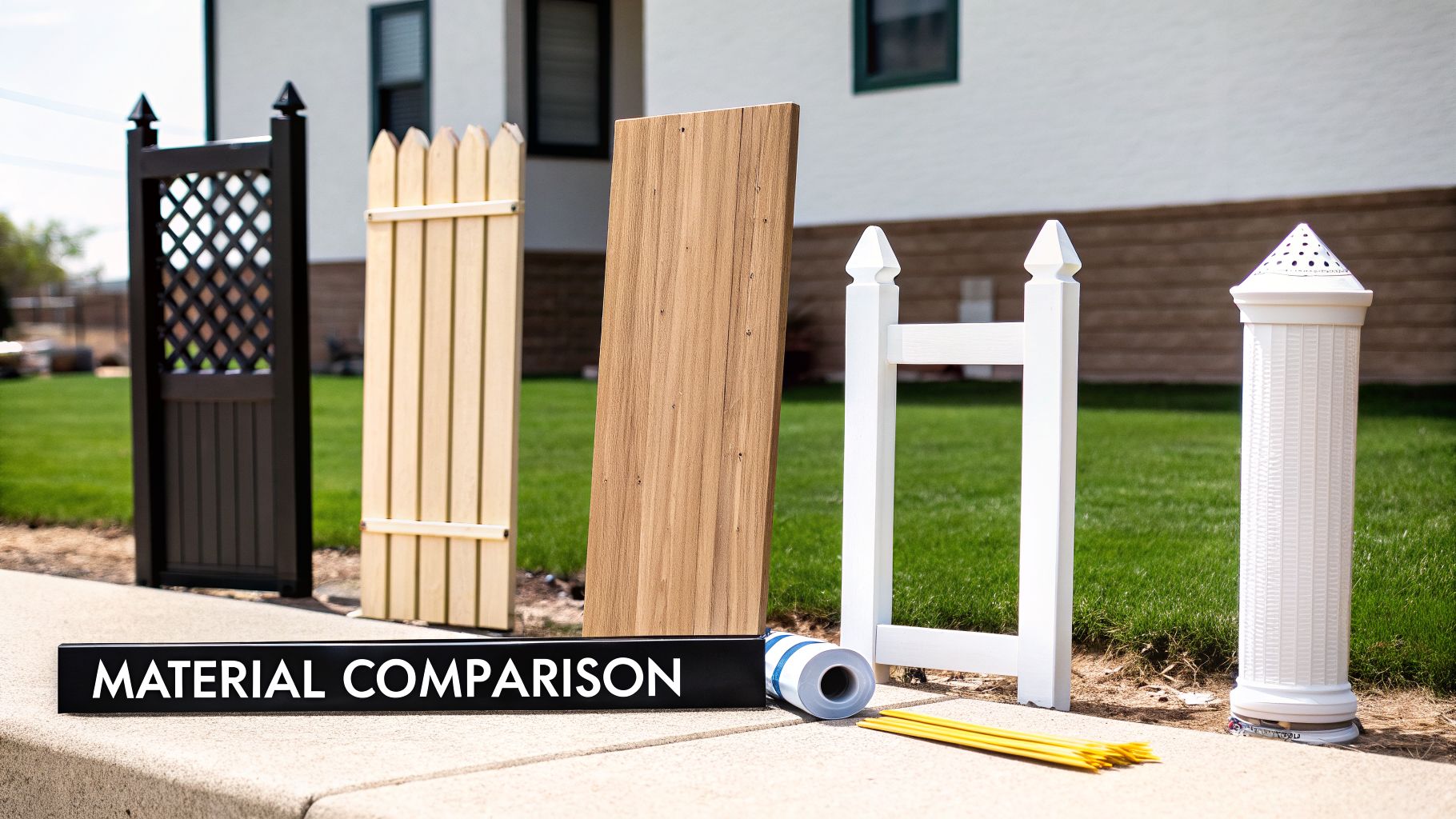
When you invest in a new fence, your choice of material is likely the first thing on your mind. It determines the look, required maintenance, and a large part of the final cost. A good local fence installer will walk you through the pros and cons of each option for your property. Here in Connecticut, a few materials are consistently popular.
A Look at Common Fence Materials
Every material has its own benefits and drawbacks. The right choice depends on your lifestyle and how much maintenance you’re willing to do.
- Vinyl (PVC) Fencing: If you want a "low-maintenance" fence, vinyl is the answer. It never needs to be painted or stained and holds up well in our Connecticut weather. It’s a top pick for privacy and classic picket fences because it provides a clean look that lasts for decades. A quick wash is all it needs to look new again. You can see some popular vinyl fence styles to get a better idea.
- Cedar Wood Fencing: Nothing matches the timeless, natural beauty of real cedar. It naturally resists rot and insects, and its warm colors can enhance a property's character. While it needs to be sealed or stained every few years to maintain its color, many homeowners find the look is worth the effort.
- Ornamental Metal (Aluminum & Steel): For security and class without blocking your view, ornamental metal is an excellent choice. It’s incredibly strong and durable, making it perfect for pool enclosures or defining a property line with elegance. Aluminum is a favorite because it's rust-proof.
- Chain Link Fencing: When practicality and budget are the main concerns, chain link is a great option. It’s all about function, making it ideal for securing large yards, keeping pets contained, or for commercial properties where you need security without blocking visibility.
Understanding the Factors That Influence Final Cost
The material cost is just one part of your quote. A professional estimate will always include several other factors that can impact the final price.
For example, two properties can have the exact same length to be fenced, but the installation cost can be very different. One might be flat and clear, while the other is sloped, rocky, and full of trees.
Any trustworthy local fence installer will give you a transparent, itemized quote. You shouldn't just get a single number. You deserve a detailed breakdown showing where every dollar is going—from materials and labor to gates and specific site prep.
Here are the key factors that will influence your project's cost:
- Total Linear Footage: This is the most significant factor. The total length of the fence is the primary driver of your material and labor costs.
- Fence Height: Taller fences cost more. A 6-foot privacy fence requires more material and stronger posts than a 4-foot picket fence.
- Property Terrain: A flat, open yard is the easiest to work on. A project with steep slopes, dense trees, or rocky soil requires more labor and specialized equipment, which adds to the cost.
- Number and Style of Gates: Every gate is an additional cost. A simple walk-through gate is one price, but a wider driveway gate or one with an automatic opener will add more to the total.
- Old Fence Removal: If you have an old fence that needs to be torn down and hauled away, that service will appear as a separate line item on your quote.
The demand for high-quality, professionally installed fences is growing. The global fencing market is expected to reach USD 54.98 billion by 2031, with much of that growth driven by low-maintenance materials like vinyl. This trend shows how important it is to work with a skilled installer who knows their trade. You can read more about the global fencing market trends to see how the industry is evolving.
The Installation Process: What to Expect
You’ve picked your installer and signed the contract. It might feel like the hard part is over, but knowing what happens next can make the project go smoothly. This is where a true professional’s process stands out.
The first step should be a final review of the contract. This isn’t just a formality; it’s the official plan for your entire project.
Make sure it clearly states the scope of work, all materials being used, the payment schedule, and an estimated timeline. A solid contract protects everyone and ensures there are no surprises once work begins.
Getting Ready: The Pre-Installation Checklist
Before the installation team arrives, some important work must happen behind the scenes. The most critical task is getting public utility lines marked. Your contractor will handle this by contacting the state's "Call 811" service.
In a few days, you’ll see colorful flags or spray paint on your lawn. Don’t worry, it’s temporary. These markings show the location of underground lines for:
- Electricity
- Natural gas
- Water and sewer
- Communications (like cable and internet)
This is a required safety measure. Hitting a utility line is dangerous and can lead to expensive repairs and outages, so any reputable installer will insist on it.
A Pro Tip: The 811 service only marks public utilities. If you have any private lines—for a sprinkler system, landscape lighting, or an invisible dog fence—you must point them out to your contractor. We've seen these get damaged, and it's an easily avoidable problem.
You'll also want to clear the work area. Move any personal items like patio furniture, grills, or kids' toys away from the fence line. Giving the crew a clear space helps them work safely and efficiently. To get a better feel for the whole process, you can see how we handle residential fence projects.
On Installation Day
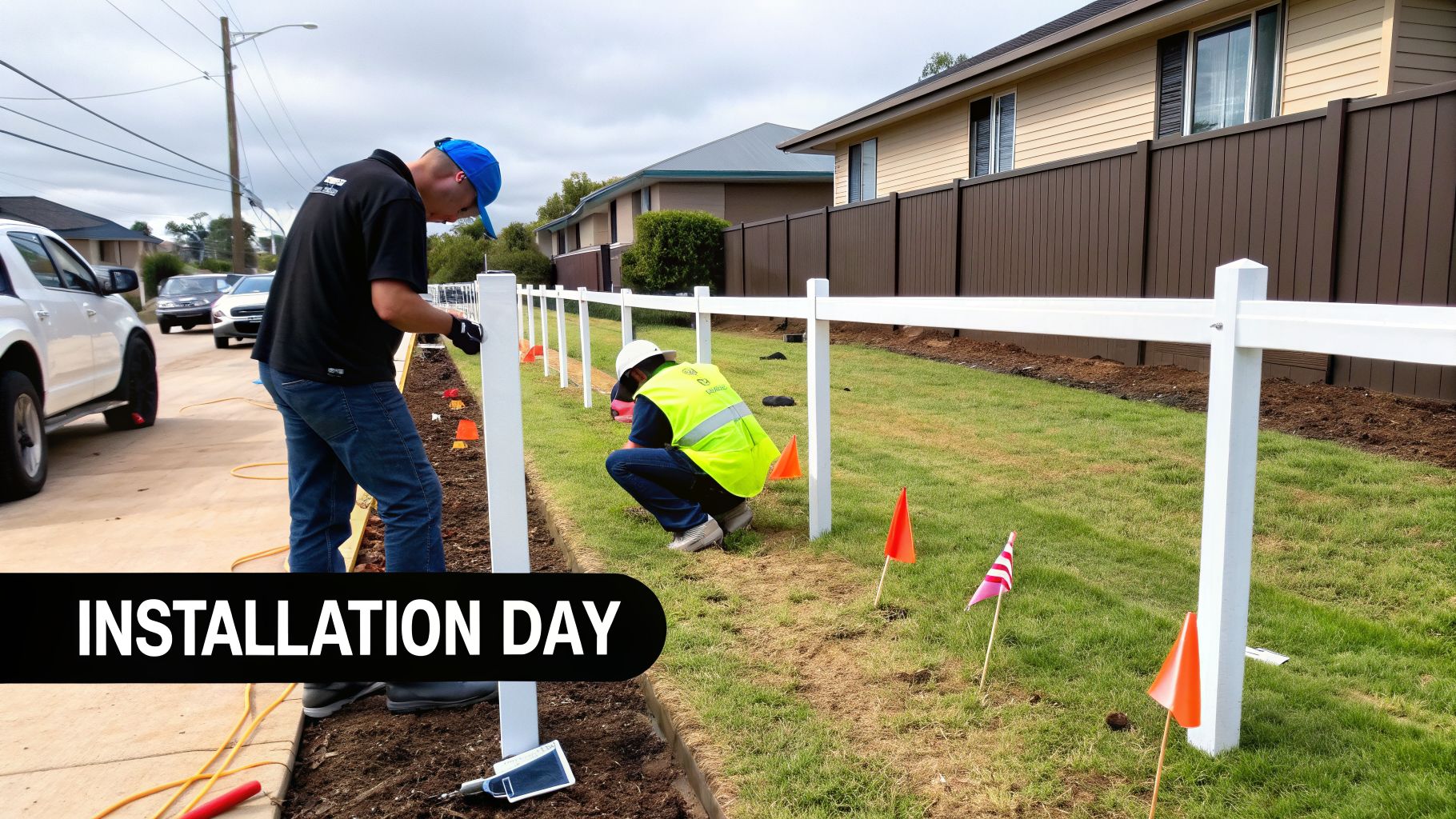
When the day arrives, a professional crew will show up on time and ready to work. A key sign of a great local fence installer is clear communication. The crew leader should walk the property with you, confirm the fence layout one last time, and answer any questions before they dig the first post hole.
As the team works, you should expect them to keep the job site reasonably tidy. Construction can be messy, but a good crew will keep their tools organized and be mindful of your landscaping. This respect for your home is a sign of their professionalism.
When you hire a fence company, you’re working with a large and established industry. In the United States, fence construction includes over 315,000 businesses, which shows how many people rely on this service. You can read the full research about the fence construction industry to get a sense of its scale. Choosing a quality installer means you’re getting a partner with real-world expertise.
The Long-Term Value of a Professional Installation
We've all seen a DIY fence project go wrong—the one that starts leaning after one winter or has a gate that never closes properly. It's tempting to save money and do it yourself, but a fence is a structural addition to your property. Investing in a professional installation is the best way to ensure your fence looks great and lasts for decades.
The real difference is what happens below the ground. When a local fence installer sets your posts, they are engineering a foundation. This means digging below the frost line so the ground's freezing and thawing won't push the posts up, setting each one perfectly straight, and securing them with the right amount of concrete. That foundation is what keeps your fence line straight and strong, year after year.
The Professional Difference in Details and Durability
There’s another important detail many people overlook: the manufacturer's warranty. Most high-quality fencing materials, especially vinyl and aluminum, come with impressive warranties. However, these warranties often require the fence to be installed according to the manufacturer's exact instructions. A simple mistake—like using the wrong screws or spacing posts too far apart—can void your coverage completely.
An experienced crew is also prepared for challenges that can ruin a weekend project. I've seen it all:
- Challenging Terrain: A pro knows how to build a fence along a steep slope, ensuring it follows the landscape smoothly.
- Pool Safety Codes: They are familiar with the strict local codes for pool fencing, from gate latch heights to the spacing between pickets. This is about safety and liability, not just looks.
- Precision and Finish: A professional’s work is clean. The cuts are precise, the caps are secure, and the gates swing smoothly. It’s that polished quality that separates an expert job from an amateur one.
The market shows this reality. In 2021, contractor-installed fencing was a USD 21,620.8 million market, and that number is expected to grow. This trend shows that homeowners overwhelmingly recognize the value of paying for expertise. You can see more data on the fencing industry's economic impact to understand just how significant professional work is.
In the end, hiring a pro is about buying peace of mind. You get a fence that's built right the first time—one that's beautiful, durable, and adds real value to your property, without the headaches and hidden costs of a DIY attempt gone wrong.
Common Questions We Hear From Homeowners
Once you decide to move forward with a new fence, it’s normal to have a few questions. It's a big project, and you want to be sure you're making the right decisions. Here are some of the questions we hear most often, with straightforward answers from our years of experience.
How Long Will My Fence Installation Actually Take?
This is usually the first question people ask. For a typical residential fence, a professional crew can often complete the job in just 1 to 3 days.
Of course, that timeline can change. A very long fence, a yard with steep slopes, or tough digging conditions (like the rocky soil we have in Connecticut) can add time. The material you choose also matters. A seasoned local fence installer will review your property and give you a clear, realistic schedule before work begins.
What’s the Deal With Fence Permits?
The short answer is, it depends on your town. There is no single statewide rule, so whether you need a permit depends on local laws and your specific fence.
In many Connecticut towns, a permit is required for any fence over a certain height (often six feet) or for fences in a front yard. If you're fencing a pool, you can expect strict permit and code requirements.
This is where hiring a true local expert pays off. A contractor who works in your area every day knows the rules for each town. They can handle the entire permitting process for you, saving you headaches and making sure the project is done correctly.
What If Someone Hits a Utility Line?
This is a valid concern, but professional installers take this risk very seriously and know how to prevent it. Before any digging begins, your contractor is legally required to contact Call 811. This service marks all public utility lines—gas, water, electric—so the crew knows exactly where they are.
However, it's important to remember that 811 does not mark private lines. This includes things like:
- Underground sprinkler systems
- Invisible dog fences
- Wiring for landscape lighting
- Power lines running to a detached garage or shed
It is your responsibility to point out any of these private lines to your installation team. This is another major reason why you should only hire a fully insured contractor; their liability coverage is your safety net for any unexpected issues.
How Much Maintenance Will My New Fence Need?
The long-term upkeep of your fence depends almost entirely on the material you choose. This is something you should consider when making your decision.
- Low-Maintenance Options: Vinyl and aluminum are the easiest to own. A simple wash with soap and water is all they need to look great.
- Natural Wood: A classic cedar fence has unmatched beauty but requires more care. To prevent it from weathering and to preserve its color, you’ll want to stain or seal it every few years.
Your installer should always give you specific care instructions for your new fence based on the material and our local climate. Following their advice will keep your investment looking beautiful and standing strong for decades.
Ready to talk about your specific project? The team at Connecticut Fence Works, LLC believes in clear communication and expert advice from the first phone call to the final walkthrough. Get your free, no-obligation estimate today.