
How Much Do Picket Fences Cost: A 2026 Guide to Materials and Labor
If you're picturing a timeless picket fence framing your Connecticut yard, your first question is likely: "What's this actually going to cost me?" Let's get right to it. On average, a professionally installed picket fence costs anywhere from $16 to $80 per linear foot. For a typical residential yard, that puts the total project cost somewhere between $3,200 and $16,000.
Your Picket Fence Cost in 2026: A Quick Overview
Before we explore the specific details that can influence your final price, it helps to have a general cost estimate in mind. Think of this as the starting point for building a realistic budget. It helps you know what to expect and plan your project with confidence.
Ultimately, your final price comes down to two key things: the fencing material you choose and the labor needed for a proper installation. The significant difference between that $16 and $80 per foot price range comes from the variety of options within those two categories.
Understanding the Basic Cost Structure
Let's imagine you're looking to fence a yard in Berlin, Connecticut—a fairly standard layout with straight lines and a simple, classic picket design. Based on our experience, the materials alone will likely cost between $6 and $50 per linear foot. Professional installation, which includes everything from setting posts to cleanup, typically adds another $10 to $30 per linear foot to that amount.
For a 200-linear-foot project—a common size for an average backyard in Hartford County—your total investment could be as low as $3,200 for a basic setup or climb upwards of $16,000 for a premium, custom job. The national average tends to be around $9,600. You can see how these numbers are calculated by checking out cost guides from various home improvement experts.
The most important thing to remember is this: your choice of material (like cedar vs. vinyl) and the complexity of your property (like hills or existing obstacles) will have the biggest impact on where your project lands in that price range.
A Quick Look at Project Estimates
To put these numbers into perspective, let's look at what a standard 200-foot project might cost. The table below gives you a snapshot of potential budgets, from a basic installation to a top-of-the-line fence. This is a great way to start framing your own budget.
Estimated Picket Fence Cost for a 200-Foot Project in 2026
Here’s a quick look at potential total costs for a standard 200-linear-foot picket fence, showing low, average, and high-end estimates.
| Cost Tier | Material Type | Estimated Total Cost (Materials & Labor) |
|---|---|---|
| Low-End | Basic Treated Wood | $3,200 – $6,000 |
| Average | Quality Cedar or Standard Vinyl | $6,000 – $11,000 |
| High-End | Premium Vinyl or Custom Wood | $11,000 – $16,000+ |
This table makes it easy to see how your choices affect the bottom line. In the sections ahead, we’ll break down exactly what goes into these figures, from the real-world price of cedar versus vinyl to the labor factors that are specific to Middlesex, New Haven, and our other local Connecticut service areas.
Decoding Material Costs: Wood vs. Vinyl Fences
When you're trying to determine the cost of a new picket fence, the first question to answer is what material you want. This single decision sets the stage for everything else, influencing not just your upfront cost but also how much time and money you’ll spend on maintenance in the future.
It's similar to choosing a car. One might have a lower initial price, but the other could save you money in upkeep over its lifetime. For picket fences, the two main choices are traditional wood and modern vinyl. Each has its own benefits and drawbacks, and understanding them is the key to picking a fence that fits your home and your lifestyle.
The Timeless Appeal of Wood Fences
Wood is the original material for picket fences and brings a classic, natural warmth to any home. When we build with wood, we typically recommend cedar for its natural resistance to rot and insects, though pressure-treated pine is a solid, more budget-friendly alternative.
One of the biggest draws to wood is its lower initial material cost. On average, you can expect wood fencing materials to cost from $6 to $25 per linear foot. This often makes it the preferred choice for homeowners who want to keep their initial investment as low as possible.
However, wood requires maintenance. A wood fence must withstand Connecticut's tough weather, from humid summers to icy winters. To do so, it needs to be sealed, stained, or painted every 3 to 5 years. Without this regular care, wood will eventually rot, warp, or become damaged by insects, leading to costly repairs and a shorter lifespan. For a deeper look into wood choices, a resource like A Builder's Guide to 1×6 Fence Boards can offer some great technical insights.
The Modern Convenience of Vinyl Fences
In recent years, vinyl fencing has become very popular, and for good reason: it’s durable and requires very little maintenance. It can be thought of as a "set it and forget it" fence. It beautifully mimics the clean look of painted wood but is made from a tough PVC material designed to last a long time.
The main advantage of vinyl is its minimal upkeep. It will never rot, warp, or splinter, and you'll never have to paint it. All it needs is a simple wash with soap and water to look new again. This convenience comes with a higher upfront price, with vinyl materials typically costing between $15 to $50 per linear foot.
While you’ll pay more for vinyl initially, many homeowners find it’s actually more cost-effective over time. When you factor in the recurring cost of painting or staining a wood fence—which can easily be several hundred dollars each time—the lifetime cost of vinyl often comes out lower.
The chart below provides a general overview of typical total project costs, showing how factors like material choice can affect the final price.
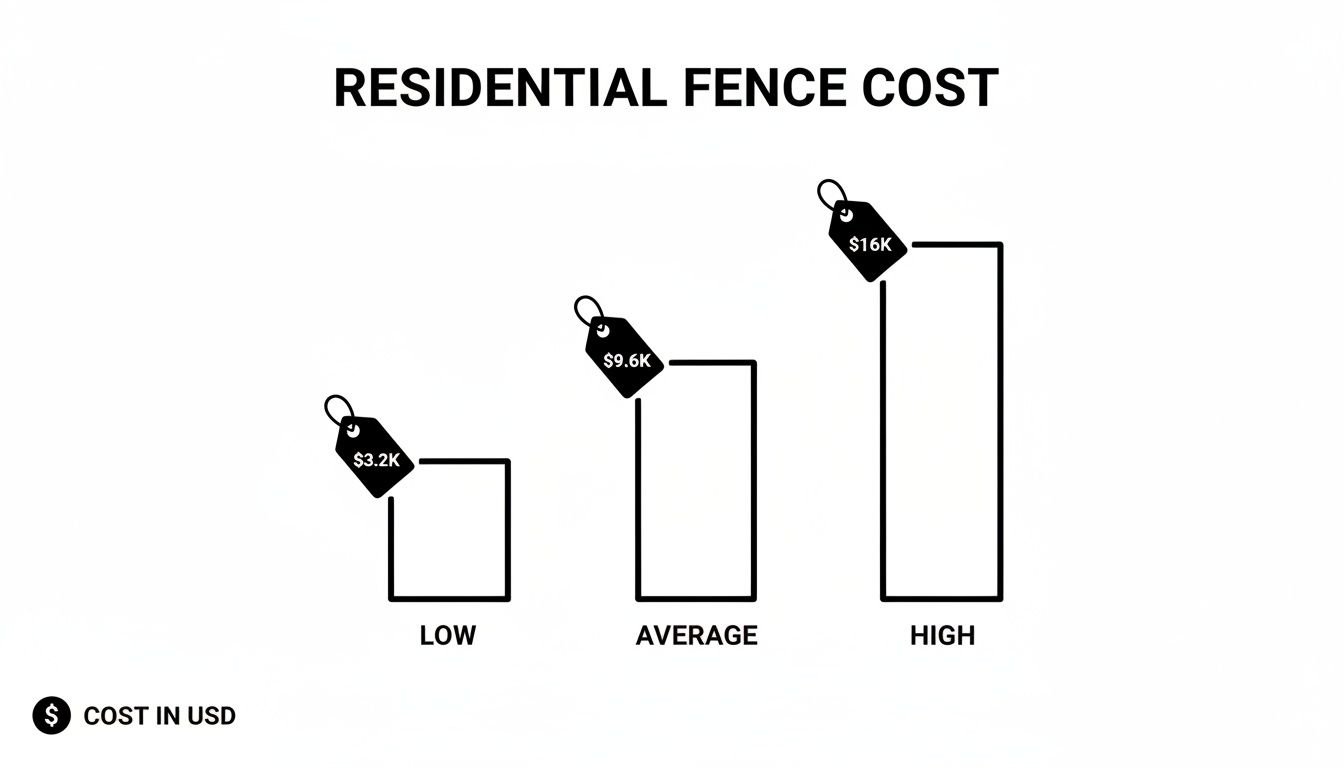
As you can see, a project can be quite affordable, but the average and high-end estimates often reflect premium materials like high-grade vinyl or custom wood designs. If the natural beauty of wood still appeals to you, it's worth exploring the best options. You can learn more about the unique qualities and lasting value of Connecticut Fence Works' cedar fencing solutions to see if it’s the right investment for your property.
Understanding Fence Installation and Labor Costs
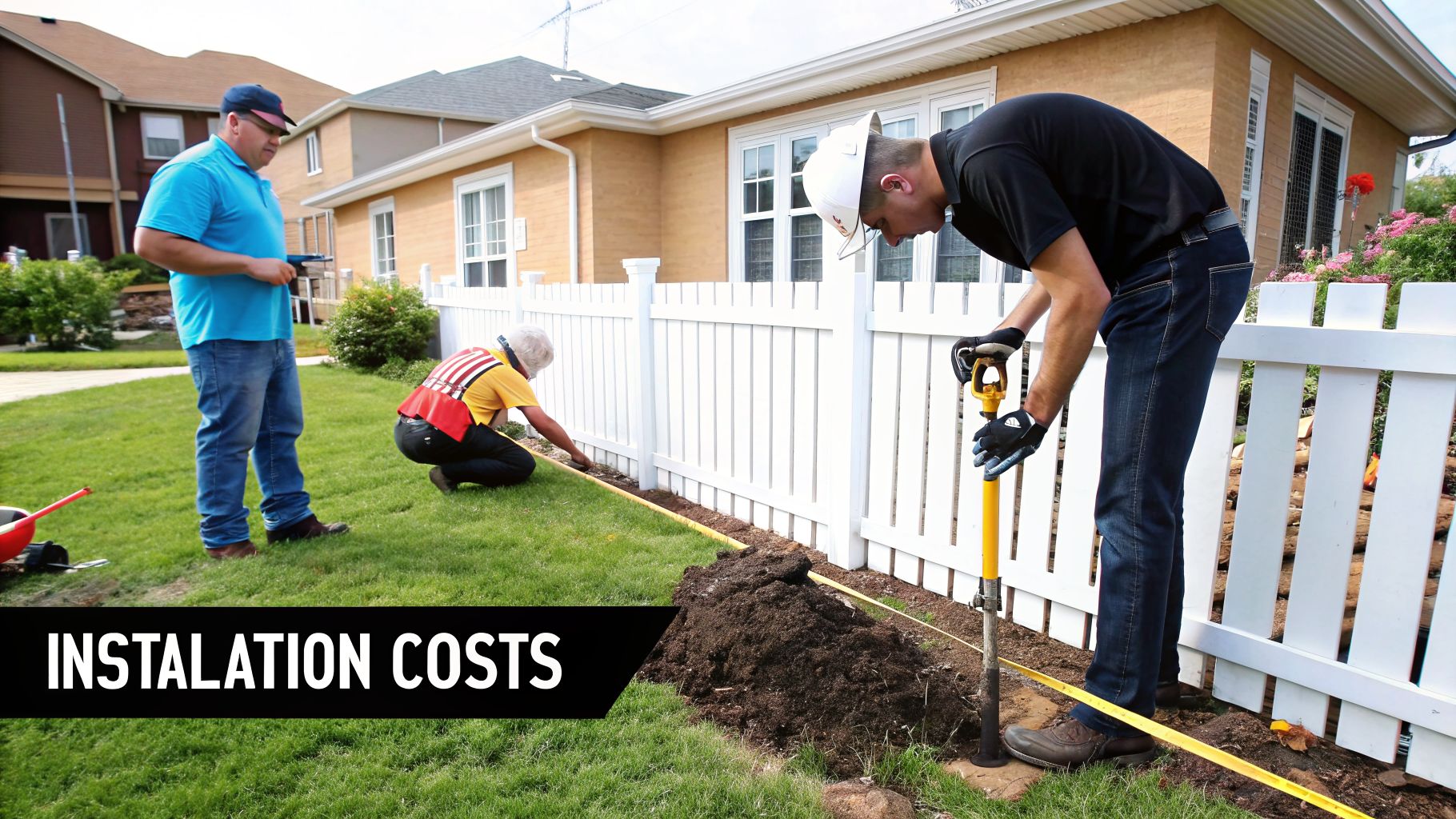
A great picket fence involves more than just the fence panels. Turning a pile of materials into a straight, sturdy fence that will last for decades depends on the quality of the installation.
The quality of the installation is what makes or breaks a fence project. This is why professional labor costs, which typically range from $10 to $30 per linear foot, are a critical part of your budget. It's an investment in expertise, specialized equipment, and the peace of mind that comes from a job done right the first time.
So, what are you really getting for that price? Let's break down what a professional crew handles.
What's Included in a Standard Installation
When you get a quote for labor, you're not just paying for a few hours of work. You're paying for a complete process that ensures a perfect result with no hassle for you.
A typical installation from our team covers:
- Site Preparation and Layout: We start by precisely marking the fence line based on your property survey. Getting this step perfect is the foundation for a flawless finish.
- Digging Post Holes: Using professional-grade tools, we dig perfectly spaced holes to the proper depth. This is crucial for creating a stable base that can withstand Connecticut's weather.
- Setting Posts in Concrete: This is the most important part of the job. Every single post is set in concrete and made perfectly vertical. A well-set post means no leaning or sagging down the road.
- Assembling the Fence: After the concrete has cured, we carefully attach the fence panels or pickets, ensuring consistent spacing and clean lines before hanging and adjusting any gates.
The real value of professional labor lies in the details you don't see. It's the knowledge of how deep to dig post holes for Connecticut's frost line, the right way to brace a gate so it never sags, and the efficiency that comes from years of experience.
Factors That Drive Up Labor Costs
Every backyard is different, which makes a "one-size-fits-all" estimate unreliable. A flat, clear yard in New Haven County is a straightforward job. A sloped, rocky property in Tolland County is a completely different challenge.
This is why an on-site evaluation is essential. It's the only way for us to identify the unique challenges of your property that will affect the final price.
Common issues that add to the labor cost include:
- Difficult Terrain: Connecticut is known for its rocky soil. If we encounter large rocks or ledge while digging, it requires special equipment and more time than digging through soft dirt.
- Slopes and Hills: Installing a fence on a grade is more complex. We must either "step" the fence panels down the hill or "rack" them to follow the ground's contour. Both techniques require extra time and skill.
- Site Clearing: If the fence line is overgrown with thick brush, roots, or small trees, our crew needs a clear path to work. Clearing these obstacles will add labor hours to the project.
- Old Fence Removal: If you have an old fence that needs to be removed, we can handle the demolition and disposal. The cost for this depends on the size and type of the existing fence.
While the temptation to install a fence yourself to save on labor is understandable, a professional crew brings experience that prevents costly errors. Understanding the specific needs of your chosen material, like the installation requirements for a low-maintenance vinyl fence, highlights the value that a seasoned team provides.
Budgeting for Hidden Costs and Extra Features
When working out the cost of a new picket fence, it’s natural to focus on the price per foot for materials and labor. However, the final invoice is often more than just that simple calculation. A realistic budget accounts for the details and finishing touches that truly complete the project.
Think of it like buying a car. The base model has one price, but the features you actually want—the ones that make it your car—determine the final cost. Let's break down the common additions and requirements that can sometimes surprise homeowners.
Gates, Gates, and More Gates
A fence isn't very useful if you can't get through it, which is why nearly every project needs at least one gate. Because gates are more complex to build and install than a standard fence panel, they have their own associated costs.
Several factors influence a gate's final price:
- Width: A simple 3-foot or 4-foot walkway gate will always be more affordable than a wide 10-foot or 12-foot double gate designed for a vehicle or lawn tractor.
- Style: Do you want a gate that perfectly matches your fence, or something more decorative? A custom arch or special inserts will cost more.
- Hardware: The cost for hinges, latches, and locks can vary. A basic latch is simple and effective, but a premium self-closing, lockable latch adds security and convenience at a higher price.
On average, you can expect a standard picket fence gate to add anywhere from $300 to $900 or more to your project, depending on these choices.
Navigating Local Building Permits
This is an expense many homeowners forget to include in their budget. Most Connecticut towns require a building permit for any new fence installation. This ensures your fence is built safely, is on your property, and meets local zoning rules for height and placement.
In our service areas across Hartford, New London, and Middlesex counties, permit fees can vary significantly from one town to the next. It's wise to budget between $100 and $500 for the permit itself.
An experienced contractor like Connecticut Fence Works knows the local codes and will handle the entire permitting process for you. This saves you time and potential headaches, ensuring everything is filed correctly so you don't risk fines or being forced to move the fence later.
The Final Touches
Finally, let's talk about the small details that give your fence a polished, professional look. These items might seem minor, but they can add up and make a big difference in both the final appearance and long-term durability.
- Decorative Post Caps: While a simple flat cap does the job, you can upgrade to more elegant styles like ball tops or pyramid caps. These can add $5 to $30 per post but provide a custom, finished look.
- Painting or Staining: If you choose a beautiful natural wood fence, it needs to be sealed to protect it from the weather. Be sure to account for the cost of materials and labor for this crucial finishing step.
- Minor Land Grading: A professional installation requires a straight and level fence line. If your yard has some bumps and dips, some minor grading might be necessary to achieve a clean result. This is usually a small charge but is essential for a high-quality job.
Local Connecticut Picket Fence Project Examples
Seeing numbers on a page is one thing, but it's much easier to budget when you can see how those costs apply to a real job. Let's walk through three common project types we see across Connecticut. These examples give you a sense of how different materials, property challenges, and goals all factor into the final price.
Scenario 1: The Suburban Curb Appeal Project in Hartford County
Imagine a classic colonial home in West Hartford. The homeowners want to frame their front yard and boost their curb appeal with a timeless picket fence. Their goal is purely aesthetic; they aren't looking for security or privacy, just that picture-perfect finishing touch.
The job calls for 150 linear feet of a 4-foot-tall picket fence.
They have chosen vinyl, which is a smart choice for anyone who wants the crisp, clean look of painted wood without the constant upkeep. They get that classic white fence, but they don't have to worry about rot, insects, or spending weekends painting every few years.
Here’s a realistic look at how the estimate would shape up:
Project Details:
- Location: West Hartford, CT (Hartford County)
- Fence Length: 150 linear feet
- Material: 4-foot scalloped-top white vinyl picket fence
- Add-ons: One 4-foot wide matching walkway gate with self-closing hinges
Estimated Cost Breakdown:
| Item | Description | Estimated Cost |
|---|---|---|
| Materials | 150 ft. of premium vinyl fencing & posts | $5,250 |
| Labor | Professional installation, post setting & cleanup | $3,750 |
| Gate | 4-foot vinyl gate with hardware | $650 |
| Permit | Town of West Hartford building permit | $200 |
| Total Estimated Cost | $9,850 |
This investment gets them a durable, maintenance-free fence that will look fantastic for decades. It's a perfect example of a standard suburban enhancement project.
Scenario 2: The Rustic Cedar Fence in Litchfield County
Now, let's head to a more rural part of Litchfield County. Here, a homeowner with a larger property wants something that blends naturally with the wooded surroundings while keeping their two golden retrievers safely in the backyard. The priorities are a rustic appearance and solid, practical function.
They're looking at 250 linear feet of a 4-foot-tall cedar picket fence.
Project Details:
- Location: Rural Litchfield County, CT
- Fence Length: 250 linear feet
- Material: 4-foot natural cedar picket fence with dog-ear pickets
- Add-ons: One 4-foot walkway gate and one 10-foot double gate for mower access
Estimated Cost Breakdown:
| Item | Description | Estimated Cost |
|---|---|---|
| Materials | 250 ft. of cedar picket fencing & posts | $6,250 |
| Labor | Installation on slightly sloped, rocky terrain | $6,000 |
| Gates | One 4-ft gate and one 10-ft double gate | $1,200 |
| Permit | Local town building permit | $150 |
| Future Cost | Staining/Sealing (not included in install) | $1,500 – $2,500 |
| Total Estimated Cost | $13,600 |
You’ll notice the labor cost is higher here. That's a direct result of working in Litchfield County's rocky soil and navigating a sloped yard, which takes more time and effort. The warm, natural look of cedar is exactly what they wanted, making the investment worthwhile. Seeing different fence styles can spark ideas, so feel free to browse through our Connecticut Fence Works project gallery for inspiration.
Scenario 3: The Historic District Accent in New Haven County
Our last example is a much smaller but more detailed project on a historic home near downtown New Haven. The owner needs to replace a failing front fence section that’s only 50 linear feet long. Because the house is in a historic district, the design needs to pass a review and match the neighborhood's classic character.
A custom-milled wood fence is the only way to meet those strict aesthetic requirements.
Project Details:
- Location: New Haven, CT (New Haven County)
- Fence Length: 50 linear feet
- Material: 4-foot custom-cut wood picket fence
- Add-ons: Removal of old fence and one custom 3-foot gate
Estimated Cost Breakdown:
| Item | Description | Estimated Cost |
|---|---|---|
| Materials | 50 ft. of custom wood fencing | $2,000 |
| Labor | Detailed installation and old fence disposal | $2,250 |
| Gate | Custom-built 3-foot wood gate | $800 |
| Permit | City of New Haven permit & historic review fee | $350 |
| Total Estimated Cost | $5,400 |
Even for a small fence, the cost-per-foot is quite high on this job. That’s driven by the custom fabrication, the labor for removing and disposing of the old fence, and the extra administrative work and fees associated with working in a designated historic district.
Smart Ways to Save on Your New Picket Fence
Getting that classic picket fence look doesn't have to break the bank. With a bit of strategic planning, you can get a beautiful, long-lasting fence that fits your budget. This isn't about cutting corners on quality; it's about making smart decisions that provide the most value for your investment.
Thinking ahead about a few key details can make a surprising difference in the final cost. From when you schedule the work to the style you choose, a few small adjustments can lead to significant savings.
Choose Your Timing Wisely
Here’s an insider tip from the fencing industry: we have a busy season. In spring and summer, everyone is thinking about their yards, and demand for our services is high. That high demand means schedules are tight and prices are at their peak.
You can use this to your advantage. By scheduling your fence installation for the off-season—late fall or winter—you’ll often find that we have more flexibility and may offer better pricing. As long as the ground isn’t frozen solid, our professional crews can install a fence any time of year.
A key takeaway is to plan ahead. Contacting a contractor in the late fall to schedule a winter project can often lead to savings of 5-15% on labor costs, simply because you're avoiding the spring rush.
Simplify Your Fence Design
That stunning, custom-scalloped fence you saw online is certainly eye-catching, but those intricate details come with a higher price tag. The more complex a design is—with custom-cut picket tops, elaborate post caps, or mixed materials—the more time and skill it takes to build, which is reflected in the labor cost.
Choosing a simpler, more traditional style can significantly lower your expenses without sacrificing that timeless curb appeal.
- Standard Styles: A classic straight-top or dog-ear picket fence is almost always more budget-friendly than a fancier scalloped or gothic-top design.
- Prefabricated Panels: In many situations, using pre-assembled fence panels is a great way to speed up the installation. Building a fence picket-by-picket on-site takes longer, which increases labor costs.
This is a perfect topic to discuss with your contractor. We can often suggest a more cost-effective design that still gives you the exact look and feel you're going for.
Think Long-Term with Your Material Choice
It’s easy to focus on the upfront price, and a traditional wood fence often appears to be the cheapest option. However, it's crucial to think about the total cost of owning the fence over its entire life. A wood fence needs to be painted or stained every few years to prevent rot, which means you're repeatedly paying for materials and labor (or your own time).
Vinyl, while costing more initially, is a completely different story. It requires virtually no maintenance beyond a simple wash now and then. When you add up what you save on painting, staining, and repairs over the 20-30 year lifespan of the fence, vinyl often ends up being the more economical choice in the long run.
Prepare the Fence Line Yourself
One of the variable costs in any project estimate is the condition of the job site. If your proposed fence line is covered in thick brush, has low-hanging tree limbs, or is cluttered with other obstacles, our crew has to spend time clearing it before they can start digging post holes. That preparation time is billed as labor.
If you’re able and willing to do a little yard work, you can save on that cost. Just be sure to talk with your contractor beforehand to know exactly what needs to be cleared. Simply trimming back bushes and clearing debris from a 2-3 foot wide path along the fence line can easily reduce the final labor bill by a few hundred dollars.
Your Picket Fence Questions, Answered
Thinking about a new picket fence? You probably have some questions, especially about the cost and what to expect during installation. We get these questions all the time from homeowners, so we've put together some straightforward answers to help you plan your project.
How Long Will A Wood Picket Fence Last Compared To A Vinyl One?
This really comes down to a choice between traditional appearance and modern convenience.
A beautiful cedar wood fence, when properly maintained, can easily last a solid 15-20 years. The key is "properly maintained"—you’ll need to re-stain or paint it every 3-5 years to protect it from New England weather and prevent rot.
On the other hand, if you're looking for something you can essentially set and forget, vinyl is the best choice. A quality vinyl fence will last 20-30 years, sometimes even longer, with nothing more than a simple wash now and then. While the initial cost is higher, many people find it pays for itself over the years in savings on paint, stain, and weekend labor.
Does The Height Of The Picket Fence Significantly Affect The Cost?
Yes, it does. Fence height is one of the biggest factors that determines your final cost. The classic 4-foot picket fence is by far the most popular and budget-friendly choice for defining a front yard or garden.
Once you go taller, to 5 or 6 feet, the price increases. It’s not just about the extra material for the pickets and rails. Taller fences need stronger, longer posts set deeper in more concrete to remain stable against the wind. That adds to both the material cost and the installation time.
How Long Does A Typical Picket Fence Installation Take?
For a typical backyard project—around 150-200 feet of fencing—our professional crew can usually complete the job in 2 to 4 days. We don't rush the process because attention to detail is what makes a fence last.
Here’s what that timeline generally looks like:
- Day 1: The crew arrives to lay out the fence line and carefully set all the posts in concrete. This is the foundation of the whole project.
- Curing Time: We then let the concrete cure for at least a day. This step is absolutely critical for ensuring a strong, stable fence that won't sag or lean.
- Day 2-4: Once the posts are solid, we return to install the fence panels, hang the gates, and handle all the final adjustments and cleanup.
Keep in mind that factors like encountering a lot of rock during digging, bad weather, or having to remove an old, stubborn fence can add more time to the job.
Are There Financing Options For A New Fence?
Absolutely. We understand that a new fence is a significant investment in your home. That's why reputable installers, including us at Connecticut Fence Works, offer financing plans.
This allows you to get the durable, beautiful fence you really want now and spread the cost over manageable monthly payments instead of dealing with one large upfront expense. Just ask us about the financing options available during your free consultation.
Ready to get a clear, no-obligation estimate for your own picket fence project? The team at Connecticut Fence Works, LLC provides expert guidance and transparent pricing to homeowners across Hartford, New Haven, and surrounding counties. Request your free estimate today!