
A Homeowner’s Guide to High Quality Fences
A great fence does more than just mark a property line—it's a lasting investment in your home's security, privacy, and curb appeal. But while it's easy to assume a higher price tag means a better fence, true quality is actually a combination of the right materials, skilled construction, and solid installation.
Let's break down what really separates a fence that just looks good for a season from one that stands strong for decades.
What Separates a Good Fence From a Great One
Think of your new fence as a permanent part of your home, not just a temporary barrier. A truly great fence is built from the ground up to withstand everything the unpredictable Connecticut weather throws at it, from coastal salt spray to heavy snow and ice.
When you invest in quality upfront, you avoid the headaches that come with lesser installations—the sagging gates, leaning posts, and early rust that can turn a new fence into an eyesore in just a few years. It’s about the peace of mind that comes from knowing your property is secure and your investment will look just as good in ten or twenty years as it does today.
The Four Pillars of a High Quality Fence
So, what should you actually look for? It really comes down to four key elements. When a fence company gets these four things right, you can be confident you're getting a structure built to last. They are the essentials that separate an average job from an exceptional one.
Here’s a quick summary of what those elements mean for you and the long life of your fence.
| Pillar | What It Means for You | Why It Matters for Longevity |
|---|---|---|
| Superior Materials | The fence is made from thicker metals, professional-grade vinyl with UV protection, or premium-grade cedar. | Stronger materials resist bending, fading, rotting, and rusting, ensuring the fence holds up for decades. |
| Expert Fabrication | Metal fences have clean welds, vinyl posts are precisely cut for a perfect fit, and wood pickets are uniform. | Precision in manufacturing means all the parts fit together tightly, creating a stronger, more stable structure. |
| Professional Installation | Post holes are dug below the frost line, set in the right amount of concrete, and every post and panel is perfectly level. | This prevents posts from pushing out of the ground during freeze-thaw cycles, which is the number one cause of failing fences. |
| Comprehensive Warranty | The company provides a strong warranty that covers not just the materials, but the labor and installation, too. | A solid warranty is a sign of the company's confidence in both its products and its installation team. |
Getting these four pillars right is what turns a simple boundary marker into a genuine asset for your property. It's why well-built fences are in such high demand—the global market, valued at USD 34.19 billion in 2025, is on track to hit USD 56.16 billion by 2034. As a homeowner, that investment pays off; a professionally installed, high-quality fence can boost a home's resale value by as much as 7% in competitive markets. You can learn more about the trends driving the fencing market on fortunebusinessinsights.com.
A high quality fence is a complete system, not just a product off a shelf. When you combine top-tier materials with expert, by-the-book installation, you get a structure that performs flawlessly for decades with minimal upkeep, all while adding serious value and curb appeal to your home.
Choosing the Right Material for Your Property
Picking the right fence material is a lot like choosing the foundation for a house. It’s the single most important decision you'll make, determining not just the look of your fence, but how long it lasts and how much time you'll spend maintaining it. Get this part right, and everything else falls into place.
Your goals should be the driving force here. Are you trying to create a private backyard oasis? Or maybe you need an elegant but secure boundary for your front lawn? Perhaps you're focused on a compliant fence for your pool area. Each of these scenarios points to a different material, and knowing the pros and cons is the first step toward a fence you'll love for years to come.
Vinyl: The Low-Maintenance Powerhouse
For anyone who would rather enjoy their weekend than spend it painting or staining, vinyl fencing is tough to beat. It’s the closest thing you’ll find to a "set it and forget it" fence. The key is to insist on professional-grade vinyl, which is made with UV inhibitors. This special ingredient stops the fence from turning yellow and brittle after a few years of harsh New England sun, a common problem with cheaper options.
A quality vinyl fence will never rot, rust, or need a coat of paint. A quick spray with a hose is all it takes to wash away the season's dirt and pollen. It's no wonder it's one of the fastest-growing choices for busy Connecticut families.
One of the biggest indicators of a quality vinyl fence is its thickness. The flimsy panels you find at big-box retailers just can't compare to the heavy, rigid construction of a professional-grade product. That extra density is what helps a fence stand up to high winds, stray soccer balls, and heavy, wet snow.
Ornamental Aluminum: Elegance and Durability
When you want security and definition without sacrificing your view, ornamental aluminum is in a class of its own. It delivers that classic, sophisticated look of wrought iron, but you can forget about the endless battle with rust. A high-quality aluminum fence is protected by a powder-coated finish.
This isn't paint. The finish is applied as a dry powder and then baked on in a factory, creating an incredibly tough shell that resists chipping, fading, and peeling for decades. And since aluminum simply can't rust, it’s the perfect solution for coastal properties where salty air can damage other metals.
The path to a great fence is straightforward: it always starts with great materials and ends with expert installation.
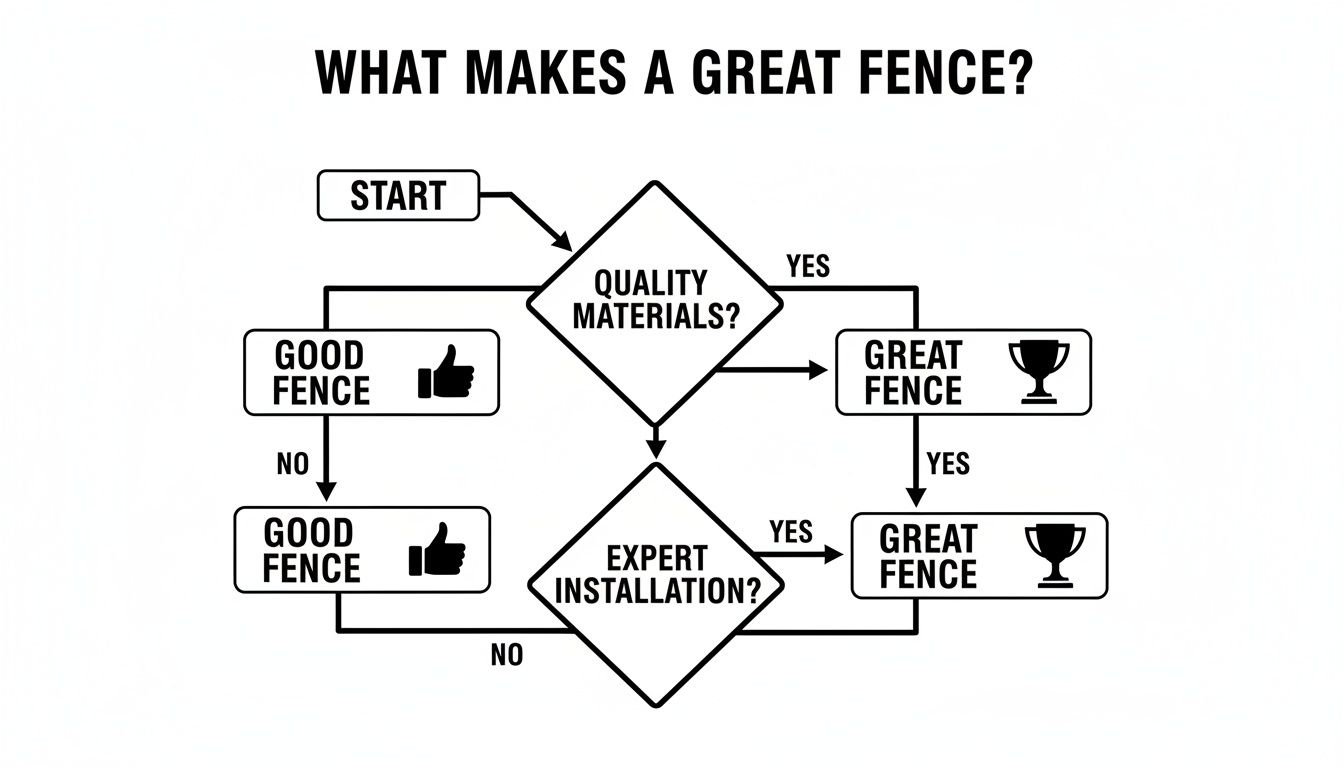
As you can see, the difference between a fence that’s just "good enough" and one that’s truly great comes down to a commitment to quality from start to finish.
Cedar Wood: Timeless Natural Beauty
There's just something about the classic, warm look of a real wood fence, and for that, nothing beats Western Red Cedar. Unlike pressure-treated pine that relies on chemicals for protection, cedar has its own built-in defense system. The natural oils in the wood make it naturally resistant to rot and insects, which is why it’s a preferred material for a long-lasting, high-quality wood fence.
With proper care, a well-built cedar fence can easily last 15-20 years, or even longer. If you let it age naturally, it will weather to a beautiful silvery-gray color. If you prefer to keep that rich, reddish-brown hue, all it takes is a periodic coat of a good quality stain to preserve the color and add another layer of protection. You can learn more about what makes this material so special in our guide to cedar fencing.
Modern Chain Link: The Practical and Secure Option
Chain link isn't what it used to be. Forget the old, plain industrial look—today's chain link is a smart, durable, and budget-friendly way to secure your property. The biggest upgrade is the vinyl coating, which is now standard for most residential and commercial uses. You'll typically see it in black or green.
This coating does two very important things:
- Protection: It seals the galvanized steel from moisture, which is the key to preventing rust and making the fence last for decades.
- Appearance: The color helps the fence blend into your landscaping, making it far less noticeable than the old-school silver kind.
Understanding how different materials hold up over time is crucial, and many of the same principles apply to other parts of a home's exterior. For a deeper dive, this comparison of Steel versus Vinyl Siding offers some great insights into durability and material science.
The Unseen Details That Guarantee Durability
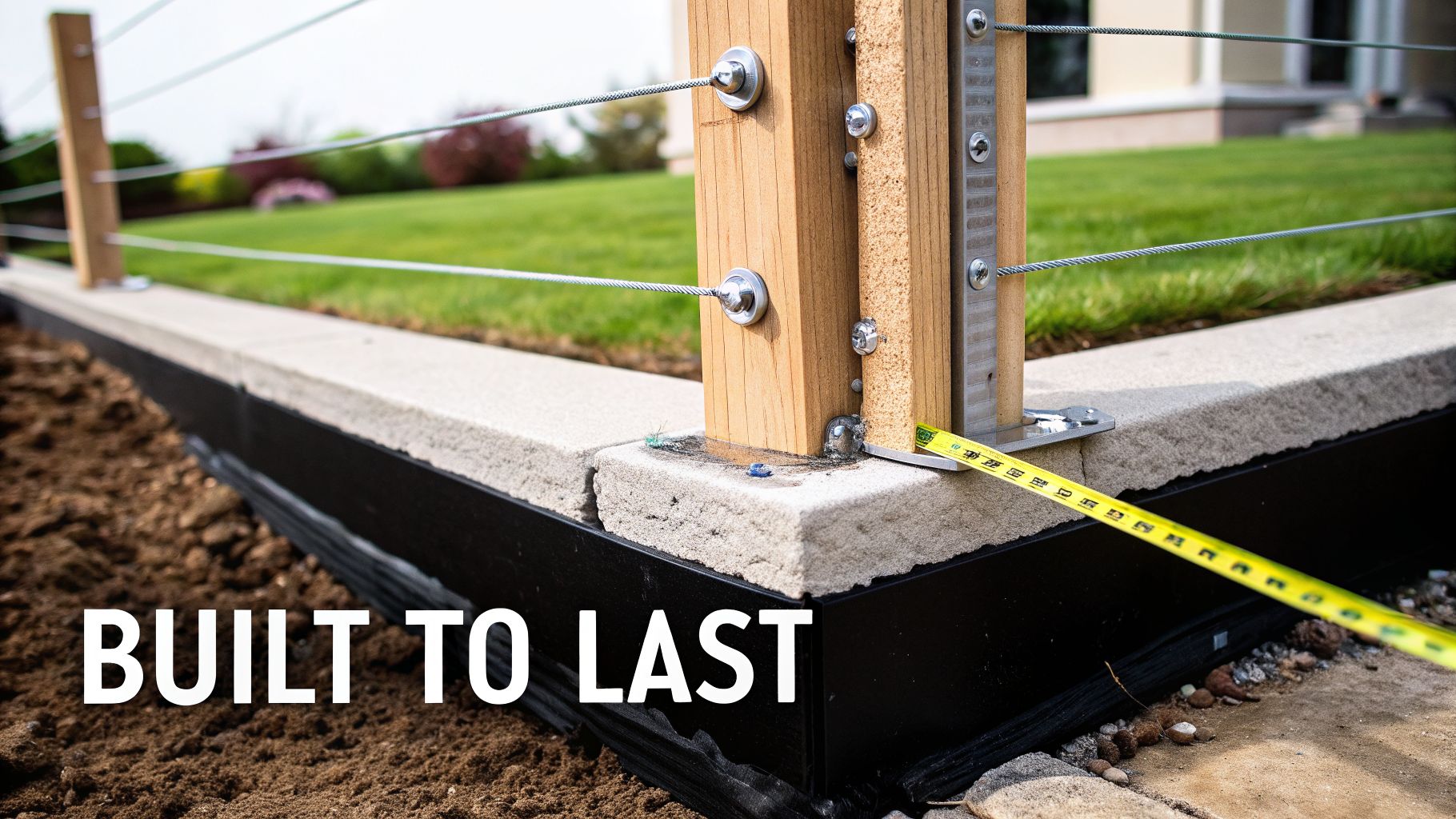
You can choose the most impressive, top-of-the-line fence materials on the market, but they're only as good as the crew putting them in the ground. The real success or failure of a fence project lies in the craftsmanship. It’s those unseen details that determine whether your fence will stand strong for years or start to fail after the first winter.
Think of it like the foundation of a house. You never see it, but it’s the single most important element holding everything together. A proper fence installation isn't just about making things look straight for the first week; it's about building a structure that can handle everything Connecticut weather throws at it—from ground frost to high winds—for decades to come.
Digging Deeper for a Rock-Solid Foundation
The biggest threat to any fence in our region is frost heave. This is what happens when moisture in the soil freezes, expands with incredible force, and literally pushes fence posts right out of the ground. It’s the reason you see so many leaning, crooked fences around town after a particularly cold winter.
A professional installer knows the only way to beat this is to dig post holes below the regional frost line. Here in Connecticut, that means going down 36 to 42 inches deep. By setting the concrete footing well below that depth, the post is anchored in stable soil that never freezes, making it completely immune to heaving.
Think of a fence post like a ship's anchor. If the anchor is just sitting on the surface, the boat will drift. But when it's dropped deep enough to grip the seabed, the ship stays put. A deep concrete footing does the same for your fence post, locking it in place against the powerful upward force of frozen ground.
This is a step that cut-rate installers often skip to save time and money, but it’s the most critical factor for the longevity of any high-quality fence.
The Hallmarks of a Quality Installation
Beyond post depth, a few other key practices separate a truly professional job from an amateur one. These are the details that ensure every part of the fence works together as a single, durable system. When you're talking with a contractor, make sure they live by these standards.
- Precise Post Spacing and Alignment: An expert crew uses string lines and levels to ensure every single post is perfectly vertical and spaced exactly as the manufacturer recommends. This precision is what gives you those strong, clean lines that won't sag over time.
- Sufficient Concrete Footings: It’s not just about how deep you go, but how much support you provide. Each post needs the right amount of concrete—typically 60 to 120 pounds per post, depending on the fence style and soil—to create a solid base that won't shift or wobble under pressure.
- High-Grade Hardware and Fasteners: Quality extends to the smallest parts. A top-tier installation uses only stainless steel or powder-coated screws, hinges, and latches. These won't rust and leave ugly streaks down your fence, and more importantly, they won't corrode and fail like the cheap plated hardware you often see on DIY jobs.
Recognizing Workmanship That Lasts
True quality is easy to spot in the final product if you know what to look for. Walk the line of a newly installed fence. Check for clean connections, perfectly level runs, and gates that swing smoothly without dragging or sticking. Give a post a push—it should be absolutely solid. The panels should be fastened securely with no rattling or gaps.
Of course, even a perfectly installed fence can be damaged by a falling tree limb or a runaway lawnmower. Knowing how to handle these accidents is part of owning a beautiful property. If you ever find yourself in that situation, you can learn more about our professional fence repair services and how we bring damaged fences back to their original strength.
Ultimately, investing in expert installation is about paying for durability and peace of mind. It’s the assurance that every technical detail, both seen and unseen, has been handled correctly to give you a fence that performs just as beautifully as it looks for many, many years.
Getting It Right: Local Rules, Permits, and Connecticut Weather
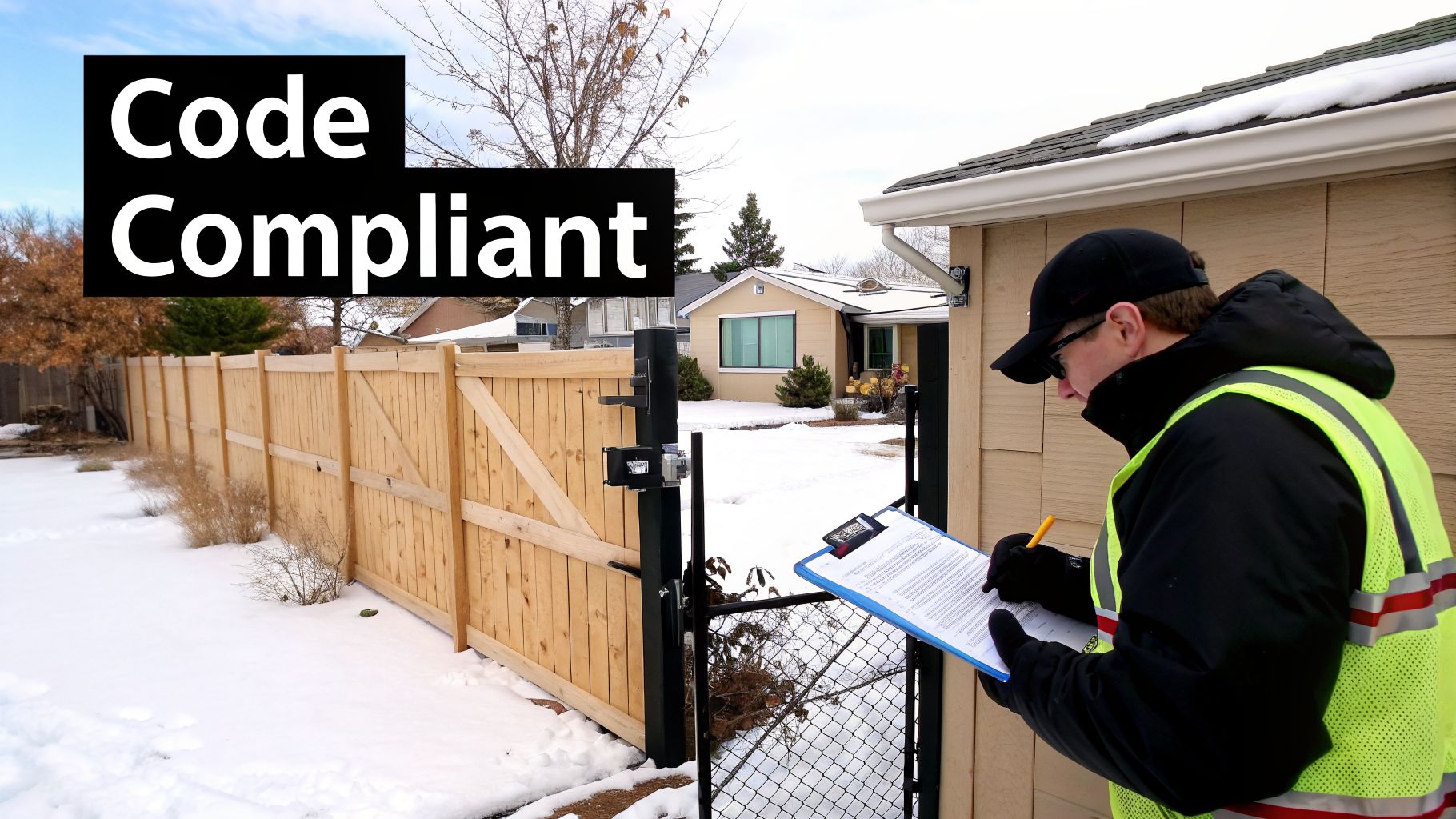
A fence isn't just an addition to your property; it’s an addition to your neighborhood. That means it has to follow the rules—specifically, your town's building codes and any homeowners association (HOA) guidelines. Getting this right from the very beginning is the difference between a smooth project and one plagued by fines or rework orders.
Let's be honest, these regulations can be a headache. The rules in one Connecticut town can be completely different from the next. This is where a true professional fence contractor earns their keep. They don’t just build the fence; they manage the entire permitting process, ensuring everything is 100% compliant.
Complying With Local Building Codes
Every town has a rulebook for fence installation. These codes aren't there to make your life difficult. They exist to ensure safety, keep neighborhoods looking good, and prevent disputes between property owners before they can start.
An experienced local installer knows the specific requirements for your town inside and out. That’s not a bonus; it’s a necessity.
Think of local building codes as the official blueprint for a successful project. Following these rules guarantees your fence is a legal, safe, and welcome addition—not a future problem with your neighbors or the town zoning officer.
Local codes typically have strict guidelines on a few key things:
- Maximum Fence Height: You'll often find different height limits for front yards versus backyards. For example, you might be cleared for a 6-foot privacy fence in the back but limited to a 4-foot decorative fence out front.
- Setback Requirements: These rules dictate how far your fence must be from property lines, sidewalks, and public roads.
- Material and Style Restrictions: To maintain a consistent appearance, some historic districts and HOAs have firm rules on the materials and even colors you can use.
- Visibility at Intersections: Corner lots are a special case. Fences here usually have specific height and placement rules to keep sightlines clear for drivers.
A contractor who lives and breathes these details saves you the immense stress of trying to interpret dense zoning laws on your own. They design a project that’s built to code from the ground up.
Specialized Rules For Pool and Security Fencing
When a fence's primary job is safety, the rules get even stricter—and for good reason. Pool fences, in particular, are governed by tough state and local codes designed to prevent tragic accidents. These aren't suggestions; they're non-negotiable, life-saving requirements. If you have a pool, you’ll want to review our in-depth guide to pool fence safety standards.
Security fencing for commercial sites or residential communities also has its own set of standards. This is a growing area of the industry, with the global security fencing market expected to hit USD 4.87 billion by 2028. Why the growth? Because high-quality security fences are proven to cut down on unauthorized access by up to 70%, making them a powerful tool for protecting people and assets. You can dig into the data yourself by checking out the latest security fencing research on 360iresearch.com.
Building a Fence That Can Handle Our Weather
Beyond the law books, your fence has to stand up to Connecticut’s demanding climate. A fence that’s perfectly fine in a dry, sunny state will buckle under the pressure of our heavy snow, humid summers, and strong winds.
- Snow Load: Around here, snow piles up. The bottom rail of a fence and its gate hardware must be tough enough to handle that heavy, wet weight without bending or breaking.
- Wind Resistance: For solid vinyl and wood privacy fences, it’s all about the posts. Setting them deep enough and spacing them correctly is what stops a strong gust from turning your fence into a sail.
- Humidity and Moisture: Rust and rot are the enemy in our humid climate. Choosing materials like galvanized and vinyl-coated chain link, powder-coated aluminum, or professional-grade vinyl is crucial for long-term survival.
Opting for a fence that’s specifically built for our regional weather isn't just a good idea—it's the hallmark of a smart, high-quality investment. A seasoned local installer knows exactly what it takes to build a fence that lasts.
Understanding the True Cost and Value of Your Fence
When you get a quote for a new fence, it’s tempting to focus only on the price tag. We’ve all been there. But here’s something we’ve learned after decades in this business: a high-quality fence isn't just an expense; it's a genuine asset for your property. The real story of what a fence actually costs unfolds over years, not just on the day you get the bill.
A well-built fence is a serious investment in your home’s value, security, and curb appeal. Sure, a better fence might have a higher upfront cost, but its true worth shines through over its 20 to 30-year lifespan. Let’s look at what "total cost of ownership" means and show you how a quality fence ends up paying for itself.
The Long-Term Savings of Low Maintenance
One of the biggest hidden costs of a cheaper fence is the constant upkeep. That bargain-priced wood fence, for example, is going to demand a lot of your time and money down the road. You’ll be out there staining or sealing it every few years just to fight off rot and pests—a project that takes up your weekend and adds up fast.
On the other hand, high-quality materials like professional-grade vinyl and powder-coated aluminum are built to be virtually maintenance-free. For the most part, a quick wash with soap and water is all they'll ever need to look brand new again.
Think of it this way: choosing a low-maintenance fence is like buying a car with excellent fuel economy. You might pay a little more at the dealership, but you save money every single week at the gas pump. Over years of ownership, those savings add up significantly.
This means you get to spend your weekends enjoying your backyard, not working in it. Over a decade or two, the money you save on stains, sealers, and repairs can easily be more than the initial price difference between a basic fence and a high-quality one.
The Power of a Comprehensive Warranty
A strong warranty isn’t just a piece of paper; it’s a company telling you loud and clear that they stand behind their work and their materials. It's proof of their confidence. A truly valuable warranty should protect your investment on two fronts:
- Materials: This is your shield against manufacturing defects. It covers things like vinyl turning yellow, an aluminum finish peeling, or premature rust appearing.
- Labor: This is just as critical. A solid labor warranty covers any problems that arise from the installation itself, like a gate that starts to sag or a post that begins to lean over time.
When a contractor offers a comprehensive warranty, it tells you they’re using durable materials and following installation practices built to last. It gives you peace of mind, knowing your fence isn't just a purchase but a secure, long-term asset that adds real value and appeal to your home.
A Simple Checklist for Choosing Your Fence Contractor
You can pick the most beautiful, expensive fence materials on the market, but if the installation is poor, you've just wasted your money. The quality of the installer is just as critical as the quality of the fence itself. A great contractor's work will stand strong for decades; a poor one's work might start leaning or sagging in just a few years.
Finding a true professional doesn't have to be a guessing game. Arming yourself with the right questions is the best way to separate the experts from the amateurs. A reputable company will always be happy to answer your questions and provide clear proof of their qualifications.
Contractor Vetting Checklist
Use this checklist to confidently evaluate and choose the right fence contractor for your project.
| Verification Step | Why It's Important | What to Ask |
|---|---|---|
| CT Licensing | This proves they are a legally registered Home Improvement Contractor (HIC) in Connecticut. It’s your first line of defense. | "Can I see a copy of your current Connecticut HIC license?" |
| Proof of Insurance | General liability and workers' compensation protect you from any financial responsibility for accidents or damage on your property. | "Could you provide a certificate of insurance?" |
| Local Portfolio | Seeing their work in person or in photos shows their experience with your chosen fence style and local conditions. | "Do you have a portfolio of recent projects in my town that I can see?" |
| Installation Team | In-house crews often lead to better quality control and accountability than relying on unknown subcontractors. | "Do you use your own employees for installation, or do you subcontract the work?" |
| Detailed Contract | A vague proposal is a huge red flag. A detailed contract protects you from surprise costs and ensures everyone is on the same page. | "Will the contract be itemized with material specs, labor costs, a payment schedule, and a projected timeline?" |
| Permits & Utilities | A professional handles the logistics. This includes town permits and arranging for "Call Before You Dig" (CBYD 811). | "Who is responsible for securing permits and contacting CBYD to mark utility lines?" |
A thorough vetting process like this is what separates a smooth project from a potential nightmare.
Digging Deeper Into the Details
Once you've confirmed their basic credentials, it's time to get into the nuts and bolts of the contract and their process. This is where you can truly gauge their professionalism. A vague contract is a contractor's best friend and a homeowner's worst enemy. Insist on a detailed proposal that leaves no room for interpretation.
When it comes to hiring any professional for work on your property, a solid vetting process is essential. For an even more in-depth look at what to ask, check out this ultimate contractor checklist.
A detailed, itemized contract is your best defense against unexpected costs and disputes. It should clearly list material specifications, labor costs, the payment schedule, and the project timeline.
Before you even think about signing, make sure the contractor is taking ownership of the critical prep work. Will they handle pulling the necessary permits with your town? And, crucially, will they make the call to CBYD 811 to have public utility lines marked? A contractor who manages these details from the start is showing you they’re committed to doing the job right.
Your Top Questions About High-Quality Fences, Answered
Thinking about a new fence is a big decision, and it’s smart to have questions. You're making a long-term investment in your property, after all. We've been doing this for a long time, and a few key questions always come up. Here’s what homeowners and business owners usually want to know.
How Long Should a High-Quality Fence Really Last?
A well-built fence should be a fixture on your property for decades, but the material you choose plays the biggest role. For example, a top-tier vinyl or ornamental aluminum fence can easily give you 30 years or more of service with almost no fuss. A premium cedar fence, when properly cared for, will look great for 15-25 years.
But here's the real secret to long life, especially in Connecticut: the installation. It all comes down to what's happening underground. Posts must have footings that go below the frost line. If they don't, the freeze-thaw cycle of our winters will literally push the fence posts right out of the ground over time, ruining your investment.
What Is the Typical Installation Process Like?
A professional installation shouldn't feel complicated for you. The whole point is for the contractor to handle the heavy lifting. The process usually kicks off with a site visit where we walk the property with you and get a clear picture of what you want to accomplish.
Once you’ve signed off on a detailed proposal, the behind-the-scenes work starts. This is a critical phase where a pro contractor earns their keep by managing:
- Securing all the necessary permits from your town.
- Coordinating with CBYD 811 to get public utility lines marked (a critical safety step).
- Setting a clear project timeline and communicating it with you.
From there, our in-house crew gets to work on the installation itself. We always finish with a final walkthrough to make sure every detail is perfect and you're completely happy. Communication is key every step of the way.
A fence is a long-term investment that can significantly improve your property's function and appeal. A well-chosen and professionally installed fence not only provides security and privacy but can also offer a strong return on investment.
Will a New Fence Actually Increase My Property Value?
Absolutely. A high-quality fence is one of those rare upgrades that adds measurable value and boosts curb appeal at the same time. Put yourself in a potential buyer’s shoes: a home with a beautiful, sturdy privacy fence has a backyard that feels like a private oasis. A home with a pool that already has a code-compliant safety fence is a huge plus.
In a competitive market, a sharp-looking fence helps a property stand out from the rest. It's a finished, polished look that signals a well-maintained home. Because it serves both a practical and aesthetic purpose, the right fence almost always delivers a positive return on your investment when you decide to sell.
Ready to invest in a fence that enhances your property's value and security for decades to come? The team at Connecticut Fence Works, LLC provides expert guidance and superior craftsmanship for homeowners and businesses across the state. Schedule your free, no-obligation estimate today.