
8 Smart Fence Ideas for Small Yards in Connecticut for 2026
Owning a small yard in Connecticut does not mean you have to give up on privacy, security, or style. The right fence can transform a compact space, making it feel larger, more private, and perfectly suited to your lifestyle. However, choosing the best option involves balancing appearance with practicality, especially with our state's diverse weather, from coastal humidity to inland freezing and thawing. A bulky or visually heavy fence can make a small area feel cramped, while a well-chosen design creates an open, welcoming atmosphere without giving up function.
This guide provides practical and effective fence ideas for small yards, specifically chosen for Connecticut homeowners. We will explore space-efficient materials, designs that make the area seem more open, and important tips for understanding local building codes in counties like Hartford, New Haven, and Tolland. Whether you need to secure a pool, contain a pet, create a secluded patio retreat, or simply boost your property's curb appeal, these solutions are designed to help you make a confident and lasting investment. You will find clear examples and helpful advice for materials ranging from modern horizontal slats and ornamental aluminum to classic vinyl privacy and budget-friendly chain link with screening.
1. Vinyl & Composite Privacy Fencing
For Connecticut homeowners looking for a durable, low-maintenance solution, vinyl and composite privacy fencing are excellent fence ideas for small yards. These materials are designed to withstand the state's freezing and thawing cycles and humid coastal air without the risk of rotting, warping, or insect damage common with traditional wood. Vinyl offers a clean, classic look, while modern composite materials from brands like Trex and TimberTech provide a realistic wood-grain appearance using recycled materials.
This approach is ideal for creating a secluded backyard oasis, securing a pool area according to Connecticut's public health codes, or simply establishing clear property lines without the recurring need for staining or painting. The solid panel construction provides maximum privacy, which is a major benefit in smaller, more crowded suburban neighborhoods.
Implementation and Best Practices
Achieving a professional and lasting installation requires attention to a few key details specific to these materials.
- Proper Footings: Ensure posts are set in concrete footings below the frost line (typically 36-42 inches in Connecticut) to prevent lifting during winter freezes.
- Expansion Gaps: Vinyl and composite materials expand and contract with temperature changes. A professional installer will leave small gaps at the ends of panels and rails to allow for this movement, preventing buckling. Post spacing is also critical, usually set at 6 or 8 feet depending on the manufacturer’s instructions.
- Hardware Choice: Always use stainless steel or galvanized fasteners. Standard steel screws and brackets will rust and leave unsightly stains on the fence surface.
Key Insight: For small yards, lighter-colored vinyl like white or tan can make the space feel larger and more open by reflecting sunlight. In contrast, darker composite tones can create a rich, sophisticated backdrop for landscaping and are more effective at hiding initial dirt or minor staining.
2. Ornamental Metal Fencing (Aluminum & Steel)
Elegant and strong, ornamental metal fencing is one of the best fence ideas for small yards where maintaining an open, airy feel is just as important as defining a boundary. Available in durable, rust-resistant aluminum or traditional wrought steel, these fences feature decorative picket and scrollwork designs that provide security without blocking the view. Their see-through nature prevents the "boxed-in" effect that solid fences can create in compact spaces.
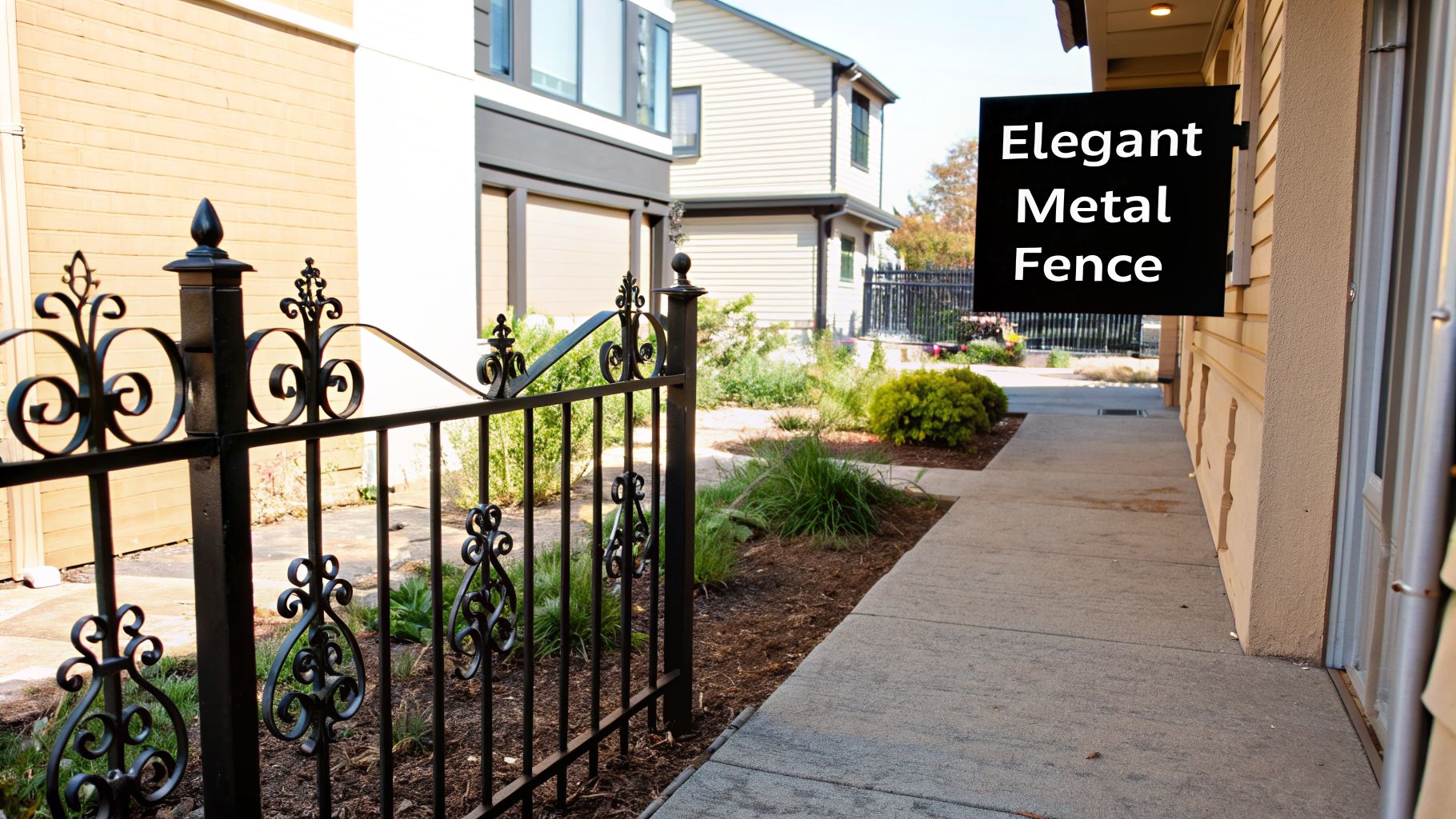
This style is common in upscale Connecticut neighborhoods from New Haven to Fairfield County, where it enhances curb appeal for front yards. It is also a top choice for pool enclosures in towns across Tolland and Hartford Counties, as most designs easily meet the state's 4-inch sphere rule for safety. The classic look adds a touch of class to small urban gardens and homeowner association common areas, establishing a sophisticated perimeter. You can find more examples by exploring our ornamental fence and gate options.
Implementation and Best Practices
A successful ornamental fence installation depends on selecting the right material and ensuring its structural strength for years to come.
- Material Selection: In coastal Connecticut, aluminum is the preferred choice over steel. Its natural resistance to rust and corrosion makes it ideal for handling the salty, humid air without the maintenance demands of steel.
- Post Stability: A secure installation requires setting posts in concrete at a depth of at least 24-36 inches. This provides the necessary stability to support the metal panels and resist frost heave.
- Pool Code Compliance: When used as a pool barrier, confirm that the picket spacing and gate hardware meet all local and state safety codes, including self-closing and self-latching mechanisms.
Key Insight: For small yards, a black or dark bronze finish on a metal fence tends to blend into the background, making the fence less noticeable and allowing the landscaping behind it to be the main focus. To add privacy, consider pairing the fence with climbing plants like clematis or a strategically placed hedge.
3. Semi-Private Vinyl or Wood Lattice Fencing
For homeowners wanting a balance between seclusion and openness, semi-private vinyl or wood lattice fencing is one of the most effective fence ideas for small yards. This design combines a solid lower panel for privacy with a decorative lattice top. The result is a fence that provides screening at eye level while allowing sunlight and air to flow through the upper portion, preventing the yard from feeling boxed-in or cramped.
This style is an excellent choice for defining property lines in close-knit neighborhoods like those in Tolland County, or for creating an elegant transition between a patio and a garden, as seen in many Hartford County homes. The see-through quality of the lattice top lightens the structure’s overall appearance, making it a sophisticated alternative to a solid privacy fence. Contemporary designs in New Haven County often use vinyl lattice to add modern texture and interest.
Implementation and Best Practices
A successful installation depends on material choice and structural strength, especially given Connecticut’s variable weather.
- Lattice Spacing: Select the lattice pattern based on your privacy needs. Tighter diamond patterns (1-inch gaps) offer more screening, while wider patterns (2-inch gaps) create a more open, airy feel.
- Post Spacing: To prevent the lattice section from sagging, especially under the weight of wet snow, posts should be spaced a maximum of 6 feet apart. For wood lattice, a supporting mid-rail may also be necessary.
- Material Selection: In Connecticut's damp climate, vinyl lattice is a durable, rot-proof option that requires minimal upkeep. If choosing wood, opt for pressure-treated pine or cedar and ensure it is properly sealed and maintained to resist moisture damage.
Key Insight: To make a small yard feel more spacious, place the taller, solid sections of the fence away from your main viewing angles, such as a patio door or kitchen window. Using the lighter lattice portions in your direct line of sight creates an illusion of depth and prevents the fence from feeling overbearing.
4. Horizontal Slat Wood Fencing (Modern Cedar)
For homeowners seeking a contemporary and visually striking solution, horizontal slat wood fencing is one of the most effective fence ideas for small yards. This design uses parallel wood boards, typically premium cedar, to create a minimalist, warm look. The strong horizontal lines draw the eye outward, making a narrow or compact space feel wider and more expansive. This modern approach is particularly popular for updating curb appeal on contemporary homes in New Haven County and creating private, design-forward urban backyards in Hartford County.
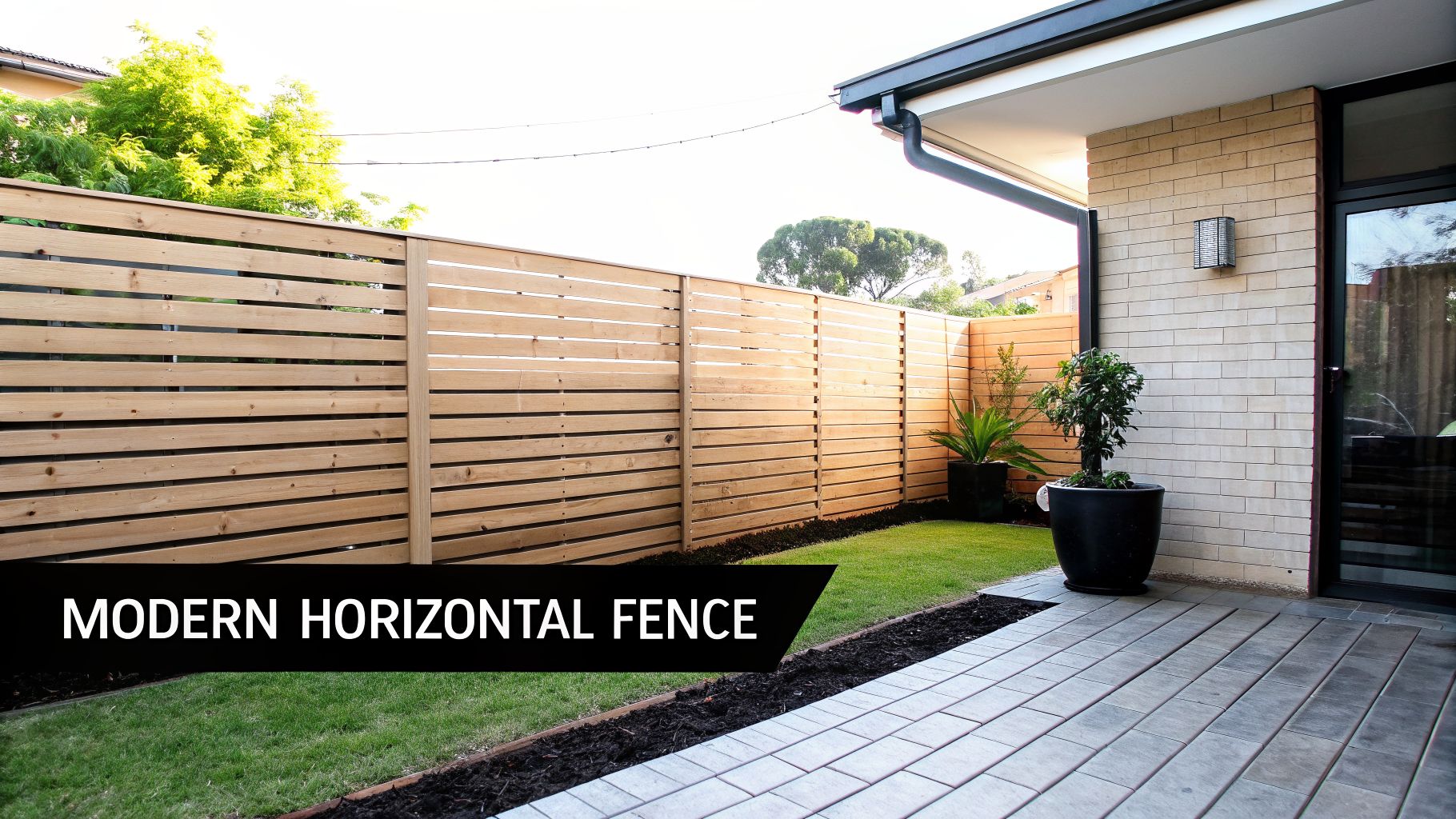
This fencing style delivers a clean, architectural look that complements both new construction and mid-century modern renovations, as seen across Tolland County. By adjusting the spacing between slats, homeowners can control the level of privacy. Tighter spacing offers seclusion, while wider gaps create a more open, screen-like effect that allows for airflow and filtered light, preventing the yard from feeling boxed in.
Implementation and Best Practices
A successful horizontal fence installation depends on precision and the right materials to maintain its straight lines over time.
- Material Selection: Use clear or premium-grade cedar to minimize knots and imperfections, ensuring a clean, high-end appearance. For the bottom boards that are in close contact with ground moisture, specify pressure-treated wood to prevent early decay.
- Secure Fastening: Horizontal boards bear weight differently than vertical ones and are more likely to sag if not properly supported. Use galvanized or stainless steel fasteners to avoid rust stains. Posts should be spaced appropriately, often closer than with traditional fences, to support the weight and maintain straight lines.
- Finishing and Protection: To preserve the rich color of cedar and protect it from Connecticut's weather, apply a high-quality protective stain or sealant within the first few months of installation. This step is crucial for preventing the wood from weathering to a gray color, unless that is the desired look.
Key Insight: Create added visual interest by alternating the width of the horizontal boards (e.g., a pattern of 4-inch and 6-inch boards). This technique breaks up the uniformity and adds a custom, sophisticated detail that enhances the fence’s modern character without sacrificing its space-enhancing effect.
5. Decorative Picket Fencing (Vinyl or Cedar)
The classic picket fence remains one of the most charming and effective fence ideas for small yards, particularly for Connecticut homeowners looking to define their property without sacrificing an open, inviting look. Updated with modern materials like low-maintenance vinyl or timeless cedar, this style offers curb appeal that complements cottage, colonial, and traditional homes. At typical heights of 3 to 4 feet, it creates a clear boundary for front yards in suburban neighborhoods or adds definition to compact urban lots in Hartford County without visually shrinking the space.
This approach is perfect for establishing a front-yard boundary, enclosing a garden, or adding a decorative touch that enhances curb appeal. While it doesn't offer privacy, its main purpose is to create a sense of place and structure. It beautifully frames landscaping and provides a classic American look that feels both established and well-maintained, a popular choice in historic towns and newer developments alike.
Implementation and Best Practices
To ensure a picket fence looks sharp and stands strong, a few specific installation details are important, whether you choose wood or vinyl.
- Height and Scale: For smaller properties, stick to heights between 3 and 3.5 feet. This height is substantial enough to define the yard but low enough to maintain clear views and a sense of openness.
- Picket Spacing: The gap between pickets determines the balance of enclosure and visibility. A standard spacing of 1.5 to 2 inches is common, allowing for a clear view while still marking the property line. For containing small pets, a narrower gap may be necessary.
- Material-Specific Posts: Cedar posts should be pressure-treated if in direct ground contact or set in gravel and concrete for long life. Vinyl posts require concrete footings set below Connecticut's frost line (36-42 inches) to prevent shifting and ensure stability through seasonal changes.
Key Insight: For maximum curb appeal, combine your picket fence with layered plantings. A low-growing hedge or a bed of perennial flowers planted along the fence line softens the structure and integrates it into the landscape, creating a richer, more polished look that elevates the entire front yard.
6. Living Privacy Screens (Hedges & Eco-Fencing)
For Connecticut homeowners interested in an eco-friendly and beautiful boundary, a living fence is a superb solution. This approach uses strategically planted hedges, clumping bamboo, or mixed evergreen plantings to create a natural privacy screen. Instead of manufactured materials, this fence idea for small yards grows over time, offering seasonal interest, providing a habitat for local wildlife, and improving air quality. It is a fantastic long-term investment for those with the patience to let it grow.
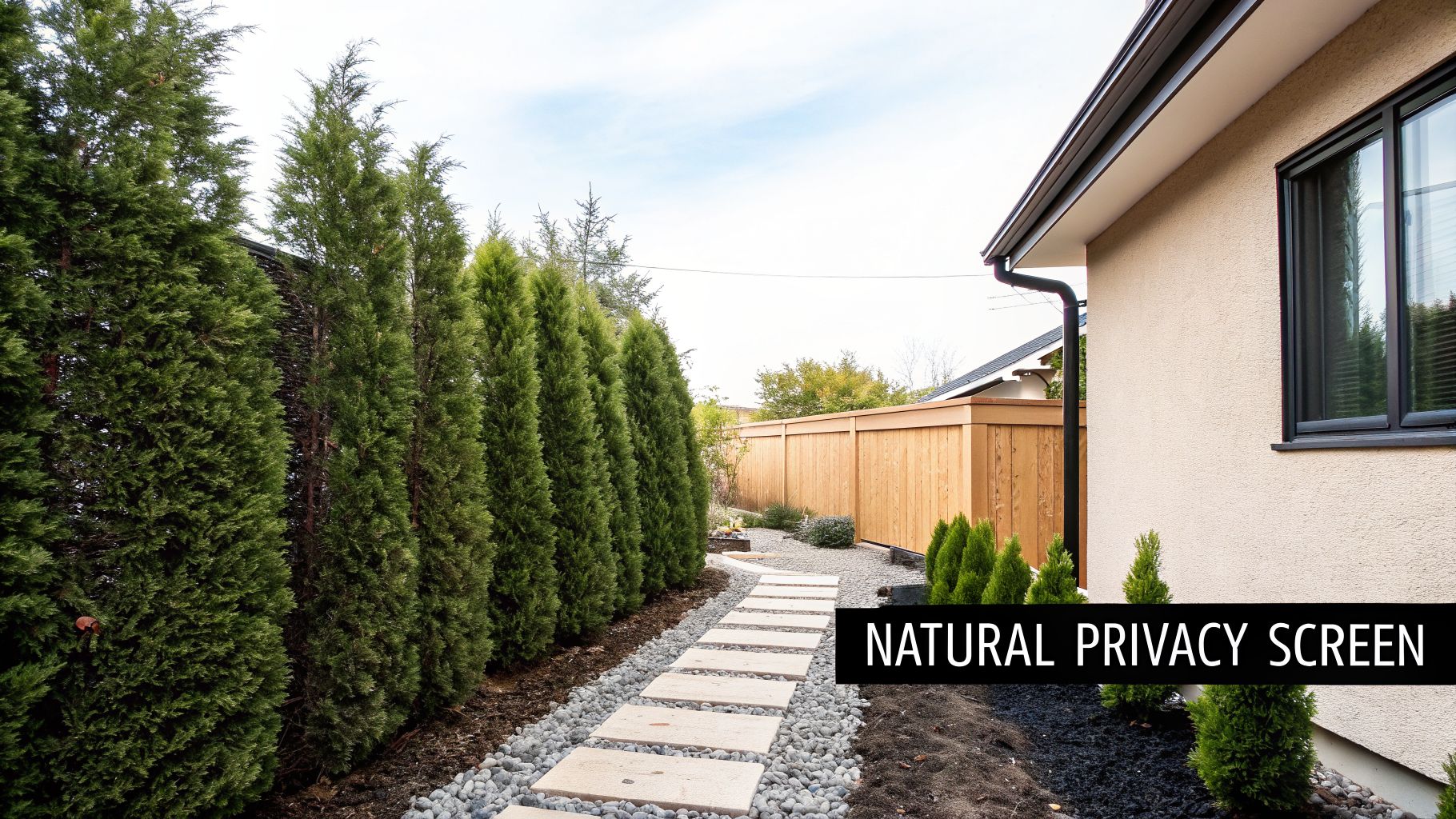
This method is gaining popularity on eco-conscious properties across New Haven and Tolland Counties, where arborvitae screens are common in residential yards. It offers a soft, textured alternative to hard fencing that can make a small space feel less boxed-in. If you are exploring various options to create a green barrier, you might find inspiration in these 8 unbeatable privacy hedge ideas. For a more structured look, these natural elements can also be combined with traditional fencing or custom-built privacy screens and enclosures.
Implementation and Best Practices
Establishing a healthy, dense living wall requires careful planning and plant knowledge specific to Connecticut’s climate.
- Select Hardy Varieties: Choose plants rated for Connecticut’s USDA hardiness zones (typically 5b to 6a). Popular choices like Emerald Green Arborvitae, Boxwood, and certain Holly varieties are excellent for creating dense, year-round screens.
- Proper Spacing and Planting: Plant new hedges in the spring to give them a full growing season to get established before winter. Space them according to their mature width, usually 2 to 4 feet apart, to ensure they grow into a seamless wall without overcrowding.
- Establishment Care: New plantings require consistent watering for the first two to three years. Apply a thick layer of mulch around the base of the plants to retain soil moisture, suppress weeds, and protect the roots during winter.
Key Insight: To achieve privacy faster, invest in taller, more mature plants from a nursery (5-6 feet high). If immediate screening is needed for security or pool safety, consider installing a simple, temporary fence like chain link just inside the planting line, which can be removed once the hedge is fully grown.
7. Chain Link with Privacy Slats or Screening
For a practical and budget-friendly solution, modern chain link fencing upgraded with privacy enhancements is one of the most functional fence ideas for small yards. While standard chain link provides an excellent security boundary, adding vinyl privacy slats, woven shade cloth, or decorative inserts transforms it into a semi-private enclosure. This approach offers durability and very low maintenance, making it a popular choice for Connecticut homeowners who need function without the cost of solid panel fencing.
This method is highly effective for securing areas like pools, where it can meet Connecticut Department of Public Health codes for safety enclosures, while also providing a degree of seclusion. It's also an excellent choice for creating clear property lines or containing pets in a small backyard at a lower cost than wood or vinyl. The ability to add privacy elements later also gives homeowners flexibility.
Implementation and Best Practices
To ensure a chain link fence with privacy additions is both durable and effective, proper installation and material selection are crucial.
- Choose Coated, Heavier Gauge Wire: For home use, select a vinyl-coated chain link (black or green are common) with a minimum wire thickness of 11-gauge. This provides better strength and rust resistance compared to thinner, non-coated options.
- Ensure Proper Tension and Footings: The key to a long-lasting chain link fence is tautness. A professional installer will use specialized tools to stretch the mesh tightly between terminal posts. Posts must be set in concrete footings below the frost line to prevent leaning or sagging, especially with the added wind load from privacy slats. For more details on professional installation, you can explore chain link fence options suitable for our region.
- Partial Slat Application: In smaller yards where airflow is a concern, consider installing privacy slats in only the lower 4 feet of the fence. This technique maintains privacy at ground level while allowing light and air to pass through the top portion, preventing the yard from feeling too closed in.
Key Insight: Darker-colored privacy slats, such as black, dark green, or brown, tend to blend in visually and mix more effectively into landscaping. This can make a small yard feel less confined, as the fence becomes a subtle backdrop rather than a stark, attention-grabbing boundary.
8. Modular Prefabricated Fence Panels (DIY-Friendly Options)
For Connecticut homeowners looking to balance budget, speed, and quality, modular prefabricated fence panels offer a practical solution. These systems, available in materials like vinyl, composite, and wood, consist of pre-assembled sections that are manufactured to standard sizes. This approach significantly simplifies the installation process, making it a popular choice for DIY-savvy homeowners and anyone needing a fence installed quickly, such as for rental properties or projects in Hartford and Tolland Counties where project timelines are tight.
This method is one of the most efficient fence ideas for small yards because it reduces on-site labor and minimizes construction waste. By using standardized panels from brands like Veranda or Bufftech, you can achieve a professional-looking result without the higher costs associated with fully custom builds. They are especially effective for creating secure perimeters or privacy screens on small residential lots where straightforward, straight fence lines are common.
Implementation and Best Practices
A successful installation with prefabricated panels depends on precise planning and proper groundwork, even with its DIY-friendly nature.
- Accurate Layout and Footings: Before ordering, measure your property lines exactly. Even for a DIY project, consider a professional site layout to ensure posts are perfectly aligned. All posts must be set in concrete footings that extend below Connecticut's frost line (typically 36-48 inches) to prevent shifting.
- Manufacturer and Warranty: Select panels from established manufacturers with strong warranties, such as Trex, Veranda, or Bufftech. A good warranty protects your investment against defects and early failure.
- Order Extra Material: Always order 10-15% extra material, including at least one spare panel and extra hardware. This covers any cutting mistakes and ensures you have perfectly matched materials on hand for future repairs, as product lines can be discontinued.
Key Insight: While modular systems are designed for simplicity, the most critical step is setting the posts. If the posts are not perfectly straight, level, and spaced according to the manufacturer's instructions, the pre-made panels will not fit correctly, which will compromise the entire project.
8-Option Comparison: Small Yard Fence Ideas
| Fence Type | 🔄 Implementation Complexity | ⚡ Resource & Maintenance | 📊 Expected Outcomes | 💡 Ideal Use Cases | ⭐ Key Advantages |
|---|---|---|---|---|---|
| Vinyl & Composite Privacy Fencing | Moderate — professional install recommended for expansion gaps and footings | Low ongoing maintenance; higher upfront cost; stainless/galvanized fasteners advised | High privacy and longevity; performs well in freeze‑thaw and coastal humidity | Homeowners wanting low-maintenance, long-lasting privacy across CT counties | Durable, low upkeep, wood-like composite options; recycled-content choices |
| Ornamental Metal Fencing (Aluminum & Steel) | Low–moderate — standard panel install; steel may need touch-ups | Low maintenance for aluminum; higher material cost; protective coatings for steel | High curb appeal with open sightlines; durable in coastal environments | Front yards, decorative boundaries, pool enclosures where visibility matters | Elegant appearance, rust-resistant aluminum, maintains neighborhood sightlines |
| Semi-Private Vinyl or Wood Lattice Fencing | Moderate — requires proper post spacing to prevent sagging | Vinyl: low maintenance; wood: periodic care and lattice cleaning | Moderate privacy with light and airflow; supports vining plants | Small yards needing defined space without feeling enclosed; transitions between areas | Balances privacy and openness; decorative and customizable |
| Horizontal Slat Wood Fencing (Modern Cedar) | Moderate–high — custom layout, proper drainage and fastening needed | High maintenance: staining/sealing every 2–3 years; cedar susceptible to rot if untreated | Contemporary aesthetic that visually expands compact yards; moderate screening | Modern homes and design-forward owners willing to maintain regularly | Clean modern look, cost-effective vs metal, sustainable cedar options available |
| Decorative Picket Fencing (Vinyl or Cedar) | Low — straightforward install, often DIY-friendly | Vinyl: near-zero maintenance; cedar: repaint/stain every 3–5 years | Low privacy but strong curb appeal; defines front yards and pathways | Front-yard applications, cottage-style homes, neighborhood-focused properties | Timeless curb appeal, affordable, easy to repair individual pickets |
| Living Privacy Screens (Hedges & Eco‑Fencing) | High — long-term planning, proper spacing and irrigation required | High initial care (2–3 years), ongoing trimming; low material footprint later | Natural privacy after 2–3 years; wildlife habitat and seasonal interest | Eco-conscious homeowners with planting space and patience | Eco-friendly, supports habitat, sound-dampening and carbon sequestration |
| Chain Link with Privacy Slats or Screening | Low — fast installation and simple repairs | Low cost; slats may fade/brittle in 5–7 years; minimal cleaning | Functional boundary with variable privacy depending on screening | Budget-conscious homeowners, pools, commercial and temporary sites | Very affordable, durable, easy to repair and replace slats |
| Modular Prefabricated Fence Panels (DIY‑Friendly) | Low — preassembled panels simplify layout and assembly | Cost-effective (25–40% labor savings); panel quality varies by manufacturer | Fast, consistent appearance; limited customization on irregular sites | Quick projects, rentals, small properties and budget-focused homeowners | Faster installation, predictable pricing, easy panel replacement |
From Idea to Installation: Bringing Your Vision to Life
Selecting the perfect fence is a major achievement, but the journey from a great idea to a beautiful, functional reality involves careful planning and work. As we have explored, from the sleek, modern lines of horizontal slat fencing to the timeless appeal of ornamental aluminum, the right fence can fundamentally reshape a small yard. It can create an intimate outdoor room, provide a secure area for pets and family, and boost your home's curb appeal. The key takeaway is that limited space does not limit your options; it simply calls for more creative and strategic thinking.
The most successful fencing projects are built on a solid foundation of careful research. Before a single post is set, it is critical to address the practical details that ensure a smooth and legal installation. This includes understanding your specific town's regulations in Hartford, New Haven, or other Connecticut counties regarding fence height, materials, and property line setbacks. A quick call to your local zoning office is an invaluable first step.
Key Insight: Never assume your property lines. A professional land survey is a small investment that prevents costly disputes and ensures your fence is built exactly where it should be, protecting your property rights and your relationship with your neighbors.
Your Actionable Next Steps
With a clearer vision of your preferred style, the next phase is to refine your plan. Start by mapping out your yard's dimensions and key features. As you move from initial ideas to detailed planning, using landscape design software can help you visualize how different fence styles integrate with your small yard's overall layout. This step helps you see how a semi-private lattice fence might cast shadows or how a solid vinyl privacy fence will define the space.
Once your design is finalized, the focus shifts to installation. While some modular panels are designed for DIY, the challenging soil and variable weather in Connecticut make professional installation a wise choice for long-term durability and performance. An experienced contractor handles everything from material purchasing to navigating complex pool safety codes, guaranteeing the final product is not only beautiful but also structurally sound and compliant. Your fence is a permanent addition to your home; ensuring it is installed correctly is just as important as choosing the right material. A well-built fence is an investment that pays dividends in security, privacy, and peace of mind for years.
Ready to turn your vision into a professionally installed reality? The owner-operated team at Connecticut Fence Works, LLC specializes in guiding homeowners through every step, from selecting the perfect fence for a small yard to flawless installation. Contact us today for a free, no-obligation estimate and experience our commitment to superior workmanship.