
Your Guide to Durable Dumpster Enclosure Gates
Let's be honest—for most property managers and business owners, the dumpster area is often an afterthought. It's a necessity, but it’s rarely a point of pride. The problem is, an exposed, unsecured dumpster can quickly become a source of major headaches, from ugly messes to serious security risks.
A proper enclosure with a sturdy set of gates isn't just about hiding trash. It's about taking control of your property's perimeter, and it's one of the smartest investments you can make.
Why Dumpster Enclosure Gates Are a Smart Investment
Think of a well-built dumpster enclosure as the finishing touch that signals a professionally managed property. Just like you invest in landscaping or a clean building facade, securing your waste area shows a deep commitment to quality, safety, and attention to detail. It tells everyone—from tenants and customers to inspectors—that you don't cut corners.
Boost Curb Appeal and Property Value
First impressions matter. An overflowing, exposed dumpster can instantly lower the perception of an otherwise beautiful commercial property or residential community. By simply hiding the waste area, you create a cleaner, more organized, and much more professional atmosphere. The impact on curb appeal is immediate and significant.
This isn't just about looks; it's about your bottom line. We've seen firsthand how properties with well-designed enclosures benefit. They experience 40% fewer overflow incidents, which directly translates to lower cleanup and hauling fees. More importantly, especially in busy areas across Hartford and New Haven Counties, a durable enclosure can reduce unauthorized access by an incredible 85%.
Improve Security and Prevent Problems
An open-access dumpster is an open invitation for trouble. It attracts illegal dumping from outsiders, who fill your container with their old mattresses and construction debris on your dime. It also becomes a magnet for scavengers and pests, creating unsanitary conditions and potential safety hazards.
By installing a lockable gate, you immediately solve problems like illegal dumping and take a huge step in learning how to prevent vandalism on your property. You control exactly who has access and when.
This simple security upgrade provides several key benefits:
- Stops Illegal Dumping: You no longer have to pay for extra pickups because outsiders are treating your dumpster like a public service.
- Deters Pests: A secure enclosure keeps raccoons, rodents, and other animals out, making the area much more hygienic.
- Reduces Liability: You minimize the risk of someone getting injured near your waste containers, which is a real concern for any property owner.
Ultimately, investing in strong gates is a straightforward, proactive step to protect your property from the constant headaches of an unmanaged waste area. It’s a key part of any effective https://ctfenceworks.com/commercial/ strategy, creating a safer and more professional environment for everyone.
Choosing The Right Gate Material For Durability And Style
Picking the right material for your dumpster enclosure gates is a decision that affects your entire property. It's about more than just hiding a trash bin—it directly influences your curb appeal, security, and future maintenance costs. Every option has its own pros and cons in terms of strength, style, and cost, so understanding them is the first step toward making a smart choice.
A well-chosen gate material does three jobs for your business. This quick visual breaks down the key benefits you get from a quality installation.
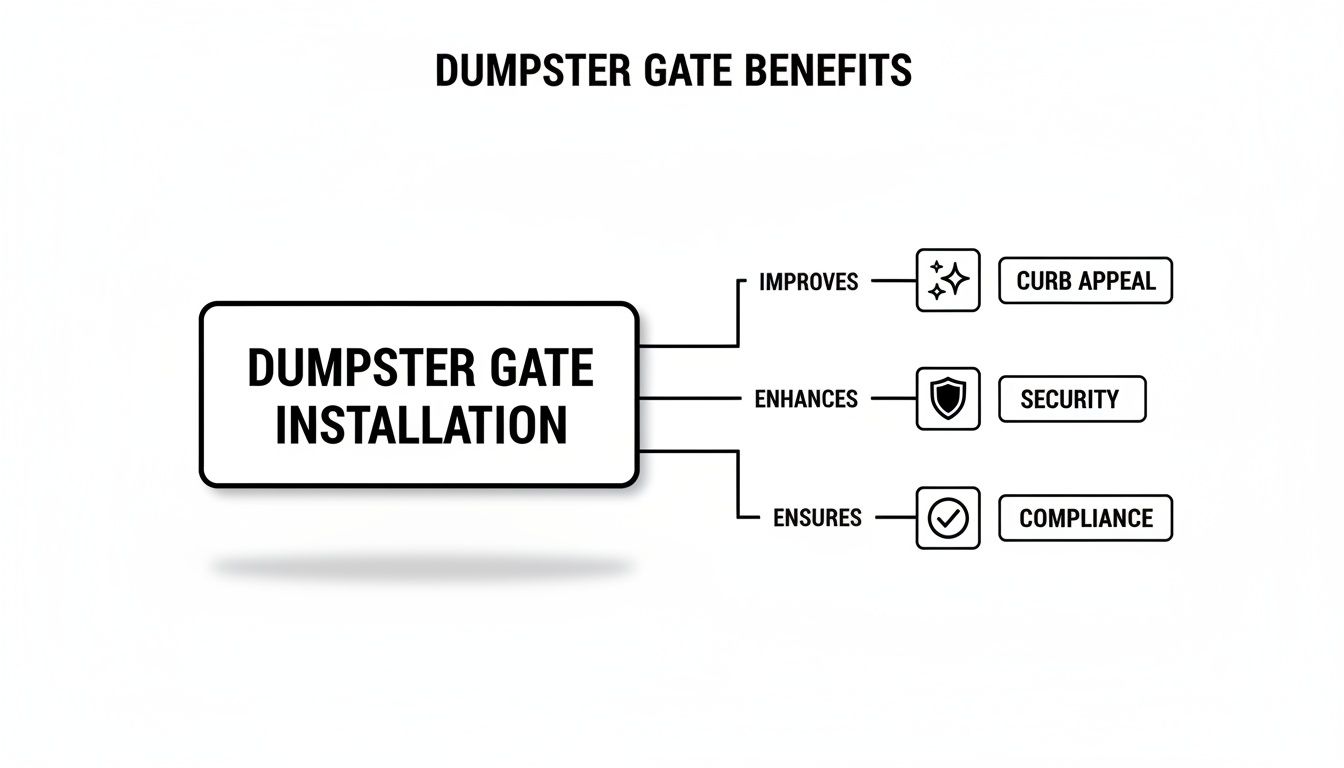
As you can see, the right enclosure is a powerful tool. It sharpens your property’s image, keeps the area secure, and makes sure you’re following local codes. Now, let’s look at the specific materials that make it all happen.
To help you weigh your options, this table provides a side-by-side look at the most common materials used for dumpster enclosure gates.
Comparing Dumpster Gate Materials
| Material | Durability | Maintenance | Aesthetics | Best For |
|---|---|---|---|---|
| Ornamental Metal | Excellent | Low (powder-coated) | High-end, classic | Upscale retail, corporate offices, high-security areas |
| Vinyl (PVC) | Very Good | Very Low | Clean, modern | HOAs, medical facilities, properties prioritizing low upkeep |
| Chain-Link | Good | Very Low | Utilitarian | Industrial sites, back-of-house areas, budget-focused projects |
Each material clearly has its place. The best one for you comes down to balancing your property's look, your budget, and how much time you want to spend on upkeep.
Ornamental Metal For Unmatched Security And Elegance
When appearance is a top priority—think upscale shopping centers, corporate campuses, or premium residential communities—ornamental metal is the best choice. These gates, usually made from powder-coated steel or aluminum, deliver a powerful combination of serious security and refined style.
Metal’s primary advantage is its strength. It resists physical force, serves as a major deterrent to trespassers, and holds up beautifully against Connecticut’s demanding weather, from heavy snow to humid summers. This preference for resilience is seen across industries; the U.S. electrical enclosures market, which needs similar protection, is projected to hit USD 5.59 billion by 2026. A massive 70.92% of that market is built on metallic options for their durability—a fact that highlights why metal is a top contender for tough, long-lasting dumpster gates.
Ornamental metal is the gold standard for blending high security with a high-end look. It sends a clear message that you value both safety and a professional, polished appearance on your property.
Vinyl For A Clean Look And Low Maintenance
If you want a crisp, modern look with almost no upkeep, vinyl (PVC) is a fantastic solution. Vinyl gates simply don’t have the same problems as other materials—they won’t rot, rust, or warp, and you’ll never have to paint or stain them. A quick wash now and then is all they need to look new.
This makes vinyl perfect for properties where your team’s time is limited but a clean, professional appearance is a must. It’s a popular choice for:
- Homeowners Associations (HOAs): Vinyl creates a consistent, tidy look throughout a community without creating a long-term maintenance burden.
- Medical Facilities: The non-porous surface is easy to clean, contributing to a hygienic environment.
- Modern Commercial Properties: Its clean lines are a great match for contemporary architecture.
While the initial cost might be more than wood or chain-link, the money you save on maintenance and repairs often makes vinyl the more economical choice over the gate's lifetime.
Chain-Link For Practicality And Affordability
When the job is all about function and budget, chain-link is the trusted workhorse. It’s a practical, no-frills material that’s been used for decades in industrial zones, service areas, and commercial lots where security and access control are more important than looks.
The open weave of chain-link allows for air circulation, which can help reduce odors, and it’s incredibly durable. If you need more privacy, slats can easily be woven into the mesh to block the view. While it’s not as imposing as a solid metal gate, a heavy-gauge chain-link fence is still an effective barrier that clearly marks your property line and keeps casual foot traffic out.
The logic behind selecting a dumpster gate isn't so different from other heavy-duty applications. For another perspective, reading up on choosing the best door for shipping containers offers great insights, as the core principles of material strength and security are universal.
Understanding Connecticut's Local Codes and Access Rules
Before you start thinking about materials or styles for new dumpster enclosure gates, there’s a more important first step: understanding the local rules. Here in Connecticut, every town has its own set of regulations for how and where these structures must be built. These are serious rules that can make or break your project.
Understanding city ordinances, zoning laws, and fire department access requirements is essential. Getting it right from the start means your project is safe, compliant, and won't be hit with fines or a costly tear-down order.
Why Local Codes Matter
Local regulations for dumpster enclosures aren't just about making things look nice. They’re in place for public safety, to maintain community standards, and to make sure essential services can do their jobs. For any property manager in Middlesex, New London, or New Haven Counties, these rules are the foundation of a successful installation.
The codes can be surprisingly specific, covering details most people would never consider. Key areas to watch include:
- Setbacks: How far the enclosure must be from property lines, buildings, and sidewalks.
- Screening Requirements: Rules on the height and opaqueness needed to hide dumpsters from public view.
- Material Restrictions: Some towns might limit your material choices to maintain a certain look for the area.
Make no mistake, non-compliance can be a nightmare. We’ve seen towns issue "stop work" orders, impose daily fines until a violation is fixed, or even demand that a brand-new enclosure be torn down. A professionally installed structure is built to code from day one, saving you from those massive headaches.
Key Access Requirements for Service and Safety
Once you've sorted out the zoning rules, you need to think about access. Your enclosure gates have to provide a wide, clear path for two very important groups: your waste hauler and emergency services. If a garbage truck can't get to your container or a fire engine is blocked, you have a serious problem.
Getting these dimensions right is absolutely crucial. Here’s what you need to plan for:
For Waste Collection Trucks:
- Direct Access: Garbage trucks are large and can’t make sharp turns. Your enclosure needs to be placed so a truck can pull straight in. As a rule of thumb, plan for at least 45 feet of clear space directly in front of the gates.
- Gate Opening Width: The gates need to swing wide open to let the truck pass. A minimum opening of 10 to 12 feet is the industry standard.
- Vertical Clearance: The truck's lifting arm needs space to operate. You’ll need around 24 feet of vertical clearance above the dumpster itself, and at least 14 feet for the truck to safely drive under any branches or building overhangs.
For Fire Department and Emergency Access:
Fire marshals have the final say. Their codes are strict because a poorly placed enclosure can block a fire hydrant or cut off an emergency route. Always confirm the local fire code requirements, as they will override any other zoning rule.
Designing for Employee and Pedestrian Safety
Don't forget about the people using the dumpster every day. Your employees or tenants shouldn't have to wrestle with a massive, heavy gate just to throw out a bag of trash—especially on a windy day.
A smart design often includes a separate, smaller pedestrian door. This simple feature makes daily use much safer and easier. It also prevents the main gates from being left open, which reduces wear and tear and keeps the area secure. It's a small detail that makes a huge difference, and something an experienced installer will recommend from the start to ensure your enclosure is compliant, safe, and works for everyone.
Essential Hardware for Strong and Functional Gates
It’s easy to focus on how a dumpster enclosure looks—the style, the color, how it matches your property. But in our experience, what really determines whether a gate system will last five years or twenty-five is the hardware holding it together.
The gate panels are the doors, but the hardware is the foundation. If the hinges and locks aren't strong enough, even the best-looking gate will start to sag, drag, and become a daily frustration. For any commercial property, investing in industrial-grade hardware is the only way to prevent constant headaches and repairs down the road.
Sizing Your Enclosure and Gates Correctly
Before we get to hinges, we have to talk about size. One of the biggest mistakes property managers make is underestimating their needs. They plan for one dumpster, and a year later, they need a second one for recycling. It’s always smarter to build with extra space from the start.
A good rule of thumb is to leave at least two feet of clearance on all sides of the dumpster. This gives staff room to move around and toss bags without scraping their knuckles, and it stops the dumpster from denting the walls.
When it comes to the gates, the opening has to be wide enough for the waste collection truck.
- Minimum Gate Opening: You'll need a clear opening of at least 10 to 12 feet wide.
- Truck Clearance: Make sure there's a straight, clear path of at least 45 feet leading up to the gates.
These aren't just suggestions; they're requirements for safe pickups. A professional installer will confirm these dimensions on-site to make sure your design is functional.
Choosing the Right Hinges to Prevent Sagging
Hinges do all the heavy lifting. They support the entire weight of your gate, so using standard residential hinges is a recipe for disaster. For heavy commercial gates, you need hardware built for the job.
Heavy-Duty Strap Hinges: These are the workhorses for any large wood, vinyl, or metal gate. The long "strap" arm distributes the weight across the panel and prevents the gate from pulling away from the post. Without them, sagging is inevitable.
Self-Closing Hinges: Many towns now require these for safety and appearance. A self-closing hinge uses a spring to automatically swing the gate shut, which is great for keeping the trash area contained without relying on employees to remember to close it.
The right hinges are the difference between a gate that operates smoothly for years and one that needs constant realignment. Investing in heavy-duty, commercial-grade hinges protects your entire gate system from failure and is a sign of a professional installation.
Selecting Secure and User-Friendly Locking Mechanisms
A great gate needs a solid lock—one that's tough enough to keep people out but not so complicated that your employees avoid using it.
Here are two of the most reliable choices for dumpster enclosure gates:
- Slide Bolts: You can't go wrong with a classic. A heavy-duty slide bolt is simple, strong, and easy to use. It slides horizontally into a receiver on the other gate or post, providing a secure lock.
- Cane Bolts: Often called drop rods, these are perfect for securing double gates. The vertical rod drops down into a pipe set in the concrete below, anchoring one of the gates to the ground. This allows you to keep one side stationary while using the other for everyday traffic.
By paying attention to these hardware details, you’re not just building a screen for your dumpster; you're making a long-term investment in your property's security, safety, and function.
The Professional Gate Installation Process Step by Step
So, you’ve decided it’s time for new dumpster enclosure gates. What actually happens between making that call and seeing the finished product? Knowing the step-by-step installation process removes the guesswork, so you know exactly what to expect.
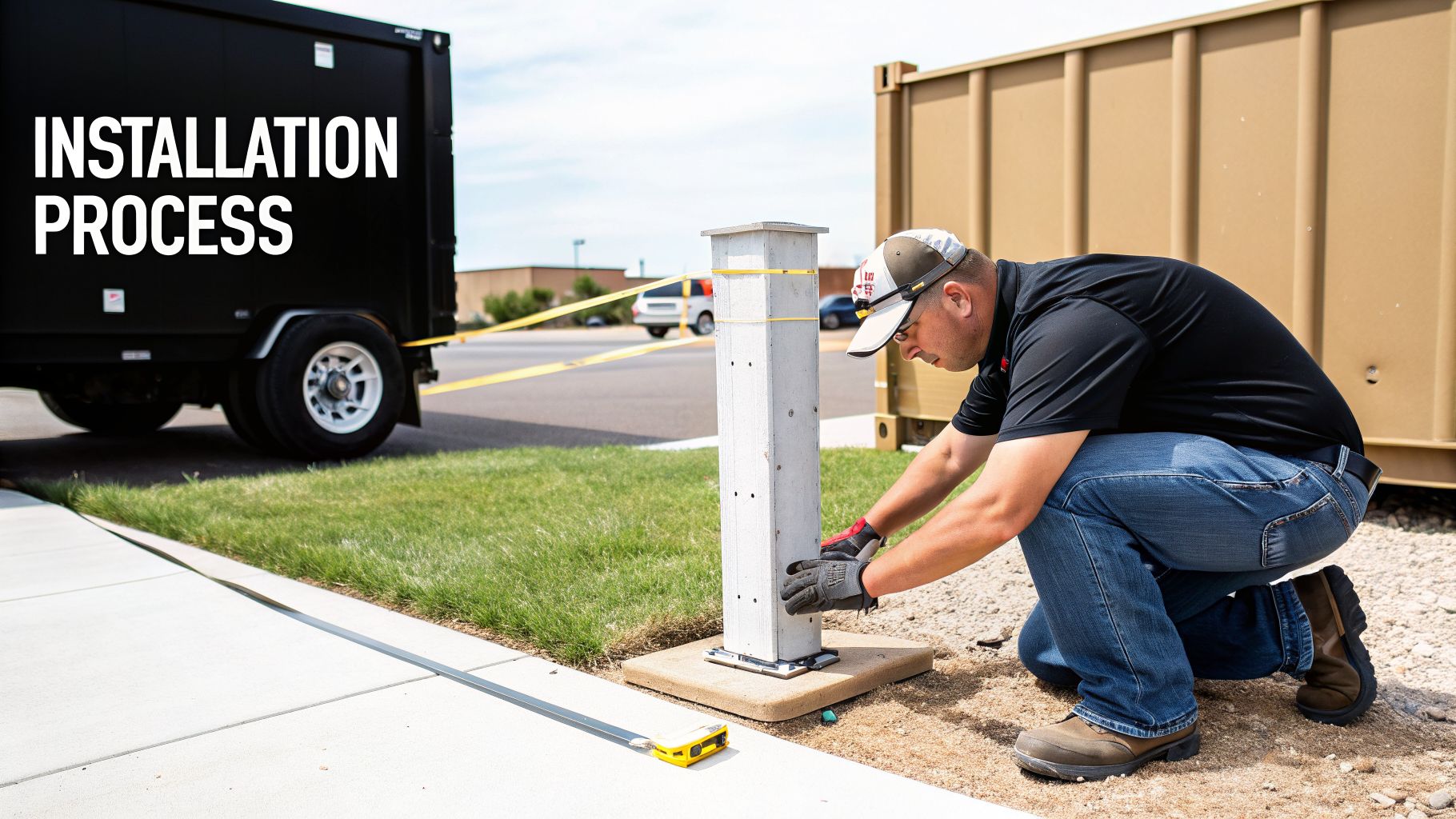
From our first meeting to the final walkthrough, a professional installation follows a clear path. This is about building something that lasts. Most standard projects take a few days, but the timeline can change depending on site complexity and the materials you choose.
Step 1: Initial Consultation and Site Assessment
Everything starts with a conversation at your property. A project manager will walk the site with you to see the location and discuss your specific needs. This is our chance to cover everything—from the style of gate you want to any security concerns and, of course, local code compliance.
During this visit, our expert will:
- Evaluate the ground conditions and any slopes.
- Look for potential obstacles like underground utilities or low-hanging branches.
- Take initial measurements to create an accurate, free estimate.
This meeting is essential. It ensures the plan we develop fits your vision, your budget, and the unique needs of your property.
Step 2: Precise Measurements and Material Ordering
Once you approve the estimate, our team returns to take final, detailed measurements. This precision is key to ordering the exact amount of material needed, which prevents waste and keeps the job on schedule.
At this point, we order all the high-quality parts from our trusted suppliers. Whether you've chosen rugged ornamental steel, low-maintenance vinyl, or practical chain-link, we source materials built for durability.
Step 3: Post Setting and Foundation Work
Now the physical work begins. Our installation crew marks out the enclosure's footprint and starts digging the post holes. This is the single most important step for the stability of your enclosure, and we don't cut corners.
The posts are always set deep in concrete, never just packed in dirt. This is a non-negotiable part of a professional job. It’s what guarantees the structure can handle high winds, the daily strain of heavy gates, and even an accidental bump from a truck without failing.
The concrete needs time to cure—typically 24 to 48 hours—before we can hang anything on the posts. It’s a short but crucial waiting period that ensures the long-term strength of the entire installation.
Step 4: Panel and Gate Installation
After the concrete foundation is solid, it’s time for the final assembly. This is when you really see your project take shape. The crew installs the fence panels and then carefully hangs the gates. We meticulously align them, install the heavy-duty hinges and locks, and test everything to ensure it swings smoothly and latches securely. This level of detail is a core part of our commercial installation promise.
With a final inspection and a thorough site cleanup, your new dumpster enclosure is officially ready to go.
Long-Term Care and Smart Technology Upgrades
Once your new dumpster enclosure gates are installed, you’ve already made a huge improvement to your property's safety and appearance. The next step is making sure that investment pays off for years to come. With some simple care and an eye on smart technology, your enclosure can be more than just a barrier—it can become an efficient part of your daily operations.
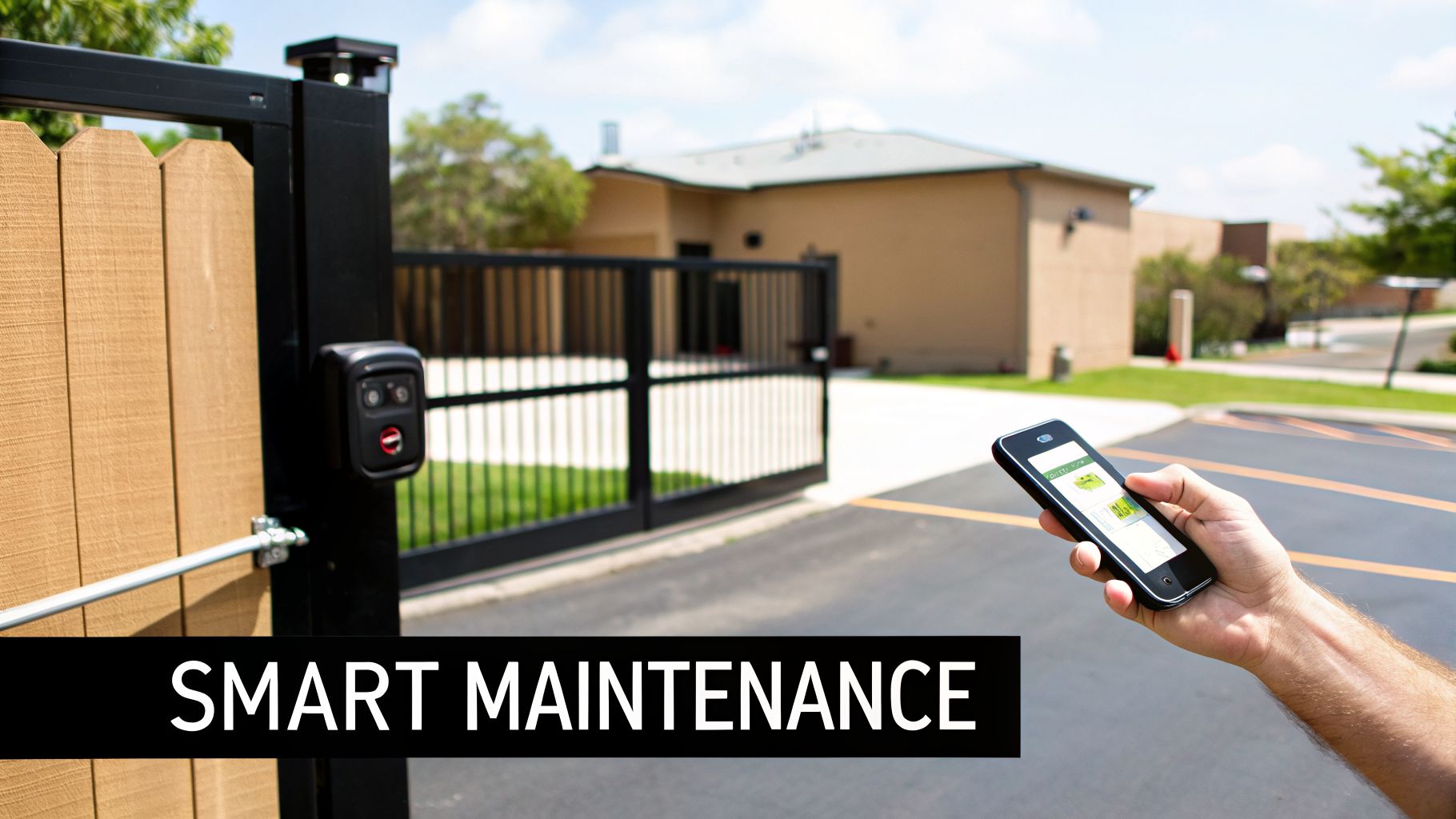
This approach transforms a simple gate into an active tool for managing your property, saving you both time and money down the road.
Simple Maintenance for Lasting Performance
Just like any other exterior feature of your building, your enclosure gates will benefit from routine attention. A little upkeep goes a long way in preventing expensive repairs and keeping the gates looking and functioning their best.
The good news? Maintenance is usually straightforward and depends on the material you’ve chosen.
- For Metal and Vinyl Gates: The main job is keeping them clean. A quick wash with mild soap and water is typically all you need. For any metal gate, it's also a great idea to regularly lubricate the hinges with high-quality grease to keep them swinging smoothly.
- For Wood Gates: These need a bit more care to prevent rot and weather damage. We recommend inspecting them annually for signs of wear and planning to re-stain or re-seal them every few years to protect the wood.
- For All Gates: Make it a habit to check that all your hardware—the hinges, locks, and bolts—is tight and working correctly. A loose bolt is a quick fix; a sagging gate is a much bigger headache.
The Future of Enclosures: Smart Technology Integration
While basic care keeps your gates in top physical condition, new technology is changing what these enclosures can do. The next step is integrating them with smart waste management systems. Imagine a gate that doesn't just open and close, but one that actively helps you run your business more efficiently.
This isn't science fiction; it's a practical upgrade that turns a passive fixture into a dynamic operational tool.
Smart enclosures with built-in sensors can communicate directly with your waste management provider, signaling when a dumpster is full and ready for pickup. This data-driven approach shifts you away from fixed schedules toward a more efficient, as-needed service model.
Turning Data Into Savings and Efficiency
This smart integration is quickly becoming a popular upgrade for commercial properties. The smart waste management market in North America is projected to hit USD 1,873.18 million by 2033, fueled by the significant cost savings it provides. For instance, gates with integrated sensors can cut unnecessary garbage collection trips by 30-50%.
For Connecticut property owners, that translates directly to fewer hauling fees, a smaller carbon footprint, and an end to costly overflows. Beyond efficiency, data shows that a well-managed enclosure directly cuts down on illegal dumping by 72% and can even lead to lower insurance premiums for 70% of facilities after installation. You can learn more by reviewing the latest smart waste management system findings.
By pairing a durable physical barrier with intelligent sensors, you create a complete system that tightens security, streamlines your operations, and delivers a clear return on your investment.
Answering Your Questions About Dumpster Enclosure Gates
Even with a clear plan, you're bound to have a few questions. That's a good thing—it means you're thinking through the details. Here are straightforward answers to some of the most common questions we get from property owners across Connecticut.
How Much Do Dumpster Enclosure Gates Cost in Connecticut?
This is usually the first question on everyone's mind, and the honest answer is: it depends. The final price really comes down to three things: the material you pick, the size of the enclosure, and the hardware you need.
A simple chain-link setup for a single dumpster is your most budget-friendly option, often landing in the low thousands. On the other end, you could have a large ornamental steel enclosure for multiple dumpsters, complete with self-closing hinges and a custom finish. That's naturally a more significant investment. The best way to get a firm number is with an on-site estimate, where a professional can measure the space and account for the length, height, and hardware you want.
The key takeaway is that there's a solution for every budget. A professional estimate allows you to compare the costs and long-term value of different materials, ensuring you find a fit that meets both your financial and functional goals.
Do I Need a Permit for a Dumpster Enclosure in My Town?
In most Connecticut towns, the answer is yes. Any time you're putting up a permanent structure—especially on a commercial property—a permit is typically required. This isn't just a bureaucratic step; it's how the town ensures your project meets all local zoning, setback, and public safety codes.
An experienced local fence contractor is your best ally here. They'll know the specific rules in towns throughout Hartford, New Haven, and Middlesex Counties. They can guide you through the application process to make sure your installation is fully compliant from the start.
How Long Will My New Enclosure Gates Last?
The lifespan of your gates really comes down to the quality of the materials and the installation. You get what you pay for. Professionally installed vinyl or aluminum gates, for example, are a fantastic long-term value, often lasting 20 to 30 years with almost no maintenance. A properly built wood enclosure can easily give you 15 or more years of service if you keep up with staining or sealing.
The secret to a long-lasting enclosure is investing in commercial-grade materials and having an expert installer who sets the posts in concrete and uses heavy-duty hardware. That's how you turn a simple purchase into an asset that provides security and curb appeal for decades.
Ready to secure your property with a durable, professionally installed dumpster enclosure? The team at Connecticut Fence Works, LLC is here to help you design a solution that fits your needs and budget. Get your free, no-obligation estimate by visiting us at https://ctfenceworks.com.