
Modern Split Rail Fence Guide for 2026
A modern split rail fence is a fresh take on a classic design. It combines the timeless, rustic simplicity you might recognize with the clean, sharp lines of contemporary style. The result is a fence that beautifully marks your property line without feeling like a wall, using materials like smooth-finished wood, vinyl, or metal to create a polished look that’s perfect for today’s homes.
The Reinvention of a Classic Fence
When you think of a "split rail fence," you might picture a sprawling farm with a rugged, hand-split barrier. While that’s where the design started, the modern version has evolved significantly. It’s like taking a classic car and giving it a new engine and a flawless paint job—the iconic shape is still there, but its performance and look are on a completely different level.
This evolution has brought the open, airy feel of the traditional design into the present day, making it a popular choice for suburban and even some urban properties across Connecticut. It provides an essential boundary marker that boosts curb appeal, all without making your yard feel closed off.
What Makes It Modern?
So, what exactly puts the "modern" in a modern split rail fence? It all comes down to the details—the materials, the construction, and the overall appearance. The basic structure of vertical posts and horizontal rails is the same, but the way it’s executed is what truly sets it apart.
You'll notice a few key differences:
- Smoother Finishes: Instead of rough-hewn logs, modern versions often feature wood that has been milled and smoothed, giving it a much more refined and intentional appearance.
- Durable Materials: While wood is still a favorite, materials like low-maintenance vinyl and durable composites are now common. They give you the classic look without the constant upkeep.
- Clean and Sharp Lines: The design emphasizes straight, crisp lines and perfectly consistent spacing. This creates a much more architectural and deliberate look.
- Mixed Materials: A hallmark of the modern style is combining materials. Think warm wood rails paired with sleek, black metal posts for a contemporary edge that stands out.
An Open Feel with a Purpose
One of the biggest advantages of a modern split rail fence is its signature openness. It functions as a "psychological barrier," clearly defining your property for visitors, delivery drivers, and neighbors, but it doesn’t block your view of the surrounding landscape.
The goal is to establish a presence without building a wall. This approach creates a welcoming, friendly boundary that enhances your home’s look and integrates seamlessly with its natural surroundings.
Split rail fences originated out of necessity in 17th-century colonial America. Settlers needed a fast, inexpensive way to enclose land using available timber. That practicality remains. For example, a standard cedar split rail fence can cost between $11.50 and $18 per linear foot installed, making it one of the most economical choices available. As these fences have evolved with modern materials, they have managed to blend that tradition with a low-maintenance appeal, a point often highlighted on resources like Angi.com.
Today's version honors that history while adapting it for modern priorities. It has become a versatile, stylish, and practical option for any homeowner who wants to add character and definition to their property. You can see how well they work with different home styles by exploring a gallery of these versatile post and rail fences.
Choosing the Right Materials and Finishes
Once you’ve settled on a modern split rail design, the next major decision is choosing the material. This choice will determine your fence’s appearance, its long-term durability, and how much time you’ll spend maintaining it. This is perhaps the most important decision you'll make in the process.
Let's review the most common materials we work with. Each one has its own unique qualities and trade-offs, so understanding them is key to picking the perfect fit for your property, budget, and lifestyle.
Classic Wood Options
There’s a reason wood has been the primary material for split rail fences for generations. It has a natural warmth and authenticity that blends beautifully into the Connecticut landscape. You get that classic look, but with modern options that improve upon the original.
Pressure-Treated Pine: This is an excellent, hard-working material. It's affordable and has been treated to resist rot and insects, which is essential in our climate. While it doesn't have the same natural resilience as cedar, its practicality and lower cost make it a very popular starting point.
Cedar: If you’re looking for natural beauty and longevity, cedar is hard to beat. It contains its own oils that act as a defense against insects and decay. It’s a premium wood that ages incredibly well, turning a beautiful silver-gray over time if left untreated. For anyone wanting a gorgeous wood fence without constant upkeep, cedar is a smart investment. You can discover more about the benefits of a cedar split rail fence and see if it’s the right choice for your home.
This image captures the essence of a modern split rail design—it’s all about creating a clean, open feeling, often by combining different materials for a custom look.
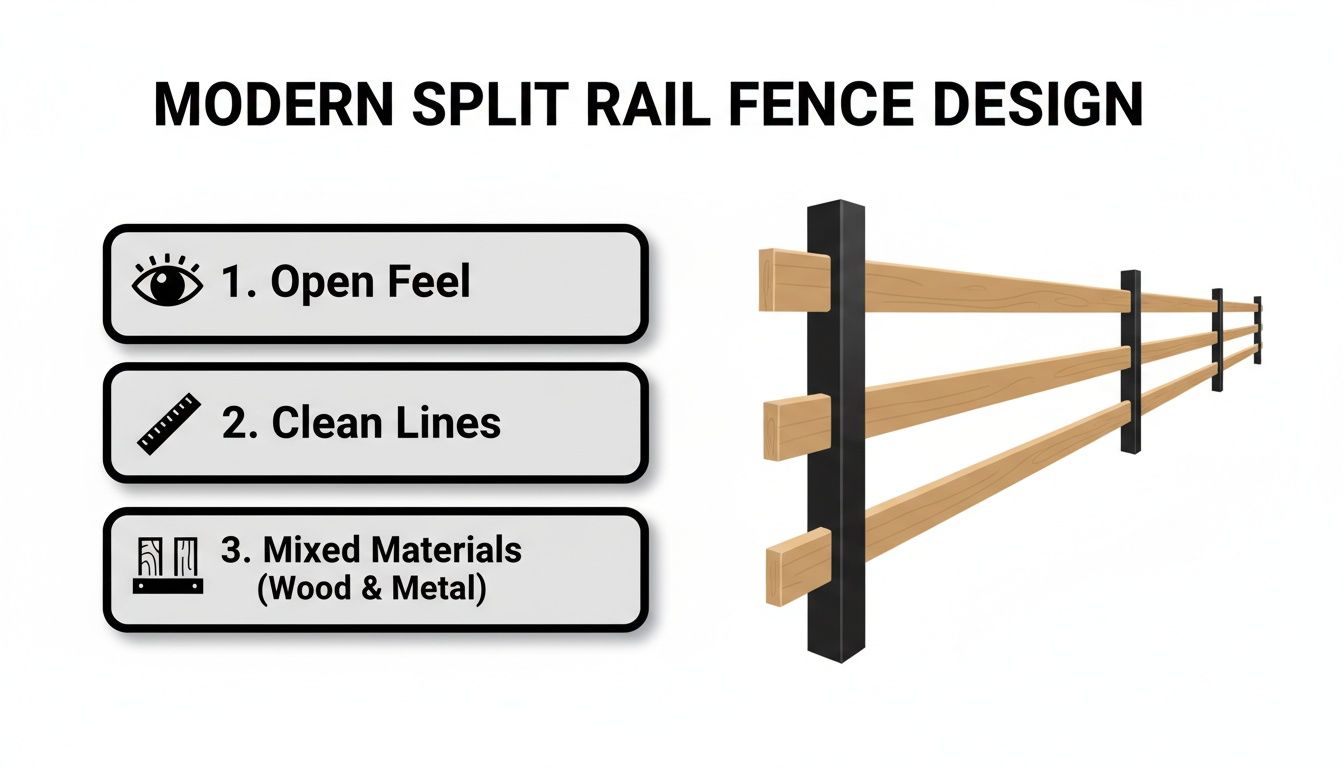
As you can see, the clean lines and mixed materials give it a unique character that is very different from traditional farm fencing.
Low-Maintenance Modern Alternatives
What if you love the split rail style but would rather spend your weekends enjoying your yard, not working on it? This is where modern materials truly excel. They deliver great looks with minimal effort and are becoming more popular every year.
Vinyl (PVC): For a truly "set it and forget it" fence, vinyl is the best option. It won’t rot, warp, or be damaged by insects, and it never needs painting or staining. A quick wash with a hose is all the maintenance it will ever require. With several color options available, you get the crisp look of a modern split rail without any of the traditional wood upkeep.
Steel or Aluminum: For a very sharp, contemporary edge, metal is the answer. We often pair powder-coated steel or aluminum posts with wood rails to create a striking mixed-material fence. This gives you unbeatable strength and a sleek, modern look that significantly boosts curb appeal.
Ultimately, choosing your material comes down to balancing three things: the look you want, your budget, and how much maintenance you’re willing to perform. Being honest with yourself about these priorities is the best way to ensure you'll love your fence for years to come.
Finishes That Define and Protect
A finish isn't just about color—it's about protecting your investment. With a wood fence, you can let it weather naturally or apply a stain. A good quality stain does more than add color; it seals the wood from moisture, which can dramatically extend its life.
For any metal components, powder coating is the industry standard for a reason. Instead of paint, a dry powder is applied and then baked on, creating a finish that’s much tougher than a liquid coat. It’s incredibly resistant to chipping and fading, ensuring those sleek metal posts look great for decades.
Modern Split Rail Fence Material Comparison
To make things a bit easier, here’s a quick side-by-side look at how these materials compare to each other.
| Material | Average Cost Per Foot (Installed) | Typical Lifespan | Maintenance Level | Best For |
|---|---|---|---|---|
| Pressure-Treated Pine | $12 – $20 | 10-15 Years | Moderate | Budget-conscious projects and a classic wood look. |
| Cedar | $18 – $30 | 20-30 Years | Low | Homeowners wanting a beautiful, naturally durable wood fence. |
| Vinyl (PVC) | $20 – $35 | 50+ Years | Very Low | Maximum convenience and a clean, uniform appearance. |
| Steel/Aluminum | $30 – $45+ | 50+ Years | Very Low | A sharp, contemporary design with ultimate strength. |
This table should give you a solid starting point for weighing the cost, longevity, and effort involved with each option. The right choice is the one that best fits your vision and your life.
Creative Design and Customization Ideas
A modern split rail fence is much more than a simple boundary line—it's a design element that can reflect your personal style and make your property more functional. While the basic design is loved for its clean simplicity, the real magic happens when you start to customize it. These creative touches are what transform a standard fence into a standout feature that is perfectly suited to your home and your needs.
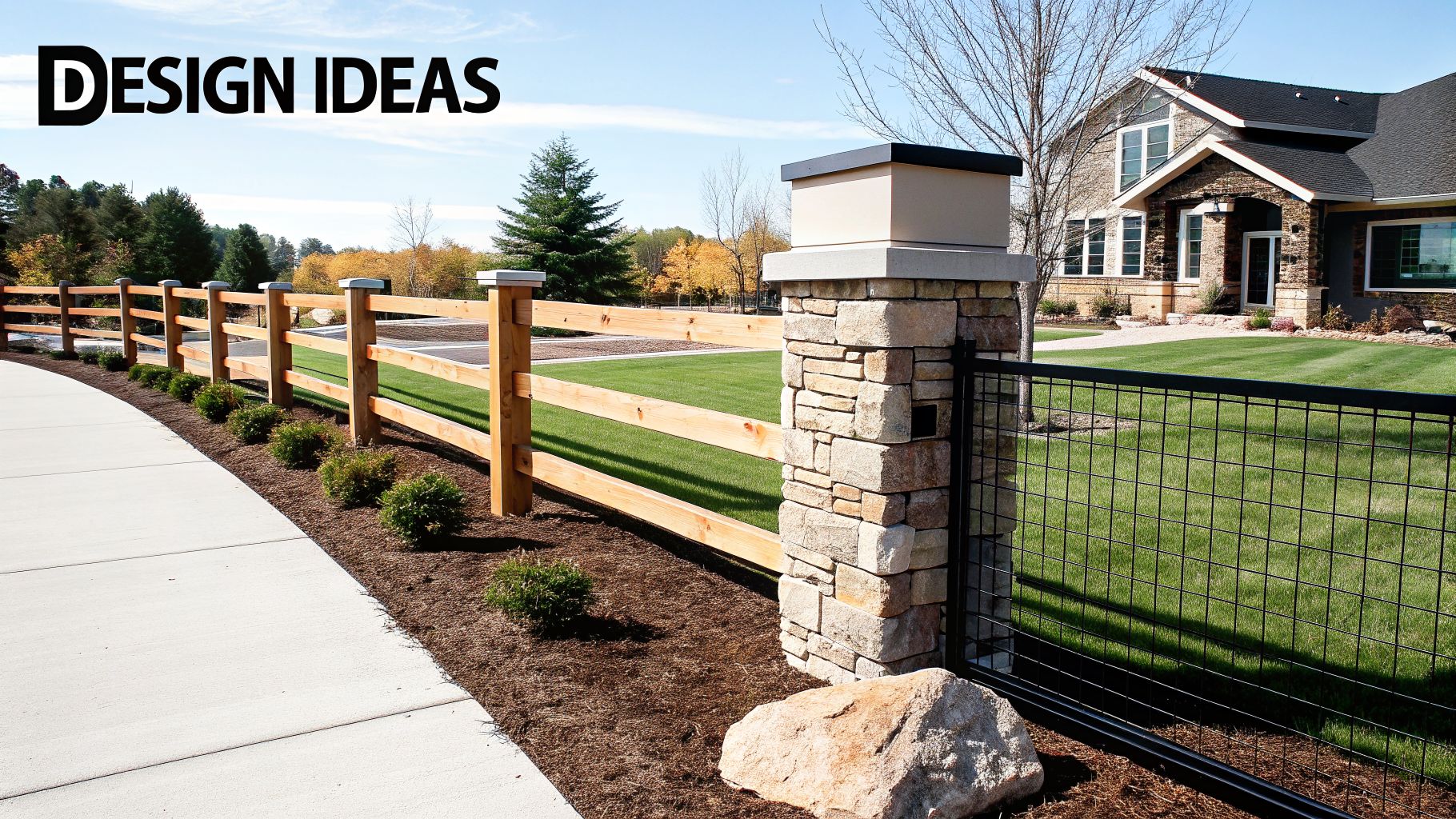
From small adjustments to bold architectural statements, there are countless ways to make a split rail fence your own. Let's walk through some of the most popular and effective ideas we see homeowners using.
Adjusting Rail Count for Height and Presence
One of the easiest yet most impactful ways to customize your fence is by changing the number of rails. The standard is usually a two- or three-rail setup, but adding or subtracting rails can completely alter the fence’s character and function.
- Two-Rail Fences: This is the classic, minimalist choice. It’s perfect for marking property lines without blocking beautiful Connecticut views, adding a strong horizontal accent to your landscape.
- Three-Rail Fences: Adding a third rail gives the fence more substance and height. This is often the ideal choice for homeowners who want a more defined boundary but still love that open, airy feeling.
- Four-Rail Fences: A four-rail fence feels much more substantial and secure. The extra height is great for containing larger pets and creates a stronger sense of enclosure, making your yard feel more like a private retreat.
Integrating Wire Mesh for Safety and Containment
For many Connecticut homeowners, keeping pets safely in the yard is a top priority. A traditional split rail fence has gaps that are wide enough for a curious dog to easily slip through. This is where adding wire mesh becomes a game-changing solution.
We can attach a black welded or woven wire mesh discreetly to the inside of the fence, effectively closing the gaps without detracting from the fence's rustic charm. The black color is important—it helps the mesh visually disappear, preserving the open sightlines that make a modern split rail fence so attractive.
This practical upgrade isn't just for pets. It’s also a common and effective solution for meeting local pool safety codes, creating a secure barrier that prevents accidental entry while still letting you see the water clearly.
This one addition turns a decorative border into a truly functional enclosure, giving families with children and pets genuine peace of mind. For homeowners with pools or those in an HOA, adding features like mesh and gates is essential for security and compliance. While these upgrades can increase a project's cost by 15-20%, they add tremendous utility. As market trends show, local companies are increasingly offering specialized hybrid options to meet these needs, which you can learn more about by reviewing these Fencing Market Insights.
Mixing Materials for a High-End Look
One of the true hallmarks of a modern split rail fence is the thoughtful mixing of materials. Combining different textures and colors is what elevates the design from simply rustic to sophisticated and refined, creating a custom look with incredible curb appeal. This approach lets you use the best qualities from each material.
Popular Combinations:
- Wood Rails with Metal Posts: Pairing the warmth of natural cedar rails with sleek, black powder-coated steel or aluminum posts creates a striking contrast. It’s a beautiful blend of classic and contemporary that defines the modern look.
- Wood Fencing with Stone Pillars: For a grand, timeless entrance, there's nothing like integrating handsome stone or masonry pillars. Using them as anchor posts or to frame a driveway adds a sense of permanence and architectural interest.
These combinations don’t just look amazing; they can also improve the fence's durability. For instance, metal posts keep the wood rails from touching the ground—a major cause of rot—which can significantly extend the life of your fence. The possibilities are nearly endless, as you can see from the wide variety of projects in our fence installation gallery.
How to Budget for Your New Fence
Let's address the most common question: "What will this new fence actually cost?" Thinking about the budget can feel overwhelming, but it doesn't have to be. The key is to understand that the final price is determined by a collection of choices you make along the way.
When we create a price quote, we start with the most basic factor: the total length of the fence, which we measure in linear feet. A small backyard in a suburban neighborhood will require far less material and labor than a sprawling, multi-acre property in the Connecticut countryside.
To give you a real-world picture, fencing a full acre of land requires about 835 linear feet. Depending on the materials and the design's complexity, a project of this size could range anywhere from $12,900 to $32,600. On average, most homeowners spend around $22,800. If you choose a straightforward two-rail cedar fence, which typically costs between $11.50 and $18 per foot, you’ll stay closer to the lower end of that budget. As you start planning, it can be helpful to see the bigger picture with these detailed fencing industry insights.
The Primary Cost Drivers
Beyond the length of your fence line, a few key decisions will have the biggest impact on your budget. These are the variables that determine the final cost per linear foot, the standard measurement used in the fencing industry.
- Material Selection: As we’ve covered, your choice of wood or vinyl is the single biggest factor. Pressure-treated pine is always the most budget-friendly option upfront. Premium materials like cedar and vinyl cost more initially but often save you money over time on maintenance.
- Number of Rails: The fence's height and overall look come from the number of horizontal rails. A classic two-rail design is the most economical starting point. For every rail you add, moving to a three- or four-rail fence, you can expect material and labor costs to increase by about 25% per rail.
Think of your fence budget like buying a new car. The base model (a two-rail pine fence) is the starting point. Every upgrade—from premium paint (cedar or vinyl) to a more robust design (a four-rail fence)—adds to the final price.
Property-Specific Challenges
No two pieces of land are identical, and your property's unique features can add costs that a simple price-per-foot calculator won't capture. It’s important to assess your property and account for these potential hurdles.
Common On-Site Cost Factors:
- Slopes and Hills: Installing a fence on uneven ground is more challenging than working on a flat lawn. It takes more skilled labor to ensure the fence follows the land's contour smoothly while keeping the posts perfectly vertical. This can add 10-20% to the installation cost.
- Rocky or Hard Soil: Connecticut soil is famously rocky. When we encounter dense rock while digging post holes, we must use specialized equipment, which adds time and labor to the job.
- Tree and Obstacle Removal: If your planned fence line runs through heavy brush, trees, or old stumps, that area must be cleared before we can begin. This preparation work is an additional but necessary expense.
Don't Forget These Additional Costs
A professional quote will always cover the core materials and labor for the fence itself. But a truly complete budget also accounts for a few other items that might be part of your project.
Knowing about these possibilities upfront helps you avoid any last-minute financial surprises.
- Gates: Every gate you add is a separate cost. The price depends on its width, the material, and the style of latch and hinge hardware you choose.
- Old Fence Removal: If you're replacing an old fence, the job includes tearing down and hauling away the old one. Make sure this service is included in your budget.
- Land Survey: If you are not 100% certain where your property lines are, investing in a professional land survey is a wise decision. It ensures your fence is built in the correct location and helps you avoid expensive disputes with neighbors later.
By carefully considering each of these factors, you can develop a realistic and comprehensive budget for your modern split rail fence. This preparation allows you to make confident decisions and end up with a beautiful, strong fence that adds value to your home for years to come.
Installation and Maintenance in Connecticut
Installing a modern split rail fence in Connecticut involves more than just setting posts in the ground. To get a fence that truly lasts, you must account for our state’s unique challenges, from local regulations to our distinct freeze-thaw cycles. Here’s what you need to know to get the job done right and keep your fence looking great for years.
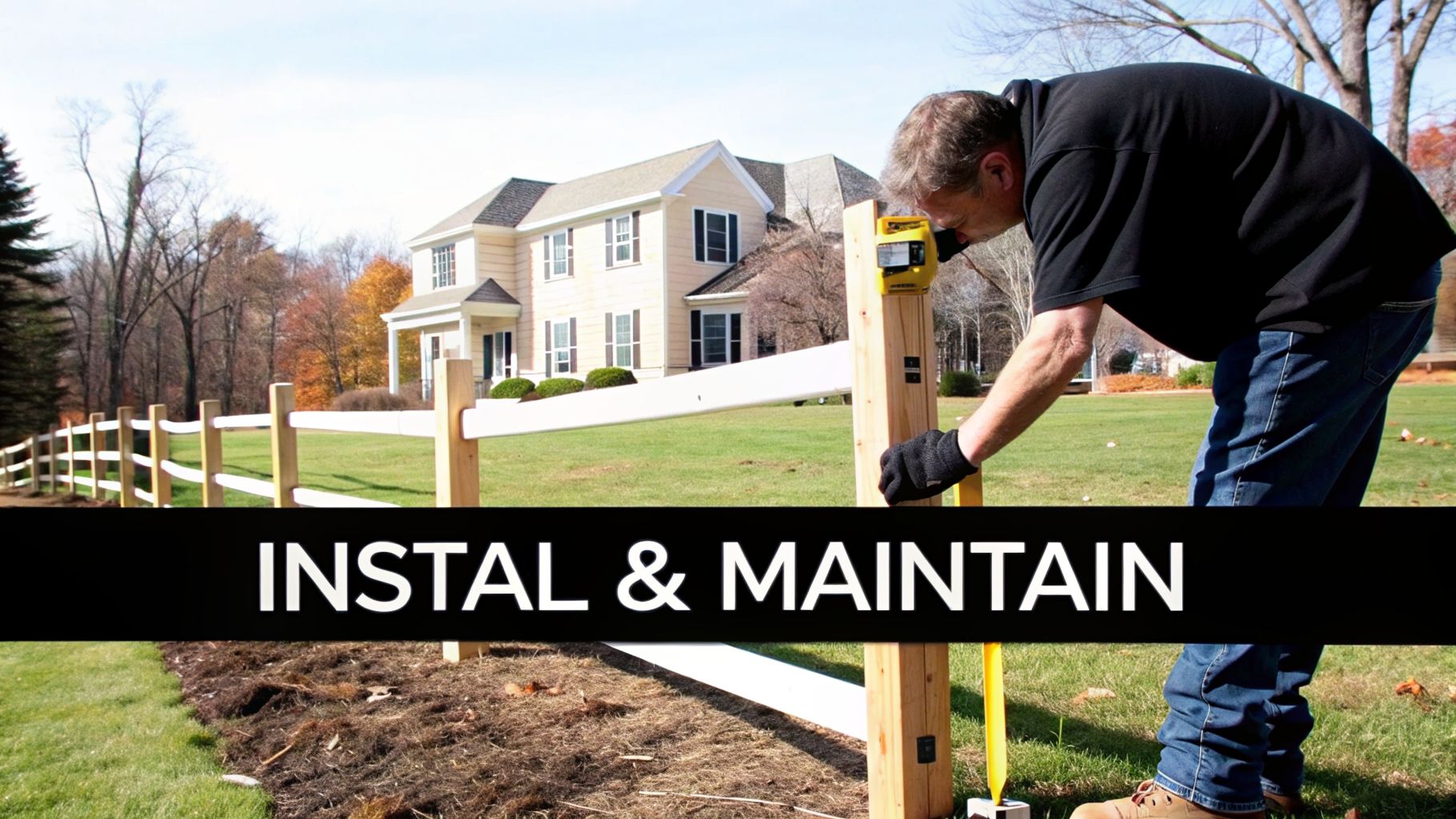
Before any digging begins, there is some important preparation to do. Getting these details sorted out first is the key to a smooth, problem-free project that is built to code.
Pre-Installation Checklist
The first thing we always tell homeowners is to know exactly where your property lines are. If there is any uncertainty, a professional land survey can save you from significant trouble and potential disputes with your neighbors. It’s a small price to pay for peace of mind.
Next, you will need to contact your local town hall. Zoning rules can vary widely across Fairfield and Hartford counties, covering everything from maximum fence height to how far it needs to be from the property line or road. A call to the planning and zoning department will provide the clear answers you need.
Finally, and this is mandatory, you must call 811 before you dig. It's a free, state-required service that sends crews to mark all underground utility lines on your property. Hitting a gas, water, or electrical line is extremely dangerous and can lead to major fines and repair bills. Do not skip this step.
The Importance of Professional Installation
Here in New England, professional installation isn’t just a convenience—it’s essential for a long-lasting fence. Our winters create a powerful effect called frost heave, which can push poorly set fence posts right out of the ground.
An experienced Connecticut contractor knows that to prevent frost heave, posts must be set well below the frost line—typically 36 to 48 inches deep in our area. This anchors the post in stable ground that doesn't move, ensuring your fence stays straight and secure through countless winters.
This local knowledge makes all the difference. It’s what separates a fence that looks good for a single season from one that remains a sturdy, beautiful feature of your property for decades.
A Simple Seasonal Maintenance Plan
The good news is that once your fence is properly installed, upkeep is fairly simple. A little attention each season is all it takes to protect your investment.
- Spring Refresh: As the snow melts, walk the fence line. Look for any signs of moisture damage on wood posts near the ground. It's also the perfect time to give a vinyl fence a quick wash with soap and water to clear away winter grime.
- Summer Upkeep: After major summer thunderstorms, check for any rails or posts that may have loosened. For wood fences, the dry summer months are the ideal time to apply a fresh coat of protective stain or sealant.
- Fall Preparation: Rake away any leaves and debris that pile up against the base of your fence. Trapped moisture is the biggest threat to wood posts, and keeping the base clear prevents rot from setting in over the wet winter.
- Winter Watch: When you're snow blowing or shoveling, try to avoid piling heavy snow against the fence. The weight and constant moisture can put a lot of stress on the posts and rails.
By following this simple routine, your modern split rail fence will continue to beautifully define your Connecticut property for years to come.
Why Professional Installation Is Worth It
It can be tempting to tackle a fence project yourself. It seems straightforward enough: dig some holes, set some posts, and you're done. But a modern split rail fence isn't just a weekend project; it's a permanent fixture of your home, and the difference between a DIY job and a professional one is something you'll see and feel for years.
Hiring an expert is about protecting your investment. It is the decision that ensures your new fence doesn't just look good on day one, but stands strong through decades of Connecticut weather.
Questions to Ask Any Fence Contractor
Once you’ve decided to hire a professional, the next step is finding the right partner for the job. Not all contractors are the same, and you need to do a little research to separate the seasoned experts from the rest. Think of it as a job interview—you’re hiring someone for an important role on your property.
Here are a few essential questions to ask before you sign any contract:
- Are You Fully Insured? This is the most important question. Any reputable contractor must carry both liability insurance and worker’s compensation. It’s your safety net, protecting you from financial risk if an accident or damage occurs on your property.
- What Warranties Do You Offer? A contractor who is confident in their work will stand behind it. Ask specifically about warranties covering both the fencing materials and the installation labor. This is your guarantee against installation errors or defective parts.
- Where Do You Source Your Materials? The quality of the wood, vinyl, or steel determines how long your fence will last. A true professional will be transparent about their suppliers and the grade of materials they are installing.
Getting clear answers to these questions will tell you everything you need to know about a company's commitment to quality and accountability.
Choosing a professional installer is about more than just getting the fence built; it’s about investing in peace of mind. You’re paying for expertise, efficiency, and the assurance that the job will be done correctly the first time.
For homeowners here in Connecticut, our team at Connecticut Fence Works has been providing that assurance since 2014. With hundreds of five-star reviews from your neighbors, our reputation is built on one thing: doing the job right. Our career installers are masters of their craft, handling every detail from a perfect layout to a flawless finish.
We manage the entire process, making sure every post is set to withstand our tough winters and every rail is perfectly aligned. Taking the next step is easy. We invite you to schedule a free estimate with us to talk about your vision and see exactly how we can bring it to life.
Answering Your Questions About Modern Split Rail Fences
Even with a solid plan, you are likely to have a few questions about bringing a new fence to life. This is completely normal. We’ve gathered some of the most common questions we hear from Connecticut homeowners to help you get a clearer picture.
How Long Does a Modern Split Rail Fence Last?
The lifespan of your fence depends on the material you choose and how it's cared for. A standard pressure-treated pine fence, when properly maintained, will typically provide 10-15 years of service. Cedar is a step up, as its natural oils resist rot and insects, often extending its lifespan to 20-30 years.
If you're looking for a low-maintenance solution, vinyl and metal are the top choices. These materials can easily last 50 years or more with minimal upkeep. For homeowners who want to handle Connecticut's tough seasons without worry, they represent a fantastic long-term investment.
Is a Split Rail Fence Good for Keeping Dogs In?
On its own, a standard two or three-rail fence is more of a visual guide than a physical barrier for most dogs. A determined or agile dog can easily slip through or jump over. The good news is that adapting it for pet containment is one of the most common and effective modifications we perform.
We simply add a wire mesh—usually a black welded or woven wire—to the inside of the fence. This creates a secure enclosure that keeps your pets safely in the yard. It’s the perfect solution because you get the security you need without losing the beautiful, open look that makes the modern split rail style so popular.
Does a Modern Split Rail Fence Increase Property Value?
Absolutely. A well-built, professionally installed fence is a huge boost to curb appeal and can definitely increase your home’s market value. A modern split rail fence, in particular, adds a touch of timeless, sophisticated style that buyers find very attractive.
Think of it this way: a quality fence does more than just look good. It clearly marks your property lines, creates a sense of privacy and security, and frames your entire landscape. Real estate agents consistently point to attractive, functional fencing as a key selling point for prospective buyers.
Do I Need a Permit for a Split Rail Fence in Connecticut?
This is a very common question, and the answer varies from town to town across Connecticut. As a general rule, many towns do not require a permit for fences under a certain height (often six feet), but you should never make that assumption.
It's critical to check with your local zoning or building department before any digging begins. This is something a professional contractor should handle for you. They will know the local regulations and manage the entire permitting process, ensuring your project is 100% compliant from day one.
Ready to turn those ideas into a finished fence you can be proud of? Since 2014, the team at Connecticut Fence Works has been focused on delivering top-tier craftsmanship and a clear, straightforward process. Schedule your free, no-obligation estimate today and let us show you what a difference true professionalism can make.