
Commercial Fence Repair Near Me: Fast, Professional Service in CT
When your business relies on a secure perimeter, a damaged fence is more than just an eyesore—it's a risk to your security, property, and daily operations. Getting fast, professional commercial fence repair from a local expert means your first line of defense is restored quickly, so you can focus on running your business.
Is Your Commercial Fence a Liability Risk?
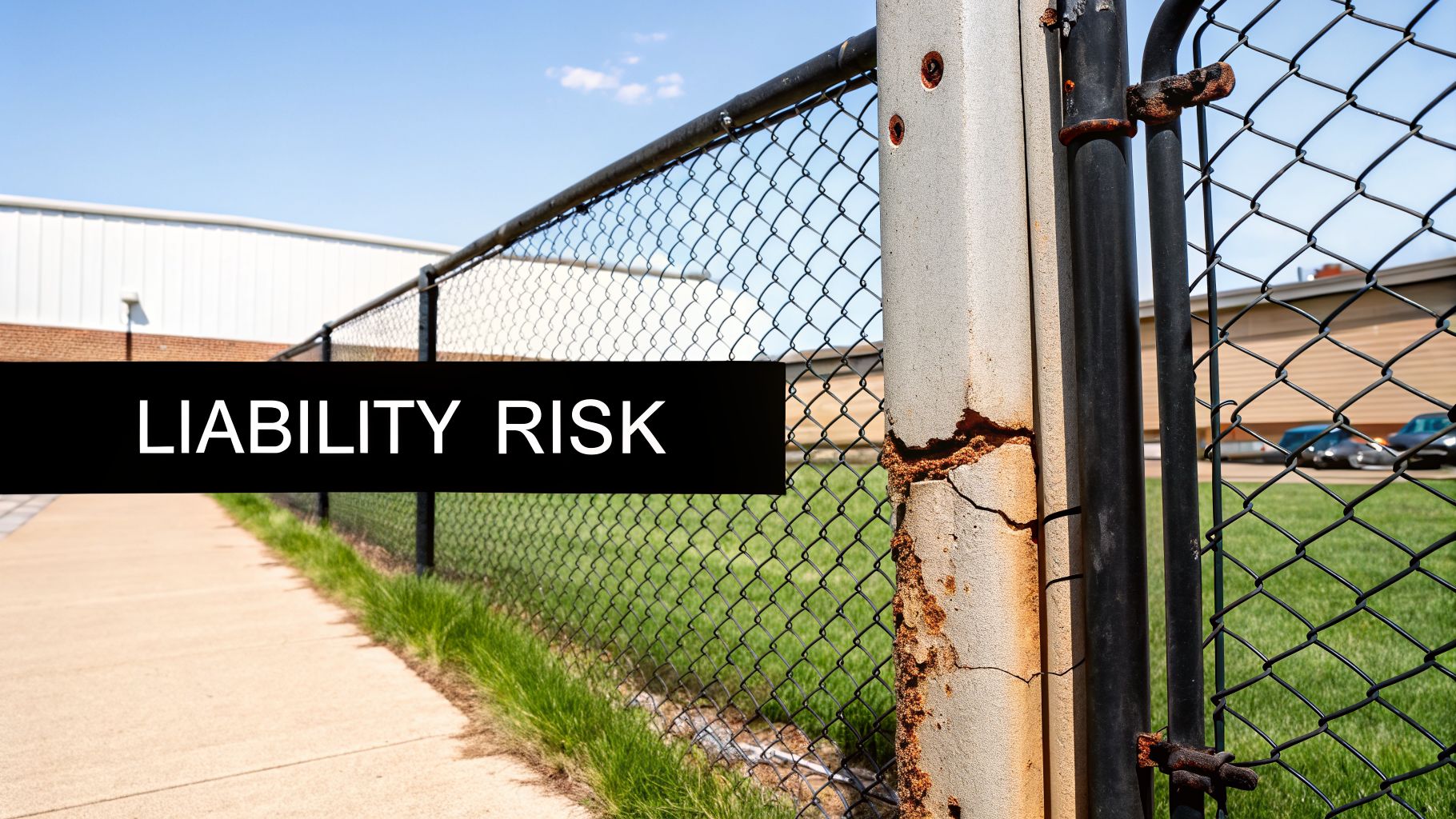
It is easy for property managers to overlook their commercial fence. But while you focus on other facility needs, your perimeter barrier could be turning from a protective asset into a major liability. What begins as a small patch of rust or a slightly wobbly post can quickly lead to failed inspections, security breaches, or even costly accidents.
Think of your fence like the foundation of a building. You may not look at it every day, but its strength is essential for protecting everything inside. Small problems, left unaddressed, can threaten your entire operation. This is why the fencing industry, a rapidly growing market, is placing a greater emphasis on maintenance. Research shows that a well-maintained barrier can reduce trespassing risks significantly. You can explore the full research on fencing market trends to see why this is a growing priority for businesses.
Signs of Trouble Beyond Fallen Sections
A fence section knocked over by a storm is obvious. The real danger, however, often comes from subtle issues that are easy to miss. Learning to spot these warning signs is the key to catching problems before a minor fix becomes a major replacement.
It pays to walk your fence line regularly. Here’s what we often see that facility managers may miss:
Leaning Posts: If a post is not standing straight, its foundation is likely failing. This is a common sign of a cracked concrete base or soil that has washed away.
Spreading Rust or Corrosion: On a chain-link or metal fence, rust is more than a cosmetic issue. It weakens the metal, making it brittle and easy to break.
Hairline Cracks: On vinyl or PVC fences, small cracks might seem harmless. But they allow moisture to get inside. When that water freezes and thaws, it can split the material wide open.
For commercial properties, weather erosion affects a significant percentage of metal fences annually in humid regions like Connecticut. This makes regular inspections an absolute must for any facility manager.
Before you call a contractor, a quick walk around your perimeter can tell you a lot. Use this checklist to get a sense of the situation.
Quick Damage Assessment Checklist
| Fence Component | Sign of Damage | Potential Risk |
|---|---|---|
| Posts | Leaning, cracked, loose in footing | Structural failure, fence collapse |
| Fence Fabric | Rips in chain-link, cracks in vinyl | Security breach, unauthorized access |
| Gates | Sagging, difficult to open/close, broken latch | Access control failure, vehicle/pedestrian hazard |
| Fasteners | Missing bolts, rusted ties, loose screws | Weakened sections, panels may detach |
| Coating | Peeling paint, widespread rust, discoloration | Weakened material, faster deterioration |
Taking just 15 minutes to check these key areas can help you spot a small problem before it becomes a costly emergency.
The Escalating Cost of Neglect
That one leaning post you noticed last month can lead to a collapsed section that leaves your property open to theft or vandalism. A rusty gate latch that’s tough to close might fail completely after hours, leaving you unsecured. These are the real-world consequences of delaying maintenance.
Ultimately, a fence in good repair reflects well on your business. It shows you are professional and take safety seriously. By catching and fixing minor issues now, you’re not just repairing a fence; you’re protecting your property, preventing accidents, and avoiding the high costs of emergencies and legal issues.
Understanding Common Commercial Fence Repairs
When it comes to commercial fence repair, there is no single solution. The right fix depends on the fence material, the type of damage, and how it was built. A professional's approach to a chain-link fence is completely different from how they would repair an ornamental steel or vinyl one.
This specialized skill is more important than ever. The US fencing market is a multi-billion dollar industry, and a large part of that growth is from commercial projects and repairs. In Connecticut, we see this every spring when property managers deal with the aftermath of a long winter.
Chain Link Fence Solutions
Chain link is popular for commercial properties because it’s tough and cost-effective, but it isn't indestructible. Vehicle impacts, shifting ground from frost, or simple wear and tear can cause damage.
Re-Stretching Sagging Fabric: A sagging chain-link fence is a security weak point. We fix this by using a professional tool to pull the mesh tight again. Once taut, we secure the fabric to the posts with new hardware, making the fence line strong and secure.
Replacing Bent Top Rails: The top rail provides essential stability. When a section is bent, we carefully cut out the damaged piece. We then slide a new rail into its place, securing it with connectors to create a strong, seamless repair that restores the fence's structure.
Key Insight: A properly installed chain-link fence should feel solid with very little give when you push on it. If it sags, the entire structure is weaker and easier for an intruder to climb or cut through. To learn more about this material, you can explore our guide on chain link fence options.
Ornamental Steel and Aluminum Repairs
Ornamental fences provide a premium look but require specific expertise to maintain their appearance and function. A proper repair preserves both the fence's beauty and its strength.
Most of our work on these fences involves a few common tasks:
Rust Treatment and Removal: With steel fences, rust is the main enemy. The process involves grinding away corrosion, treating the bare metal with a rust-inhibiting primer, and applying a matching paint to blend the repair flawlessly.
Repairing Broken Welds: Welds are the joints holding the fence together. An impact or stress can cause them to break. Our technicians can re-weld these connections on-site, restoring the joint to its original strength.
Replacing Damaged Pickets: A bent or broken picket can ruin the look of an ornamental fence. We can precisely cut out the damaged piece and weld or fasten a new, identical picket in its place.
Vinyl Fence Fixes
Vinyl is a popular low-maintenance choice, but it has weaknesses. It can become brittle in cold temperatures and is prone to cracking from direct hits. Unlike wood or metal, vinyl repairs almost always involve replacing a part rather than patching it.
For vinyl fences, we typically handle cracked panels or posts that have been pushed up by frozen ground. If a panel is cracked, we slide the damaged section out from between the posts and slide a new one in. For a post that has lifted, we must dig it out completely, pour a new concrete footing to the proper depth, and set the post perfectly level before reattaching the fence panels.
What to Expect from a Professional Fence Repair
When you search for a "commercial fence repair near me," you are not just buying a quick fix. You are investing in a process that restores your security and peace of mind. Knowing what a reputable contractor’s process looks like helps you identify true professionals.
It all starts with a thorough site inspection. This is more than a quick glance; it’s an experienced technician walking the entire fence line. They are trained to spot not just the obvious damage, but also hidden issues—like weakening post foundations or subtle corrosion that could lead to future problems.
From Quote to Contract
After a complete assessment, you should receive a detailed, transparent quote. This is not just a number on a piece of paper. It should be a full breakdown of costs for materials, labor, and any permit fees. A professional quote eliminates guesswork and ensures you know exactly what you are paying for.
Once you approve the quote, a formal contract is the next step. This document protects both parties by clearly defining the work to be done, the project timeline, payment terms, and warranties. In a large and growing industry, a solid contract is a clear sign of a contractor who stands by their work. You can learn more about the fence construction industry's growth on IBISWorld.com.
The infographic below shows the typical steps for different fence types.
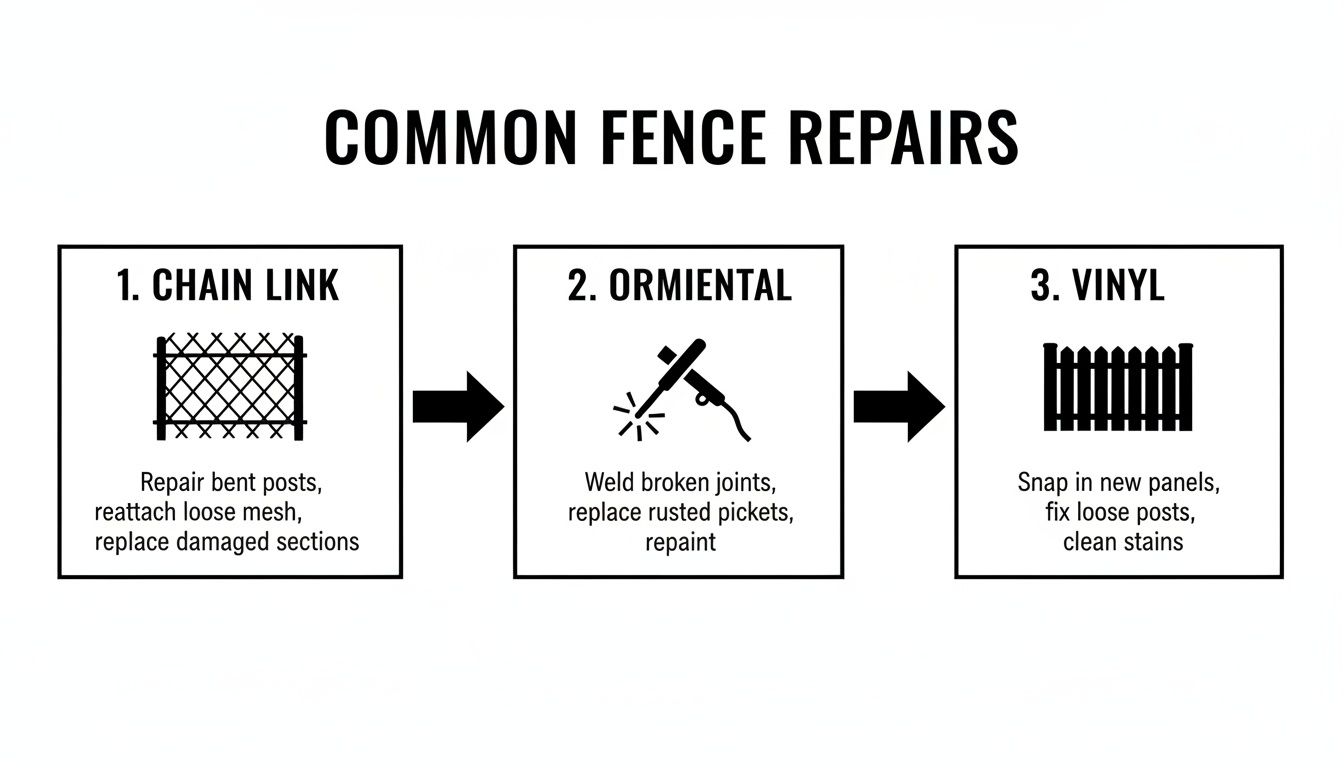
As you can see, while the general process is similar, the actual techniques vary. Re-stretching a chain-link fence requires a different skill set than replacing a section of ornamental iron or a cracked vinyl panel.
Scheduling, Repair, and Final Sign-Off
With the contract signed, your project is scheduled. A reliable crew will order the correct materials and arrive on time, fully equipped to complete the job efficiently. They will focus on making repairs that blend perfectly with your existing fence.
The job isn't finished when the last post is set. A true professional's work includes a complete site cleanup, removing all old materials and debris, and leaving your property as clean as they found it.
The process concludes with a client walkthrough. The project manager will walk the fence line with you, show you the completed work, and ensure everything meets your expectations. This is your chance to ask questions and give final approval, ensuring you are completely satisfied with the result. You can explore our fence repair services to see how we put this client-focused process into action.
How to Budget for Your Fence Repair Project
When your fence is damaged, two questions immediately come to mind: "How much will this cost?" and "How long will my property be vulnerable?" There is no simple, one-size-fits-all answer. Understanding what goes into a repair quote is the key to budgeting effectively and recognizing a fair price.
Think of it like car repairs. Straightening a few leaning posts is a minor job, but replacing a large section of fence destroyed by a vehicle is a major one. Both are "repairs," but the scope, materials, and labor are very different.
Properly planning for unexpected expenses is essential for running a business smoothly. A good guide to budgeting for small business success can help you create a financial plan that accounts for maintenance surprises like a damaged fence.
Factors Influencing Commercial Fence Repair Costs
To provide an accurate and transparent quote, we must consider several key factors that affect the final price. Understanding these factors will help you see exactly where your money is going.
The following table breaks down the main components that determine the cost of your repair project.
| Cost Factor | Description | Impact on Price (Low/Medium/High) |
|---|---|---|
| Material Type | The kind of fence you have is a major cost driver. Repairing an aluminum fence requires different parts and skills than a wood fence. | High |
| Extent of Damage | The difference between fixing one broken gate hinge and replacing a 20-foot section of fencing is significant. | High |
| Labor & Complexity | Some repairs are simple, while others require special techniques, like welding or drilling into concrete. | Medium |
| Site Accessibility | How easily can we get our truck and equipment to the fence line? Is the damage on a steep hill or behind landscaping? | Medium |
| Emergency Service | Urgent, after-hours calls to secure a property require an immediate response from a crew, which may have a premium cost. | Medium |
| Debris Removal | The cost to haul away and dispose of old, damaged fencing materials, concrete, or other debris. | Low |
Each element contributes to the total investment needed to restore your fence. A trustworthy quote will always account for these details.
Timeline Expectations: From Minor Fixes to Major Overhauls
Just as important as the cost is how long the repair will take. We know that every day your fence is damaged is a day your property is not fully secure.
For most minor repairs, like re-hanging a sagging gate or replacing a few pickets, we can often complete the work in just a few hours.
More substantial projects, such as replacing multiple fence sections or setting new posts in concrete, will naturally take longer. These jobs typically take one to two days, which includes the necessary time for the concrete to set and strengthen. A clear, realistic timeline will always be part of our initial quote, so you know exactly what to expect.
Choosing the Right Local Fence Repair Contractor

When you search for "commercial fence repair near me," you are not just looking for a quick fix. You are looking for a reliable partner who understands that your fence is a critical part of your business's security. The difference between a true professional and an inexperienced operator is significant. Choosing the wrong one can lead to a repair that fails, forcing you to start the process all over again.
Hiring the right contractor is like hiring a key employee—you need to do your research. A poor repair is bad enough, but an uninsured contractor can expose your business to major liability if an accident occurs on your property.
Vetting Potential Fence Repair Companies
How do you tell the experts from the amateurs? A professional company will be transparent and ready to answer your questions. Start by doing some research online.
Once you have a shortlist of companies, it’s time to dig deeper. Focus on three key areas: their experience, their credentials, and what past customers have to say.
Crucial Questions to Ask Before You Hire
Be prepared with these questions. A confident, experienced contractor will have no problem giving you straight answers.
Do you have specific experience with commercial properties like mine? There is a big difference between a backyard fence and a high-security commercial perimeter. Ask to see a portfolio of their recent commercial jobs to see their work firsthand.
Can you provide proof of insurance and licensing? This is non-negotiable. The contractor must carry general liability insurance and workers' compensation. This protects your business from a lawsuit if an accident happens on your property.
What warranties do you offer? Reputable companies stand by their work. Ask for specifics on the warranties they provide for both materials and labor. A solid warranty is a clear sign they are confident in the quality of their repair.
Key Takeaway: If a contractor is hesitant to provide their insurance certificate or examples of past work, that’s a major red flag. True professionals are proud of their credentials and are happy to share them to earn your trust.
Beyond these questions, check their online reviews. Go to Google and see what real customers are saying. Don't just look at the star rating; read the comments and look for patterns. Are clients consistently happy with their communication, timeliness, and the final result? A few bad reviews can happen, but a clear trend of poor service is a warning you should not ignore.
Your Connecticut Fencing Partner
When you search for "commercial fence repair near me" in Connecticut, you need a team that understands the challenges our local weather presents—from winter frost heaves to summer humidity.
That's where we come in. As an owner-operated company, Connecticut Fence Works has spent years serving businesses across Hartford, Tolland, Middlesex, New London, and New Haven Counties. We are not just based here; our expertise is built on firsthand experience with the same conditions your fence endures. We know what it takes to perform a repair that lasts.
Choosing a local company isn't just about faster service. It's about having a partner who is invested in protecting your property because we are part of the same community. We live here, we work here, and we stand behind every repair we make.
Our entire process is built on clear communication and quality workmanship, from the first call to the final walkthrough. Let us handle the repairs so you can regain peace of mind and a secure perimeter.
See for yourself how we approach commercial fencing solutions in Connecticut. When you're ready, reach out for a free, no-obligation estimate and experience what it’s like to work with a dedicated local expert.
Frequently Asked Questions About Fence Repair
When your commercial fence is damaged, we know you need answers quickly. As a property manager or business owner, you are balancing security, safety, and your budget. Here are some of the questions we hear most often, with straightforward answers.
How Quickly Can You Respond to an Emergency?
We take emergency calls very seriously, especially when a property's security is at risk. A breach from a vehicle collision or a malfunctioning security gate cannot wait.
While our exact arrival time depends on your location in Connecticut and our crew's availability, we always prioritize urgent situations. For the fastest response, call us directly. We will give you our earliest availability to get your site secured.
Repair or Replace: Which Is More Cost-Effective?
This is a common question, and the answer depends on the fence's age, material, and the extent of the damage.
Repair is your best bet for: Isolated problems on a fence that is otherwise in good condition. This includes fixing a few bent posts from a minor impact or replacing a single broken gate hinge.
Replacement becomes the smarter move for: Widespread, ongoing issues. If you are dealing with extensive rust on a chain-link fence, widespread rot in a wood fence, or multiple structural failures, you may spend more on continuous repairs than on a new installation.
During our free estimate, we will provide a professional assessment and an honest recommendation. We'll lay out the costs for both options so you can make the best financial decision for your property.
Do I Need a Permit for Commercial Fence Repair?
That is a great question, and the answer depends on your town's specific rules and the scale of the work. For most minor repairs in Connecticut towns—like replacing a few boards or fixing a latch—you do not need a permit.
However, you will likely need a permit if the job involves:
Replacing a large section of the fence line.
Changing the fence's original height or moving its location.
Don't worry about navigating the rules. We handle this regularly. As part of our service, we will advise you on any permit requirements for your project to ensure all work is done correctly.
Your property’s security is our top priority. For expert advice and dependable service on your next commercial fence repair, trust the local professionals at Connecticut Fence Works, LLC. Visit us online to request your free, no-obligation estimate today at https://ctfenceworks.com.