
How long does vinyl fence last: 2026 Durability Guide
When you're deciding on a new fence for your home, one of the first questions you likely have is, "How long is this actually going to last?" It's a fair question, and with vinyl, the answer is quite impressive.
A professionally installed, high-quality vinyl fence can be expected to last anywhere from 20 to 30 years. Some top-tier, premium products can even push that number closer to 50 years. That kind of lifespan turns a simple fence purchase into a genuine long-term investment for your property.
The Real Lifespan of a Vinyl Fence
Choosing a fence is a big decision for any homeowner, and understanding its lifespan is key. It helps to think of a quality vinyl fence not as a temporary barrier, but as a permanent upgrade—one that boosts your home’s security, privacy, and curb appeal for decades.
Unlike other materials that can be damaged by humid summers and icy winters, modern vinyl is specifically designed for durability. It’s built to stand up to the elements year after year, all without the constant upkeep that other fences demand.
A Clear Comparison
Vinyl's proven durability has changed the game in residential fencing. While most good-quality installations will give you 20 to 30 years of service, it’s not unusual for premium grades to last 40 or even 50 years with just basic care.
That’s a huge leap from traditional wood fences, which typically need replacing after just 10 to 15 years. And that’s with the constant scraping, staining, and sealing needed to fight off rot and decay. As many industry experts agree, vinyl's staying power has set a new standard.
A fence is more than just a boundary—it’s an asset. The extended lifespan of vinyl means you install it once and enjoy decades of security and curb appeal, freeing you from the cycle of frequent repairs and replacements.
The chart below gives you a straightforward visual of what to expect from vinyl versus a traditional wood fence.
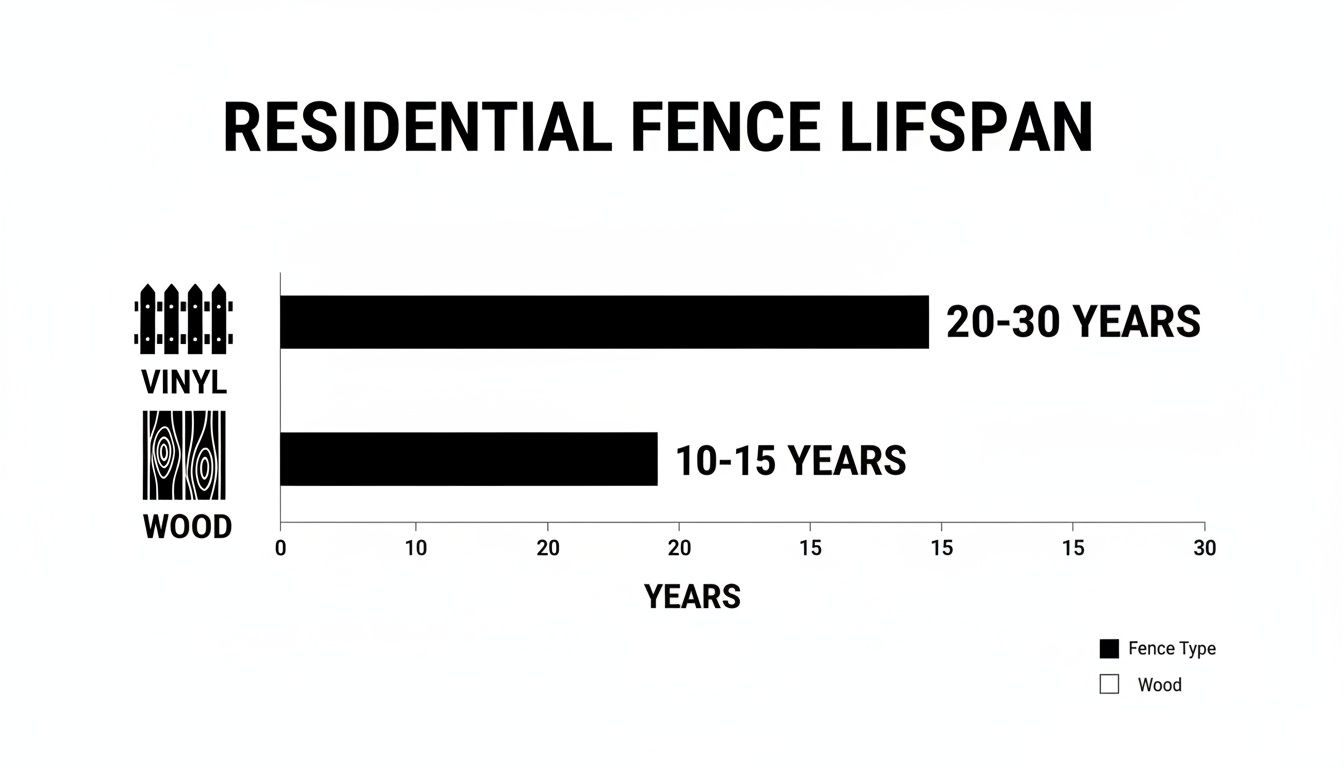
As you can see, vinyl offers at least double the lifespan of a typical wood fence, making it a far more reliable choice for the long term.
To put this in perspective, here is a quick breakdown of how common fence materials compare when you consider both their lifespan and the work required to maintain them.
Fence Lifespan and Maintenance at a Glance
| Fence Material | Typical Lifespan | Maintenance Level |
|---|---|---|
| Vinyl | 20-30+ Years | Low |
| Wood | 10-15 Years | High |
| Aluminum | 20-30+ Years | Low |
This quick comparison makes it clear: if you’re looking for a fence that delivers maximum longevity with minimum hassle, both vinyl and aluminum are the top contenders.
Key Factors That Determine Fence Durability
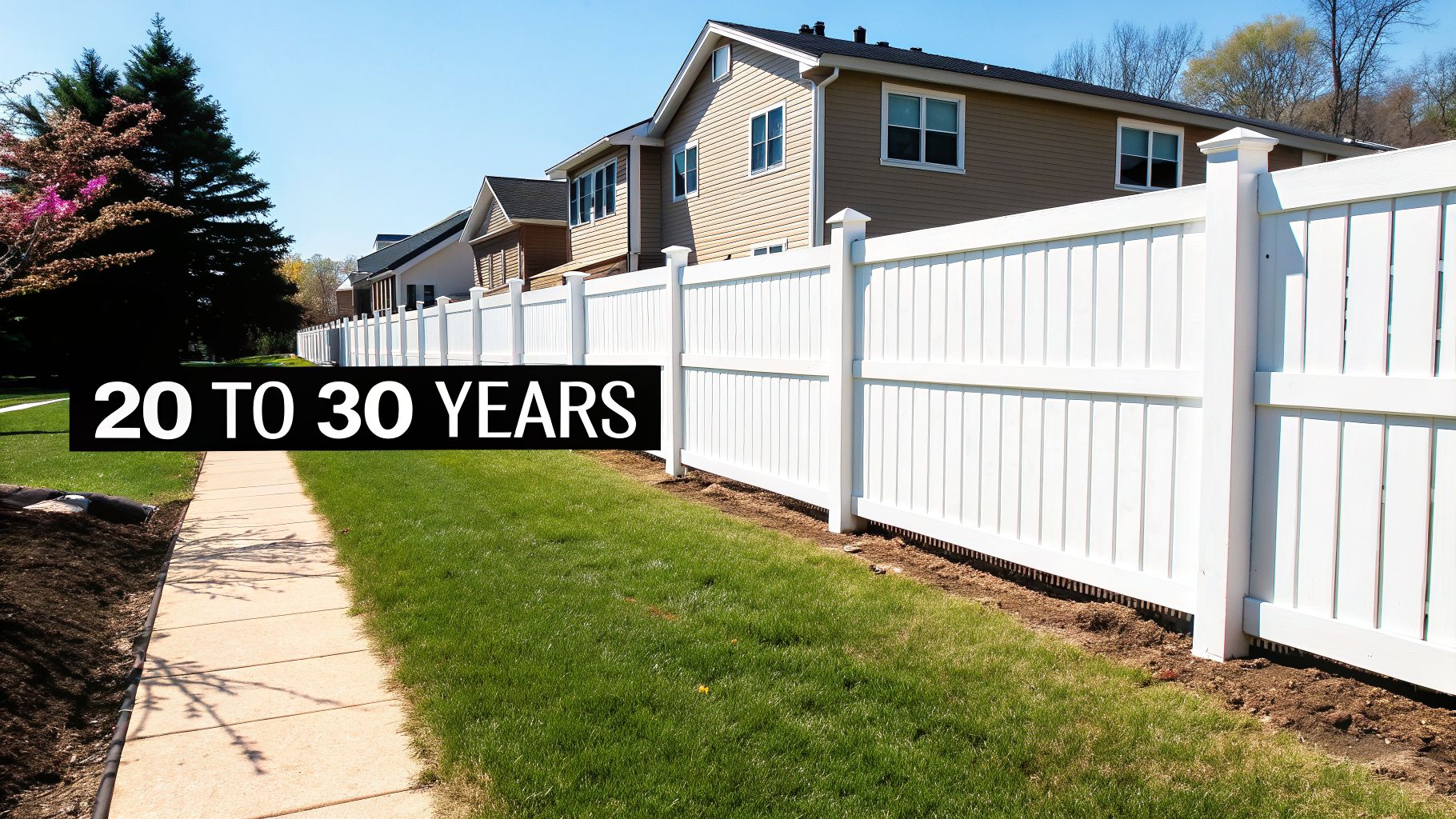
While a 20 to 30-year lifespan is a great baseline, not all vinyl fences are created equal. The real answer to "how long does vinyl fence last" comes down to a few critical factors that separate a fence that looks good for a season from one that stands strong for decades.
Think of it as the difference between a cheap suit and a custom-tailored one. Both look fine at first, but only one is built to last. Let's break down what really matters.
The Quality of the Vinyl Itself
The single most important factor is what the vinyl is actually made of. Top-tier manufacturers will only use 100% virgin vinyl. This simply means the fence is produced from brand-new raw materials, which gives it the best possible strength, color, and flexibility.
Some companies cut corners by using recycled vinyl. While recycling is a good practice for many products, it's not ideal for a fence that needs to battle the elements. Recycled materials can introduce inconsistencies that make the final product more brittle and likely to crack over time. It’s like baking with old ingredients—you just won't get the same quality result.
A fence constructed from 100% virgin vinyl is a sign of quality. This ensures consistent strength and color, forming the foundation for a fence designed to last a generation.
Beyond the source of the material, its thickness is also crucial. The posts, rails, and pickets need to have substantial wall thickness. A thicker profile offers far better impact resistance and helps prevent the sagging you sometimes see on flimsy, big-box store fences. It's built to handle real life, from an accidental bump with the lawnmower to kids leaning against it.
Built-In Sun Protection
A vinyl fence’s number one enemy isn't wind or rain—it's the sun. Over time, relentless ultraviolet (UV) radiation can break down the material, causing it to turn yellow, become brittle, and lose its strength. That's where a key ingredient, titanium dioxide (TiO2), comes in.
Think of TiO2 as a powerful, permanent sunscreen that’s mixed directly into the vinyl from the start. This additive works as a highly effective UV blocker, reflecting the sun's damaging rays away from the fence and protecting its structure. It's what allows a modern white vinyl fence to stay bright white and strong for its entire life, instead of fading and degrading like older, cheaper versions.
The Role of Professional Installation
Finally, you can have the best vinyl material in the world, but if it's not installed correctly, it won't last. A professional installation isn’t just about getting the fence straight; it’s about creating a solid structure that can stand up to tough winters and humid summers for years to come.
A high-quality installation always covers these key points:
- Proper Post Depth: Every post must be sunk deep enough to get below the local frost line. This is essential, as it prevents the ground from pushing the posts out of alignment during winter's freeze-thaw cycles.
- Secure Connections: Panels and rails need to be connected to the posts securely, but with enough room to allow for natural expansion and contraction with temperature changes. This prevents the fence from buckling or pulling apart.
- Correct Spacing: Precise measurements and leveling are vital. They ensure that weight and stress are distributed evenly across the entire fence line, which is key to preventing sag and maintaining long-term strength.
At the end of the day, expert installation is what ties all the other quality components together. It turns a great product into a permanent, valuable fixture for your property.
How Local Weather Affects Your Vinyl Fence
Anyone living in the region knows our weather can be unpredictable. When you're investing in a new fence, you need to know it can handle everything from muggy summer days to punishing winter freezes. A well-made vinyl fence isn't just a good-weather option; it’s actually designed for this kind of four-season climate.
Think about our humid, damp summers. That moisture is a major problem for a traditional wood fence, creating the perfect environment for rot and attracting insects. Vinyl, on the other hand, is non-porous, meaning it doesn't absorb water. Water simply can't soak in, which means rot and pests never become an issue. This alone eliminates the biggest headache that comes with owning a wood fence in our climate.
Built for Cold Winters
Our freeze-thaw cycles are what really separate durable materials from the rest. When water gets into tiny cracks in wood or concrete, it freezes, expands, and can break the material apart from the inside out. High-quality vinyl, however, is manufactured with a critical degree of flexibility.
Think of it like this: where a rigid material would get brittle and snap in the cold, modern vinyl is designed to bend. This allows it to safely expand and contract with temperature swings, preventing the cracks and splits that destroy other fences during a tough winter.
This built-in flexibility is a huge reason how long a vinyl fence lasts is measured in decades, not just a few years. It’s made to move with the shifting ground, not fight against it.
Standing Strong Against Wind and Rain
From summer thunderstorms to coastal gales, a fence has to take a beating from the wind. While the vinyl material itself is incredibly resilient, its strength against high winds comes down to one thing: the quality of the installation. A fence is only as strong as its posts.
When a professional crew sets the posts deep below the frost line and anchors each one properly in concrete, the entire fence line acts as a single, solid barrier. This is what keeps your fence standing straight and tall after a storm blows through. That ability to shed wind and water makes vinyl a truly tested choice for any home.
Comparing Vinyl Against Wood and Aluminum Fencing
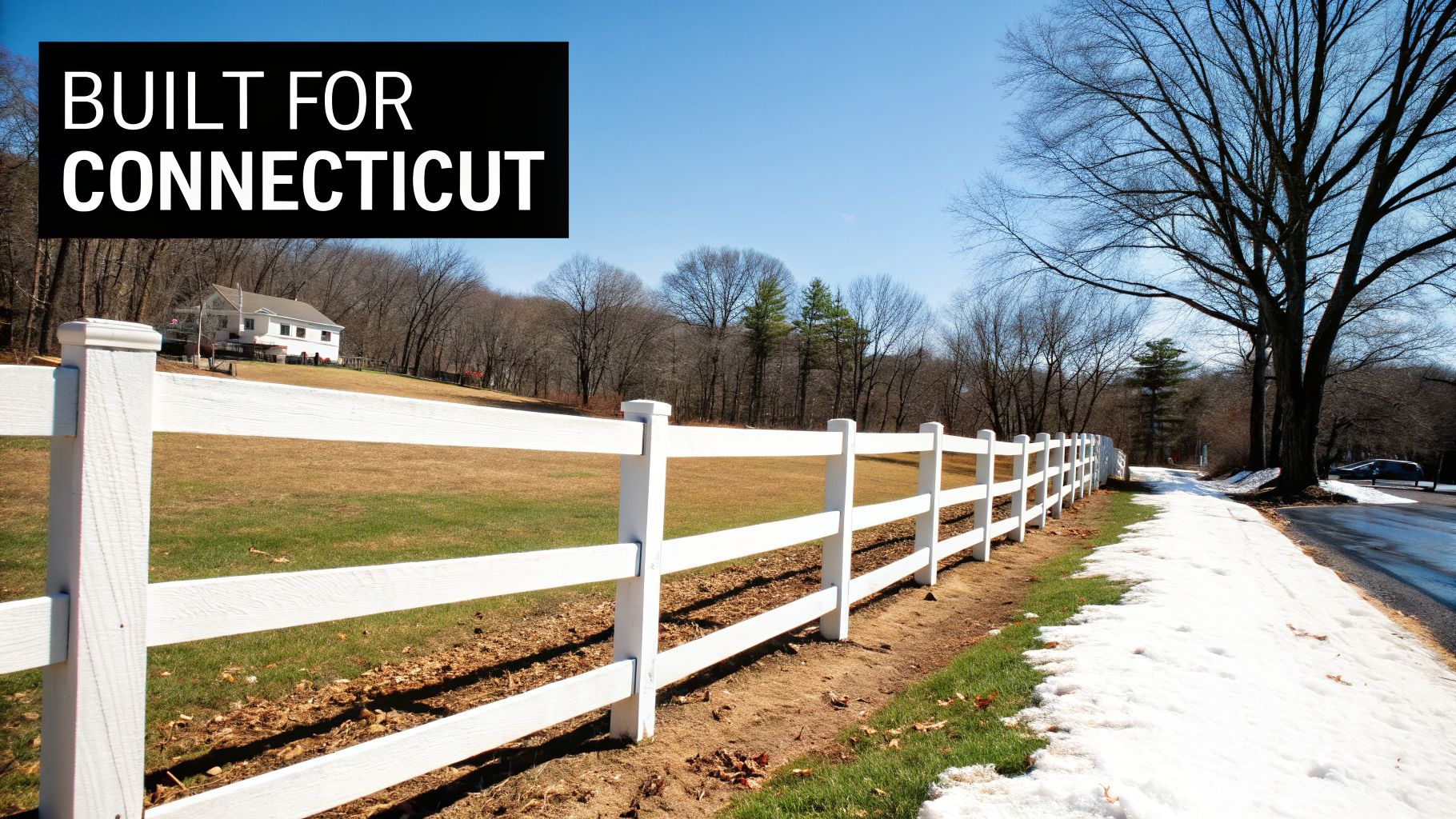
To feel confident in your choice, it helps to see how vinyl compares to other popular fencing materials. While vinyl often wins for longevity and easy care, looking at the pros and cons of wood and aluminum gives you the full story. This clear comparison shows why vinyl so often delivers the best long-term value for homeowners.
Wood Fencing: A Classic with High Demands
Let's start with the classic: wood. There's no denying the timeless, natural beauty of a cedar fence. It’s a gorgeous option that blends into just about any landscape, which is why it remains a favorite for many.
But that natural charm comes at a price, and not just the initial cost. The real cost is in maintenance and a shorter lifespan. A wood fence is in a constant battle with the elements.
It demands regular attention—staining, sealing, or painting every few years to fight off moisture, rot, and insects. If you fall behind on that upkeep, a wood fence will quickly start to warp, splinter, and decay.
Even with perfect care, a typical wood fence lasts about 10 to 15 years. When you compare that to vinyl's 20 to 30 years or more, you're looking at replacing a wood fence at least once, maybe twice, in the time you'd have a single vinyl one. If you’re drawn to its rustic appeal, you can learn more about the unique qualities of cedar fencing.
Aluminum Fencing: A Low-Maintenance Alternative
Aluminum is another fantastic, low-maintenance material that rivals vinyl in the durability department. It won’t rust, rot, or be damaged by insects, making it a true "set it and forget it" choice for many homeowners.
The sleek, modern look of aluminum works especially well for pool enclosures and defining property lines where total privacy isn't the main goal. An aluminum fence can easily match vinyl's 20 to 30-year lifespan, making it another great long-term solution.
The trade-off? While it's certainly strong, aluminum is more likely to dent from a heavy impact than vinyl is. More importantly, its traditional open-picket style just doesn't offer the same kind of privacy you get from solid vinyl panels.
When you weigh all the factors—lifespan, maintenance, and appearance—vinyl strikes the perfect balance. It delivers the longevity of aluminum and the privacy of wood, all with the lowest maintenance demands of any material on the market.
Ultimately, the right fence comes down to what you value most. But if you’re looking for a material that gives you design flexibility, robust privacy, and a lifespan that promises decades of worry-free performance, vinyl fencing is an unbeatable investment.
Simple Upkeep to Maximize Your Fence's Life
One of the biggest benefits of a vinyl fence is how little work it requires. But low-maintenance doesn't mean no maintenance. Think of it less as a chore and more as a quick annual check-up that protects your investment for decades to come.
This small amount of care goes a long way, ensuring your fence looks just as good in its twentieth year as it did on day one.
The Annual Cleaning Routine
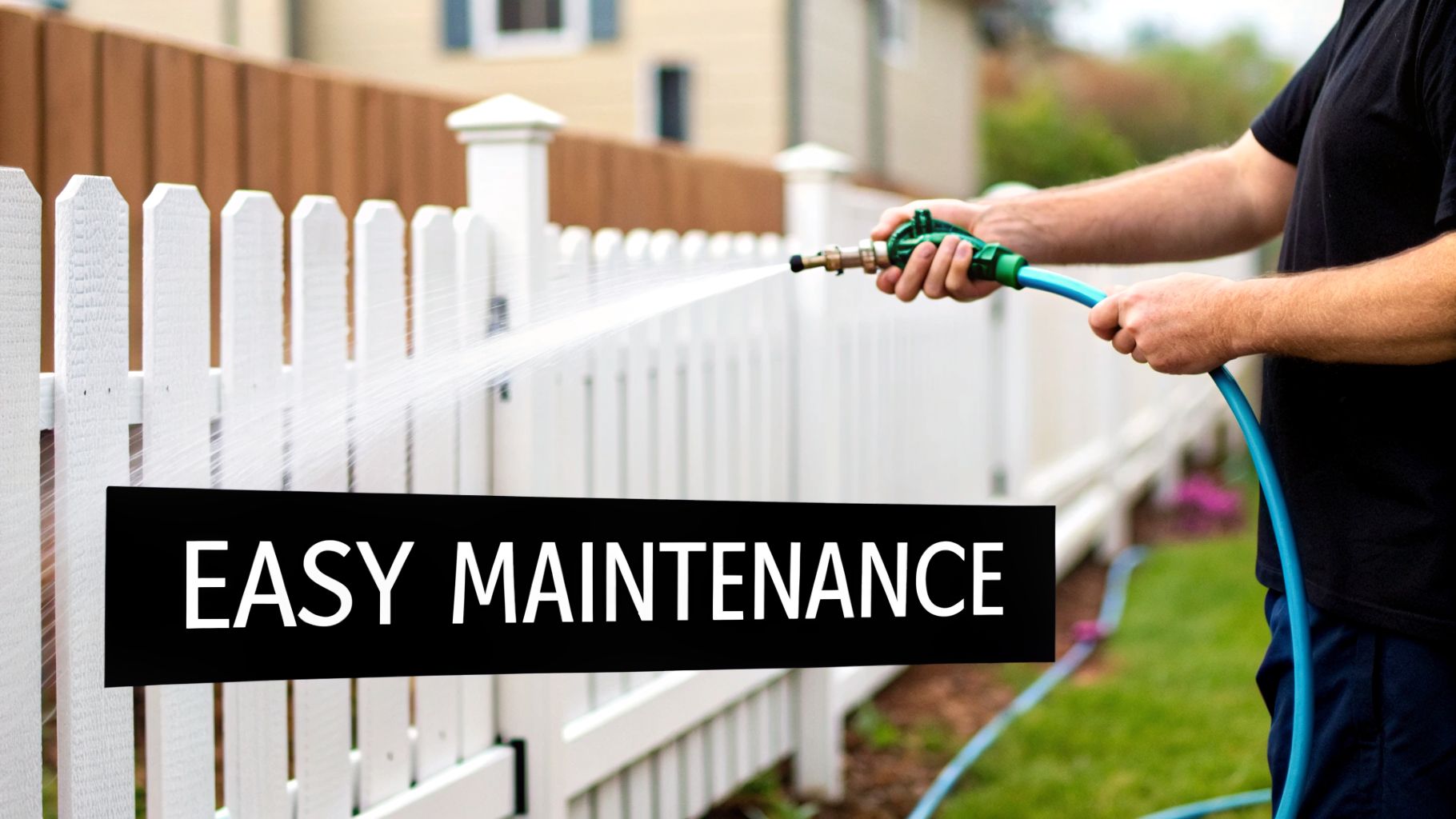
For most homeowners, keeping a vinyl fence looking sharp is surprisingly simple. A yearly cleaning is usually all you need to wash away pollen, dirt, and general grime. Most of the time, a good spray-down with a garden hose is all it takes.
If you have stubborn spots—like mildew in a damp, shady corner or mud splattered from a lawnmower—just use a soft brush and a bucket of mild, soapy water. That’s it. You don't need harsh chemicals or a pressure washer, which can actually damage the vinyl’s protective finish.
After its yearly cleaning, it’s the perfect time for a quick walk-around inspection. This only takes a few minutes, but it's the best way to catch small issues before they become bigger problems.
- Check Post Caps: Make sure every post cap is sitting tight and secure. They aren’t just for looks; they’re your fence’s first line of defense against water and debris getting inside the hollow posts.
- Inspect Gate Hardware: Take a look at the hinges and latches. Gates get the most use, and screws can sometimes work themselves loose. A quick tightening keeps everything swinging smoothly and closing securely.
- Scan the Fence Line: Look down the entire run of the fence. A professionally installed fence shouldn't shift, but it’s always smart to confirm everything is still straight and level, especially after a long winter.
Properly capping your posts is a crucial part of protecting your fence from the elements. To learn more about this, you can read about choosing the perfect cap for fence post and ensuring your posts are shielded from long-term moisture damage.
A quick, ten-minute inspection each spring is one of the smartest things you can do to extend your fence’s life. It allows you to address tiny adjustments yourself, ensuring the fence remains as sturdy and secure as the day it was installed.
By making this part of your spring routine, you're actively safeguarding the longevity that makes vinyl such a fantastic investment. And if you do happen to spot something more serious during your inspection, like damage from a fallen limb, don't worry. Vinyl fence repairs are typically clean and straightforward. You can learn about our professional fence repair services that can get your fence back into perfect shape.
Why Professional Installation Unlocks True Longevity
A top-quality vinyl fence has the potential to last for 30 years or more, but that potential isn’t guaranteed. It all depends on how it’s installed from day one. Think of it like building a house; without a solid foundation, even the finest materials won't stand the test of time. Professional craftsmanship is the single biggest investment you can make in your fence's future.
An experienced installer sees a fence as a complete system, not just posts and panels. They know it has to work in harmony with the local environment. That’s why their process is so careful. It’s the difference between a product that just looks good and a lasting improvement you can rely on for decades.
The Foundation of a Lasting Fence
For a fence to survive tough seasons, the work done underground is every bit as important as what you see. The most critical step is digging the post holes deep enough to get well below the regional frost line. This is essential. It’s what prevents “frost heave,” a powerful force where freezing soil can push posts out of the ground, leaving your fence crooked and weak.
Just as crucial is the concrete used to set each post. Professionals have a specific mix and method for creating a solid footing that won't shift, locking the post firmly in place. This precision ensures the whole fence remains stable against wind, impact, and whatever else comes its way. The parallels to other foundational work are clear; understanding the debate over a DIY vs Professional Foundation Installation for other structures shows just how vital expertise is for long-term stability.
An expertly installed fence is a promise of performance. It means every post is plumb, every panel is level, and every component is secured to withstand decades of weather without sagging or shifting.
The Value of Craftsmanship
Finally, it comes down to the details. Precise leveling and spacing distribute the fence’s weight evenly across the entire structure, which prevents stress from building up on any one point. As an owner-operated business, we take this level of detail seriously. Our reputation is built one straight, strong fence at a time.
We bring this same commitment to every project, including durable solutions for local businesses. You can see how we apply these standards by learning about our commercial fence installation in Connecticut.
At the end of the day, a proper installation is the bridge between a great product and real-world performance, ensuring you get every bit of value from your investment.
Common Questions About Vinyl Fence Longevity
Making a final decision on a new fence can feel a bit overwhelming, and it's completely normal to have some remaining questions. It's a major investment, after all. Let's tackle some of the most common concerns we hear from homeowners to make sure you have complete confidence in your choice.
Will a White Vinyl Fence Turn Yellow Over Time?
That's a common worry, but with today's materials, the answer is a firm no—as long as you choose a quality product. Reputable manufacturers add a critical ingredient to their vinyl: titanium dioxide (TiO2). Think of it as a powerful, permanent sunscreen built right into the material.
This ingredient is the secret to preventing the yellowing and brittleness that affected vinyl fences from decades ago. A professionally installed, high-grade fence is engineered to hold its brilliant white finish year after year, even under the summer sun.
Can a Vinyl Fence Be Repaired if Damaged?
Absolutely. In fact, this is one of vinyl's strongest selling points. Vinyl fences are built in a modular way, with individual pickets, rails, and posts. So, if a falling branch or a stray baseball cracks a single component, you don't have to replace the whole fence.
A skilled installer can simply remove the damaged piece and slide in a new one. The repair is quick, efficient, and once it's done, you'd never even know the damage was there.
Is a Thicker Vinyl Fence Always Better?
In almost every case, yes. The wall thickness of the vinyl is one of the clearest indicators of its quality and long-term durability. A thicker profile gives the fence far more structural strength to resist sagging and better impact resistance against whatever life throws at it.
It's tempting to go for a lower-priced option from a big-box store, but those fences often use thinner, less sturdy vinyl. They might look good on day one, but they simply don't have the strength to withstand years of freeze-thaw cycles and storms.
It's always wise to ask about the specifics of a warranty. A "lifetime warranty" typically covers manufacturing defects like cracking or unusual discoloration for the original owner. It usually does not cover damage from impacts, extreme weather, or improper installation—which is another reason why choosing an expert installer is so critical.
Investing in a fence with substantial wall thickness is one of the most important things you can do to ensure you get the full 20 to 30-year lifespan you're paying for.
Ready to invest in a fence that offers decades of beauty and performance? The team at Connecticut Fence Works, LLC provides expert guidance and superior installation for residential and commercial properties across the state. Request your free estimate today!