
Types of Fences for Dogs: 2026 CT Home Guide
Choosing a fence for your dog is one of the most important steps you can take for their safety and your peace of mind. You have many options, from classic wood and reliable chain link to modern vinyl. Each type has its own benefits depending on your dog's needs and your yard's layout. This guide will help you understand your choices and select the best fence for your situation.
Finding the Right Fence for Your Dog in Connecticut
A fence is more than just a property boundary—it creates a safe play area for your dog and serves as a primary layer of protection. For homeowners in Connecticut, selecting the right fence means balancing your dog's temperament, your yard's characteristics, and our state's variable weather conditions.
The process is similar to choosing the right leash for your dog; you wouldn't use the same one for a small Chihuahua as you would for a large Great Dane. The fence you choose directly affects your dog's freedom and safety, as well as your daily routine.
Key Factors to Consider
Before you review different materials, it's helpful to assess your specific needs. Clarifying your priorities at the start will make all subsequent decisions easier.
- Your Dog's Behavior: Is your dog a jumper, a digger, or a chewer? Some dogs are natural escape artists. Your dog's behavior is the most critical factor, as it determines the necessary fence height, strength, and design.
- Your Property's Layout: Is your yard sloped? Do you have rocky soil or an unusual property line? These physical conditions can make some fence types more practical—or more costly—to install than others.
- Aesthetic and Privacy Goals: Are you seeking a full privacy barrier to block views and reduce barking? Or do you prefer an open, visible design that enhances your home's curb appeal?
The ideal fence addresses your dog's containment needs while complementing your home's style and local environment. A fence that fails to account for a dog’s tendency to jump or dig is an investment that will not perform its essential function.
This guide is designed to be your roadmap. We will explore the most common and effective types of fences for dogs, detailing the pros and cons of materials like wood, chain link, vinyl, and ornamental metal. By the end, you will have the information needed to select a fence that keeps your dog secure and enhances your property.
Why Wood Fences Are a Classic Choice for Dog Owners
The wood privacy fence is a timeless American classic for reasons that extend beyond its appearance. For dog owners, it is one of the most effective solutions for creating a secure and peaceful backyard. Its primary strength is its ability to provide a solid visual barrier, which is highly beneficial for many dogs.
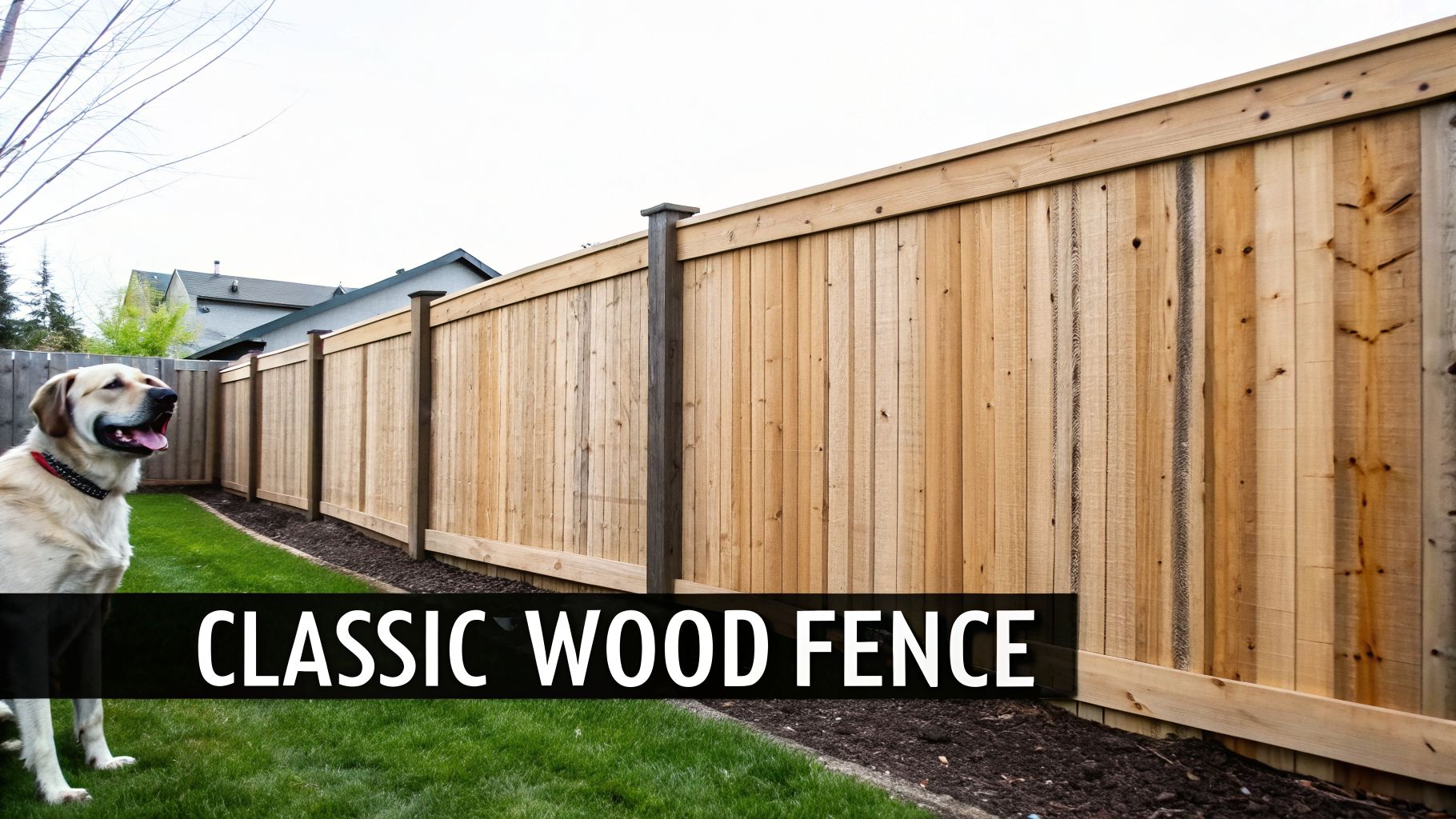
From your dog's point of view, every passing person, animal, or vehicle is a significant event. A solid wood fence applies the "out of sight, out of mind" principle, which can dramatically reduce the triggers that lead to barking and fence-running. This results in a calmer dog and, frequently, more harmonious neighborhood relations.
The Appeal of Natural Wood
Aesthetics are also important. A well-constructed wood fence adds a natural warmth and texture that improves your property's curb appeal. Materials such as cedar offer a classic look that can be customized to suit any home style, from traditional to contemporary.
This is not solely about appearance. A solid wood panel fence provides a formidable physical barrier. It is an excellent choice for large, powerful breeds that might view a more open fence style as a challenge. The solid construction discourages climbing and provides a genuine sense of security for both you and your dog.
Wood fences are the preferred choice for over 60% of homeowners building a pet enclosure, primarily because they block visual triggers. In fact, properties with solid fences often experience 75% fewer noise complaints, which highlights their effectiveness in reducing a dog's anxiety-driven behaviors.
Key Considerations for Wood Fences
While wood is an excellent choice, it does require some maintenance. To maintain its appearance and structural integrity against Connecticut's four-season weather, routine care is necessary.
- Sealing and Staining: This is essential. Applying a quality stain or sealant every few years is the best defense against moisture, rot, and insects that can weaken the fence.
- Potential for Chewing: Some dogs, particularly teething puppies or anxious adults, may be inclined to chew on wood. This can damage the fence and create a hazard if the dog ingests splinters or treated wood.
- Warping and Repairs: Wood is a natural material, so minor warping or shrinking over time is normal. Fortunately, replacing an individual board is a simple repair.
Choosing the right material from the start is crucial. Investing in pressure-treated cedar is a wise decision due to its natural resistance to insects and decay. You can learn more about the unique advantages of cedar fencing and why it is a popular option in New England.
Our data indicates that for larger breeds like Labradors or German Shepherds, a fence at least 6 feet high is the safest option to prevent escapes. With proper care, a modern pressure-treated cedar fence can last 20-30 years—a significant improvement over untreated wood from the past.
Ultimately, a wood fence is an excellent all-around solution if you prioritize privacy, classic style, and a secure boundary for your dog. It may require more maintenance than vinyl, but many homeowners find the beautiful, peaceful environment it creates is a worthwhile trade-off.
If you value your free time but still need a secure fence for your dog, modern materials offer low-maintenance solutions. While a classic wood fence has its appeal, many dog owners prefer materials that can withstand both their pets and Connecticut's weather with minimal upkeep.
Let's explore some of the most popular low-maintenance options that ensure your dog's safety without demanding your weekends.
The Modern Appeal of Vinyl Fencing
Vinyl, also known as PVC, has become a leading choice for dog owners who want a "set it and forget it" fence. As a non-porous material, it is immune to the common problems of wood fences—it will not rot, suffer insect damage, or warp from moisture. A simple spray with a garden hose is typically all that is needed to keep it looking new.
For dog owners, the benefits are even more significant:
- No Chewing, No Splinters: The slick, smooth surface offers nothing for dogs to chew on, eliminating the risk of dangerous splinters.
- Total Privacy: Vinyl fencing is usually available in solid panel designs, creating a complete visual barrier. This is highly effective for reactive dogs that bark at passersby or other animals.
- Gap-Free Security: The panels interlock securely, leaving no gaps for small dogs or puppies to squeeze through.
Vinyl is a superb all-around choice for nearly any dog, but it is especially effective for escape artists and dogs prone to reactivity. To explore your options, you can learn more about vinyl fencing options that combine style and security.
Ornamental Fencing: Where Style Meets Strength
If you want to secure your yard without obstructing your view, ornamental aluminum and steel fences provide the timeless elegance of wrought iron without the rust and maintenance. Aluminum is a particularly smart choice in Connecticut; because it will not rust, it performs exceptionally well in our humid summers and snowy winters.
One critical detail for these fences is the picket spacing. The standard gap can be just wide enough for a small dog or a determined puppy to slip through.
Expert Tip: If you have a small dog, always request "puppy pickets." This design adds shorter pickets to the bottom section of the fence, reducing the space and making it secure for even the smallest breeds.
While ornamental styles do not offer privacy, their robust construction is a major advantage. They are incredibly difficult for a dog to damage or climb. For a complete, low-maintenance yard, many homeowners pair their ornamental fence with other durable solutions, like professionally installed artificial turf dog runs, which help keep paws clean all year.
Chain Link: The Unsung Hero of Dog Fencing
Chain link fencing is often overlooked due to its functional appearance, but it is a true workhorse for dog containment. It is one of the most durable and cost-effective ways to secure your property, especially for large yards where other materials would be prohibitively expensive.
Modern chain link has evolved significantly from the stark, industrial look of the past. Today's options are more refined:
- Vinyl Coatings: A black, green, or brown vinyl coating helps the fence blend into your landscaping while adding another layer of rust protection.
- Privacy Slats: You can have slats woven into the mesh to create a visual barrier, which can help calm dogs that bark at distractions.
The open weave offers excellent visibility, which can be an advantage or disadvantage depending on your dog's personality. While it may not be the best choice for a natural climber, its strength and low cost make it a reliable option for safely containing medium to large dogs in a spacious yard.
Matching the Fence to Your Dog’s Behavior and Yard
Selecting the right fence involves more than just choosing a material you like. A beautiful fence that fails to contain your dog is not just a poor investment—it's a significant safety risk. The key is to evaluate the situation from your dog's perspective.
Every dog has a preferred method of escape, whether it's jumping, digging, climbing, or squeezing through small gaps. By identifying your dog's signature move, you can choose a fence designed to counteract it.
For the Jumper
If your dog is particularly athletic, a standard four-foot fence may not be sufficient. For breeds like Huskies, Border Collies, or any dog with a powerful jump, fence height is the primary consideration. A visual barrier is equally important, as many dogs will not attempt to jump a structure they cannot see over.
Your best option for a jumper is a solid wood or vinyl privacy fence that is at least six feet tall. The solid panels block their view of temptations on the other side. This "out of sight, out of mind" approach is often enough to eliminate the jumping impulse.
For the Digger
If your dog is determined to find what lies beyond your property line, you have a digger. Digging is an instinct for many breeds and can quickly compromise your fence's security. To counter this behavior, you need to extend the barrier below ground.
You have several effective options to stop a determined digger:
- Bury the Fence: A common solution is to bury the bottom of a chain link fence several inches into the ground. Adding a bottom tension wire increases its rigidity and makes it harder to push through.
- Add a Concrete Base: For maximum security, you can have a concrete curb poured along the fenceline. This creates an impenetrable barrier that stops even the most persistent digging.
- Install Dig Guards: Another effective technique is to attach a wire mesh "L-footer" to the base of the fence. The mesh is bent into an "L" shape facing into the yard and buried just under the surface. When your dog tries to dig, their paws encounter the wire, and they quickly learn to stop.
For the Climber
Some dogs view a fence as a climbing structure. Chain link fences, with their convenient handholds and footholds, are a common target for athletic climbers like Boxers and Pit Bulls. The solution is to choose a surface that offers no grip.
This is where solid vinyl or wood privacy fences are particularly effective. Their smooth, vertical surfaces give a climbing dog nothing to hold onto. It is also important to avoid designs with horizontal rails on the outside of the fence, as a clever dog can use them like a ladder.
A fence is only as strong as its weakest point. For a determined dog, that weak point might be the texture of the fence itself. Smooth, solid surfaces are a climber's worst enemy, removing any temptation to scale the barrier.
For the Small Escape Artist
You do not need a large dog to have an escape problem. Small breeds and puppies are experts at squeezing through gaps you might not have noticed. For these small adventurers, the spacing between pickets is the most critical detail.
Here’s how to secure a small dog:
- Choose Narrow Spacing: If you prefer an ornamental aluminum or steel fence, ask your installer for "puppy pickets." This design adds extra vertical bars along the bottom section, making the gaps too narrow for a small dog to pass through.
- Go Solid: Once again, vinyl and wood privacy fences provide a foolproof solution. With no gaps to exploit, they offer complete security for dogs of all sizes.
This decision flowchart can help you visualize how these choices align with your budget and maintenance preferences.
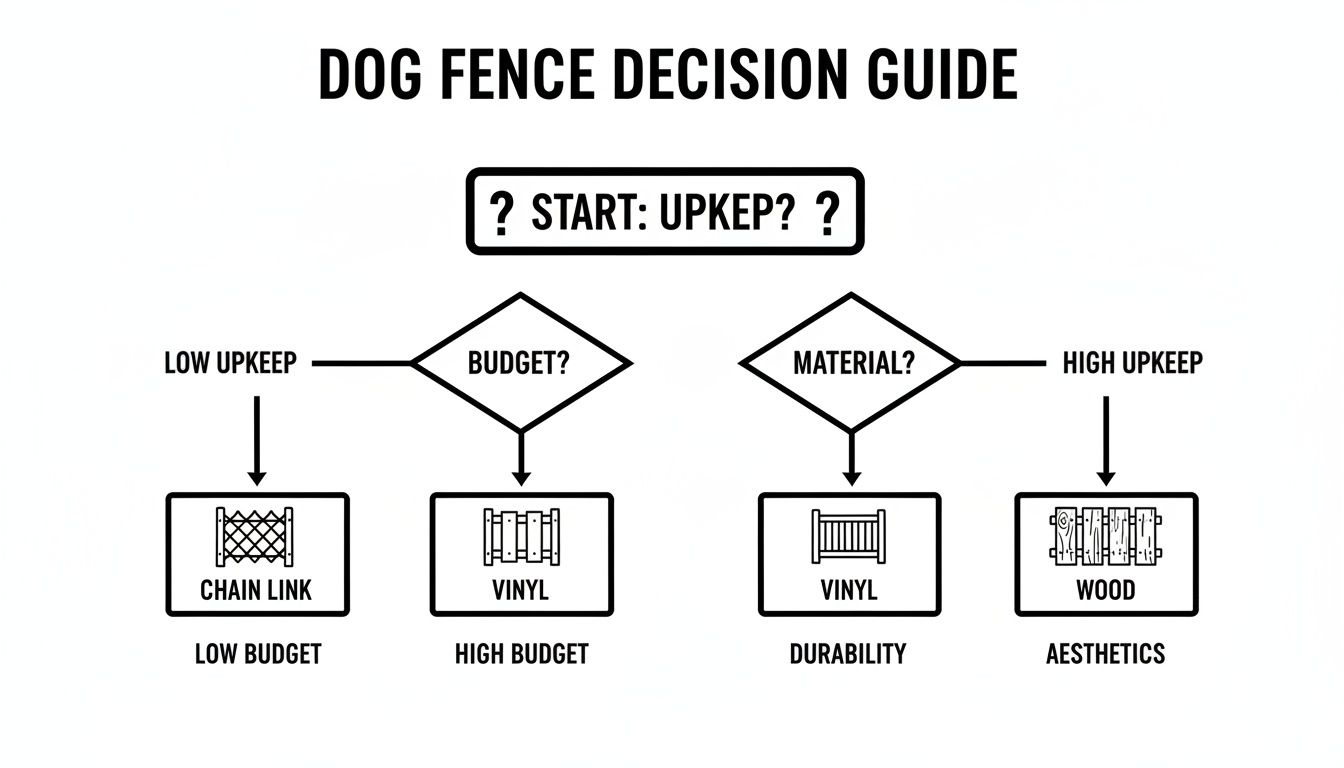
As the guide illustrates, chain link is a great low-maintenance, budget-friendly option, while wood and vinyl offer different benefits if you have a larger budget.
Solving for Tricky Yard Layouts
Not every yard is a flat, perfect rectangle. Slopes, hills, and uneven ground can create challenges, often leaving unsafe gaps at the bottom of the fence. While finding a house with a fenced in yard is a good start, the quality of the installation is what truly ensures your dog’s safety.
This is where hiring an experienced fence contractor provides significant value. A professional knows how to manage difficult terrain and create a seamless, gap-free perimeter.
- Racking a Fence: On gentle slopes, fence panels can be "racked," or angled, to follow the ground's contour. This keeps the bottom of the fence consistent with the landscape, eliminating gaps.
- Stepping a Fence: For steeper inclines, panels are installed in a stair-step pattern. A skilled installer will know how to place the posts to minimize the triangular gaps that form under each step, keeping your dog securely contained.
Ultimately, the best dog fence is a complete system designed specifically for your dog and your property. By understanding your dog's behaviors and accounting for your yard's unique layout, you can invest in a solution that provides true peace of mind.
The Practical Side: Budgeting and Local Connecticut Rules
Now that you have an idea of the fence style that suits your dog and home, it's time to consider the practical aspects: budgeting and local regulations in Connecticut. Addressing these two areas early on is key to a smooth and successful project.
The final cost of a dog fence is determined by several key factors that influence your total investment.
What Goes Into the Cost of a Dog Fence?
Understanding the cost involves looking at the individual components rather than a single price. The material you select and the size of your property are the most significant factors, but other details can also affect the final estimate.
Here’s what influences the cost of your project:
- Fence Material: This is the largest variable. Options range from budget-friendly chain link to premium ornamental aluminum, vinyl, or cedar.
- Total Length (Linear Feet): The larger your yard, the more materials and labor will be required.
- Fence Height: A six-foot privacy fence will cost more than a four-foot version of the same style due to the increased amount of raw material.
- Site Preparation: Connecticut is known for its hills and rocky soil. If your yard is not level or has difficult ground conditions, additional time and equipment may be needed to set the posts correctly, which can impact the cost.
It is helpful to view your fence as a long-term investment. One material might seem cheaper initially, but its durability and low maintenance could save you money and effort in the long run.
For example, a vinyl fence has a higher upfront cost than a standard wood fence. However, you will never need to spend time or money staining or sealing it, resulting in long-term savings.
Navigating Connecticut's Fencing Rules
In addition to your budget, you must adhere to local regulations. Every town in Connecticut, from Hartford County to Fairfield County, has its own zoning ordinances for fences. These rules cover everything from maximum height and property line setbacks to which direction the finished side of the fence must face.
Ignoring these regulations can lead to fines or, in the worst-case scenario, an order to remove a non-compliant fence. This is why hiring an experienced local contractor is so important—they are familiar with these codes and ensure your project is compliant from the start.
Pool safety is a particularly strict area of regulation. If your new fence will enclose a swimming pool, it must meet state and local codes designed to prevent accidents.
In Connecticut, key pool fence requirements typically include:
- A minimum height of 4 feet, although many homeowners choose a taller fence for added security.
- Self-closing and self-latching gates with the latch positioned high enough to be out of a small child's reach.
- Minimal clearance between the ground and the bottom of the fence to prevent anyone from slipping underneath.
Clarifying these costs and regulations is essential for a successful project. It ensures your new fence is not only a safe enclosure for your dog but also a sound, legal investment in your property.
Planning Your Next Steps for a Secure Dog Fence
You have now learned about the different types of fences for dogs and have a better understanding of what might work for your yard and your pet. The final step is to turn this knowledge into a tangible fence.
Begin by walking around your property again, this time with the perspective of a fence installer. Note any slopes, difficult corners, and the location of your property lines. Think about your dog's specific habits—is it a jumper that requires extra height, or a digger that needs a reinforced base?
From Idea to Installation
The next step is to balance your practical needs with your personal style. Consider your home's architecture and how a fence will complement it. Think about your budget, both for the initial installation and for any long-term maintenance the material may require.
Once you have a clear plan, it is time for the most important step: getting an expert's evaluation of your property. Research is valuable, but it cannot replace an on-site consultation.
An experienced fence installer does more than provide a price. They serve as a partner, helping you identify your property's potential and pointing out challenges you might have missed, such as difficult grading or Connecticut's rocky soil.
This conversation is your opportunity to confirm your choices, get professional advice on the best layout, and see exactly how your vision will be realized. Taking these thoughtful steps is the best way to get a fence that is secure, beautiful, and built to last.
Ready to consult an expert? You can schedule a free, no-obligation estimate with our team to receive a precise quote and professional guidance tailored to your property.
Frequently Asked Questions About Dog Fences
Even after careful research, you likely still have some specific questions. This is completely normal. Let’s review some of the most common inquiries we receive from Connecticut homeowners to help you feel confident in your final decision.
What Fence Height Do I Need for a Large or Athletic Dog?
If you have a large dog or an athletic breed—such as a Husky, German Shepherd, or agile Border Collie—a standard four-foot fence is often insufficient. For these jumpers, we recommend a minimum height of six feet.
Even more important than height is the style of the fence. A solid wood or vinyl privacy fence is your best option. The reasoning is simple: if the dog cannot see potential distractions like squirrels, cats, or mail carriers, the temptation to jump is significantly reduced. An open-style fence, regardless of its height, can sometimes appear as a new challenge to a determined dog.
How Can I Stop My Dog from Digging Under the Fence?
Digging is a common instinct, but there are several effective ways to secure the bottom of your fence line. The best method depends on your fence type and your dog's level of motivation.
Here are a few common strategies:
- Burying the Fence: A great solution for chain link is to bury the bottom of the wire mesh a few inches into the ground. A tension wire is then run along the bottom to keep it rigid.
- Adding a Concrete Base: For the most persistent diggers, a poured concrete curb along the fence line is an almost foolproof solution. It creates an underground barrier that is impossible to get through.
- Installing an L-Footer: This technique involves attaching a section of wire mesh to the fence's base, bending it into an "L" shape, and burying it just below the surface. When your dog tries to dig, their paws hit the buried mesh, which feels unnatural and discourages the behavior.
What Is a Realistic Timeline for a Fence Installation?
The timeline for a new fence can vary depending on the size of your yard, the terrain, and the weather. However, for most residential projects in Connecticut, the actual installation typically takes 2 to 5 days once the materials are on site.
The one step we never rush is setting the posts. After the posts are set in concrete, we always allow at least a full day for the footings to cure before installing any panels. This crucial waiting period gives your fence a solid foundation, ensuring it remains strong for years to come.
Which Is Better a Physical Fence or an Invisible Fence?
This is a common question. While invisible (or electric) fences may seem like an appealing solution, a physical fence offers a much higher level of safety. An invisible fence might keep your dog in, but it does nothing to keep other animals or people out.
For genuine peace of mind, a physical fence is almost always the superior choice. It is a tangible barrier that protects your dog from external threats and is effective for all personality types—from stubborn to anxious to those with a strong prey drive. The static correction from an invisible fence is not always a reliable deterrent for a motivated dog chasing a squirrel toward a busy road.
When you are ready to create a safe, beautiful, and durable space for your dog, it is wise to work with local experts. Connecticut Fence Works, LLC combines professional guidance with high-quality workmanship to deliver exceptional results. Schedule your free estimate today and take the first step toward a safer yard.