
Your Guide to Decorative Wooden Fencing in Connecticut
A wooden fence does so much more than just mark a property line. It’s a classic design choice that can completely change your home's outward appearance, add a welcome layer of privacy, and create a cozy, defined space. For homeowners in Connecticut, the natural warmth of wood is a perfect match for our beautiful landscapes, from coastal homes to quiet suburban neighborhoods.
Why a Decorative Wooden Fence is a Smart Choice
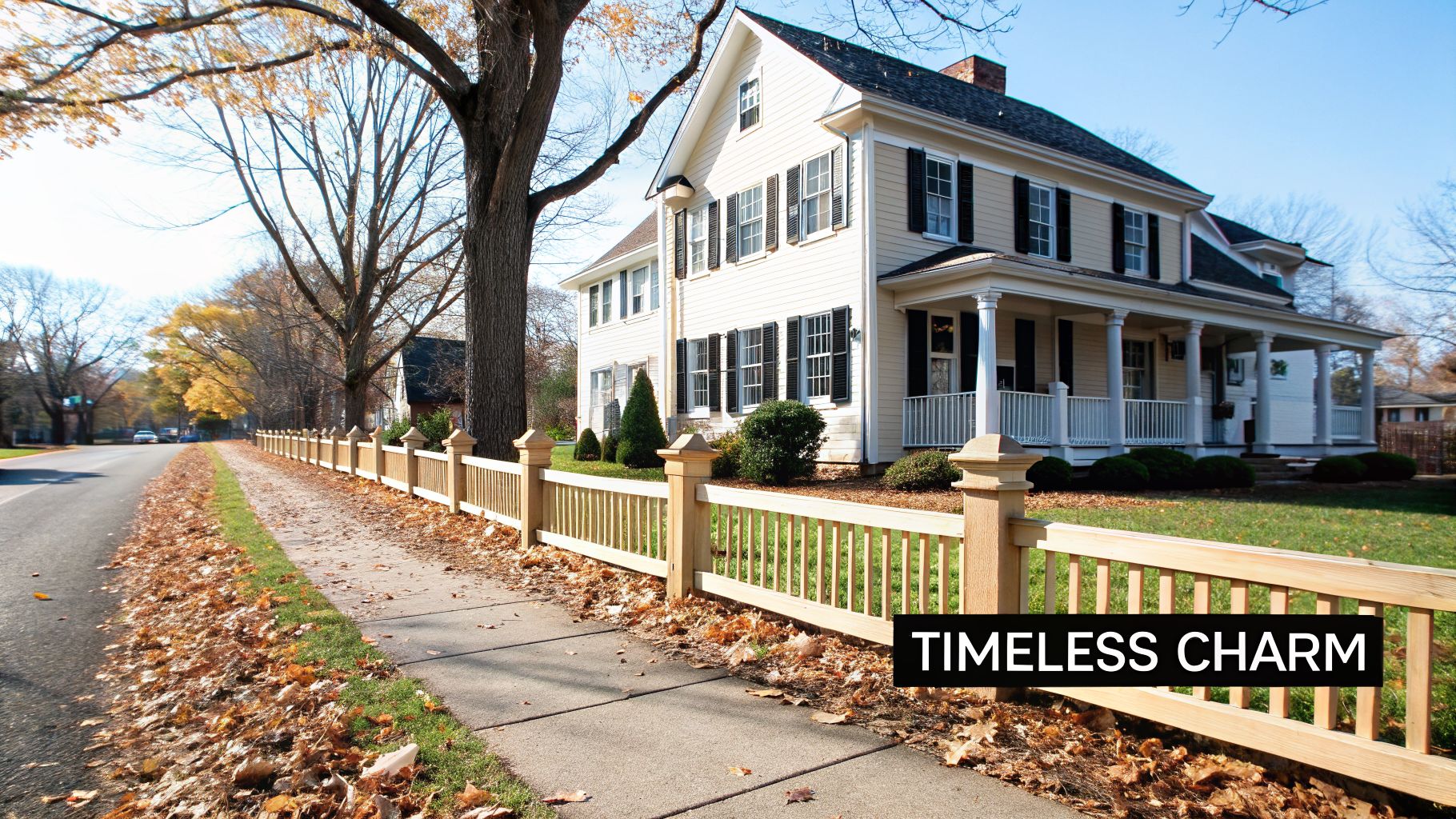
When you picture a timeless American home, what comes to mind? For many, it’s a house framed by a handsome wooden fence. There's a reason for that. Wood has a character and charm that synthetic materials just can't copy. It suggests tradition, warmth, and a connection to the outdoors, offering a friendly, inviting feel that can be tailored to your home’s unique style.
But it’s about more than just looks. A well-built wooden fence is a practical, valuable addition to any property.
The Real-World Benefits
Choosing the right fence is an investment, and wood delivers a return in several key ways.
- Improved Curb Appeal: A fence is one of the first things people see. The right design acts as a beautiful frame for your home and garden, making a great first impression.
- Meaningful Privacy and Security: Whether you want to create a secluded backyard oasis or simply keep kids and pets safely contained, a solid or semi-private wood fence provides an effective and attractive barrier.
- Increased Property Value: This is a big one. A high-quality, professionally installed fence is a feature that buyers notice. It adds to the home's security, beauty, and overall completeness, which can boost its value.
- Unmatched Design Flexibility: This is where wood truly shines. From a classic picket fence to a modern horizontal design or a stately board-on-board, wood can be shaped and styled to fit any aesthetic you can dream up.
We often tell homeowners that a great fence is one of the few projects that adds beauty, privacy, and tangible value all at once. It’s a personal touch that’s also incredibly practical.
What to Expect From This Guide
We've put this guide together to simplify the entire process, from dreaming about styles to watching the final post go in the ground. We’ll break down everything you need to make a confident decision for your Connecticut home, focusing on practical advice learned from years of experience.
We'll dive into the pros and cons of different styles, helping you decide if a friendly picket fence, a private shadowbox, or a rustic post-and-rail is the right choice for your needs. To get your imagination going, you can see how these styles look in the real world by browsing our gallery of completed fence projects.
By the time you're done reading, you'll have a clear understanding of the styles, materials, and costs involved, empowering you to choose the perfect decorative wooden fence for your property.
Finding the Perfect Decorative Wood Fence Style
Choosing the right wooden fence is about more than just marking a property line. It’s an architectural decision. The style you select becomes a frame for your home and garden, shaping its first impression and setting the entire mood for your outdoor living space.
The enduring appeal of wood is undeniable. It's a classic material that continues to be a top choice in residential fencing. The US fencing market is on track to reach $12.4 billion by 2027, with much of that growth fueled by homeowners choosing wood for its natural beauty and versatility. In fact, residential projects are expected to account for 45.1% of all fencing revenue globally in 2026, and decorative wood styles remain at the top of everyone's list.
Let's look at the most popular designs we see here in Connecticut and explore which one might be the perfect fit for your home.
The Classic American Picket Fence
When you picture a charming American home, a picket fence is almost always part of the image. With its evenly spaced vertical boards and decorative tops, it creates a boundary that feels friendly and welcoming, not imposing.
This style is a fantastic choice for front yards or for enclosing a garden. It defines the space beautifully without cutting off your view or making your property feel closed-in. It’s the definition of timeless curb appeal.
The Neighborly Shadowbox Fence
The shadowbox is a clever design that plays with perspective. It’s built with pickets that alternate on either side of the horizontal rails. This simple trick offers a unique blend of privacy and openness.
Look at it straight on, and it appears solid. But from an angle, you’ll notice it allows air and light to filter through. We often call this a "neighbor-friendly" fence because it looks just as good from your neighbor's side as it does from yours. It’s perfect for backyards where you want seclusion but don't want to feel completely walled off.
A shadowbox design is one of the most versatile styles we install. It provides substantial privacy for a backyard barbecue but still lets a nice breeze through on a summer day, which is a big plus for many Connecticut homeowners.
The Private Board-on-Board Fence
If complete, uninterrupted privacy is your goal, then a board-on-board fence is your answer. This style is constructed with overlapping vertical boards that leave absolutely no gaps or lines of sight.
It’s the ultimate choice for creating a secluded backyard sanctuary, securing a pool area, or simply blocking out an unwanted view. While its main purpose is privacy, you can soften its look by adding a lattice top or decorative post caps, giving you security without sacrificing style.
Elegant Custom Lattice Designs
Lattice is all about adding a touch of elegance and detail. Its crisscross pattern can be used to build an entire fence, but it’s most often seen as a decorative topper on a solid privacy or shadowbox fence. This is a great way to add height and visual interest without creating a massive, imposing wall.
Lattice is also a gardener’s best friend. It provides the perfect support for climbing plants and flowering vines. Imagine how you could add vibrant garden colour to your fence by training beautiful climbers up a lattice panel—it truly brings the fence to life.
The Rustic Post-and-Rail Fence
For large properties, farms, or homes with a rustic style, nothing fits better than a post-and-rail fence. Built from strong vertical posts connected by two, three, or four horizontal rails, this style is less about privacy and more about defining a large boundary.
Its open, honest design feels right at home in a natural landscape. It’s a classic for a reason—it’s durable, cost-effective for large areas, and perfectly suited for the rural scenery found across Connecticut. To see what goes into this style, you can learn more about the specifics of post-and-rail fences in our detailed guide.
Choosing the Right Wood for Connecticut's Climate
While the style of your fence sets the scene, the wood you choose is the star of the show. It determines how long your fence will last, how much maintenance it will need, and ultimately, how it will stand up to the unique challenges of our Connecticut weather.
We see it all here: humid summers that promote moisture and rot, followed by deep winter freezes that can cause wood to split and warp. Choosing the right material isn't just a detail—it's the most critical decision you'll make to ensure your fence looks great for years, not just a season.
It really comes down to a trade-off between the look you want, your budget, and how much time you want to put into maintenance.
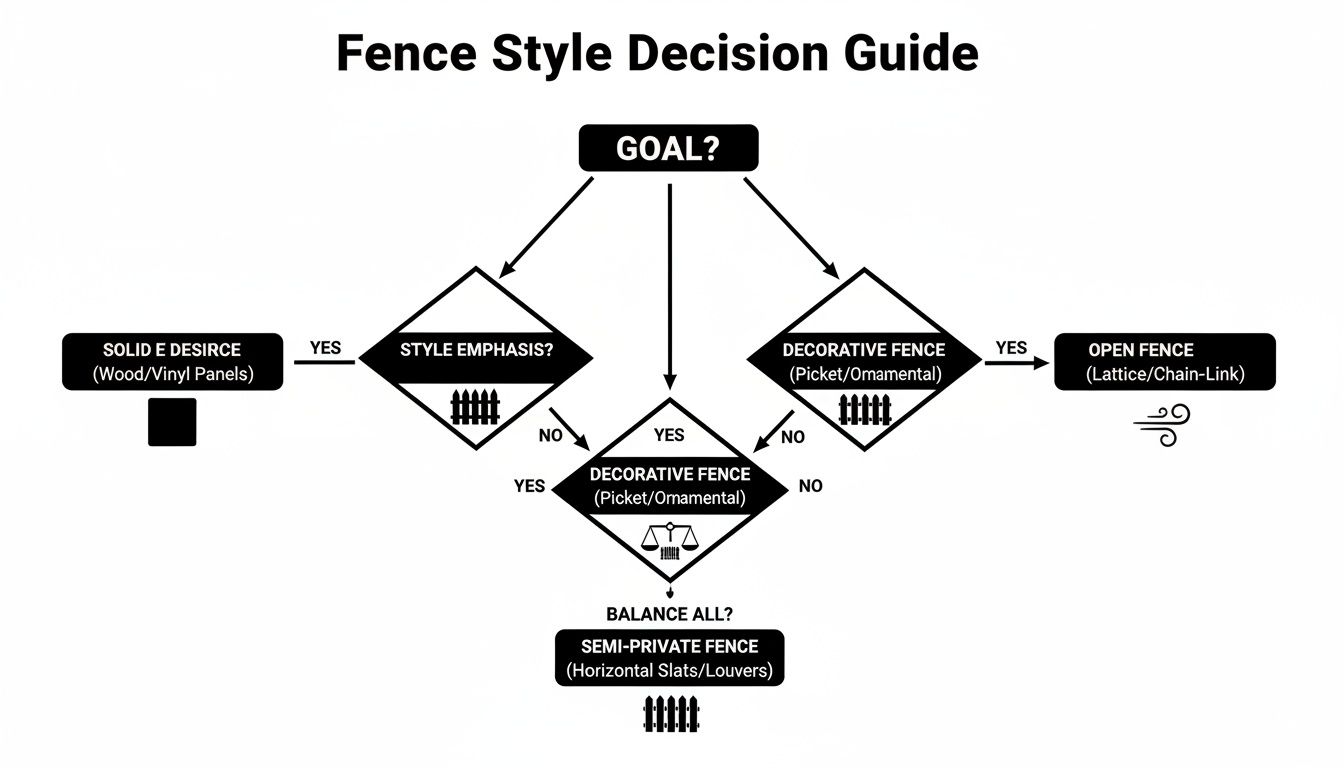
Think of this flowchart as your starting point. Every great fence project begins with a clear goal, which then points you toward the perfect combination of design and material for your yard.
To help you decide, let's compare the most common wood choices we use for fencing projects right here in Connecticut.
Comparing Popular Wood Fence Materials
| Wood Type | Average Cost | Typical Lifespan (with maintenance) | Best For | Maintenance Level |
|---|---|---|---|---|
| Pressure-Treated Pine | $ | 15-20 years | Budget-conscious projects; durability | High |
| Western Red Cedar | $$ | 20-25+ years | Natural beauty; rot resistance | Low to Medium |
| Exotic Hardwoods (Ipe) | $$$$ | 40-50+ years | Ultimate luxury; maximum longevity | Low |
This table gives you a quick snapshot, but the story behind each wood type is what really matters. Let’s dig into the details.
H3: Cedar: The Premium Natural Choice
When homeowners want a fence that combines timeless beauty with natural resilience, cedar is almost always the answer. It’s the material we recommend most often, and for good reason. Its rich, warm colors bring a natural elegance to any property.
But the real magic of cedar lies within the wood itself. It’s packed with natural oils that act as a built-in defense against rot, decay, and insects. This is a huge advantage in our damp climate.
Cedar is far less likely to warp or twist when it gets wet, meaning it holds its handsome shape year after year. While it costs more upfront than pine, its incredible durability and low-maintenance nature make it a fantastic long-term investment. Many homeowners appreciate that you don't have to constantly worry about it.
If you let it be, cedar will naturally age into a beautiful, silvery-gray color. If you prefer to keep its original vibrant color, a quality stain applied every few years will do the trick. You can learn more about the benefits and characteristics of cedar fencing on our dedicated page.
H3: Pressure-Treated Pine: The Durable, Budget-Friendly Option
Looking for a tough, reliable fence that won’t break the bank? Pressure-Treated (PT) pine is your go-to. This isn't just any pine; it's a type of pine that has been put through a process that forces chemical preservatives deep into the wood.
This treatment makes it incredibly resistant to termites and rot, giving it a long lifespan that can easily compete with more expensive woods—as long as it’s maintained.
PT pine has a distinct greenish tint when new, which fades to a honey-brown and eventually gray. Unlike cedar, maintenance isn't optional here. To get that 15-20 year lifespan, you must stain or seal it regularly to protect it from moisture and prevent the cracking and warping that sunlight and rain can cause.
- Cost-Effective: PT pine is significantly more affordable than cedar, making it a perfect choice for fencing a large yard or for those working with a tight budget.
- Strong and Dense: It's a heavy, robust wood that provides excellent strength, making it a great option for privacy and security.
- Maintenance is a Must: Its long life is directly tied to your willingness to care for it. Plan on cleaning and re-sealing it every 2-3 years to keep it in top shape.
H3: Exotic Hardwoods: The Ultimate Statement
For a fence that is truly in a class of its own, we turn to exotic hardwoods like Ipe (pronounced ee-pay). These are some of the densest, toughest woods on the planet. Sourced from South America, they are naturally resistant to just about everything—rot, insects, and even fire.
The look is just as dramatic as their performance. With a deep, rich color and a tight, beautiful grain, a hardwood fence is less of a boundary and more of an architectural feature.
Of course, this level of performance comes at a price. Hardwoods are by far the most expensive material and require special tools and skills to install correctly. They're a premium investment best suited for a stunning feature wall, a high-end modern home, or any project where making an unforgettable statement is the top priority.
Understanding Your Fence Installation Budget
Trying to figure out the cost of a new wooden fence can be tricky. It’s never just one number. Instead, a few key things all play a part in determining the final cost. Understanding these factors is the best first step you can take toward setting a realistic budget and avoiding surprises down the road.
Think of it less like buying a product off the shelf and more like ordering a custom piece of furniture for your yard. The total length sets the starting point, but the real cost is in the details—the materials you choose, the complexity of the design, and the unique challenges of your specific property.
Breaking Down the Core Cost Factors
The first question everyone asks is, "What's the price per foot?" While that’s the main driver, the answer depends entirely on what goes into each foot of your fence.
- Fence Height: This is a straightforward one. A six-foot privacy fence simply requires more wood, longer posts, and more labor than a four-foot picket fence. As the height goes up, so does the cost.
- Material Choice: As we covered earlier, your choice of wood is a major decision. A beautiful Western Red Cedar fence will have a higher upfront cost, while pressure-treated pine is a more budget-friendly, practical option.
- Style Complexity: There's a world of difference in the labor needed for different styles. A simple post-and-rail fence is quick to put together. An intricate shadowbox or board-on-board design, however, demands precision, more cuts, and significantly more time on site, which is reflected in the installation cost.
The "price per foot" is a great number for rough planning, but it's always a flexible figure. The truth is, you won't know the real cost until a professional has walked your property and accounted for every detail of your specific project.
How Site Conditions Influence Your Budget
Every piece of land is different, and the unique character of your yard plays a huge role in the final cost. A flat, clear, empty lot is the dream scenario for any installer, but most Connecticut properties have a few quirks that require extra attention.
A good contractor will always perform a site assessment to look for things that can impact the budget, such as:
- Slopes and Hills: Installing a fence on uneven ground is an art. It takes more time and skill to make sure every post is perfectly straight and to "step" the fence panels correctly down the hill.
- Rocky Soil or Ledge: Here in New England, you never know what's under the surface. Digging post holes in soft soil is easy, but hitting a stubborn rock or a sheet of ledge means breaking out heavy equipment, like a jackhammer. That adds both time and expense.
- Obstructions: Is there an old, failing fence that needs to be torn out and hauled away? Heavy brush that needs clearing? We often have to work carefully around mature trees, sheds, and established garden beds, all of which can add to the labor involved.
The demand for quality fencing is always strong. The global market was valued at $33,750.7 million in 2026 and is expected to grow to $52,443.4 million by 2033. For our commercial and HOA clients in places like Tolland and Middlesex counties, wood is often chosen for its blend of custom looks and durability. In fact, a well-maintained wood fence can often reduce long-term maintenance costs by 20-30% compared to certain metal alternatives that don't stand up as well to our humid climate. You can dive deeper into these figures by exploring the full research on global fencing trends.
Viewing Your Fence as a Long-Term Investment
It's easy to get sticker shock and focus only on the initial price tag. But a well-built decorative wooden fence is a true investment in your home. Paying for professional installation and quality materials from the start means you're not just buying a fence—you're buying peace of mind and avoiding the constant headaches and surprise costs of repairs down the line.
Ultimately, it’s an improvement that pays you back for years by boosting your home's curb appeal, giving you the privacy you want, and adding real value to your property.
Navigating Fence Installation and Local Codes
A beautiful wood fence is so much more than just the final product you see. It's a genuine construction project, and like any project, success starts with what you do before the first post goes in the ground. Getting the prep work right is the difference between a fence that lasts for decades and one that causes headaches from day one.
The absolute first step, before you even think about styles or materials, is to verify your property lines. You wouldn't build an addition to your house without knowing exactly where your property ends, and a fence is no different. Any reputable contractor will insist on a recent property survey to avoid costly and stressful disputes with neighbors down the road.
Equally important is the legally required safety check: calling 811 before you dig. It’s a free service that gets local utility companies to mark underground gas, water, and electric lines. Hitting one of those lines is a project-ending, budget-destroying mistake you don't want to make.
Understanding Connecticut Fence Regulations
Once you have a clear and safe site, it's time to tackle the local rulebook. Every town in Connecticut has its own set of rules, and they aren't just suggestions—they are legal requirements designed for safety and community standards.
- Building Permits: Don't assume you can just start building. Most towns require a permit for a new fence, especially if it's over six feet tall or encloses a pool. Skipping this can lead to fines or, in a worst-case scenario, an order to tear down your brand-new fence.
- Property Line Setbacks: Zoning rules will specify exactly how close your fence can be to your property line. It might be a few inches or a few feet, and the rules often change between your front, side, and back yards.
- Height Restrictions: There are almost always limits on fence height. Typically, front yard fences are limited to four feet, while side and backyard fences might be allowed up to six feet.
This is where an experienced local contractor really proves their worth. They navigate the specific rules in towns across Hartford, Middlesex, and New Haven counties every day and will handle the entire permitting process for you.
Pool enclosures are a whole other level of regulation. Connecticut enforces a strict code for pool safety. This dictates everything from fence height and picket spacing to the specific type of self-closing, self-latching gate hardware required to prevent access by young children. Getting this wrong isn't an option.
The Professional Installation Process
It's easy to see why the demand for quality fencing is so high. North America makes up over 34% of the global market, with around 50,000 fencing contractors in the US alone. A well-built fence is a solid investment, often boosting a home's value by 5-8%. You can see a broader picture of the global fencing market and its trends to understand its scale.
Hiring a professional team is about more than just avoiding the hard work. They bring a level of precision that ensures a lasting result. While focused on fencing, many of the same principles apply to other complex landscape installations.
A professional manages the entire process—from the initial layout to setting each post perfectly straight in concrete. They make sure the final structure is level, sturdy, and built to withstand New England weather for years to come. That kind of oversight provides peace of mind, knowing your investment is not only beautiful but also safe, compliant, and secure.
Protecting Your Investment with Proper Fence Care
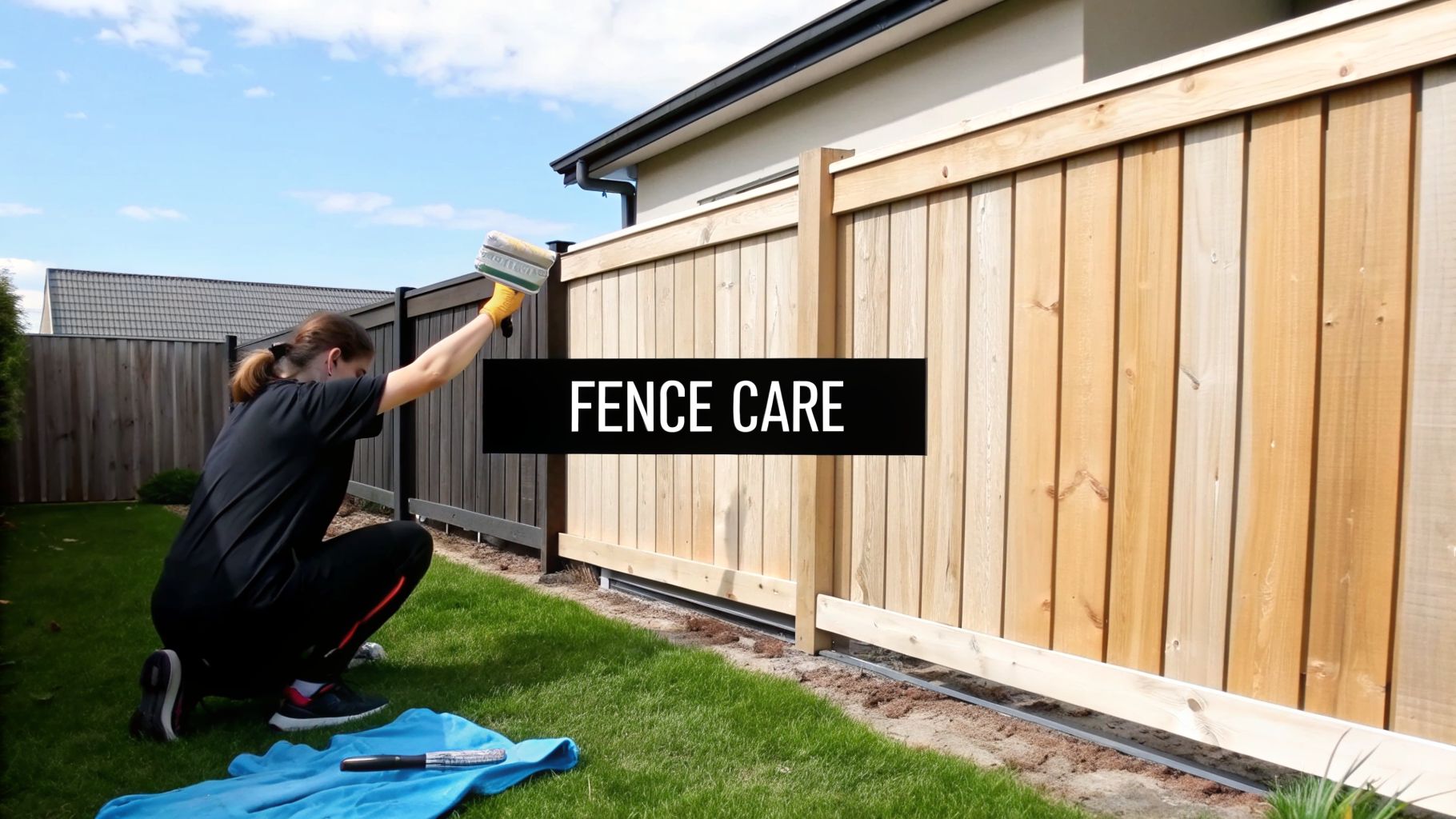
You’ve invested in a beautiful new wooden fence, and it looks fantastic. But it’s more than just an attractive boundary—it’s a major addition to your home’s value and security. To keep it looking its best and standing strong against Connecticut's four-season weather, a little routine care is all it takes.
With some simple, proactive maintenance, a professionally installed wood fence can easily last 20 years or more. Think of it as protecting your investment for decades of enjoyment.
A Simple Seasonal Maintenance Plan
Fence care doesn’t have to be a huge chore. A quick check-in each season is usually all you need to stay ahead of any potential problems.
- Spring Cleaning: Once the winter snow has melted, give your fence a gentle wash. A bucket of mild, soapy water and a soft brush will remove the grime, salt, and any mildew that's built up. This is also the perfect time to walk the fence line and inspect for any damage the winter may have caused.
- Summer Inspection: Take a stroll along your fence line during the warmer months. Keep an eye out for any loose boards, wobbly posts, or nails that might have popped up. Catching these small things early saves you from a much bigger headache down the road.
- Autumn Preparation: Before the leaves start to pile up, make sure to trim back any climbing vines or overgrown shrubs touching the fence. This is all about ensuring good airflow; trapped moisture is wood's worst enemy.
The Power of Staining and Sealing
If there's one thing you do for your fence, make it this. The single most important maintenance task for any wood fence is protecting it from moisture and sun damage. Staining or sealing is your first line of defense.
A quality stain or sealant is like a high-performance jacket for your fence. It repels water, which prevents the wood from getting waterlogged and starting to rot. It also contains ingredients that block the sun's harsh rays, stopping that gray, cracked look before it starts. For a decorative fence, this step is absolutely essential to preserve the wood’s natural color and character.
Think of sealant as sunscreen for your fence. It provides an essential protective barrier against the elements, preserving both the structure and the appearance of the wood for years.
Caring for Different Wood Types
While all wood needs protection, the exact approach can differ depending on the material you chose.
Pressure-Treated Pine
This is a tough, durable wood, but it requires consistent maintenance to reach its full lifespan. The pressure treatment protects the wood from rot and insects from the inside, so your job is to protect it from the weather on the outside.
- Wait a few months after installation for a new pine fence to dry out completely before you apply the first coat of stain.
- Plan on cleaning and reapplying a protective finish every 2-3 years. This is key to preventing the cracking, splitting, and water damage that can happen over time.
Western Red Cedar
Cedar is a fantastic, lower-maintenance choice because it has its own natural resistance to rot and insects.
- If you appreciate the rustic, silvery-gray look that cedar develops as it ages, you can simply leave it untreated.
- To keep its beautiful, rich color, you’ll want to apply a high-quality UV-blocking stain (either clear or tinted) every 3-5 years.
A little bit of care goes a long way. By following these simple steps, you can ensure your decorative wooden fence remains a beautiful and functional part of your property for years to come.
Common Questions About Wooden Fences
If you're thinking about a new wooden fence, you probably have a lot of questions. That's completely normal. Over the years, we've heard the same great questions from homeowners across Connecticut, so we've put together some answers to the most common ones.
How Long Does a Wooden Fence Last in Connecticut?
This is a big one, and the answer really comes down to two key factors: the wood you choose and the quality of the maintenance it receives. Here in Connecticut, our weather—from humid summers to harsh, freezing winters—puts any outdoor structure to the test.
- A well-built pressure-treated pine fence, when properly cared for, can give you a solid 15-20 years of service.
- Cedar is a great choice for a long life. Thanks to its natural oils that resist rot and insects, a cedar fence often lasts 20-30 years, and sometimes even longer.
Keep in mind, a fence’s lifespan starts with its installation. A fence that’s correctly set to handle our state's freeze-thaw cycles from day one will always last longer than one that isn't.
Do I Need a Permit to Build a Fence in My Town?
Almost certainly, yes. While the specifics can change from one of Connecticut's 169 towns to the next, most towns require a permit for fence installation. This is especially true for fences over a certain height (often 6 feet) or any fence that will enclose a swimming pool.
This is one step you absolutely don't want to skip. We always tell homeowners to start with a call to their local building or zoning department. An experienced fence contractor will already be familiar with the local codes and can handle the permitting process for you, ensuring everything is done correctly.
Which Wood Fence Style Offers the Most Privacy?
For total, top-tier privacy, the board-on-board fence is the undisputed winner. The design uses an overlapping pattern of vertical boards, which completely eliminates any gaps. It creates a solid visual screen that blocks the line of sight from every angle.
A tall stockade fence is another fantastic choice if you're looking for near-total seclusion. Ultimately, the best fence for you will strike the right balance between the privacy you need, the airflow you want, and the look you love.
Is a Cedar Fence Worth the Extra Cost?
For many Connecticut homeowners, the answer is a resounding yes. It's true that cedar has a higher upfront cost than pressure-treated pine, but it's an investment that pays off in longevity and appearance.
Cedar's natural durability means you'll spend less time and money on maintenance over its very long life. It’s also a more stable wood, so it's far less prone to warping or twisting. This resilience, combined with the gorgeous, silvery-gray color it develops over time, makes cedar a premium material that adds lasting value and beauty to your property.
Ready to get answers for your own property? The team at Connecticut Fence Works, LLC provides expert guidance and free, no-obligation estimates to help you plan the perfect fence. Learn more and get started today.