
A Connecticut Homeowner’s Guide to Cedar Stockade Fences
When you picture a classic American backyard fence, you are likely thinking of a cedar stockade. It is a true staple in residential fencing, known for creating a solid, gap-free wall of wood that offers complete privacy and a timeless look.
What Exactly Is a Cedar Stockade Fence?
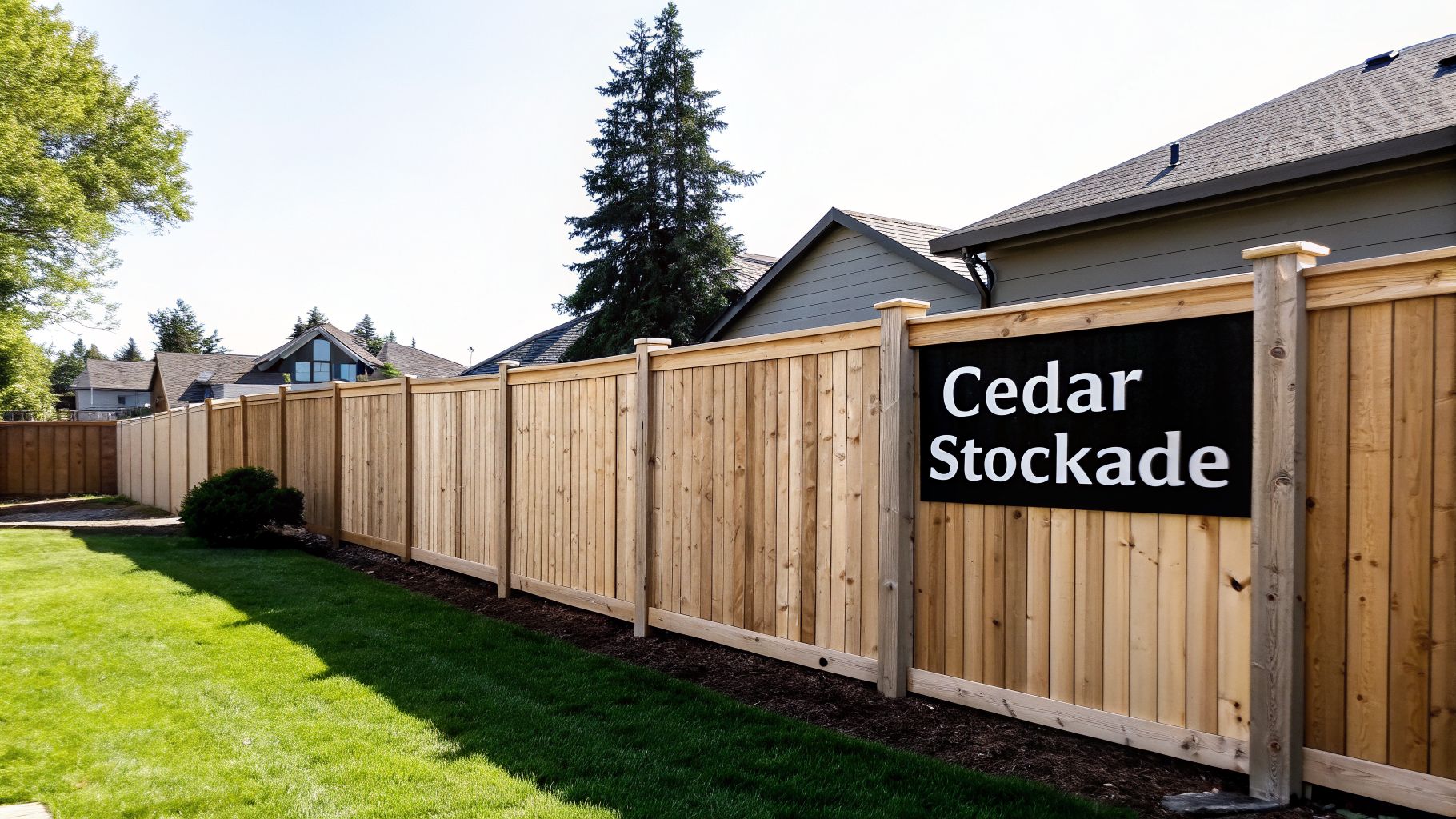
Think of it as a handsome, wooden shield for your property. The stockade style is one of the oldest and most effective designs for one primary reason: total privacy. It has a long, proven history, making it a go-to choice for generations of homeowners.
The term "stockade" comes from its construction. It is built using a row of vertical wooden boards, called pickets, that are placed edge-to-edge. Each board fits snugly against the next, forming an unbroken panel that completely blocks the view from the outside.
This solid wall design makes it the perfect solution for securing a backyard, keeping pets safely contained, and carving out a private sanctuary for your family. Unlike other fence styles that have intentional gaps, a stockade fence is all about creating a true visual barrier.
The Power of Cedar Wood
While a stockade fence can be built from different materials, cedar is what truly makes it a premium choice. Cedar is a remarkable wood with its own natural defense system. It contains oils and compounds that make it inherently resistant to a wooden fence’s two greatest adversaries.
- Insect Damage: The pleasant, earthy aroma of cedar is a natural repellent for destructive pests like termites and carpenter ants.
- Rot and Decay: Those same oils help the wood resist moisture, which is the main cause of rot. This is a significant advantage, especially with Connecticut's humid summers and wet seasons.
Because of this built-in durability, a well-maintained cedar stockade fence can easily last 15 to 25 years, often without needing the harsh chemical treatments required for other wood types. For more details on what makes this wood so special, take a look at our full guide to cedar fencing options.
A Design Rooted in American History
The stockade fence is not a new trend; its design has deep roots in American history. It evolved from the tall, defensive palisade walls that early colonists in the 1600s and 1700s built to protect their settlements. As detailed in the history of American fence building on WTOP.com, cedar was a prized local timber for its resilience and strength, making it ideal for these critical structures.
In simple terms, a cedar stockade fence combines a time-tested privacy design with a naturally resilient wood. It is a straightforward and highly effective choice for anyone wanting a strong, beautiful, and long-lasting private enclosure for their property.
The Benefits of a Cedar Fence
A cedar stockade fence is a classic for a reason, and it is not just about its appearance. It is a smart investment that delivers real, practical benefits. For homeowners in Connecticut, choosing cedar is a decision that provides returns for years by enhancing your home life and protecting its value.
The first thing most people notice is the immediate privacy. The way stockade boards fit together creates a solid visual barrier, turning your yard into a truly private space. This is about more than just blocking a view—it is about creating a secluded retreat where you can relax, entertain, or let children play freely without feeling exposed.
That solid construction also serves as a decent sound buffer. While no fence is completely soundproof, a dense wood wall can certainly reduce traffic noise, neighborhood chatter, and barking dogs. It helps make your backyard feel more like an escape from the outside world.
Nature's Built-In Defense System
The real advantage of cedar lies within the wood itself. Cedar naturally produces oils and tannins, which act as a personal defense system. These compounds are highly beneficial in Connecticut's climate, actively fighting off the elements that destroy lesser woods.
This gives cedar two major advantages from the start:
- Inherent Rot Resistance: The natural oils are excellent at repelling moisture, which is the root cause of rot. This is a game-changer for surviving our humid summers and wet, snowy winters.
- Natural Insect Repellent: The same oils that give cedar its signature pleasant smell are a major deterrent for insects. Termites and carpenter ants, which can damage other fences, generally avoid it.
Because it defends itself so well, cedar does not require the heavy chemical treatments that pressure-treated pine needs. It is a more natural choice for your property from day one.
A Long History of Performance
Cedar’s reputation as the best wood for the job is not new. Western red cedar became the gold standard for stockade fencing in the 1950s and 60s. The lumber from that era, often sourced from massive old-growth trees, was packed with natural preservatives. It offered up to 5 times the decay resistance of untreated pine, with some of those original fences lasting an incredible 40 years or more. You can discover more insights about fence lumber history at BryantFence.com.
A cedar fence is not just a purchase; it is an investment in durable, long-lasting performance. Its ability to withstand insects and moisture means fewer worries about premature decay and costly repairs down the road.
This incredible resilience means a well-built cedar fence is a true asset that adds lasting value to your home.
Timeless Looks and an Eco-Friendly Footprint
Finally, the sheer beauty of cedar cannot be ignored. The warm, rich tones of natural cedar look fantastic with any home, from a classic colonial to a modern new build. A great-looking fence provides a massive boost to curb appeal, which directly impacts how your home is perceived and valued.
On top of all that, it is a choice you can feel good about. Wood is a renewable resource, and when it comes from well-managed forests, it is a genuinely green building material. At the end of its long life, a cedar fence is biodegradable, unlike plastic or vinyl fences that end up in a landfill. It is a beautiful, sustainable choice all around.
Customizing Your Fence Style and Height
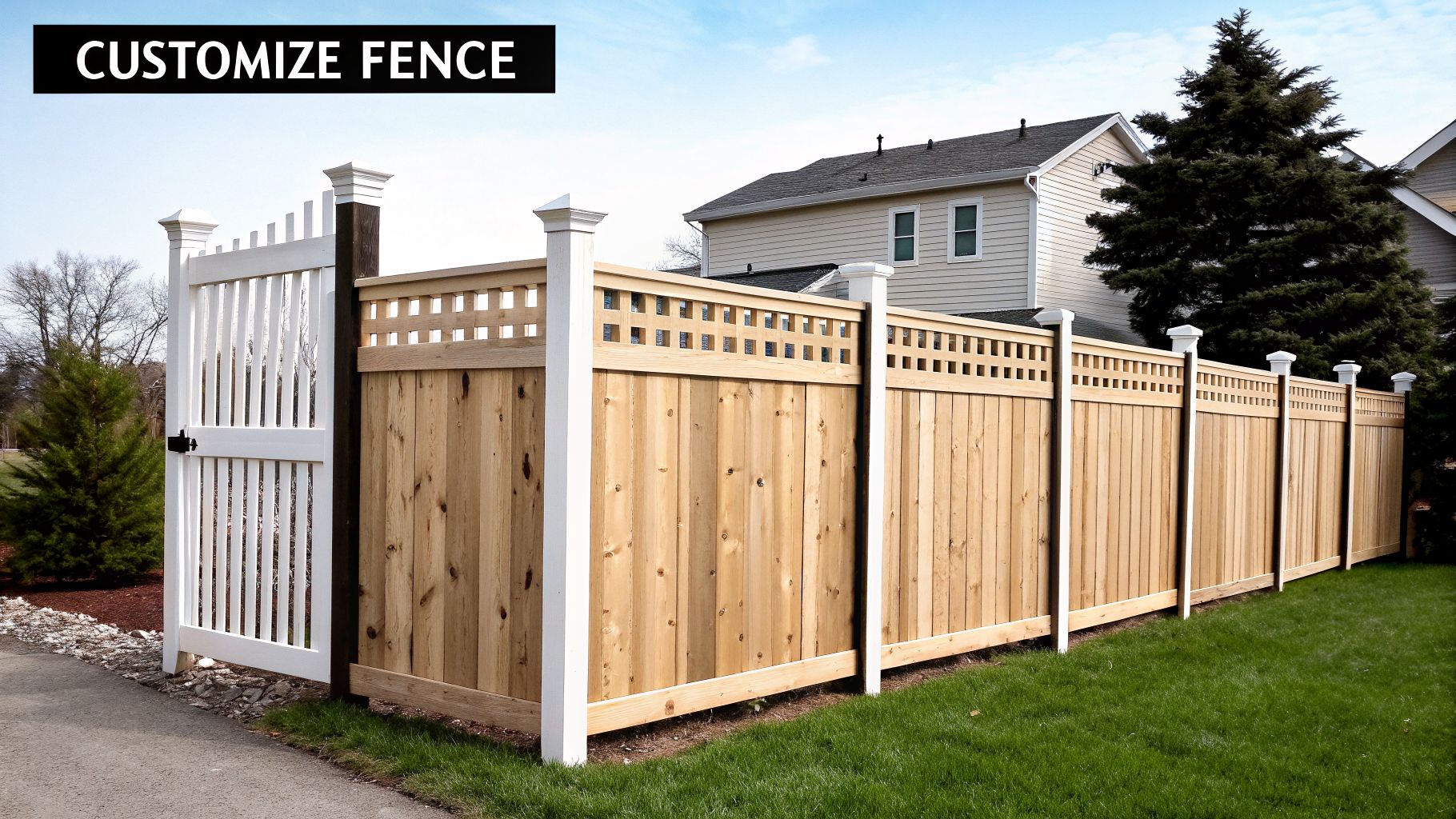
A cedar stockade fence is not a one-size-fits-all product. It should be considered an extension of your home's character. By making smart choices about its style, board design, and height, you can transform a simple boundary line into a beautiful, functional feature that truly complements your property.
One of the first things people notice is the top of the fence. While it may seem like a minor detail, the cut of the picket can completely change the fence’s personality, shifting it from rustic to refined.
Choosing Your Picket Style
Selecting the right picket top is much like choosing crown molding for a room—it is the finishing touch that ties everything together. While you can get creative, most homeowners find that one of these classic styles is the perfect fit.
Dog-Eared Pickets: This is the undisputed classic for a reason. We clip the top corners of each board at a 45-degree angle, which creates a simple, pleasing look. From a practical standpoint, this design also helps shed water and prevents the wood from splintering at the top as it ages.
Flat-Top Pickets: If you are aiming for a clean, modern aesthetic, you cannot go wrong with a flat top. The boards are cut straight across, creating a crisp, uninterrupted horizontal line. This minimalist style is a perfect match for contemporary homes.
Gothic Pickets: For a touch of traditional elegance, the Gothic picket is a fantastic choice. Each board is carved into a distinct pointed, spade-like shape. It is a decorative detail that gives the entire fence a more formal, stately presence.
These small details make a big difference. To get a better feel for how these styles look once installed, you can browse through our project gallery and see them on real Connecticut properties.
Deciding on Fence Height
Even more important than the style is the height, because function is key. The height you choose is directly tied to what you need your fence to do. Are you defining a small garden bed or creating a completely private backyard oasis?
A 6-foot cedar stockade fence is, by far, the most popular choice for backyard privacy. It is the sweet spot—tall enough to block sightlines from the street and neighboring homes, effectively turning your yard into a secluded retreat for your family.
On the other hand, a 4-foot fence is an excellent option when you want to establish a boundary without closing off the space. This height is perfect for front yards or for sectioning off a pool or garden. It keeps small pets in and defines the area, all while maintaining an open, neighborly feel.
When you need absolute privacy and security, an 8-foot fence is the solution. This height creates a formidable barrier that is great for properties bordering busy roads or commercial zones, as it offers superior noise reduction and completely blocks the view. Just be aware that many towns have height restrictions, so checking local building codes before committing to an 8-foot fence is absolutely critical.
While cedar is a timeless choice, it is worth knowing about other options if you are looking for a different aesthetic. For instance, unique materials like charred larch fencing can offer a striking modern look and exceptional durability. Taking the time to consider all these elements ensures your new fence is not just beautiful, but also perfectly suited for its job.
Breaking Down the Cost of a Cedar Stockade Fence
One of the first questions on every homeowner's mind is, "What will this cost me?" When you start researching a new cedar stockade fence, you will often see the term "price per linear foot." It is a useful starting point, but it rarely tells the whole story.
The price per foot is just the baseline. The final cost depends on the specific materials you choose and the complexity of your particular yard. A simple fence on a flat, clear lot is one thing; a taller fence with custom gates on a sloped, rocky property is another entirely.
The Biggest Material Cost Drivers
The materials are the core of your fence and the biggest variable in your budget. "Cedar" is not a single product, and the specific choices you make here will have a direct impact on the final price.
Grade of Cedar: Not all cedar is the same. You will find higher grades with very few knots and a clean, uniform look. This premium wood comes at a premium price. On the other hand, a "character-grade" cedar with more knots offers a rustic charm and is more budget-friendly.
Board Thickness: The pickets, or boards, that make up the face of your fence come in different thicknesses. A standard board might be 5/8-inch thick, but you can upgrade to a sturdier 1-inch board. These thicker boards feel more substantial, stand up better to the elements, and last longer—and the price reflects that added durability.
Post Type and Material: Your fence posts are its skeleton. While using cedar posts provides a seamless, all-cedar look, many homeowners in Connecticut opt for pressure-treated pine posts. They are incredibly durable (especially when set in concrete) and offer significant cost savings without compromising the fence's structural integrity.
How Labor and Site Conditions Affect the Price
Beyond the wood and hardware, installation labor is a major part of your investment. A professional installation ensures your fence will be straight, strong, and secure for years to come. The cost of that labor depends heavily on the conditions of your specific property.
A wide-open, perfectly level yard is a straightforward job. But few properties in Connecticut are that simple. We often encounter challenges that require more time, skill, and sometimes, specialized equipment.
A fence quote should be more than just a single number. A transparent, professional estimate will break down costs for materials, labor, and any special features, so you know exactly what you are paying for and can budget with complete confidence.
For instance, installing a fence on a steep slope requires us to carefully follow the grade of the land, which is far more meticulous work. If we encounter rocky soil (a classic New England surprise!), we may need a jackhammer or auger to dig the post holes properly. Navigating around large tree roots or other existing landscape features also adds time and complexity to the job.
Other Factors That Influence Your Budget
Finally, let's look at a few common options and services that can shape your final quote. This table breaks down how different choices can affect the overall cost.
Cedar Stockade Fence Cost Factors at a Glance
| Cost Factor | Description | Impact on Price |
|---|---|---|
| Fence Height | A standard 6-foot fence uses more material and takes slightly more labor than a 4-foot fence. | Moderate |
| Gates | Every gate requires additional framing, hardware (hinges, latch), and careful labor to ensure it hangs perfectly. | Moderate to High |
| Decorative Post Caps | Adding custom caps to your posts is an aesthetic upgrade that gives the fence a polished, finished look. | Low to Moderate |
| Old Fence Removal | If we need to tear down and haul away an existing fence, that disposal and labor cost is added to the project. | Moderate |
Each of these choices plays a role in the total investment. By understanding what drives the price of a cedar stockade fence, you can make informed decisions and better appreciate the lasting value that a quality, professionally installed fence brings to your home.
What Goes Into a Professional Fence Installation?
A beautiful fence can begin to lean, sag, or warp just a few years after installation. The cause is almost always a subpar installation. A truly great fence—one that stands proud for decades—is built on expert workmanship from the ground up.
Let's review what a professional installation really looks like. It is a deliberate, step-by-step process where every detail matters. Knowing what to expect not only gives you peace of mind but also helps you understand why hiring a professional is a true long-term investment in your property.
Site Preparation and Layout
Everything starts with a walk around your property. An experienced installer will walk the line with you, listening to your goals for privacy and security while assessing the landscape. We will measure the perimeter and take note of any potential challenges, like tricky slopes, mature trees, or existing structures.
This is also when we confirm the exact location of the fence. Using a recent property survey, we will mark out the boundary to ensure every post and panel is squarely on your land. From there, we place stakes to map out the post locations, creating a clear visual guide for the entire project.
Before a single shovel hits the dirt, we make a crucial call to 811 (Call Before You Dig). This free service notifies local utility companies to mark underground gas, water, and electric lines. It is a non-negotiable safety step that prevents dangerous and expensive accidents.
Setting a Strong Foundation
The posts are the backbone of your fence. Their stability determines everything. This is where the difference between a professional job and a DIY project becomes most apparent, as any shortcut taken here will eventually lead to failure.
Our process is all about building strength that lasts:
- Digging Below the Frost Line: We use powerful augers to dig post holes to a depth of at least 36 inches. In Connecticut, this gets us safely below the frost line, which is absolutely critical for preventing "frost heave"—the upward soil movement during winter freezes that can push posts right out of alignment.
- Setting Posts in Concrete: Each post is set into the hole, meticulously leveled until it is perfectly plumb, and then braced. We then fill the hole entirely with a high-strength concrete mix, creating a solid footing that anchors the post against anything the weather throws at it.
This level of detailed labor is a major factor in the overall project cost, right alongside your choice of materials and fence height.
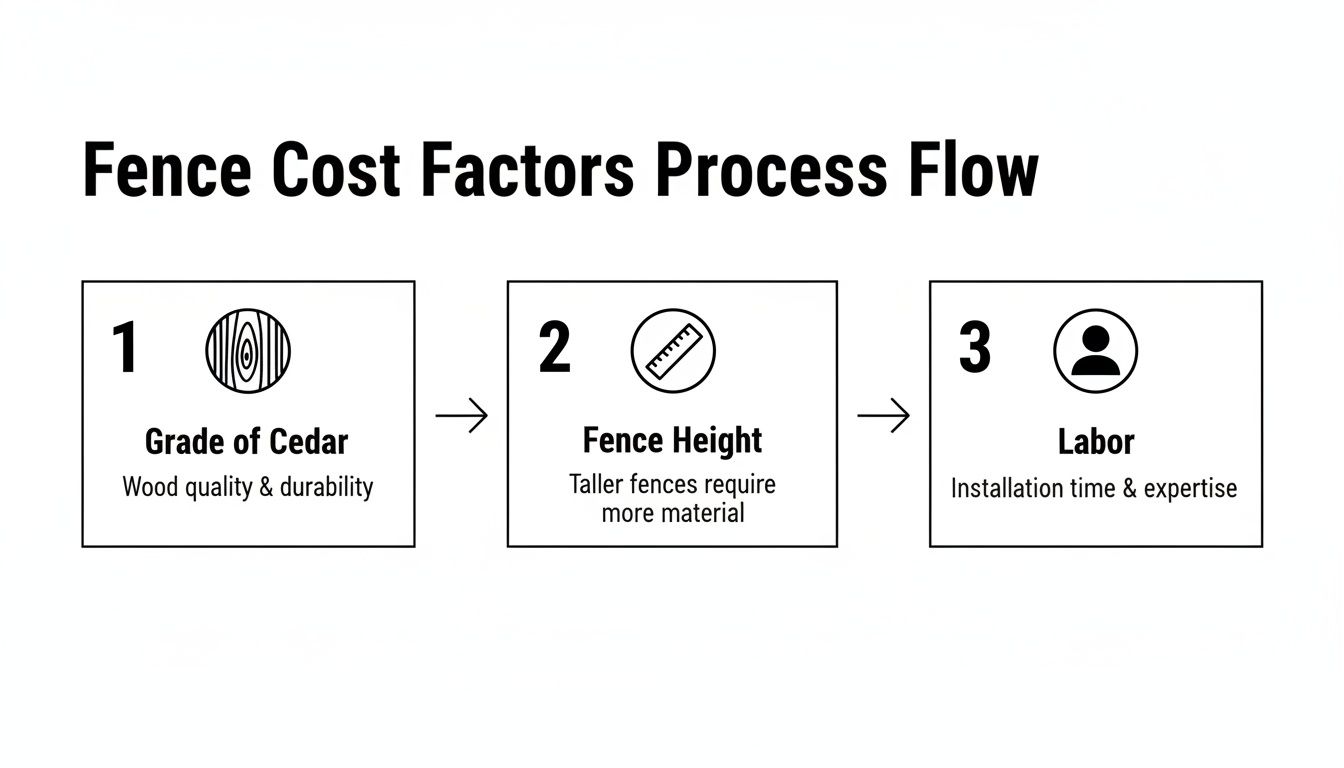
As you can see, the craftsmanship required for a proper installation is just as important as the materials you choose.
Assembling the Fence and Gates
Once the concrete has fully cured and the posts are immovable, the fence itself starts to take shape. We begin by installing the horizontal rails—usually two or three per section—that form the fence’s skeleton. Getting these perfectly level is key to a straight, professional-looking final product.
Next comes the satisfying part: attaching the cedar pickets. A skilled installer works with precision, attaching each board to the rails with consistent, tight spacing. This craftsmanship is what creates the seamless, uniform wall of privacy you are looking for.
Finally, we build and hang the gates. This is a task that requires real skill, from constructing a rigid gate frame to installing heavy-duty hardware. We make sure every gate swings smoothly and latches securely, engineering it to resist the sagging that affects so many poorly installed gates.
Keeping Your Investment Strong in the Connecticut Climate
Your new cedar stockade fence looks fantastic right now, but the real test is how it holds up over time. A well-cared-for cedar fence can easily last 15 to 25 years, but reaching the upper end of that lifespan does not happen by accident. To get the most out of your investment, a little proactive care is essential, especially with Connecticut's harsh weather cycles.
Your fence stands guard through everything from humid summers and driving rain to winter ice and snow. A little routine attention is all it takes to keep it strong and looking its best for decades.
The Big Question: To Stain or To Seal?
One of the first decisions you will make is how to finish the wood. You cannot go wrong either way, as it is mostly a matter of aesthetics and how much maintenance you prefer.
Some homeowners love the look of natural cedar as it ages. Left untouched, it will gradually weather to a distinguished, silvery-gray patina. It is a beautiful, rustic look that requires minimal effort.
However, if you want to preserve that fresh-cut cedar color and give your fence an extra layer of defense, applying a finish is the way to go. Your two main choices are:
- Staining: A good semi-transparent stain soaks into the wood, adding a tint of color while letting the beautiful grain show through. Most quality stains also contain UV blockers to fight sun fading and mildewcides to combat the mold and algae that thrive in our humid summers.
- Sealing: A clear sealant acts like a raincoat for your fence. It forms a transparent barrier that repels water—the number one enemy of any wood fence. A sealant will not alter the wood's natural color, but it is a powerful tool against rot and decay.
A popular choice we often recommend is a modern stain-and-sealant combo product. You get the color, UV protection, and water repellency all in one application, giving your cedar stockade fence a serious defensive advantage.
A Simple Plan for Seasonal Upkeep
The secret to a long-lasting fence is catching small problems before they become big ones. A quick walk-around and cleaning once a year can make all the difference.
Each spring, after the pollen settles, give your fence a gentle wash. A power washer on its lowest setting is perfect for clearing away the winter's accumulation of dirt, grime, and organic debris. This is not just for looks; it removes the buildup that mildew and mold feed on.
While you are out there, give the fence a quick inspection. Look for:
- Loose or Popped Nails: Wood expands and contracts with temperature and humidity, which can work fasteners loose over time.
- Wobbly Posts: Give each post a firm shake. If it moves, it could be a sign of rot near the ground or shifting from winter frost heaves.
- Damaged Boards: Scan for any splintered, cracked, or rotting pickets that might need replacing.
If you spot a minor issue, fixing it early is your best bet. For anything more serious, like a leaning post or a section with significant damage, it is wise to call in a professional. Our crew can diagnose the root cause and handle any needed repairs. You can learn more about our common fence repair services.
With just a little attention each year, your cedar stockade fence will remain a strong, beautiful feature of your property for years to come.
Bringing Your Cedar Fence Vision to Life with Connecticut Fence Works
You have done your research. You know the difference between board styles, the pros and cons of cedar, and what it takes to build a fence that lasts. But all that research leads to the most important decision of all: choosing the right team to build it.
That is where we come in. At Connecticut Fence Works, we are not just another contractor. We are an owner-operated company, which means our name and reputation are on the line with every single project. We live and work right here in Connecticut, and we are passionate about building beautiful, sturdy fences that make our neighbors proud.
Why Homeowners Choose Us
We have built our business on a simple premise: do great work and treat people right. That means showing up when we say we will, communicating clearly, and never cutting corners. We know a new cedar stockade fence is a big investment in your home, and we want you to feel completely confident from our first conversation to the final handshake.
Hiring any contractor can feel like a leap of faith. That is why knowing how to vet a landscape contractor—or any home service professional—is so critical to avoiding headaches down the road. We welcome the tough questions because we are proud of our answers and our track record of five-star reviews from homeowners just like you.
We are career fence installers, not just seasonal laborers. This means your project is handled by an experienced team that understands the nuances of building a precise, durable, and attractive fence that will perform for years.
Your Local Connecticut Fence Experts
From the Hartford area to the shoreline, we are proud to serve communities all across the state. Our team has installed fences in neighborhoods throughout:
- Hartford County
- Tolland County
- Middlesex County
- New London County
- New Haven County
Whether you need a privacy fence to create a backyard oasis, a secure enclosure for your pool, or a simple, elegant boundary for your property, we have the local expertise to get it done right. It all starts with a real conversation about your needs, followed by a detailed, no-pressure estimate.
Your home deserves the skill and attention to detail that only a dedicated, local expert can provide. Let's work together to build the perfect fence for your property.
Ready to take the next step? Contact Connecticut Fence Works today for a free, no-obligation estimate and start planning your perfect fence. Visit us at https://ctfenceworks.com to get started.