
CT Deer Fence Installation Cost: 2026 Pricing & Budget Guide
There's nothing more disheartening for a gardener than discovering deer have turned your hard work into an overnight buffet. If you've reached that point, your first thought is probably: "How much is this going to cost to fix?" The short answer is that a deer fence installation cost usually runs between $9 and $25 per linear foot. This means a typical project can range from a few thousand dollars to well over ten thousand, depending on your property's size and the materials you choose.
Your 2026 Guide to Deer Fence Costs in Connecticut
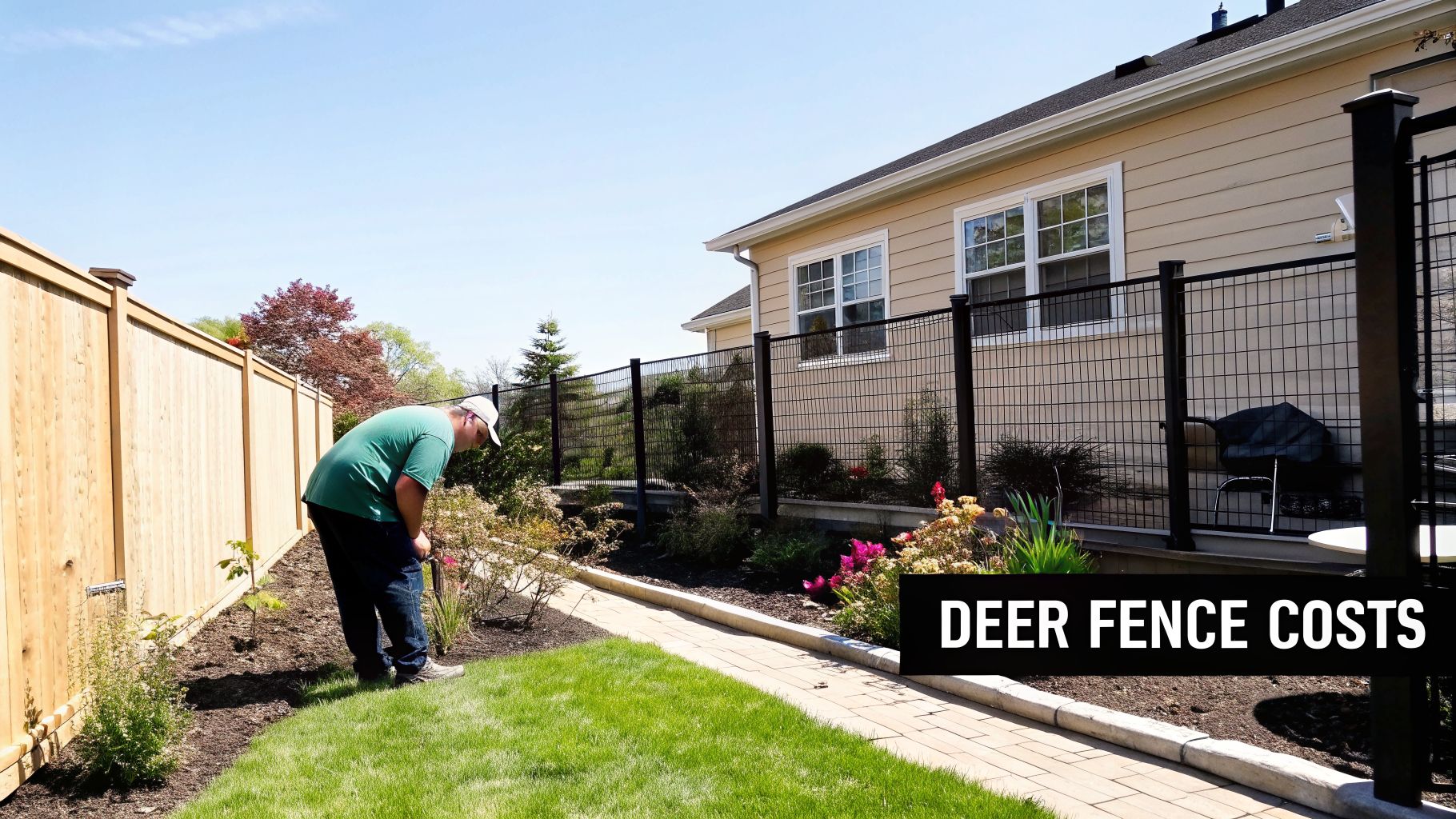
As a Connecticut homeowner, you know that keeping deer out isn't just for looks; it's about protecting your investment in your landscape. But there’s no single price tag for a deer fence. The final cost depends on your property’s unique layout, the materials you select, and the level of security you need.
Think of it this way: buying a fence is a lot like buying a car. A basic fence to guard a small garden is like a reliable sedan—it gets the job done effectively. But if you need to secure a large, hilly property, you're looking at the equivalent of a rugged, all-terrain SUV. The needs are different, and so is the price.
Understanding The National Averages
To get a general idea, let’s look at the national picture. For 2026, the average professional deer fence installation costs around $4,200. Most homeowners spend between $1,400 and $7,000.
What does that mean for a real project? A small 100-foot fence—perfect for keeping deer out of your prized vegetable patch—might cost about $900. If you're looking to protect a half-acre lot with 300 feet of sturdy, 8-foot-tall fencing, you can expect to invest around $4,200. When you consider that annual deer damage can easily cost over $1,500, that investment starts to make a lot of sense.
What to Expect for Your Project
The single biggest factor in your final cost will always be the total length of the fence. To help you start budgeting, we've put together a quick overview of common project sizes and what they typically cost.
Key Insight: Try to see this as an investment, not just another home expense. A well-built deer fence doesn't just stop the financial loss from ruined landscaping; it gives you back your yard and provides invaluable peace of mind.
Here's a quick look at what you might expect to invest based on the size of your project.
Estimated Deer Fence Installation Costs at a Glance (2026)
| Project Size (Linear Feet) | Typical Use Case | Estimated Cost Range |
|---|---|---|
| 100 – 200 feet | Protecting a small vegetable garden | $1,500 – $4,500 |
| 300 – 500 feet | Securing a backyard or pool area | $4,000 – $11,000 |
| 600+ feet | Enclosing a full property perimeter | $10,000+ |
Of course, these numbers are just a starting point. Now, let’s explore the details—from material choices to the terrain of your property—that will shape your final deer fence installation cost.
Viewing Your Fence as an Investment, Not an Expense
It’s easy to feel sticker shock when you see the final number on a deer fence quote. We understand. But thinking of that deer fence installation cost as a one-time expense is the wrong way to look at it. A well-built fence is a powerful investment in your property's future—and your own peace of mind.
To appreciate the value, you have to consider the cost of not having a fence. We’ve all been there. You spend a beautiful spring weekend planting, putting hundreds of dollars into gorgeous shrubs, vibrant perennials, and a promising vegetable garden. Then, a few nights later, the deer arrive. All that work and money is gone, leaving you with nothing but chewed-up stems and frustration.
Calculating the Real Cost of Deer Damage
That frustration has a real price tag, and it adds up faster than you might think. It's not just about the plants you lost; it’s also the hours of planting, watering, and care that went with them.
- Destroyed Landscaping: A handful of mature shrubs or a prized flower collection can easily represent $500 to $1,000 in value.
- Lost Garden Produce: One overnight visit can wipe out a vegetable garden that would have fed your family for months.
- Repeated Efforts: Doing this year after year? That's a cycle of wasted money and dashed hopes that takes a serious toll.
This isn’t a small problem; it’s getting worse everywhere. The global demand for deer fencing is on track to grow from a $650 million market in 2024 to an estimated $1.12 billion by 2033. Here in the U.S., our 30 million-plus deer cause over $1 billion in landscape and crop damage every year. For Connecticut homeowners, that often translates to $500-$2,000 per acre in plant losses, year after year. You can explore these market trend statistics to see just how big the issue has become.
How a Fence Pays for Itself
When you start adding up those annual losses, the return on a quality fence becomes crystal clear. A professional installation isn't just another bill to pay; it's a permanent solution to a costly, recurring problem.
A proper deer fence can cut your landscape losses by over 90%. For many of our clients, this means the fence pays for itself within just a few years by ending the cycle of buying and replacing expensive plants.
And the benefits don't stop there. A fence protects the beautiful landscaping you’ve worked so hard on, which directly boosts your home’s curb appeal. Even better, it gives you back your yard. You can finally plant that fruit tree you’ve dreamed of or start a rose garden without worrying if it will become a midnight snack for the local deer herd.
Ultimately, a fence isn't just a barrier. It’s a strategic upgrade that stops a financial drain, reclaims your outdoor space, and adds lasting value to your home. For a Connecticut homeowner, it’s one of the smartest property investments you can make.
What Goes Into a Deer Fence Quote? Breaking Down the Costs
If you've ever gotten a few quotes for a deer fence, you might have noticed something puzzling: the prices can vary, sometimes by a lot, even for properties that seem similar in size. Why is that? It's a lot like getting a quote for a kitchen remodel—the final price isn't just about square footage. It comes down to the cabinets, the countertops, and how complex the job is.
A deer fence installation cost works the same way. The final number on your estimate is a blend of the specific choices you make and the unique challenges your property presents. Understanding these key factors will help you know where your money is going and make informed decisions. The two biggest factors are always the fencing material you choose and the layout of your land.
Choosing Your Fence Material
The single biggest item on your quote will be the material itself. Each option offers a different balance of upfront cost, long-term durability, and appearance. Let's walk through the most common choices we install.
Polypropylene Mesh: This is usually the most budget-friendly option. It's a tough, black plastic mesh that's surprisingly strong but also lightweight. While it gets the job done, it's more likely to be damaged by a heavy fallen branch or chewing from smaller animals. You can typically expect a 10-15 year lifespan from a poly fence.
Woven Wire Metal: For homeowners looking for a serious upgrade in strength, this is it. It consists of steel wires woven into a tight, flexible pattern that is incredibly resistant to impact and damage. It’s coated in black, which helps it fade into the background, becoming almost invisible from a short distance. A well-installed woven wire fence can easily last 20-30 years, often longer.
Welded Wire Metal: This is another heavy-duty steel option. Instead of being woven, the wires are welded together at every crossing, creating a stiff grid. It offers fantastic protection but can be less flexible than woven wire when we need to follow the curves of a rolling landscape.
A good fence is more than just a barrier; it's an investment that pays you back by protecting your landscape and improving your property.
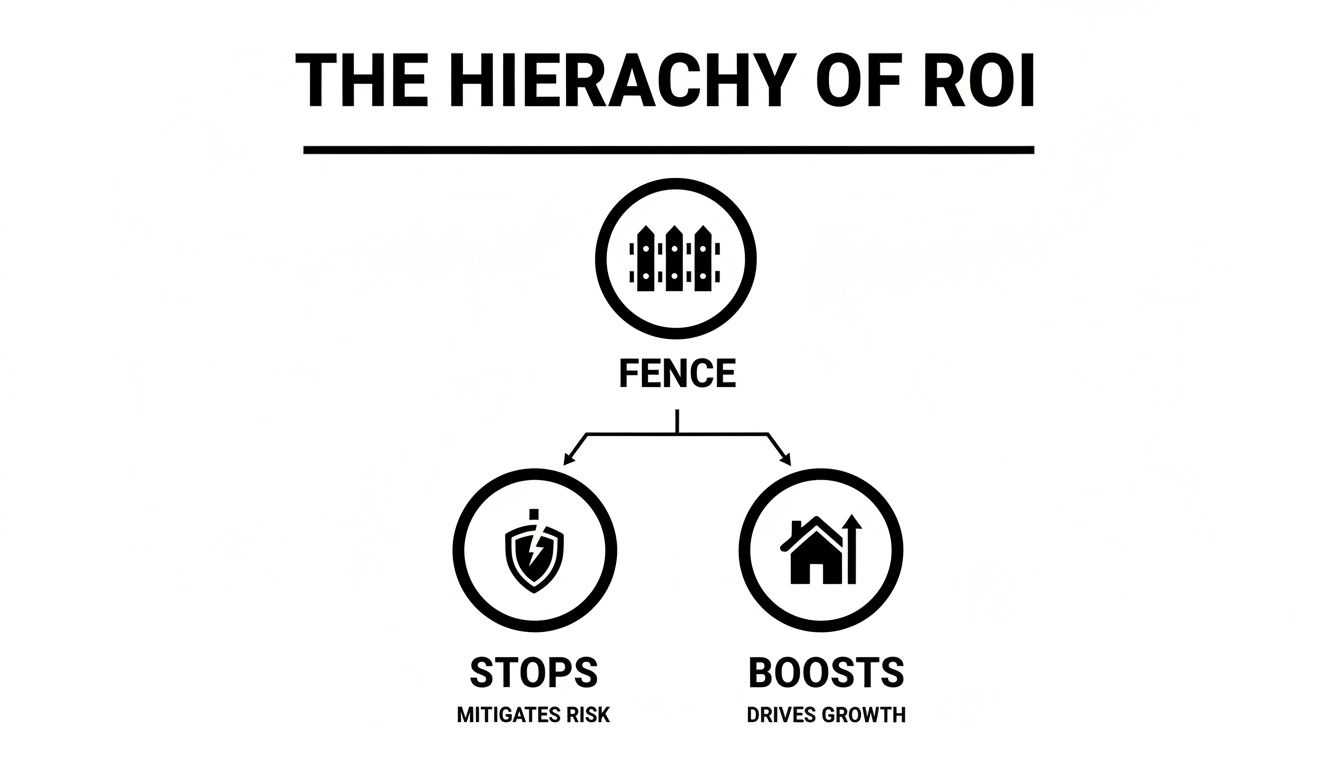
As you can see, the fence stops the constant financial drain of replacing chewed-up shrubs and trees, while at the same time, it boosts your property's value by making your yard more usable and beautiful.
How Height, Gates, and Your Yard Affect the Price
After you've picked your material, the next big influence on cost is the labor involved. Building a fence correctly is a skilled trade, and the difficulty of the job site directly impacts the time and expertise required.
A Pro's Perspective: It's a good rule of thumb that labor will make up about 50% of the total deer fence installation cost. This isn't just paying for time; it's paying for the expertise to build a fence that will stand straight, stay tight, and do its job for decades.
Here’s what our installers are looking at when they assess a property:
Fence Height: You might see 6-foot fences out there, but a motivated deer can sail right over one. For real peace of mind, the industry standard is 7.5 to 8 feet tall. Taller fences need longer, stronger posts and more material, which adds to the cost but provides truly reliable protection.
Number of Gates: Every gate is a custom-fit component. Whether it's a wide driveway gate or a simple walking gate for garden access, each one requires extra posts, hardware like hinges and latches, and careful work to make sure it hangs perfectly and closes securely.
Property Terrain: This is often the wild card. A flat, clear lawn is a straightforward project. Most Connecticut yards, however, have features that add time and complexity:
- Rocky Ground: Our state is famous for its rocky soil. Digging post holes through it is slow work and sometimes requires jackhammers or other specialized equipment.
- Steep Slopes: Installing a fence on a hill is a true test of skill. It takes careful planning to follow the lay of the land precisely so there are no gaps for deer to sneak under.
- Heavy Tree Cover: We often have to build a fence line through dense woods. Clearing brush and working around mature trees and their root systems takes much more time and effort than working in an open field.
Sometimes people ask about using a chain link fence for deer. While it's a sturdy option, its high visibility, heavy materials, and intensive installation process typically make it a less practical and more costly choice for this specific purpose. If you're curious, you can see how a chain link fence compares to other solutions in our guide. Knowing how these factors work together will give you a much clearer picture of what to expect when you get your personalized quote.
DIY vs. Professional Installation: A Realistic Comparison
The idea of installing your own deer fence is always tempting. At first glance, cutting out the labor bill seems like the quickest way to reduce your deer fence installation cost. But before you start clearing your weekends and renting equipment, it’s important to think about what you’re truly signing up for.
We've seen it many times: a well-intentioned DIY fence that fails after the first big New England snowstorm. The homeowner is left right back where they started, but now they're out the cost of materials and a lot of wasted time. This isn't just about saving money upfront; it's about getting a fence that actually does its job for years to come.
The True Cost of a DIY Deer Fence
When you decide to install it yourself, you’re not just the installer—you’re the project manager, equipment operator, and quality control inspector. While you’re not writing a check for labor, the hidden costs in time, frustration, and specialized tools add up fast.
First, there's the equipment. A proper installation requires more than just a shovel and a positive attitude. Most homeowners have to buy or, more often, rent heavy-duty tools.
- Post Hole Digger or Auger: To get the necessary depth and stability, especially in Connecticut’s rocky soil, a gas-powered auger is almost essential.
- Tensioning Tools: The key to a strong deer fence is tension. You'll need specialized grippers and pullers to stretch the mesh taut. A loose fence is an open invitation for deer to push right through.
- Post Driver: Manually pounding in dozens of posts is back-breaking work. A heavy-duty post driver is often the only way to get the job done efficiently and correctly.
Beyond the tools, the biggest hurdle is the skill involved. There’s a steep learning curve to installing a deer fence that will last. You need to know exactly how to brace corner posts to handle thousands of pounds of tension, how to follow a slope without leaving gaps at the bottom, and how to properly stretch the mesh so it doesn't sag.
An improperly built fence isn't just an eyesore; it's a liability. A sagging, weak barrier can fail under the pressure of a single deer, a heavy snowfall, or a fallen limb, wasting your entire investment of time and money.
The Lasting Value of a Professional Installation
Hiring a professional crew is about more than just paying for labor. You're investing in expertise, efficiency, and genuine peace of mind. A seasoned team brings a level of skill that's simply impossible to replicate in a few weekends.
For a professional job, labor typically represents around 50% of the total project cost. Installers might charge an hourly rate between $30 and $60 or a per-foot rate of $6 to $15. When you hire a trusted local company like Connecticut Fence Works, you're getting a team that has perfected its craft since 2014, backed by hundreds of five-star reviews. They know the local terrain and how to build a fence that stands up to it.
Considering one study estimated the average homeowner's annual losses from deer damage at $750, a professionally installed fence that works from day one is one of the smartest investments you can make for your property. You can explore a broader overview of how fencing costs are calculated by reviewing national cost averages here.
To help you decide, here’s a straightforward comparison of the two approaches.
DIY vs. Professional Deer Fence Installation
| Factor | DIY Installation | Professional Installation (e.g., CT Fence Works) |
|---|---|---|
| Upfront Cost | Lower, but with hidden costs for tools, extra materials, and potential mistakes. | Higher, but it's an all-inclusive price covering labor, tools, and expertise. |
| Time Investment | Significant. Expect to spend multiple weekends on physically demanding labor. | Minimal for you. The project is completed efficiently, often in just a few days. |
| Required Skill | High. You need to understand post-setting, tensioning, and working with uneven terrain. | All skill is provided. The crew brings years of experience to your project. |
| Durability & Quality | Variable. There's a high risk of sagging, gaps, or premature failure under pressure. | Guaranteed. The fence is engineered and built to last for decades, often with a warranty. |
| Peace of Mind | Low. You're left wondering if you did everything right and when something might fail. | High. The job is backed by professional accountability and a commitment to quality. |
Ultimately, the choice depends on your skills, your property, and what you value most. A small, simple garden enclosure on flat ground might be a good DIY project. But for most properties in our area—with their signature rolling hills and rocky ground—a professional installation is the surest way to get a truly deer-proof yard you won't have to worry about.
Real-World Deer Fence Project Costs in Connecticut
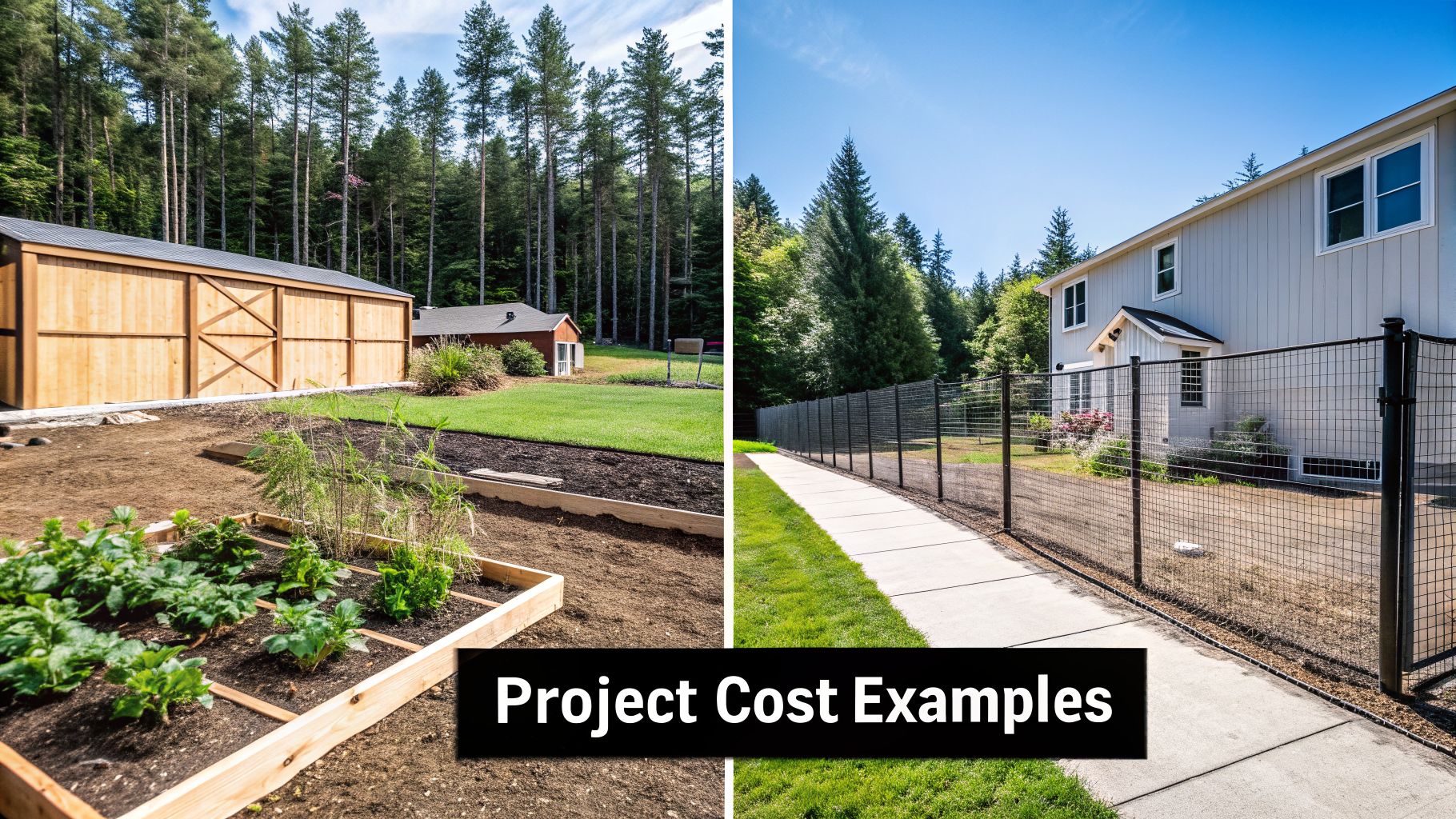
While cost-per-foot numbers give you a starting point, they don't tell the whole story. The best way to understand your potential investment is to see how the numbers come together in a real-life situation.
Let’s walk through three different scenarios we commonly see here in Connecticut. These examples show how much things like property size, terrain, and material choices can impact the final price tag, helping you build a more realistic budget for your own project.
Scenario 1: The Fairfield County Garden Enclosure
Imagine a classic suburban backyard in Fairfield County. You’ve put a lot of work into your vegetable garden, but the local deer have decided it’s their personal buffet. To protect a 40-foot by 60-foot plot, you’ll need about 200 linear feet of fencing.
The yard is mostly flat with good soil, making for a straightforward installation. You just need a single walking gate to get in and out with your wheelbarrow. A strong, 8-foot-tall polypropylene mesh is a great, cost-effective choice for this situation.
- Materials: 200 feet of 8-foot poly mesh, posts, and related hardware.
- Labor: Standard installation on level ground with minimal site preparation.
- Gates: One 4-foot walking gate.
Estimated Project Cost: $3,500 – $4,800
This range covers a full, professional installation from start to finish. The final price would be at the lower end if the area is perfectly clear and accessible, and could be higher if any minor brush clearing or ground leveling is needed.
Scenario 2: The Hartford County Perimeter Fence
Now, let's look at a larger property—a half-acre lot in a Hartford County suburb. The goal here is to secure the entire backyard so the kids and dogs can play safely, free from concerns about deer ticks or ruined landscaping. This requires fencing a perimeter of roughly 450 linear feet.
The land has a gentle slope and a few mature trees we'll have to work around. You want a more robust, long-lasting solution, so you’ve chosen a woven wire metal fence. You’ll also need two gates: one for foot traffic and a 10-foot double gate to get the lawnmower through.
- Materials: 450 feet of 8-foot woven wire, heavy-duty posts, and hardware.
- Labor: More involved due to the sloped ground, navigating trees, and handling heavier materials.
- Gates: One 4-foot walking gate and one 10-foot double gate.
Estimated Project Cost: $11,500 – $14,000
The higher cost here reflects the upgrade to stronger materials, the added complexity of a wide double gate, and the extra labor required for the terrain. While it's a bigger investment, this type of fence delivers maximum durability. For homeowners exploring long-term fence options, it’s always smart to compare materials; for instance, you can see how the benefits stack up against a beautiful cedar fence installation in our detailed guide.
Scenario 3: The Litchfield County Wooded Acreage
Finally, let’s head to the hills of Litchfield County. You have a 2-acre property, and you want to secure a one-acre area around your home and landscaping. This means a fence line of about 800 linear feet through classic New England terrain: rocky soil, steep slopes, and dense woods.
You’ve decided on woven wire for its strength and how well it blends into the natural scenery. For access, you need a 12-foot automated driveway gate for convenience, plus a standard walking gate closer to the house. When considering a job of this size, it's worth weighing the pros and cons of a DIY vs Professional Installation to understand what's involved.
- Materials: 800 feet of 8-foot woven wire, reinforced corner posts, and hardware.
- Labor: Highly complex, requiring extensive clearing, specialized equipment for the rocky ground, and careful work on steep grades.
- Gates: One 4-foot walking gate and one 12-foot automated driveway gate.
Estimated Project Cost: $25,000+
This project sits at the high end of the cost spectrum. The price is driven by the large scale, the extremely challenging site work, and the addition of an automated gate, which is a significant component of the budget by itself. This is a perfect example of how demanding terrain can make skilled labor the single largest factor in a project's cost.
Taking the Next Step Toward a Deer-Proof Yard
You've done the research. You know the materials, the process, and what a deer fence installation cost might look like. It's a significant investment, but it’s also the most reliable, long-term solution for the constant headache and expense of deer damage. Now it's time to make the final call and ensure that investment pays off for years to come.
This is the point where choosing the right partner makes all the difference. It's what separates a fence that just gets the job done from one that truly protects your property and looks great doing it.
Finalizing Your Decision with Confidence
When you're ready to get estimates, two things should be at the top of your checklist: the warranty and the contractor’s reputation. Any reputable company will stand behind its installation with a clear warranty covering both the materials and their workmanship. This is your guarantee that the fence is built to handle tough New England weather and will last.
Just as important is the team doing the work. Look for a local, owner-operated business with deep roots in Connecticut and real reviews from your neighbors. A contractor who communicates clearly and shows up when they say they will isn't just being professional—they're showing you the same level of care they'll put into building your fence.
Choosing a contractor is about more than just the lowest bid; it's about investing in a partner who will deliver a precise, durable, and attractive final product tailored to your property. Peace of mind comes from knowing the job was done right.
As you move toward a deer-free yard, remember that fencing is just one part of a complete strategy. Learning how to keep deer out of your garden with other methods can add another layer of defense for your most prized plants.
You're at the final stage of reclaiming your yard. With a solid understanding of your options, you're ready to get a specific plan that fits your property and your budget.
Why not start with an expert you can trust to turn those plans into a reality? You can get the ball rolling today by requesting a free, no-obligation estimate from Connecticut Fence Works. We'll provide a custom quote and help you finally secure your landscape.
Frequently Asked Questions About Deer Fence Costs
You have the basics on what a deer fence might cost, but a few questions are probably still on your mind. That's completely normal. We've been installing these fences across Connecticut for years, and we've heard it all. Here are straightforward answers to the most common questions we get from homeowners just like you.
How Tall Does a Deer Fence Really Need to Be?
To be blunt: a 6-foot fence is tempting, but it’s more of a suggestion to a deer than a real barrier. For a fence that truly works, the industry gold standard—and what our experience confirms—is a height of at least 7.5 to 8 feet.
Why so tall? Deer are incredible jumpers, but they’re also cautious animals. They won't attempt a leap if they can't clearly see their landing zone or feel confident they can clear the top. An 8-foot fence creates that critical element of doubt, making it both a physical and a psychological deterrent. It’s the most reliable way to protect your property.
Will a Deer Fence Increase My Property Value?
In a state like Connecticut, where deer are a constant problem for gardeners and homeowners, the answer is a definite yes. A professionally installed deer fence isn't just an extra; it's a valuable asset that solves a major issue for anyone looking to buy a home here.
Think of it this way: a quality fence protects expensive landscaping, makes your yard safer for kids and pets, and immediately removes a huge source of frustration. Buyers see this as a significant upgrade that's already taken care of, which can absolutely boost your home's marketability and final sale price.
It signals to potential buyers that your property is well-cared-for and ready to enjoy from day one, without the worry of seeing their new garden become a deer buffet. That peace of mind is a powerful selling point.
How Long Does a Professionally Installed Deer Fence Last?
The lifespan of your fence really comes down to two things: the materials you choose and the quality of the installation. A professional installation is what ensures you get the full lifespan out of your chosen material.
Here’s a realistic timeline you can expect:
- Polypropylene (Plastic) Mesh: When installed correctly, a high-quality poly mesh fence will serve you well for 10 to 15 years.
- Metal (Woven or Welded Wire): This is your long-term solution. A solid metal fence can easily last 20 to 30 years or even longer, making it a one-time investment for most homeowners.
Expert installation makes all the difference. Setting posts to the right depth, getting the tension just right, and using proper bracing—that’s what prevents sagging and ensures your fence stands strong against weather and time.
Ready to get a precise quote for your property? The team at Connecticut Fence Works is here to provide a free, no-obligation estimate tailored to your specific needs. Visit our website to get started and take the final step toward a beautiful, deer-free yard.