
Affordable Chain Link Fencing in Connecticut: Your Complete Guide
When you need to secure your property in Connecticut without overspending, the goal is to find the right balance between cost, security, and long-term durability. For many homeowners and businesses, affordable chain link fencing is the perfect solution. It's a practical investment for everything from marking property lines and keeping pets safe to adding a solid layer of protection to your home.
Why Chain Link Is a Smart Fencing Choice in Connecticut
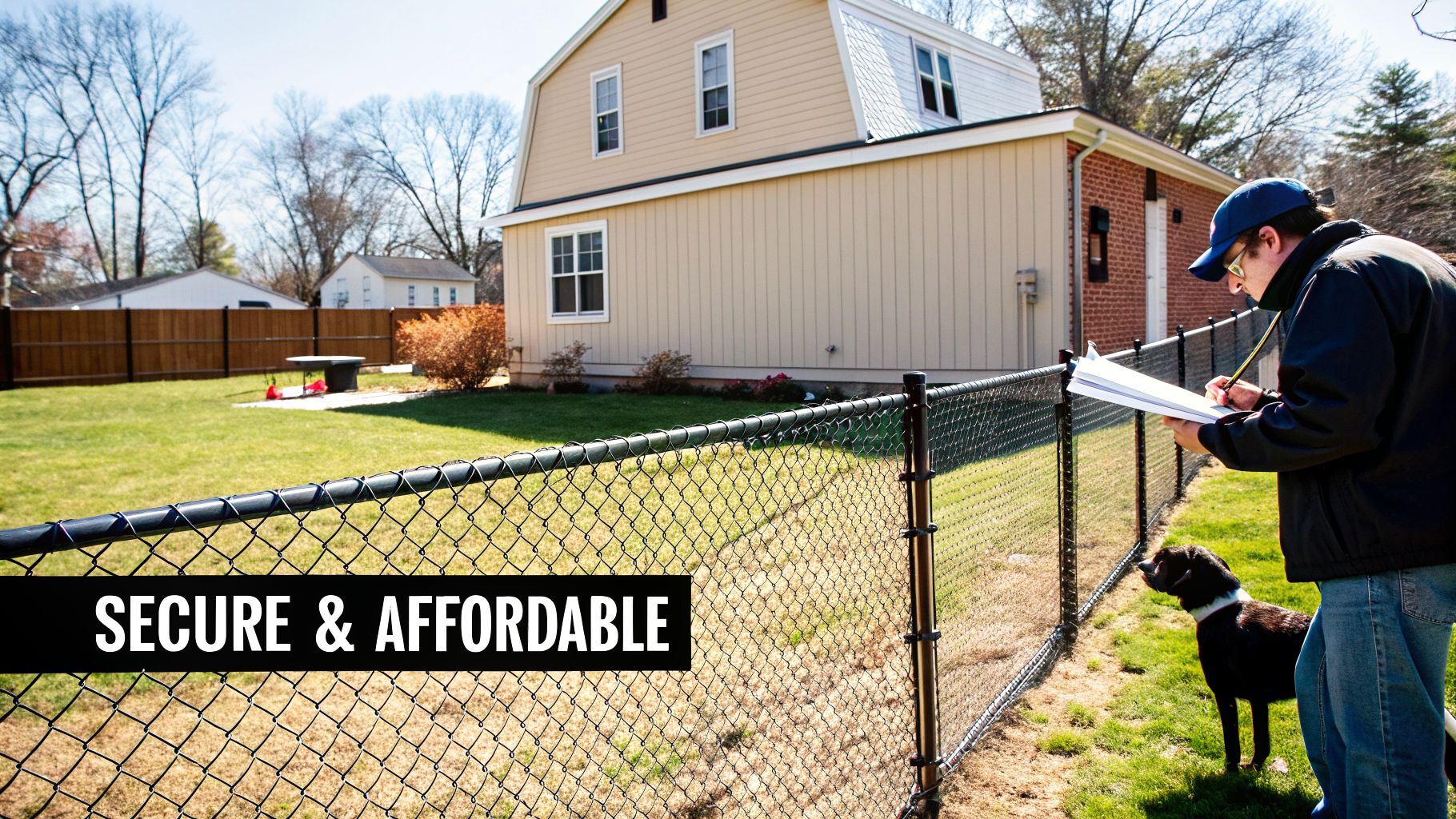
When people consider fencing, they often compare wood, vinyl, and metal. Each has its advantages, but chain link consistently stands out for its straightforward, practical value. It isn't a compromise—it's a deliberate choice for function and longevity.
Here at Connecticut Fence Works, we've installed miles of fencing across the state and often recommend chain link for its unique benefits. It provides clear lines of sight, which is a major advantage for security, and the open weave design allows strong New England winds to pass through. This resilience alone makes it a reliable choice that requires very little upkeep.
The Real-World Value of Chain Link
What makes chain link so popular? Its value comes down to a few core strengths that are especially important for anyone living in Connecticut.
- Exceptional Durability: Modern chain link is made from galvanized steel, which is designed to resist rust and corrosion. It holds up well against our humid summers and harsh, icy winters—conditions that can cause untreated wood to rot and warp over time.
- Cost-Effectiveness: Simply put, chain link has a lower initial cost than wood or ornamental iron, particularly for larger properties. Both the materials and the installation process are more budget-friendly, allowing you to secure a large area without a massive expense.
- Low Maintenance: A wood fence needs to be stained or painted every few years. A chain link fence, however, does not. A quick wash now and then is all it takes to keep it looking good for decades.
This trend toward durable, cost-effective solutions isn't just a local observation. The global fencing market, valued at USD 36.47 billion in 2025, continues to grow, indicating a clear and increasing demand for reliable property enclosures. The affordability of chain link is a major contributor to this growth.
As your local guide, we at Connecticut Fence Works believe an informed decision is the best one. We are here to explain every option and ensure you understand the entire process, from selecting materials to the final installation.
Our goal is to ensure you get a fence that fits your budget, looks great, and performs flawlessly for years. You can see how we’ve helped other Connecticut homeowners by viewing the projects in our gallery. We’ll help you navigate the choices to plan a project you can feel confident about.
Understanding Chain Link Fence Costs in Connecticut
If you have used a generic online fence calculator, you may have noticed they don't provide a complete picture. These tools often don't account for the realities of working in Connecticut—such as local labor costs, typical backyard terrain, or the specific materials available from local suppliers. To create an accurate budget, you need figures that reflect what your neighbors in Hartford, New Haven, and surrounding towns are actually paying.
The good news is that a professionally installed chain link fence remains one of the most budget-friendly options available. For most standard residential projects in Connecticut, you can expect the cost to be between $20 to $40 per linear foot. For a typical 150-foot backyard fence, the total cost would likely be in the $3,000 to $6,000 range.
Of course, this is just an estimate. A few key decisions will greatly influence where your project falls within that range. Understanding these cost factors is the first step toward getting a quote that fits your needs and your budget.
The Main Factors That Drive Your Fence Price
Think of it like buying a new car. The base model has an attractive price, but every added feature, from a larger engine to a better sound system, adjusts the final cost. The same principle applies to chain link fencing. The biggest variables affecting the price are the fence's height, the thickness of the wire (its gauge), and the type of coating you choose.
- Fence Height: This is straightforward—a taller fence requires more material. You will need longer posts and more chain link fabric. A 4-foot fence is great for marking a property line or containing a small dog. A 6-foot fence provides more security and some privacy but will naturally increase both material and labor costs.
- Wire Gauge: Gauge is a measure of the wire's thickness. It's important to remember that a lower number means a thicker, stronger wire. For example, a heavy-duty 9-gauge wire is significantly tougher (and more expensive) than a standard residential 11.5-gauge wire.
- Material Coatings: The classic silver, galvanized finish is the most economical choice. For a more refined look, you can choose a black or green vinyl coating. This adds slightly to the cost but provides an extra layer of rust protection and helps the fence blend into your landscape.
It's no surprise that many homeowners choose this option. A recent market analysis showed that metal fencing, including chain link, made up over 52% of the entire fencing market's revenue in 2023. People in Connecticut and across the country are choosing it because its value is hard to beat. If you are interested in the data, you can review the full industry analysis for a closer look.
A Simple Way to Think About Fence Gauge
Is wire gauge still a bit confusing? Let's use an analogy. Imagine you own a heavy-duty work truck. You wouldn't put small sedan tires on it, would you? They might hold air, but they would wear out quickly and perform poorly under a heavy load.
That’s how fence gauge works. A lighter, higher-number gauge (like 11.5) is your "sedan tire"—perfectly fine for a quiet suburban yard. A thicker, lower-number gauge (like a 9-gauge) is your "heavy-duty truck tire"—built for security purposes, commercial properties, or containing large, energetic dogs.
While the "truck tire" option costs more initially, its strength and durability make it a smarter investment for more demanding situations.
Breaking Down the Quote You Receive
When you receive an estimate from a reputable installer like Connecticut Fence Works, it should not be just a single number. A professional quote will itemize the costs so you can see exactly where your money is going, with no hidden fees or surprises.
What to Look For in a Professional Fence Quote:
| Cost Component | What It Covers |
|---|---|
| Materials | This is the largest portion of the cost. It includes the chain link fabric, all posts (line, corner, and end posts), top rails, and all hardware—tension bars, fittings, caps, and ties. The price here is determined by your choices in height, gauge, and coating. |
| Labor | This covers the installation crew's time and expertise. It includes digging and setting every post in concrete, stretching the mesh perfectly tight (a crucial step!), and hanging your gates so they swing smoothly without sagging. |
| Gates | Gates are almost always priced separately. A simple 4-foot walk-through gate will cost much less than a 12-foot double-drive gate. Custom sizes or automatic gate openers will also be listed here. |
| Site Prep/Add-Ons | If your fence line needs to be cleared of brush, or an old fence needs to be removed and hauled away, you will see those costs here. This section also includes optional items like privacy slats. |
Once you understand these components, you can review any quote with confidence. You will know exactly how your choices affect the final price, which helps you find the perfect balance between the security you need and a cost you're comfortable with.
Choosing the Right Materials for Your Budget and Needs
Selecting the right materials for your chain link fence is where you can balance cost, appearance, and function. It's like tailoring a suit—the fabric and features you choose make all the difference. This is your opportunity to ensure the fence you get is exactly what you need, whether for containing a dog, securing your business, or simply marking your property line.
Knowing a little about the components beforehand helps you have a more productive discussion with your installer.
Take a look at the chart below. It provides an overview of how decisions about the project type, fence height, and material thickness all contribute to the final price.
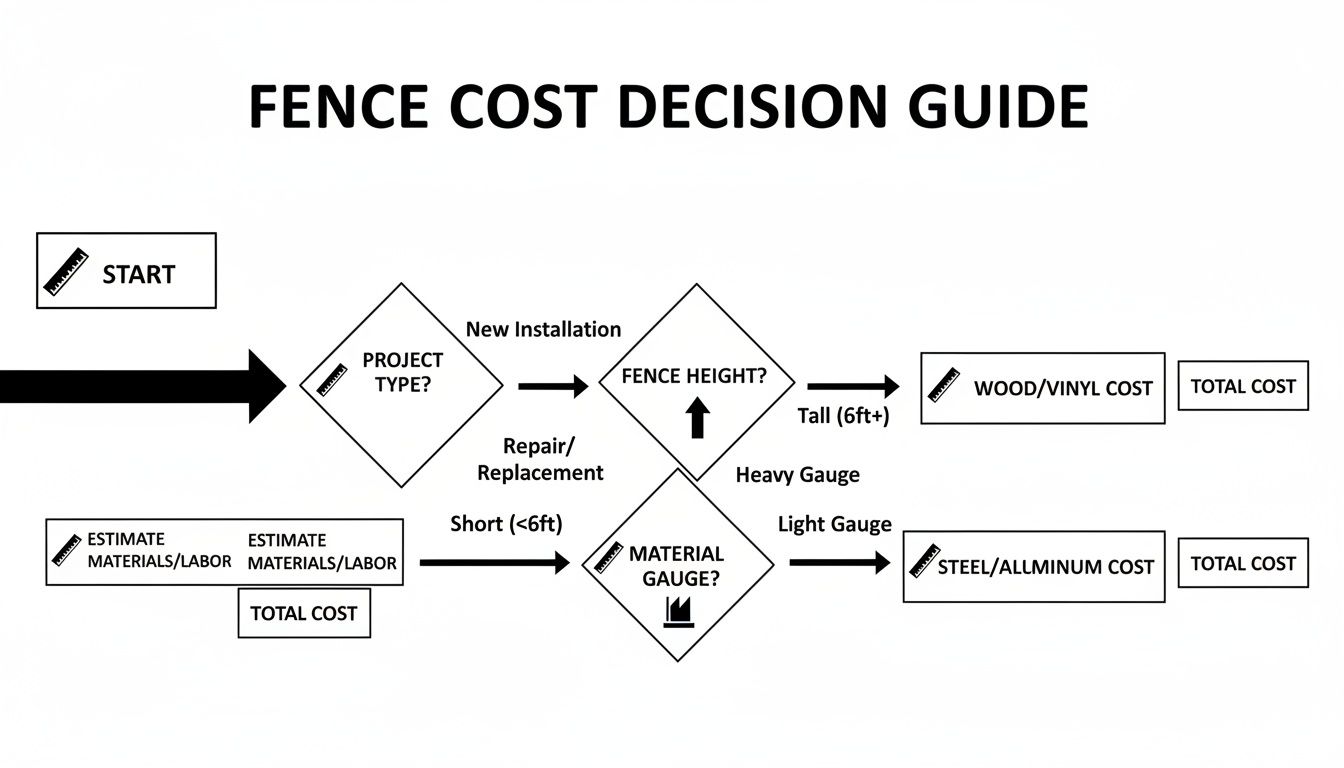
As you can see, the more heavy-duty your needs, the more the project will cost. That's why carefully selecting your materials is so important for planning an affordable chain link fence project.
Wire Gauge: Your Fence’s First Line of Defense
One of the first and most important decisions you'll make is the wire gauge. The concept is simple: gauge is a measure of the steel wire's thickness. The tricky part is that the numbering is inverted—a lower gauge number means a thicker, stronger wire.
Think of it like buying a winter coat in Connecticut. An 11.5-gauge wire is like a good fall jacket; it's ideal for most residential settings, marking boundaries, and keeping smaller pets safe. But if you need to withstand a Nor'easter, you'll want the heavy-duty parka. That's your 9-gauge wire.
- 11.5-Gauge: The standard choice for most residential jobs. It's cost-effective and does a great job creating a clear boundary or a safe space for the family dog in a typical backyard.
- 9-Gauge: This is the heavy-duty option. Its extra thickness makes it much tougher, which is why we recommend it for commercial security, containing large or very energetic dogs, or high-traffic areas.
For most homeowners we work with, the 11.5-gauge offers the best balance of price and performance. But if security is your main concern, the extra investment for 9-gauge wire provides valuable peace of mind.
Finish and Coatings: Galvanized vs. Vinyl
Once you've decided on the wire's strength, you need to choose its protective coating. This choice affects not only how the fence looks but also how well it holds up to our state's freeze-thaw cycles and humid summers.
To help you visualize the differences, here's a quick comparison of the most common options we install.
Comparing Chain Link Fence Options
This table provides a side-by-side look at the most popular chain link choices, helping you weigh what matters most for your property and your budget.
| Feature | Standard Galvanized | Black Vinyl-Coated | Privacy Slats |
|---|---|---|---|
| Primary Benefit | Pure function and lowest cost | Enhanced appearance and superior weather protection | Adds seclusion and blocks views |
| Appearance | Classic, silvery-gray industrial look | Sleek black finish that blends into the landscape | Creates a semi-solid barrier in various colors |
| Durability | Very high; zinc coating prevents rust for decades | Excellent; vinyl adds an extra layer of protection over the galvanized core | The slats themselves are durable, but the fence's core strength depends on gauge |
| Best For | Budget-conscious projects, commercial lots, and when appearance is not a priority. | Residential yards, pool enclosures, and situations where looks matter. | Backyards bordering neighbors, properties on busy streets, or dumpster enclosures. |
| Relative Cost | $ | $$ | $ (Added to fence cost) |
Ultimately, your choice here comes down to balancing your budget with your desire for a particular look and level of long-term weather resistance.
Standard Galvanized Finish
The traditional chain link look comes from galvanization, a process where the steel is dipped in molten zinc. That zinc coating provides a tough, protective barrier against rust and corrosion.
If your top priority is a no-frills, functional fence that will last for decades at the lowest possible cost, standard galvanized chain link is an excellent choice. It is the workhorse of the fencing world for a reason.
Vinyl-Coated Finish
For a more polished look and an extra layer of defense, a vinyl-coated fence is a fantastic upgrade. The process begins with the same galvanized steel wire, which is then fully encased in a durable layer of vinyl, most often in black or green.
The black vinyl option is very popular with Connecticut homeowners because it tends to visually blend into the background, allowing your landscaping to stand out. While it costs more initially, many people feel the sophisticated appearance and added durability are well worth it.
Add-Ons: Privacy Slats and Gates
The final elements to consider are the functional extras. These are priced separately but are essential for making your fence work for your lifestyle.
Privacy Slats
Want to turn your chain link fence into a privacy screen? Slats are the easiest way to do it. These are thin vinyl strips that are woven vertically through the mesh. They significantly reduce visibility and come in colors that can match your fence, giving you instant seclusion.
Gates
Every fence needs a way to get in and out. The cost of a gate depends entirely on its size and complexity. A simple 4-foot walk gate is a standard, affordable option for pedestrian access. A 12-foot double-drive gate, wide enough for a vehicle, is a more significant investment. We can help you determine the best placement and size to make moving around your property easy.
Smart Ways to Save on Your Fence Installation
Everyone wants a great deal on their new fence, but finding the most affordable chain link fencing isn't just about searching for the lowest material price. Real, lasting savings come from smart planning and knowing where a little of your own effort can make a big difference.
A few practical steps can significantly reduce the final bill without sacrificing quality. Think of it as being an active partner in your project—it’s the best way to ensure you get maximum value for your investment.
Prepare the Fence Line Yourself
One of the easiest ways to lower your bill is by reducing the crew's labor time. A significant part of any installation is preparing the site, and since you pay for that time, you can save money by doing the prep work yourself. It's a perfect weekend project.
- Clear Brush and Debris: Walk the path where the fence will be installed. Clear away any bushes, weeds, low-hanging tree limbs, or other obstructions. When our team arrives to a clear fence line, they can start setting posts immediately instead of spending billable hours on cleanup.
- Mark Underground Lines: This is essential. Before any digging begins, you must know what's buried underground. Just call 811 (the "Call Before You Dig" service) a few days in advance. They will send someone to mark all public utility lines for free, preventing a dangerous and expensive accident.
Handling this prep work makes our crew more efficient, which translates directly into savings for you.
Plan Ahead for Permits
In Connecticut, most towns have their own rules about fences. Many require a permit, especially if your fence is over a certain height or near a property line. Discovering this mid-project can lead to headaches, stop-work orders, and unexpected fines from your local building department.
Addressing the permit process early is one of the smartest moves you can make. It’s far easier to adjust a plan on paper than to deal with a stop-work order once construction has begun.
We have worked in towns all over the state, so we can help you figure out what your municipality requires. Sorting this out early ensures a smooth installation process that stays on budget.
Consider Repairing Instead of Replacing
If you already have a chain link fence that has seen better days, don't automatically assume you need a full replacement. In many cases, a strategic repair can add years of life to your existing fence for a fraction of the cost.
For example, a storm may have brought down a limb that damaged a single 10-foot section, or perhaps a couple of posts are loose from years of freeze-and-thaw cycles. These are often simple, isolated fixes.
When to Repair vs. When to Replace:
| Situation | Recommended Action | Why It Saves Money |
|---|---|---|
| A damaged section or two | Repair the specific area. | You are only paying for a small amount of material and labor, not an entire fence. |
| A bent top rail or loose post | Repair by replacing the single component. | Swapping out one part is far more cost-effective than a total overhaul. |
| Widespread rust or sagging | Replace the entire fence. | Once 30-40% of the fence is failing, repairs can become a constant expense. A new fence is a better long-term investment. |
We believe in giving honest advice. When we come out for an estimate, we'll give your current fence a thorough inspection. If a simple repair is all you need, we'll tell you. Our goal is to find the right solution for your property and your budget.
Why Professional Installation Offers the Best Long-Term Value
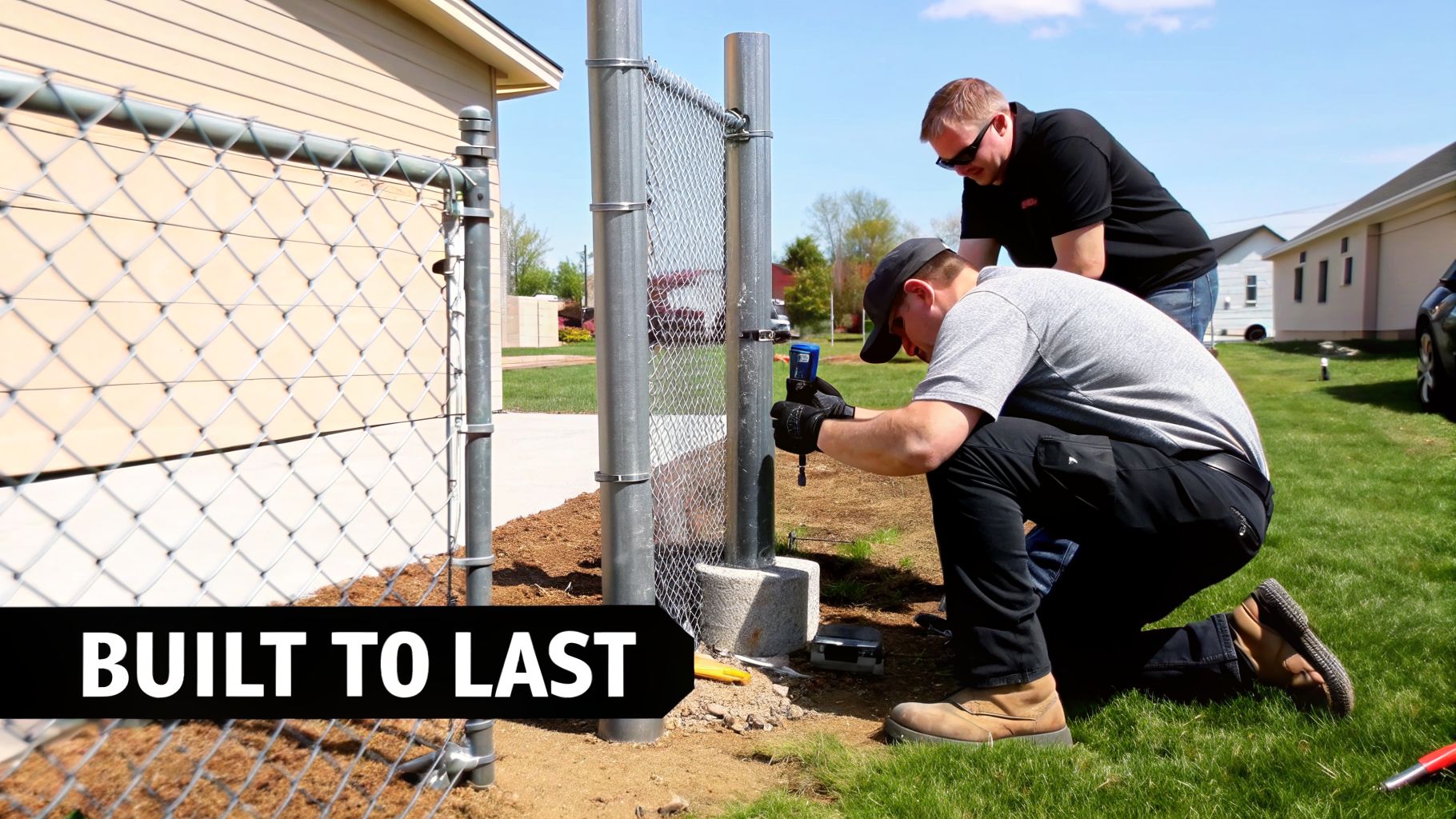
When planning an affordable chain link fencing project, it's easy to focus on the initial price. A do-it-yourself approach might seem cheaper on paper, but true value is measured over decades of solid performance, especially here in Connecticut.
Think of it this way: you could try to fix your car's brakes yourself, or you could hire a certified mechanic. You might save a little on labor upfront, but the expert's work provides safety, reliability, and peace of mind. Professional fence installation is an investment in that same kind of confidence.
The Pitfalls of a DIY Installation
A chain link fence can look deceptively simple, but its strength depends on a series of critical techniques. Small mistakes made during a weekend installation can quickly lead to a weak, sagging fence that requires expensive repairs. That "affordable" project can become a recurring headache.
Here are a few common DIY mistakes we are often called to fix:
- Improper Post Depth: It's not enough to just dig a hole and place a post in it. Here in New England, posts must be set below the frost line—typically 36 to 48 inches deep—and secured in concrete. If not, our freeze-thaw cycles can push the posts out of the ground, resulting in a leaning, unstable fence within a few seasons.
- Insufficient Tension: The clean, taut appearance of a chain link fence comes from stretching the mesh with specialized tools. Without the right equipment, it's nearly impossible to get the tension correct. A loose fence will inevitably sag and bow, looking sloppy and compromising its security.
- Incorrect Gate Hanging: A poorly hung gate is a classic sign of an amateur job. If it’s not set perfectly level with the right hardware, it will drag on the ground, fail to latch, or pull on the posts until the hinges break.
A professionally installed fence avoids all these problems from the start. It’s an investment built to last. For a look at what this level of quality means on a larger scale, you can see how we handle demanding projects with our commercial installation services.
The Professional Difference: Post Depth and Durability
The real secret to a long-lasting fence is what happens underground. Our installers understand Connecticut's soil and weather. We ensure every single post is anchored correctly in concrete, creating a rigid foundation that won't move, no matter what our harsh winters bring.
A fence is only as strong as its foundation. By ensuring every post is perfectly level and set deep in concrete, we build a structural skeleton that guarantees your fence remains straight and strong for decades, not just a few years.
This careful, deliberate approach is what distinguishes a professional job from a weekend project. We use proper tensioning tools to stretch the mesh drum-tight, so sagging is never a problem. We hang gates with precision so they swing smoothly and latch securely every time. That is the difference that delivers real long-term value.
A Lasting Contribution to Your Property Value
Beyond just security, a well-built fence is a solid investment in your home. It’s one of the first things people see, and a crisp, straight fence adds significant curb appeal. A sagging, sloppy one, on the other hand, can be an eyesore that detracts from your property's value.
Investing in a quality installation is one of the smartest renovations that raise property value. The demand for quality, cost-effective fencing is stronger than ever. The global market for the machinery that produces these materials was estimated at USD 500 million in 2025 and is still growing. This trend reflects strong consumer demand and manufacturing improvements that help keep prices competitive. You can even read the full research on the chain link production market to see the data yourself. For homeowners, this means that quality materials for a professional job remain affordable.
Your Next Steps to a Secure and Affordable Fence
By now, you've seen how chain link fencing offers an incredible combination of durability and value. You also know that an affordable chain link fencing project is achievable for Connecticut property owners—it just takes some planning and the right partner.
So, what's the next step to make this a reality for your property?
At Connecticut Fence Works, we have built our reputation on clear communication, dependable scheduling, and building fences that last. We've earned the trust of homeowners across Hartford, Tolland, and New Haven Counties because we believe a successful project always starts with a good conversation and a clear plan.
Your Path to a Finished Fence
We want to make this as straightforward as possible for you. You won't get any high-pressure sales pitches—just honest advice from local professionals who build fences every day. Taking the first step is simple and has no strings attached.
The most important part of any fence project is ensuring it fits your goals and your budget. A free, on-site estimate is the only way to get a truly accurate quote for your specific property, not just a generic online guess.
What to Expect During Your Free Estimate
When you're ready, the first real step is to request a free, no-obligation estimate from our team. When one of our experts visits, here’s what to expect:
- We Listen: First, we'll talk. What is your main goal? Are you trying to keep a dog in, secure a pool area, or simply mark your property line? Your priorities are our starting point.
- We Measure: Our estimator will walk the fence line with you, taking careful measurements and noting any challenging spots like slopes, large tree roots, or other obstacles.
- We Plan: We will go over the best layout options, determine the most convenient spots for gates, and help you finalize your choices on materials.
- We Quote: Soon after our visit, you’ll receive a detailed quote that breaks down every cost. You'll see exactly what you're paying for, with no surprises.
We also know that a new fence is a significant home improvement. That's why we offer financing options to help spread the cost out and make it more manageable. You can get the security and peace of mind you need now, with a payment plan that works for you.
Let’s get started on a fence you'll be proud of for years to come.
Frequently Asked Questions About Chain Link Fencing
It's completely normal to have a few questions. A new fence is a significant project for your property, and you want to feel confident that you've considered all the details. Here are some of the things we're asked most often by Connecticut homeowners like you.
How Long Does a Chain Link Fence Last in Connecticut?
A properly installed chain link fence is more than capable of withstanding our tough New England weather. A standard galvanized fence, the classic silver-colored style, will easily provide 20 years or more of service. Its protective zinc coating effectively fights off rust through our humid summers and icy winters.
For even greater longevity, consider a vinyl-coated fence. The vinyl sheathing provides an extra barrier over the galvanized steel, dramatically improving its defense against moisture. This one choice can often extend the fence's life to 30+ years with very little maintenance required.
Will a Chain Link Fence Increase My Property Value?
While it may not be a showstopper like a remodeled kitchen, a good fence absolutely adds to your property's real-world value and appeal. A crisp, sturdy fence instantly boosts curb appeal, clearly marks your property lines, and provides a level of security that prospective buyers definitely notice.
Think about it from a buyer's perspective, especially for those with children or pets. A secure, fully fenced yard is a huge selling point—it’s one less major project they have to worry about after moving in. While a poorly installed fence can be a drawback, a professional job is always a smart investment in your home's appeal.
What Does the Installation Timeline Look Like?
From signing the agreement to the final handshake, the process is surprisingly efficient. While we can’t control the weather, a typical project follows a clear timeline.
Here’s a general breakdown of the process:
- Prep Work (1-2 weeks): Once you give us the go-ahead, we order all the specific materials for your project. This is also when we work with you to handle any local permits that may be required.
- Setting the Posts (1 day): This is the most critical day of the installation. Our crew digs all the post holes and sets each post perfectly in concrete, creating a strong framework for your fence.
- Curing Time (2-7 days): Concrete needs time to harden. We must let the post footings cure completely. Rushing this step leads to a weak fence, so we wait for it to become rock-solid.
- Finishing the Job (1-2 days): With the posts firmly set, our team returns to stretch the chain link mesh, secure it to the frame, and hang your gates. For most residential fences, we can complete this in a day or two.
A typical residential project is usually finished within 1 to 2 weeks from the start of the physical work, depending on the fence size and curing time. The most important factor is allowing the post footings to cure properly.
Ready to move forward with a fence that’s built right and built to last? The team at Connecticut Fence Works, LLC provides clear communication, reliable scheduling, and a finished product you’ll be proud of. Get started with your free, no-obligation estimate by visiting us at https://ctfenceworks.com.