
Hiring a Professional Fence Installer in Connecticut
A professional fence installer is more than just a contractor with a post-hole digger. They are a specialist who understands everything from local Connecticut building codes to how our New England weather affects different materials. Hiring a true professional means your fence will be built to last, look great, and do its job properly—something a weekend DIY project rarely achieves.
Defining Your Fence Project and Finding Installers
Before you start calling for quotes, a little bit of homework will make the whole process smoother. When you have a clear vision, you can explain it effectively, which helps any good installer give you a much more accurate estimate and timeline right from the start.
So, where do you begin? It all starts with one simple question: why do you want a fence in the first place? Your answer will guide every other decision you make.
Pinpoint Your Primary Goal
The "why" behind your project is the most important piece of the puzzle. Are you trying to create a private backyard getaway? Keep your adventurous dog from exploring the neighborhood? Or maybe just add a finishing touch to your home's exterior? Each of these goals points to a different type of fence.
- Privacy: If you want to block out the world, a solid fence that’s at least six feet tall is your best choice. Wood and vinyl are fantastic options for creating that seamless visual barrier.
- Security & Safety: For keeping pets in or enclosing a pool, your focus will be on height, strength, and the spacing between pickets. Aluminum and modern chain-link fences are excellent for this kind of job.
- Curb Appeal: Sometimes a fence is purely about looks. A decorative aluminum fence or a classic wood picket design adds instant character and charm without feeling like a fortress.
- Boundary Marking: If you just need to establish a clear property line, a simple, rustic post-and-rail fence is an attractive and budget-friendly solution.
We see this all the time. Industry data shows that privacy is the top reason people install a fence, cited by 68% of homeowners. That’s followed by pet containment at 55% and boosting curb appeal at 42%.
Plan the Practical Details
Once you know your "why," it’s time to figure out the "what" and "where." This means getting a handle on the physical layout of your property and what your budget looks like. A few key details will make your first conversation with an installer incredibly productive. If you're curious about our approach, you can learn about our company's commitment to quality.
Measure Your Yard and Check Local Rules
You don’t need to be a professional surveyor for this. Just grab a long tape measure and walk the line where you imagine the fence going. Get a rough estimate of the total length in feet—this is the single biggest factor that will determine your project's cost.
While you’re out there, make a mental note of any potential obstacles:
- Are there any steep hills or uneven sections?
- Do you have large trees, sheds, or large rocks in the way?
- Where will you need gates for people, cars, or lawnmowers?
Next, do a quick search for your town's local zoning regulations. Most Connecticut towns have specific rules about fence height, materials, and how far the fence needs to be from your property line (known as the "setback"). A quick visit to your town's website or a call to the building department can prevent major headaches. If you have a Homeowners Association (HOA), you'll need to check their rules, too. Any reputable installer will be familiar with these codes, but it never hurts to be informed.
How to Properly Vet a Fence Contractor
Getting a list of local fence companies is simple enough. The real work—and the most critical part of your project—is figuring out which one to trust with your property. The right choice means a beautiful fence that stands strong for decades; the wrong one can lead to a wobbly, failing fence in just a few years, not to mention budget headaches and endless delays. Taking the time to properly check out your installer is the single best way to protect your investment.
Before you even pick up the phone, a little prep work goes a long way.
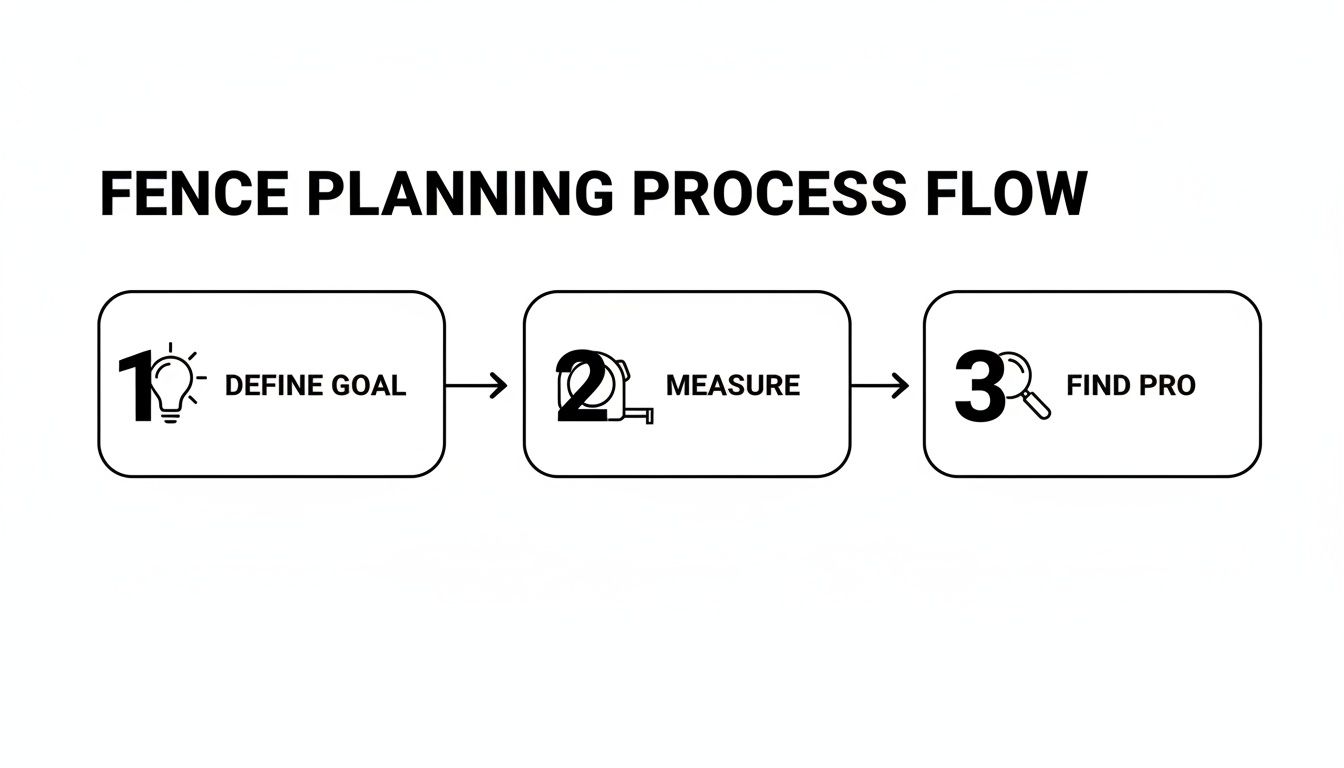
When you know what you want and have a rough idea of the footage, you can have a much more productive conversation with potential contractors.
First Things First: The Must-Have Credentials
Before you get into the fun stuff like materials and styles, you need to check off a couple of non-negotiable items. Think of these as your first line of defense against legal issues and poor-quality work. Any legitimate pro will have this information ready and won't hesitate to share it.
The first is their state license. Here in Connecticut, any contractor doing more than $1,000 in residential work must hold a Home Improvement Contractor (HIC) registration. You can—and should—verify this right on the state's official website. An unregistered contractor is a deal-breaker, period.
Next up is insurance. You're looking for a Certificate of Insurance (COI), and it’s crucial that it comes to you directly from their insurance agent, not just handed over by the contractor. This document needs to show two key things:
- General Liability: This covers your property (and your neighbor’s) from any accidental damage during the job.
- Workers' Compensation: This is what protects you if a crew member gets injured on your property. Without it, you could be held responsible.
A COI that comes straight from the insurance agency is the only way to be sure it's current and legitimate. A contractor can easily show you an expired or altered document. This one small step shields you from massive financial and legal risks.
Digging Deeper: Experience and Reputation
Once the paperwork checks out, it's time to look at their actual track record. A company's history can tell you a lot about its stability and the pride it takes in its work. You want someone with roots in the community.
Ask for local references. Don't just settle for a list of names; ask for addresses of recent jobs in your area, whether it’s in Glastonbury, West Hartford, or a neighboring town. A quick drive-by is an invaluable tool. You can see for yourself if the fence lines are straight, if the posts are perfectly vertical, and if the overall installation looks clean and professional.
Then, head online. A serious contractor will have a professional website showcasing their projects. A well-organized portfolio gives you a real sense of their craftsmanship and the scope of their work. For instance, you can see the quality we bring to every job by exploring https://ctfenceworks.com/gallery/. Understanding how a contractor presents themselves online, often through smart local SEO strategies for contractors, can also indicate their level of professionalism.
Red Flags to Watch For
Knowing what to look for is only half the battle. You also need to know what to run from. If you encounter any of these warning signs during your initial calls or estimate meetings, it's a good idea to proceed with caution or simply move on.
- Aggressive Sales Tactics: A good contractor educates you and lets their reputation do the selling. Be wary of anyone using high-pressure "act now" discounts to rush your decision.
- Demands for a Huge Deposit: A deposit for materials is normal, usually in the 30-50% range. If a contractor asks for more than half the project cost before any materials even arrive, that's a major red flag.
- Vague, "Back-of-the-Napkin" Quotes: A professional quote is detailed. It should clearly list the cost of labor, materials, fence style, and total length. A single lump-sum number is not enough.
- No Written Contract: A handshake deal won't cut it. A formal contract is there to protect both of you by outlining the exact scope of work, payment schedule, timeline, and warranty details.
- Unclear About the Crew: Ask who will actually be building your fence. Is it the company's own experienced team, or will they be passing the job off to a random subcontractor? You want the crew to be accountable to the company you hired.
From Estimate to Contract: Decoding Your Project's Cost
Once you’ve narrowed down your list of potential installers, it’s time to ask for detailed estimates. This is where the project starts to feel real, moving from a general idea to a concrete financial plan. A quote from a true professional is so much more than just a final number—it's the blueprint for your entire project, and knowing how to read it is the key to a smart investment.
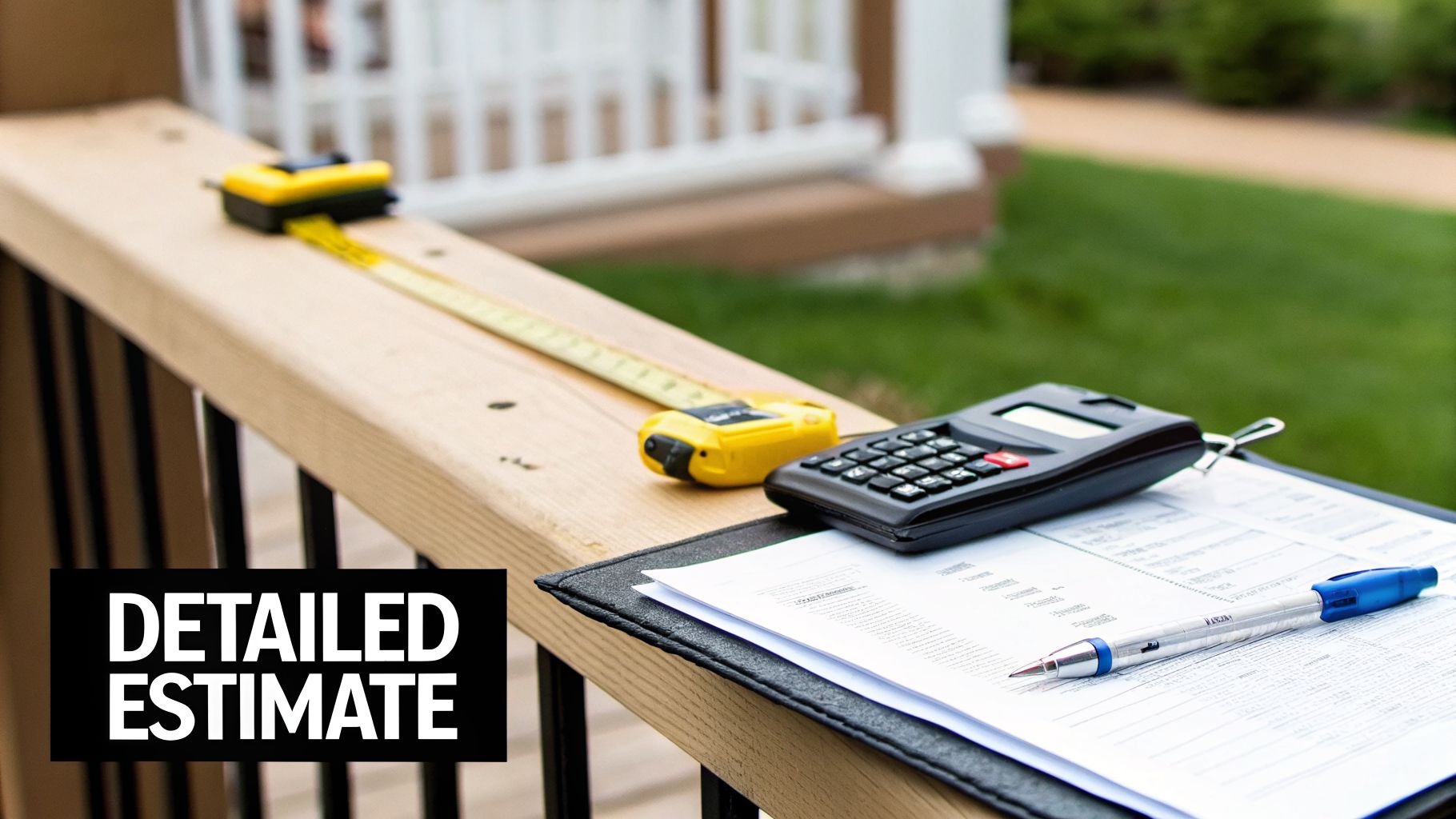
Think of the estimate as your first real look into how a contractor operates. A vague, one-line quote is often a red flag for a disorganized project filled with surprise costs later on.
What to Look for in a Professional Estimate
A quality estimate leaves no room for confusion. It should be a clear, itemized document that shows you exactly where every dollar is going. Insist on seeing these details:
- Total Linear Footage: This is the precise length of your fence line. It’s the starting point for almost all other calculations.
- Itemized Material Costs: Look for a full breakdown—fence style, material (like cedar or vinyl), height, and the exact count of posts, panels, or pickets.
- Hardware Specifications: This covers the quality of gates, hinges, and latches. Not all hardware is the same, and better quality here directly affects your fence's long-term function and security.
- Labor Costs: This should be its own line item, clearly stating the cost for the installation crew's work.
- Additional Services: Any extra work, like removing and hauling away an old fence, clearing brush, or bringing in special equipment for rocky ground, should be listed and priced separately.
To get this level of detail, many reputable installers now use sophisticated construction estimating software to build their quotes. This technology helps them generate accurate proposals that truly reflect the scope of work, which is a good sign of their professionalism.
Why Fence Quotes Vary: Deciphering the Costs
The bottom-line price is shaped by much more than just the length of your fence. A seasoned pro will always walk your property to account for variables that impact labor and materials—and these factors often explain why one quote comes in higher than another.
For example, a yard with a steep slope requires significantly more labor and expertise to make the fence follow the terrain smoothly. Digging through solid rock, a common headache in many Connecticut towns, often requires heavy-duty equipment and adds considerable time to the job. These are legitimate costs, and an honest contractor will point them out and explain them to you upfront.
A professional installer doesn't just sell you a fence; they solve the unique challenges of your property. They anticipate obstacles like difficult terrain or access issues and build those solutions into the plan, preventing costly surprises down the road.
Understanding these factors is especially important today. The fence construction industry is a major part of the U.S. economy, with a market size of $20.4 billion spread across over 315,000 businesses. While contractors have been passing on higher material costs, this unpredictability makes a clear, fixed-price quote more valuable than ever. For Connecticut homeowners, this trend reinforces why a trusted pro who can manage these variables is such a sound investment.
The Final Agreement: From Quote to Contract
After you’ve compared estimates and chosen your installer, the final step before work begins is signing the contract. This is a legally binding document that protects both you and the contractor by putting every detail in writing. Never, ever move forward on a project without a signed contract in hand.
The contract should echo the detail of your chosen estimate while adding a few more critical protections.
Must-Have Clauses in Your Fence Contract
- Scope of Work: A complete project description, confirming the fence style, material, height, and total length.
- Payment Schedule: This clearly outlines when payments are due. A common structure is a deposit (30-50%), a possible progress payment, and the final payment only when the job is complete to your satisfaction.
- Project Timeline: While bad weather can interrupt the schedule, the contract should give you a projected start date and an estimated timeframe for completion.
- Warranty Information: The document must define the installer's workmanship warranty—what’s covered (like posts shifting from frost) and for how long. The material warranty is separate and comes from the manufacturer.
- Change Order Process: This spells out exactly how to handle changes if you decide to alter the plan mid-project, ensuring any adjustments to cost or schedule are formally approved by you first.
Reading the fine print is your final act of due diligence. A high-quality material like vinyl needs expert installation to perform and look its best for decades. Your contract is the guarantee that your installer is committed to that standard. If you're considering this option, you might want to explore the benefits of a professionally installed vinyl fence to see why these installation details are so crucial. This final document is your peace of mind, ensuring your vision becomes a durable, beautiful reality.
What to Expect During the Installation Process
The contract is signed and your start date is on the calendar. Now for the exciting part: watching your new fence come to life. This is the phase where all the planning pays off, and you get to see skilled professionals put their expertise to work. It’s less about making decisions and more about watching the vision for your property become a reality.
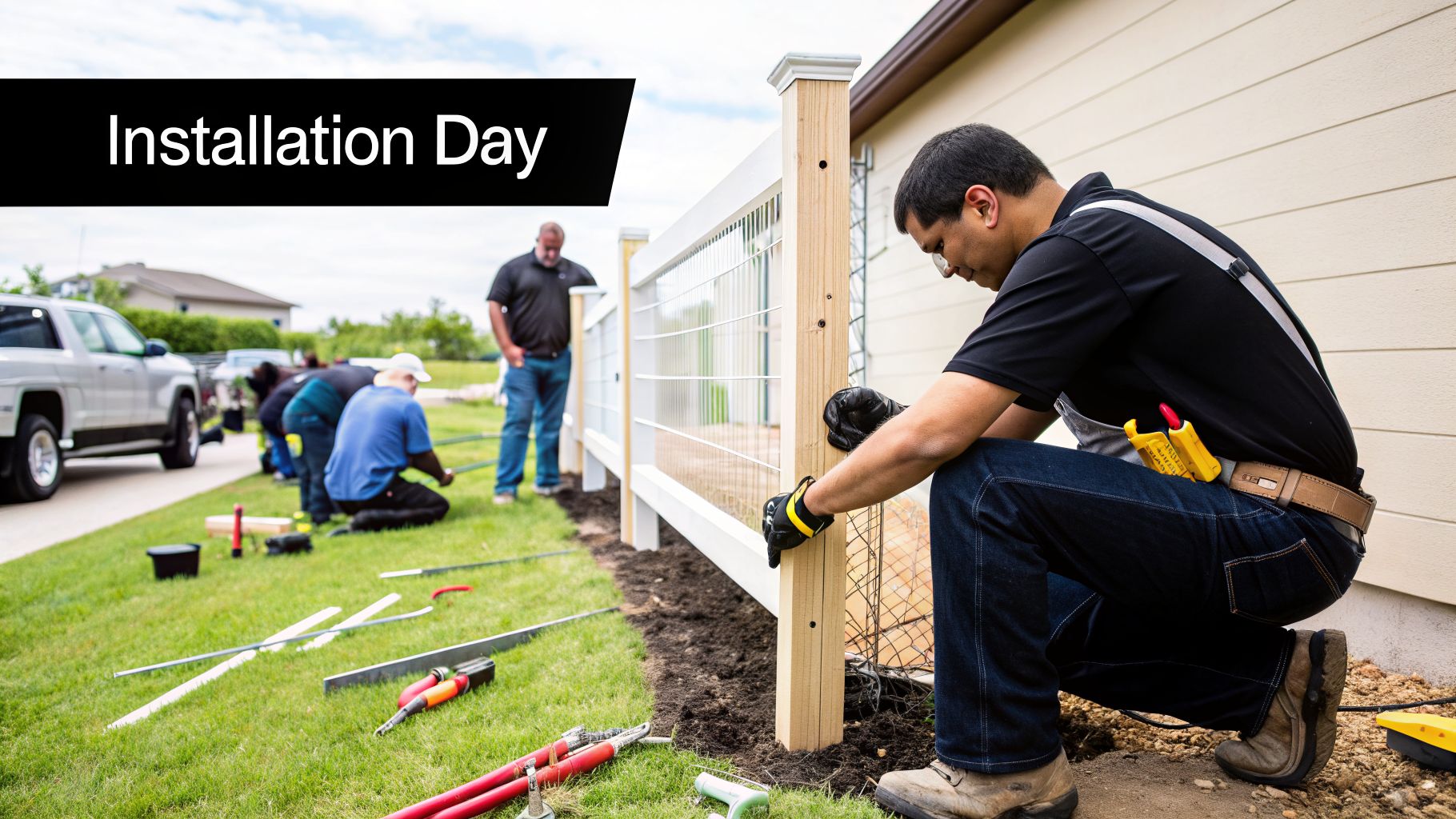
Honestly, this is where the value of hiring an experienced crew really shines. A well-organized team works with a kind of practiced efficiency that can turn a bare lawn into a fully installed fence in what often feels like no time at all.
The Crucial Pre-Installation Steps
Before a single post hole gets dug, a couple of absolutely vital safety and compliance tasks need to be handled. Any reputable contractor will manage these for you—it’s just part of how they do business.
The first and most important is locating underground utility lines. In Connecticut, state law requires anyone digging to first call 811, the "Call Before You Dig" service. It’s a free service that alerts all the local utility companies to come mark the approximate location of their buried gas, water, electric, and communication lines. This simple call prevents dangerous, disruptive, and expensive accidents.
Your contractor will also make sure all the necessary building permits are taken care of with your town’s building department. While the ultimate responsibility falls on the homeowner, a true professional knows the local codes inside and out and will typically handle the entire application process on your behalf.
Typical Installation Timelines
So, how long will your yard be a construction zone? It really depends on the project's size, the materials you chose, and any unique challenges your property might present. Still, we can sketch out a general timeline.
- Chain-Link or Aluminum: For a pretty standard suburban yard (around 150-200 feet), these fences usually go up in just 1-2 days. The work is straightforward since the parts are already made.
- Vinyl Fencing: A vinyl installation is similarly efficient, typically taking about 1-3 days for an average-sized property. It’s a clean and methodical process.
- Wood Fencing: This is where the timeline can stretch. Wood fences, especially custom "stick-built" designs, require more hands-on labor. A beautiful wood privacy fence could take anywhere from 3-5 days to complete, as it involves on-site cutting, assembly, and detail work.
Keep in mind that unforeseen issues can affect any timeline. Heavy rain can make digging impossible, and hitting unexpected rock can slow down the process of setting posts. A professional crew will communicate any delays with you promptly.
The demand for skilled fence installers has been on the rise ever since the residential construction boom of 2021. With the global fencing market projected to hit $36.75 billion by 2026 and pros handling 80% of complex installations, finding the right team is more important than ever. For a company like Connecticut Fence Works, this means being experts in local codes and helping homeowners achieve their goals—whether it's keeping a pet safe or satisfying an HOA requirement—by managing these pre-installation logistics flawlessly. You can explore the growth of the fencing market to see these industry trends for yourself.
On Installation Day
When the crew shows up, the first thing they should do is walk the property with you. They’ll review the plan, double-check the fence layout, and confirm exactly where you want the gates. A good team will also take care to protect your property, minimizing any disruption to your lawn and landscaping as much as possible.
You should expect the team to be courteous, organized, and focused on safety from start to finish. They’ll arrive with all the tools and materials needed to work efficiently. The crew leader will be your main point of contact if you have any questions throughout the day.
The Final Walkthrough
Once the last panel is in place and the final gate is hung, the job isn't quite done. Before you hand over that final payment, it’s essential to do a final walkthrough with the crew leader or project manager. This is your chance to inspect every detail up close.
During this walkthrough, make sure you:
- Open and close every single gate. Does it swing smoothly? Does it latch securely?
- Look at the fence line from a distance. Is it straight and consistent?
- Check that the posts are plumb (perfectly vertical) and securely set.
- Confirm that the crew has cleaned up the site, leaving your yard in great condition.
This final check ensures the work not only meets the standards in your contract but, more importantly, your own expectations. A true professional fence installer will be proud to walk the line with you, confident that they’ve delivered a product you’ll love for years to come.
Caring for Your New Fence and Making Sense of Warranties
Getting a new fence installed is a fantastic feeling, but the job isn't truly done once the crew leaves. Protecting that investment means a little bit of upkeep and, just as importantly, understanding the guarantees that come with it. A little proactive care will keep your fence standing strong and looking sharp, especially with the harsh New England weather we get.
The good news? For most modern fences, maintenance is surprisingly simple. It really just comes down to the material you chose.
Keeping Your Fence in Top Shape
Your goal is to stay ahead of the game by keeping things clean and catching small issues before they grow into costly repairs.
- Vinyl Fences: This is the easiest material to own. A quick wash with soap and water once or twice a year is usually all you need to get rid of grime and mildew. A soft-bristle brush can help with any stubborn spots.
- Wood Fences: Wood has a classic look that needs a bit more care. I always tell my clients to give it a good look-over each year, checking for any signs of rot or insect damage. To keep it from weathering, plan on cleaning and re-staining or sealing it every 2-3 years. This is your best defense against moisture and sun damage.
- Aluminum Fences: Much like vinyl, aluminum fences are incredibly low-maintenance. Hosing one down to clear off pollen and dirt is often enough. It's also smart to check the gate hardware every so often just to make sure everything is swinging and latching smoothly.
After a tough Connecticut winter, make it a habit to walk your fence line. Snowplows, heavy snowdrifts, and falling branches can cause damage, and the constant freeze-thaw cycles can put stress on posts. A quick inspection in the spring can save you a lot of headaches later.
What Your Workmanship Warranty Really Covers
Hiring a true professional isn't just about getting a straight fence—it's about the assurance that comes with their workmanship warranty. This is entirely separate from the manufacturer's warranty on the materials. This is the installer's personal guarantee on the quality of their labor.
A workmanship warranty is the installer’s promise that they built your fence correctly. It’s a direct reflection of their confidence in their skills and a crucial sign that you've hired a reputable company.
So, what does that actually mean for you? This warranty covers problems directly caused by the installation itself. For example, a fence post that shifts out of the ground after a frost is a classic issue in our climate. It almost always means the post wasn't set deep enough or with the right amount of concrete. That kind of problem is exactly what a workmanship warranty is for.
What it won't cover are things outside the installer's control. Wood naturally graying over time isn't a defect, it's just what wood does. Likewise, damage from a fallen tree, a car backing into a panel, or issues from neglecting basic maintenance won't be covered.
If you spot something that seems like an installation issue, the process should be straightforward. Just contact the professional fence installer who did the work, explain what you're seeing (photos are a huge help!), and they should schedule an inspection. A company that stands by its work will honor its warranty and make things right.
Common Questions About Hiring a Fence Installer
Once you’ve done your homework and have a contractor in mind, a few final questions are bound to pop up. That’s a good thing. The world of fencing has its own quirks and language, and getting clear answers now will give you peace of mind once the work begins.
A true professional will have heard them all before. We’ve gathered the most common questions we hear from Connecticut homeowners to help you get the clarity you need.
How Long Does a Typical Fence Installation Take?
This is usually the first thing everyone wants to know. While every project is different, we can give you a solid idea based on the fence's length, the material you’ve picked, and what your property is like.
For a standard backyard, say around 150-200 feet, a vinyl or chain-link fence install is pretty quick—usually wrapping up in one to three days. If you're going with wood, especially a custom-built fence, it might take a little longer. Plan on about three to five days for that.
Your contractor should always lock in a projected timeline in the contract. Just be prepared for Mother Nature. A surprise downpour or a sudden freeze can put digging and concrete work on hold for a day or two.
Who Handles Property Lines and Permits?
This is one area where responsibility is crystal clear. As the homeowner, you are responsible for knowing where your property lines are. If there's even a hint of doubt, getting a professional survey is the single best investment you can make to avoid a headache—or a dispute with your neighbor—down the road.
When it comes to permits, the rules change from one Connecticut town to the next. This is where hiring a local pro really pays off. A good contractor knows the specific regulations in your area and will either handle the entire permit process for you or give you a clear, step-by-step guide on what you need to do.
Hiring an installer with deep local knowledge is a massive advantage. They get the nuances of permitting in towns from Berlin to New Haven, which saves you a ton of time and ensures your project is compliant from day one.
What if My Neighbor's Property Is Damaged?
This question gets right to the heart of why you should only work with a fully insured contractor. Professionals carry general liability insurance for this exact reason. It’s there to cover any accidental damage, whether it’s to your own property or your neighbor's.
Before a single post hole is dug, ask for their Certificate of Insurance (COI). Make sure it's sent to you directly from their insurance company, not from the contractor. That certificate is your proof that their policy is active and you're protected from any financial liability.
Should I Repair My Old Fence or Replace It?
Deciding whether to patch up an old fence or start fresh usually comes down to two things: how bad the damage is and how old the fence is. An honest pro can walk your fence line and give you a straight answer.
-
Consider a repair if: The problem is isolated. A few broken pickets, a damaged gate, or one bad panel on an otherwise solid fence can often be fixed cost-effectively. If the posts are still solid and the structure is sound, a targeted repair makes a lot of sense.
-
Consider a replacement if: You’re seeing widespread issues. Are posts rotting at the base, leaning, or popping out of the ground? If more than 25% of your fence is failing, a full replacement is almost always the smarter long-term investment.
An experienced installer can help you weigh the cost of patching things up year after year against the value and security of a brand-new fence that comes with a warranty. It’s expert advice that ensures you make the right call for your property and your budget.
Ready to move from questions to a beautiful, professionally installed fence? The team at Connecticut Fence Works, LLC brings decades of combined experience to every project. We handle the details so you can enjoy a durable, attractive fence built to last. For a free, no-obligation estimate, get in touch with our team today.