
Your Guide to Home Security Fencing in Connecticut
A good home security fence does more than just mark where your property ends. It’s the first layer of protection for your home—a physical barrier designed to stop trouble long before it reaches your door.
Your Fence: The Foundation of Home Security
When people think about home security, they usually imagine alarms and cameras. While those are great tools, a strong physical barrier is where a solid security plan begins. It establishes a clear, tough boundary that sends an unmistakable message: this property is not an easy target.
Think of it this way: your security cameras are the lookouts on a castle wall, and your alarm is the horn they sound when there's danger. But your fence? That's the moat. It’s the first obstacle any intruder has to face. It slows them down, exposes them, and buys you precious time to react. A security fence creates that same critical buffer zone around your home.
Deter, Delay, Detect: How a Security Fence Works
An effective security fence isn't just a barrier; it's a strategic tool that works on three basic principles. Once you see how these ideas connect, you'll understand why the right fence is so powerful.
Deterrence: The sight of a tall, strong fence is often enough to make a potential trespasser move on. Opportunistic criminals look for the easiest target, and a property with a proper security fence is anything but.
Delay: If an intruder is determined enough to try and get past it, the fence's job is to physically slow them down. Every second they spend trying to climb or break through is another second for you, a neighbor, or your security system to spot them and call for help.
Detection: A well-designed fence forces anyone trying to get through it into predictable spots, like trying to climb a specific section or tamper with a gate. This makes them much easier to see, whether with your own eyes or on a security camera feed.
A professionally installed security fence offers more than just physical protection; it provides peace of mind. It turns a simple property line into a personal safe haven, and that feeling of security is priceless.
More Than Just a Barrier
Beyond its main security job, a quality fence brings many other benefits to homeowners across Connecticut, from Hartford County to New Haven County. It keeps kids and pets safely in the yard, away from traffic. Additionally, a thoughtfully designed fence can dramatically improve your home’s curb appeal and even increase its market value.
This isn't just a local trend. Homeowners and businesses everywhere are recognizing the importance of strong perimeter security. The global security fencing market is projected to grow from $61.26 billion in 2025 to $73.58 billion in 2026—a 20.1% increase in just one year.
Of course, a fence is just one part of a complete security strategy. For truly comprehensive protection, adding electronic surveillance is key. You can explore different options and even find answers to questions like, Are Trail Cameras Good For Home Security to supplement your physical barrier. By combining a strong fence with smart technology, you create layers of defense that keep your family and property thoroughly protected.
Choosing the Right Material for Your Security Needs
Picking the right material for a security fence isn't just about what looks good. It's the most critical decision you'll make, determining how strong, durable, and effective your fence will be for years to come. I've seen homeowners in Connecticut make this choice hundreds of times, and it always comes down to balancing security goals with appearance and maintenance.
Some materials are all about creating an intimidating physical barrier that’s tough to break through. Others are designed to block the view entirely, removing the temptation for would-be intruders. Let's walk through the pros and cons of the most common options.
Ornamental Steel and Aluminum Fences
When you want a fence that combines serious strength with timeless elegance, nothing beats ornamental metal. Steel is the top choice for residential security. It's incredibly strong, making it very difficult for anyone trying to cut, bend, or force their way through. It's the gold standard for a reason.
Aluminum is a lighter-weight alternative to steel, but it has its own major advantage: it doesn't rust. For our humid Connecticut summers and icy winters, this means you get a strong, low-maintenance fence that will look great for decades. While not quite as tough as steel, a high-quality aluminum fence is more than enough to secure most homes.
One of the biggest security advantages of these fences is something people often overlook: the design itself.
Excellent visibility eliminates potential hiding spots for intruders, making it easier for you, your neighbors, or security cameras to spot suspicious activity. This open design turns your entire yard into a "detection zone."
Plus, we can top these fences with pointed pickets or decorative finials, which are a serious deterrent against climbing. The imposing look alone often convinces a potential trespasser to move on to an easier target.
Heavy-Gauge Chain Link
Forget the flimsy, sagging chain link you might remember from the past. Modern heavy-gauge chain link is a tough, practical, and budget-friendly choice for securing your property. The "gauge" refers to the wire's thickness; a lower number means a thicker, stronger wire. A 9-gauge fence is significantly harder to cut than standard options.
For even better security, you can upgrade your chain link fence with a few key features:
- Smaller Mesh Size: A tight diamond pattern gives climbers fewer places to get a handhold or foothold.
- Privacy Slats: If you want to block the view, we can weave vinyl slats through the mesh to add a layer of privacy.
- Barbed or Razor Wire Toppers: While usually for commercial sites, these can be installed in certain areas (pending local rules) for maximum anti-climb protection.
This isn't just a basic fence; it's a durable and long-lasting security system. If you're curious about this versatile option, you can learn more about our chain link fence installations and their security benefits.
It's no surprise that the demand for all types of security fencing is on the rise as more people take proactive steps to protect their homes.
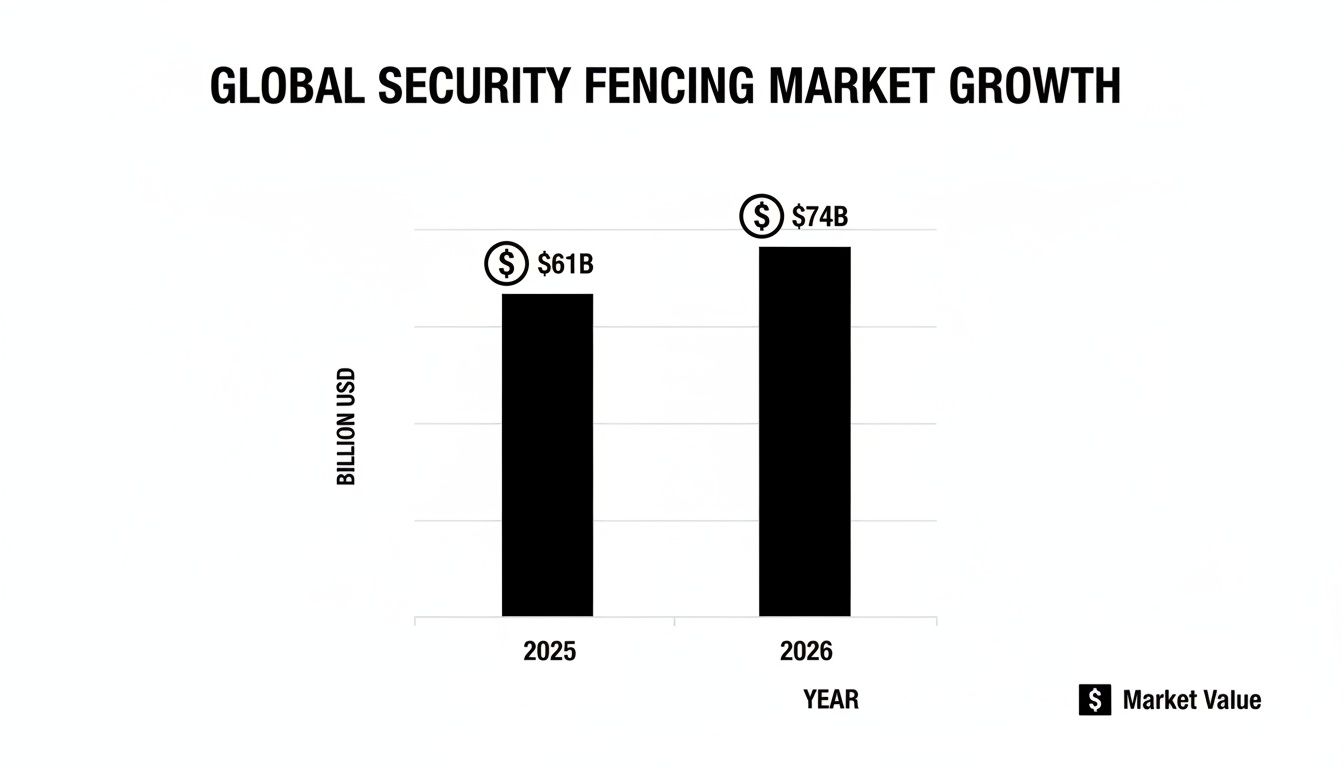
This chart shows just how fast the market is growing, jumping from an estimated $61 billion in 2025 to nearly $74 billion in 2026. That’s a huge increase, and it really highlights how seriously homeowners are now taking perimeter security.
Vinyl and Wood Privacy Fences
While see-through fences are great for watching your property, privacy fences provide security in a different way: by blocking the view. The logic is simple—if a thief can't see what you have in your yard, they're less likely to bother trying to get in.
Vinyl (PVC) fencing has become a homeowner favorite, and for good reason. It’s incredibly durable and requires almost no maintenance. It won’t rot, warp, or ever need a new coat of paint. A tall, solid vinyl fence creates a complete visual barrier, and its smooth surface is also surprisingly difficult to climb.
Of course, there's also the classic wood fence. A beautiful wood fence provides fantastic privacy with styles like board-on-board or stockade, completely hiding your yard from view. Wood does require more upkeep to protect it from weather and rot, but many feel its natural charm is worth it. When properly cared for, a sturdy cedar or pressure-treated pine fence is a formidable and attractive security barrier.
Home Security Fence Material Comparison
To make the choice a little easier, we've put together a quick comparison of the most popular materials we install for Connecticut homeowners. This table breaks down how each one stacks up in terms of strength, climb resistance, upkeep, and cost.
| Material | Security Strength | Climb Resistance | Maintenance Level | Typical Cost |
|---|---|---|---|---|
| Steel | Very High: Extremely difficult to cut or bend. | High: Can add pointed pickets for extra deterrence. | Low to Medium | High |
| Aluminum | High: Strong and rust-proof. | High: Pointed picket designs are very common. | Very Low | Medium-High |
| Chain Link | Medium-High: Use heavy-gauge and small mesh. | Medium: Can be improved with smaller mesh size. | Very Low | Low |
| Vinyl (PVC) | Medium: Acts as a visual and physical barrier. | High: Smooth surfaces are very difficult to climb. | Very Low | Medium |
| Wood | Medium-High: Solid, sturdy barrier when maintained. | Medium-High: Solid panels are hard to get a grip on. | Medium to High | Low-Medium |
Ultimately, the best material is the one that fits your specific property, security concerns, and budget. Looking at this chart can help you see the trade-offs and find the perfect match for your home.
Key Design Features That Maximize Fence Security
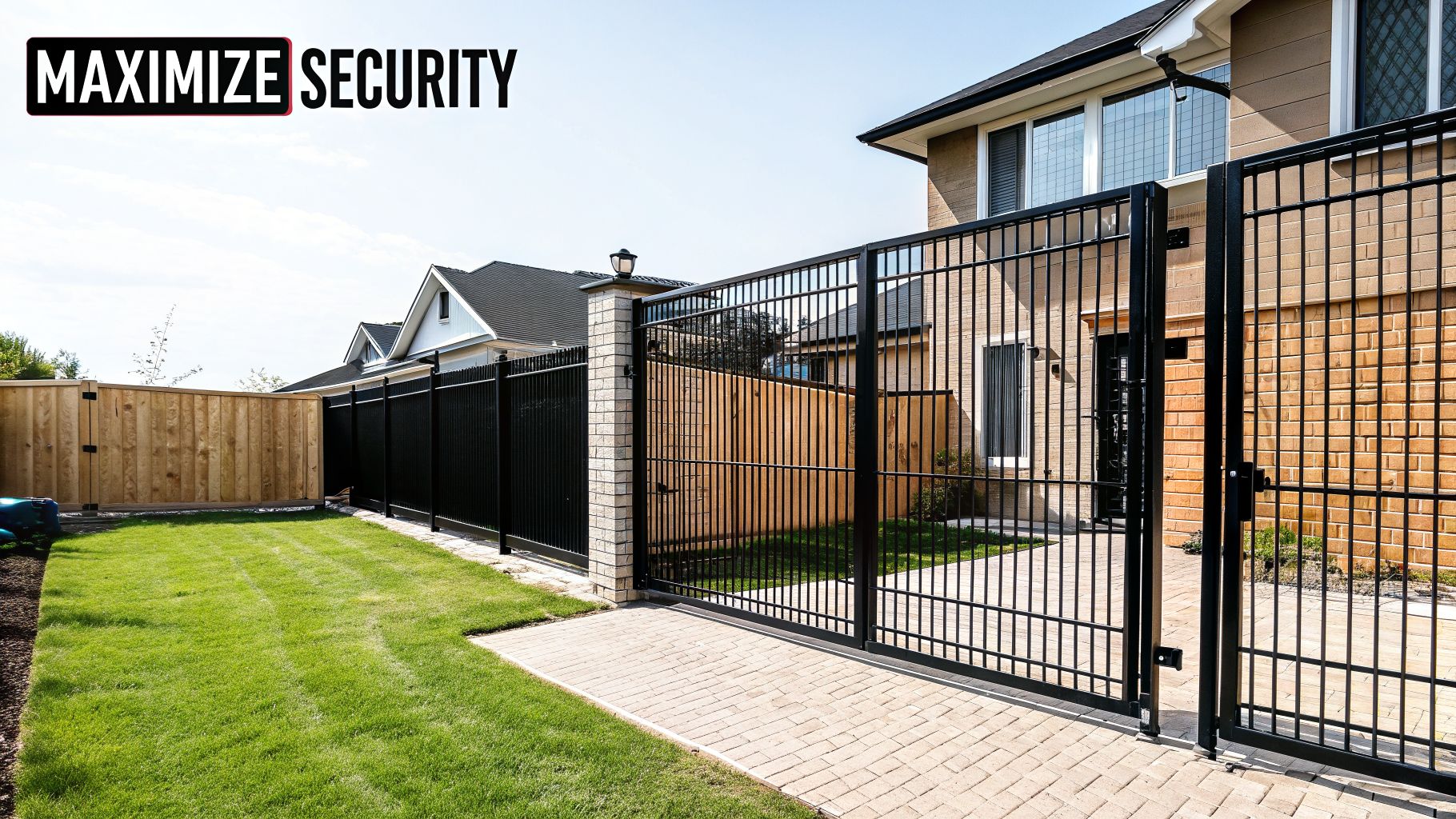
Choosing a strong material is just the beginning. A truly effective home security fencing plan is all in the design details—the features that turn a simple boundary line into a serious deterrent. The toughest steel or vinyl fence won't do its job if there is a flaw in the design.
Think of it this way: the fence material is your wall, but the design is everything else. It determines how high that wall is, how strong the entry point is, and whether you're leaving any blind spots for an intruder to use. Getting these details right is what makes a perimeter genuinely secure.
Finding the Right Fence Height
Your first, and arguably most important, design decision is height. A tall fence serves as both a physical obstacle and a powerful psychological deterrent. For most residential properties, this means a fence that's at least six to eight feet tall.
Anything shorter than six feet can potentially be climbed. Once you reach the six-foot mark, getting over the fence becomes a much more noticeable and difficult act, which is exactly what you want. Pushing it to eight feet makes it even more intimidating and offers a significant security boost.
Of course, we have to work within local rules. Many Connecticut towns have specific height regulations, particularly for fences in front yards. A knowledgeable contractor can help you find the perfect balance between maximum security and full compliance with town codes.
The Visibility vs. Privacy Trade-Off
Next, you'll need to decide on a core strategy: do you want a see-through fence or one that offers complete privacy? Each approach has its own security logic, and the best choice depends on your property's layout and what you're trying to prevent.
See-Through Fences (Enhanced Surveillance): An ornamental steel, aluminum, or even a chain link fence gives you a clear line of sight. This design is all about eliminating hiding spots. It makes it nearly impossible for someone to hide on your property without being seen by you, your neighbors, or your security cameras.
Privacy Fences (Obscured Targets): Solid vinyl and wood fences completely block the view from the outside. Here, the security principle is "out of sight, out of mind." If a potential thief can't see your property and spot valuables—like grills, patio furniture, or tools left out—they have less reason to trespass in the first place.
"A security fence should be at least 7 feet tall…Fencing material should not be easy to vandalize, cut, or climb; ornamental fences, such as wrought iron, are considered to be the best in these cases."
This expert advice highlights how height and material work together. Ultimately, you have to decide what worries you more: an intruder having a place to hide once they're on your property, or a thief being able to easily scout your home from the street.
Don't Overlook Gates and Locks
Your fence is only as strong as its weakest point—and most of the time, that's the gate. An intruder will always check the gate before trying to climb or cut through a fence panel. That’s why reinforcing your gate system is essential for a truly secure perimeter.
The gate itself must be built from the same sturdy material as the rest of your fence. More importantly, it needs to be installed with heavy-duty hinges and a reinforced frame to stand up to brute force.
Beyond the gate's construction, the lock is your final checkpoint. A simple latch just won't do. For real security, you should be looking at options like these:
- High-Security Deadbolts: These are built to resist picking, drilling, and tampering.
- Electronic Locks: A keypad or fob system gives you controlled access without a physical key that can be copied or stolen.
- Slide Bolts with Padlocks: This classic combination is incredibly effective, especially when paired with a high-quality, weather-resistant padlock.
Investing properly in your gate and lock turns the most common point of failure into a point of strength for your home security fencing, making your entire property a much harder target.
Navigating Connecticut's Local Codes and Pool Safety Rules
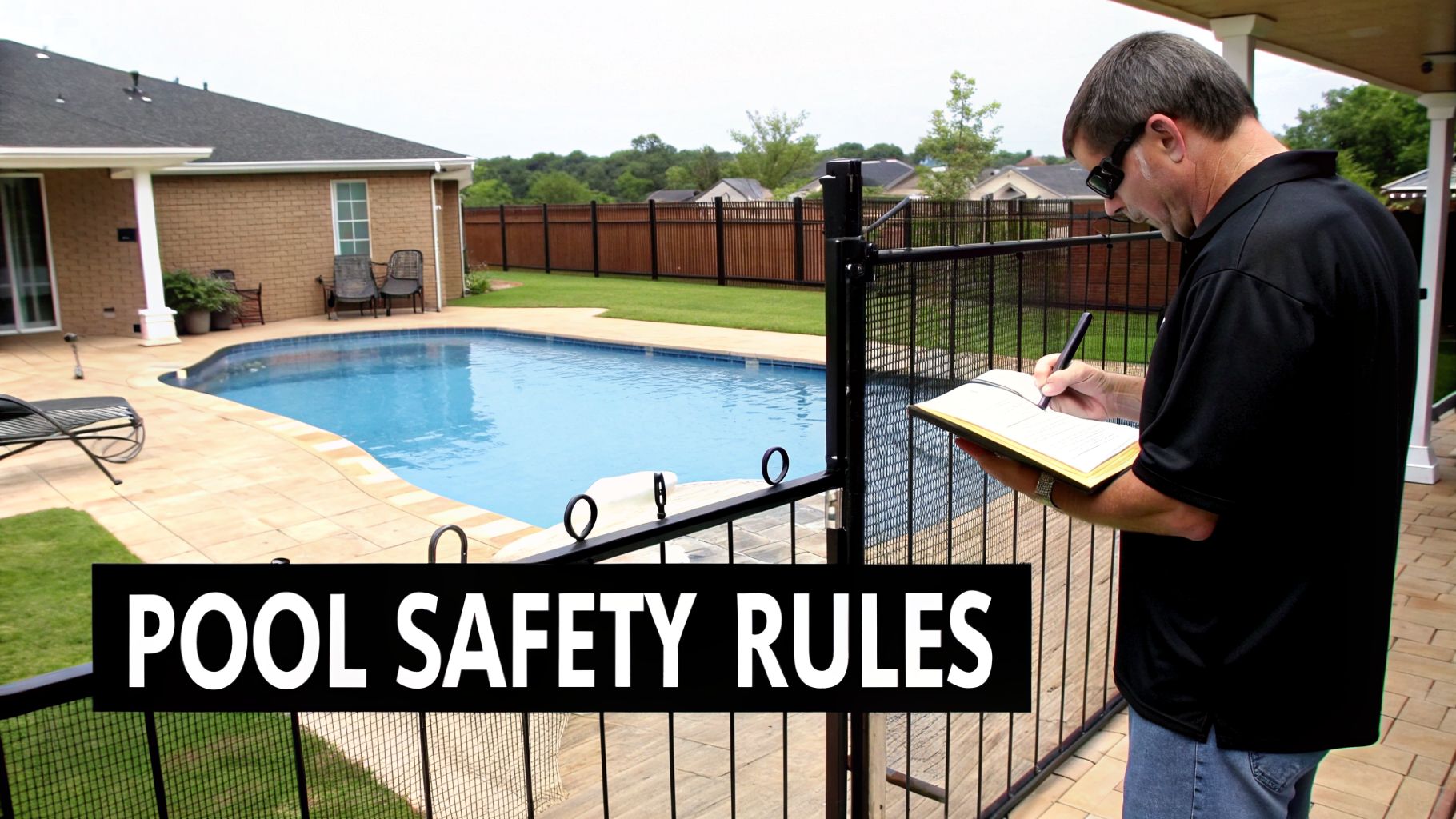
Putting up a new security fence in Connecticut is about more than just picking a great design. It’s also about following a maze of local rules, from town zoning laws to state-wide safety codes. We’ve seen it all, and these regulations are in place to keep neighborhoods safe, maintain property values, and ensure good relationships between neighbors.
Understanding these rules is the first step for a smooth project. Every town, whether it's Hartford or New Haven, has its own set of rules that can dictate everything from the height of your home security fencing to how close it can be to your property line. Getting this wrong can mean fines or even being forced to tear down a brand-new fence.
Understanding Local Zoning and Permitting
Before breaking ground, the first stop is your local town hall—or, more likely, its website. This is where you'll find the specific zoning and building codes for your property. It’s a crucial step that prevents headaches down the road.
The rules often change depending on where the fence is on your property:
- Front Yard Fences: These usually have the tightest restrictions, often capped at four feet to maintain clear sightlines in the neighborhood.
- Side and Rear Yard Fences: You typically have more freedom here, with heights of six or even eight feet allowed for better privacy and security.
- Corner Lots: Expect special rules here. Your town will want to ensure your fence doesn’t create a blind spot for drivers at the intersection.
The permitting process can feel tedious, but it's your best friend. It gets your project on the official record, ensures it’s inspected and built to last, and protects your investment. A good contractor will handle all of this for you, so you don't have to get bogged down in the paperwork.
Special Focus on Connecticut Pool Safety Codes
When a swimming pool is involved, the rules get serious, and there is no room for error. These regulations, often called the "BOCA Code," are all about one thing: preventing the tragedy of accidental drowning, especially involving children. For anyone with a pool, a code-compliant fence isn't just a good idea—it's an absolute, life-saving necessity.
A pool fence in Connecticut has to meet several key standards. Our team has built hundreds of them, and we know the rules by heart. You can see a full breakdown in our guide on Connecticut's pool fence requirements, but here are the core principles we follow on every single job:
- Minimum Height: The fence must stand at least 48 inches tall, measured from the ground on the side facing away from the pool.
- Climb-Resistant Surface: The outside face can't have any horizontal rails, holes, or other features that a child could use as a foothold to climb over. If it's a picket fence, the gaps between the pickets can't be wider than 4 inches.
- Self-Closing, Self-Latching Gates: Every gate needs to swing outward, away from the pool. They must have hinges that automatically pull the gate shut and a latch that clicks closed on its own. That latch has to be at least 54 inches high, well out of a small child's reach.
A properly installed fence is your most important layer of pool safety. In fact, official reports show that a code-compliant fence can reduce the risk of drowning by an incredible 80%. We've helped families across five counties get this right. The key is working with an installer who lives and breathes these codes, ensuring your family's safety and your own peace of mind.
Understanding the Cost and Return on Your Fence Investment
Let's talk about the cost. It's the first question on everyone's mind, and for good reason. It's helpful to think of a home security fence less as a simple purchase and more as a permanent upgrade to your property—an investment in your safety and your home's future value.
Your final price isn't just a random number. It's a careful calculation based on the unique details of your property, and understanding the different factors will help you see exactly where your money is going.
Key Factors That Influence Fence Costs
No two yards in Connecticut are the same, which means no two fence projects will have the exact same price. Here’s what we look at when building your estimate.
- Material Choice: This is the biggest variable. A straightforward, heavy-gauge chain link fence will be more affordable, while something like ornamental steel is a premium choice with a higher price tag.
- Fence Dimensions: It's simple math: a longer and taller fence costs more. The total length (linear feet) and the height are the primary cost drivers. An eight-foot privacy fence will naturally require more material and labor than a standard six-foot one.
- Property Terrain: A flat, open lawn is a straightforward job. But if your yard has steep slopes, is full of New England rocks, or has many mature trees to work around, our crew will need more time and specialized equipment to ensure a perfect installation.
- Gates and Hardware: How many gates do you need, and what kind? A simple walk gate for a garden path is one thing; a 12-foot double-drive gate is another. Add-ons like self-closing hinges or an automatic opener will also affect the cost.
The best way to approach this is to see your fence as a long-term improvement, not just an expense. A professionally installed fence is an asset that protects your family and can genuinely increase your property's value, making it a sound financial decision.
The Return on Your Investment
A high-quality security fence doesn't just sit there—it actively works for you from the day it's installed. The return you get goes far beyond the initial cost.
The most immediate benefit is a potential boost to your property value. A strong, attractive fence adds significant curb appeal and sends a clear message to potential buyers: this home is secure and well-cared-for. It’s a feature that can make your home stand out in a competitive market.
You might also get a pleasant surprise from your homeowner's insurance provider. Many insurance companies offer discounts for proactive security measures. By reducing the risk of break-ins, vandalism, and liability issues (like someone wandering into your pool), a fence can lower your annual premiums. It's definitely worth a call to your agent once the job is done.
And, of course, there's the return you can't put a price on: peace of mind. Knowing that your kids and pets can play safely in the yard and that you have a strong barrier against intruders is priceless.
Budgeting and Financing Your Project
We believe every family deserves to feel secure in their own home. That’s why we provide clear, itemized estimates with no hidden fees or last-minute surprises.
To make this important upgrade more manageable, we also offer flexible financing options. This allows you to get the protection you need for your home security fencing project now, without having to use all your savings. You can get the job done right and pay for it over time in a way that fits your family's budget.
How to Choose the Right Connecticut Fence Contractor
You’ve done the hard work of picking the perfect material and design for your home security fencing. But even the best materials are only as good as the team that installs them. A fence’s real strength and long-term durability come from the quality of the installation, making your choice of contractor the most critical decision in the process.
Think of it this way: you wouldn't let a rookie mechanic work on a high-performance car. Your fence is a serious investment in your home's security. It deserves the same level of expertise from seasoned, professional installers who know their craft inside and out.
Vetting Your Local Fence Contractor
The first step is simply doing your homework. A truly professional contractor will have nothing to hide and should make it easy for you to check their credentials. Don't hesitate to ask tough questions and do a little digging before you commit.
Here are a few essential checks to run on any potential partner:
- Verify Proper Licensing and Insurance: This is the most important one. Any legitimate contractor in Connecticut must be fully licensed and carry liability insurance. This protects you from any liability if an accident or property damage happens during the project.
- Review Their Portfolio: Ask to see photos of their finished work, especially projects in your local area. This gives you a real sense of their craftsmanship and whether they have experience with the specific type of fence you want.
- Read Customer Testimonials: See what your neighbors are saying. Look for genuine, detailed reviews that speak to the whole experience—from scheduling and communication to the final result. You can learn more about our own commitment to this by reading about our company’s story and values.
A professional installation is all about precision. Look for clean lines, consistent post depths, and perfectly hung gates. These details are the difference between a fence that lasts five years and one that lasts for decades.
From Estimate to Installation
Your initial consultation is a great opportunity to gauge a contractor’s expertise. A real pro does more than just give you a number. They’ll walk the property with you, offer smart advice on layout, and help you avoid common installation mistakes. They should always provide a free, detailed estimate that clearly breaks down every cost, so there are no hidden fees later on.
The demand for high-quality fencing is booming. In fact, the North American fencing market is projected to hold over 46% of the global market by 2035, driven largely by security-focused projects. This growth means more contractors are out there, but not all have the expertise to properly install the robust steel and aluminum fences that provide real security. You can read the full research about the robust fencing market to see just how massive the industry is.
Ultimately, you want to find a partner who is obsessed with quality and dedicated to customer satisfaction. Choosing the right contractor ensures your vision for a secure, beautiful property isn't just built, but is built to last.
Common Questions About Home Security Fencing
When you're considering a project as important as a security fence, it's natural to have questions. To help you get started, we've put together answers to the topics we hear about most often from homeowners right here in Connecticut.
What Is the Best Height for a Home Security Fence?
For real security, we almost always recommend a fence that's between six and eight feet tall. Anything shorter can be too easy for a determined person to climb, but a fence at this height is a serious physical and psychological barrier. An eight-foot fence, in particular, sends a clear message.
Of course, the right height for your property involves balancing maximum security with your town's zoning codes. That’s something we help you figure out from the very beginning, ensuring your home security fencing is both effective and compliant.
Can a Security Fence Lower My Homeowner's Insurance?
It’s definitely possible, and something we see quite often! When you have a professional-grade security fence installed, your insurance company sees that you're actively reducing the risk of theft and vandalism. This often translates directly into a discount on your homeowner's insurance premiums.
Our advice is to always give your insurance agent a call before we start. We’re happy to provide any documentation they need about your new fence to help you secure those savings.
It’s a fantastic way to get a direct financial return on your investment, on top of the priceless peace of mind a good fence brings.
How Long Does a Security Fence Installation Typically Take?
The timeline for any fence project depends on a few things: the total length of the fence, the material you've chosen, and the complexity of the terrain. That said, for a standard residential property, we can typically complete the entire installation in 2 to 5 days.
We know that having work done at your home can be disruptive, so we make a point of providing a clear, realistic schedule upfront. You'll know what to expect and when, and we'll keep you informed from the first post to the final walkthrough.
Can I Add Security Features to My Existing Fence?
Absolutely. If your current fence is still in decent shape, upgrading it can be a great, cost-effective way to boost your home's security. We can take a look at what you have and suggest the most impactful improvements.
A few common ways we can enhance an existing fence include:
- Adding height with fence panel extenders.
- Installing anti-climb toppers for a powerful deterrent.
- Upgrading to a sturdier gate with heavy-duty locks.
Making a few smart modifications can often give you the security you need without the cost of a full replacement.
Ready to turn these ideas into reality? For a durable, attractive, and professionally installed fence that secures your property and provides peace of mind, trust the experts at Connecticut Fence Works, LLC. We offer free estimates, thoughtful layout guidance, and financing options to make your project a success. Get in touch with us today at https://ctfenceworks.com.