
7 Timeless White Picket Fence Designs for Your Connecticut Home in 2026
A white picket fence is more than just a boundary; it's a timeless symbol of home and a classic element of New England charm. However, the traditional design has grown beyond a single style. Today's white picket fence designs offer a wide range of options to improve curb appeal, add privacy, and meet local safety rules—all while handling Connecticut's changing seasons.
Choosing the right design is essential for matching your property's style, whether you have a historic home in Hartford County or a modern house on the New Haven shoreline. To find the perfect frame for your Connecticut home, think about how different decorative outdoor structures can work together to create a unified and practical landscape.
This guide explores a collection of picket fence ideas, from traditional to modern, giving you the practical details you need. We'll cover everything from material choices like maintenance-free vinyl versus classic cedar to costs, benefits, drawbacks, and installation tips for Connecticut homeowners. Let's find the perfect design to frame your home beautifully for years to come.
1. Classic Vertical Picket Fence with Spaced Pickets (including Dog-Ear & Cat-Face variations)
The classic vertical picket fence is the quintessential American design, defining curb appeal for generations. This style features evenly spaced vertical boards, or pickets, attached to horizontal rails. Its lasting popularity comes from its ability to create a clear boundary without completely blocking views, making it a perfect choice for front yards and garden enclosures. It offers a friendly, welcoming look that suits many home styles, from historic Colonials in Hartford County to charming farmhouses in Tolland County.
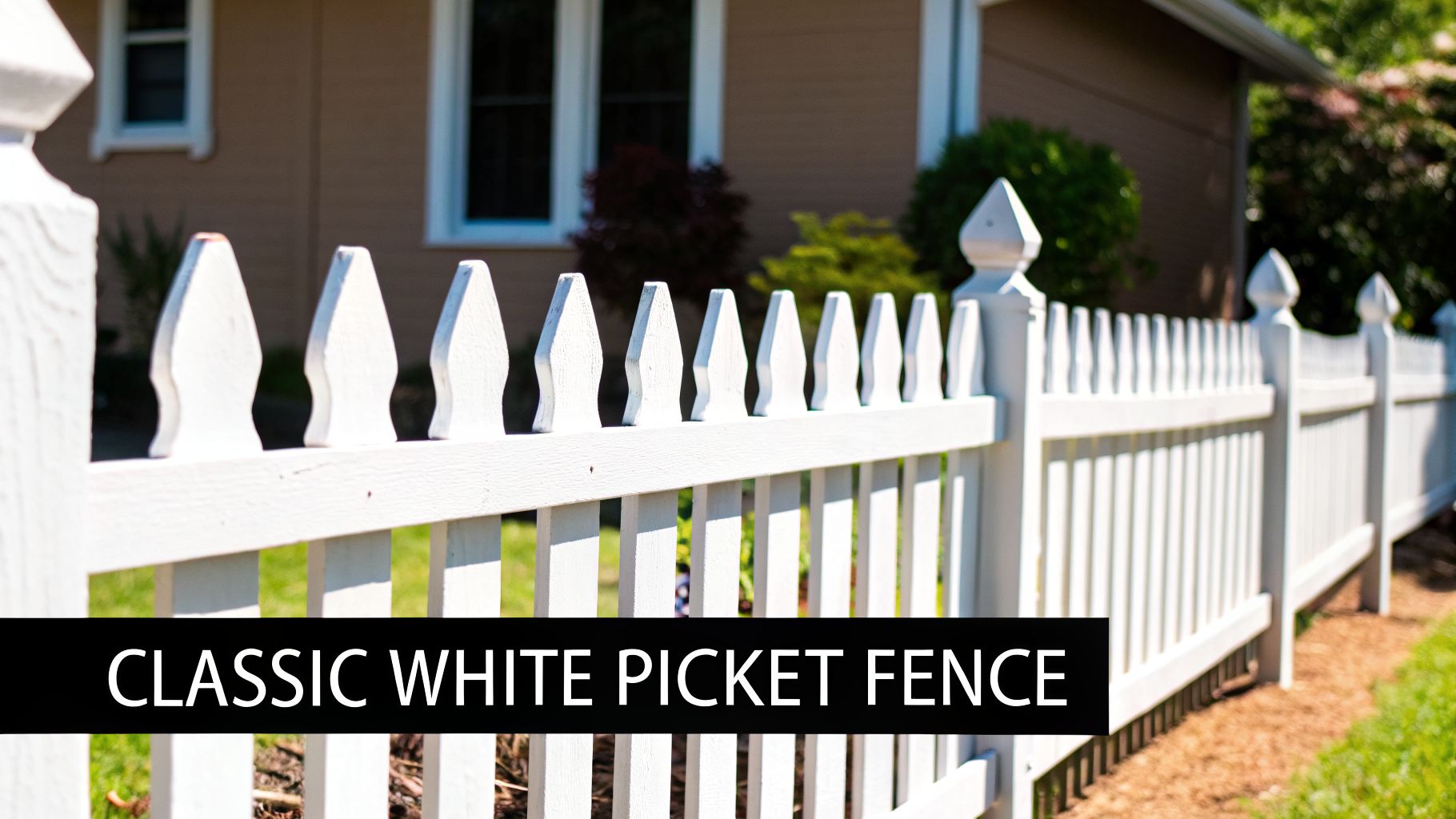
This design is highly customizable, especially the picket tops. While the traditional pointed top is iconic, variations like the Dog-Ear and Cat-Face (also known as a French Gothic) add unique character. The dog-ear picket has a top corner clipped off at an angle, a simple detail that helps shed water and adds a rustic touch. The cat-face offers a more decorative, curved design, adding a touch of elegance.
Implementation and Best Practices
- Materials: While traditional wood offers authentic charm, vinyl is an excellent, low-maintenance alternative for Connecticut's variable weather, as it resists moisture, rot, and pests without needing annual painting. For those who love the natural beauty of wood, Western Red Cedar is a premium choice known for its durability and resistance to decay; you can explore cedar options that are well-suited for our climate.
- Dimensions & Spacing: A standard height of 3 to 4 feet is common for front yards. Pickets are usually 1×3 or 1×4 inches, with spacing between them set at 2 to 3 inches. This gap is wide enough to keep an open feel while containing small pets.
- Installation Tips: For fences over 4 feet tall, adding a third horizontal rail in the middle adds significant strength and helps prevent the pickets from bending over time. To ensure stability against ground freezing and thawing, posts should be set in concrete and spaced 6 to 8 feet apart.
Pro Tip: For a professional finish on a dog-ear fence, use a template to ensure every angled cut is identical. This small step creates a clean, uniform line that greatly improves the final look.
2. Stepped or Contoured Picket Fence
For properties with uneven ground, the stepped or contoured picket fence offers an elegant and practical solution. This variation of white picket fence designs is specially made to follow the natural slope of the land, ensuring a consistent and attractive boundary. Instead of leaving ugly gaps at the bottom, which can affect security and appearance, this style adjusts the height of its panels or rails to follow the ground, creating a seamless line that complements the landscape. It is an ideal choice for hillside homes in Tolland County or properties with major height changes in Middlesex County.
There are two main methods for this design: Stepped and Contoured. A stepped fence features panels that go down like stairs, with each section level and posts adjusted in height. A contoured (or racked) fence has rails that run parallel to the slope with the pickets remaining vertical, offering a smoother appearance. The choice between them depends on how steep the slope is and the look you want.
Implementation and Best Practices
- Materials: Vinyl is an excellent choice for contoured fences as pre-made racked panels are available, simplifying installation on sloped ground. Wood, particularly durable Western Red Cedar, offers a classic look but requires more precise, custom-cutting on-site to match the terrain, making professional installation highly recommended.
- Dimensions & Spacing: The fence height, typically 3 to 4 feet, remains consistent from the ground up. The most important measurement is the gap at the bottom; keeping a 1- to 2-inch space prevents moisture from being drawn up into wood fences and allows for easier yard maintenance.
- Installation Tips: A professional site survey is essential before starting. Knowing the exact slope allows for precise planning and ordering of materials. For a contoured fence, make sure the pickets remain perfectly vertical even as the rails follow the slope. For stepped fences, post lengths will vary, so careful measurement for each post is needed.
Pro Tip: For sloped installations, proper drainage planning is key. Consider installing a French drain or a small channel along the uphill side of the fence line to direct water runoff and prevent it from pooling, which can weaken post foundations and damage the fence over time.
3. Scalloped or Curved Picket Top Fence
For homeowners wanting a change from straight lines, the scalloped picket fence adds a gentle, rolling curve to the top of the fence line. This design trades the sharp points of a traditional fence for a soft, wave-like shape, creating a refined and dynamic look. Often seen on high-end homes in Fairfield County and modern suburban developments in New Haven County, this style adds visual interest and a sophisticated appearance that immediately improves curb appeal. It creates a sense of movement and is a popular choice for framing gardens or highlighting a home's unique features.
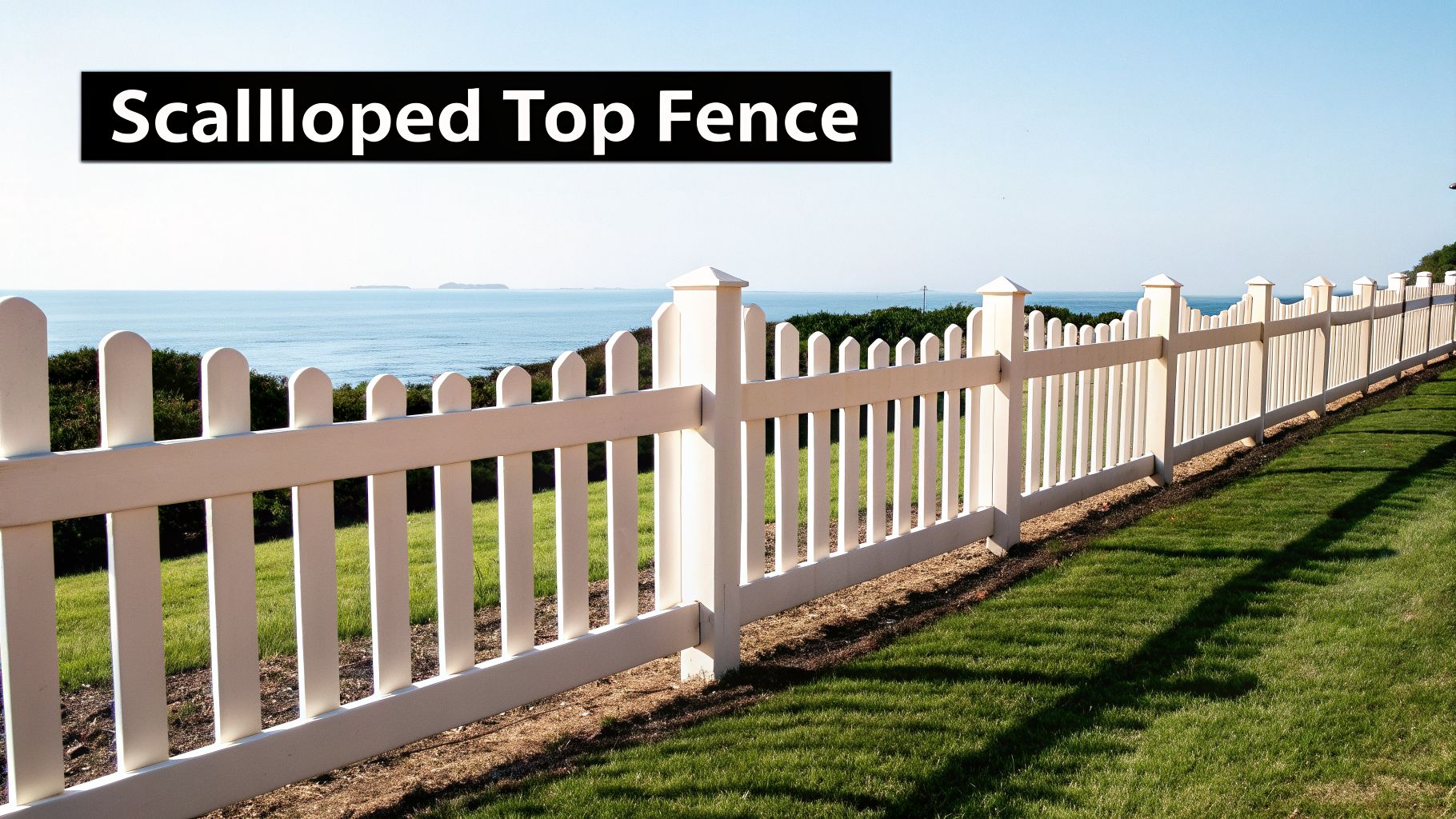
This design is defined by the arc formed by the tops of the pickets between two posts. A "scallop" dips down in the middle, while a "crown" or "arch" curves upward. The depth and shape of this curve can be customized from a subtle wave to a more dramatic scallop, offering a range of design possibilities. This decorative approach is valued for its elegant and polished look.
Implementation and Best Practices
- Materials: While wood can be cut into a scalloped shape, maintaining the curves can be difficult. Vinyl is the preferred material for this design, as manufacturers produce pre-cut, interlocking panels that create a perfect, consistent curve that requires no ongoing maintenance. This makes it an ideal choice for Connecticut's weather, ensuring the design stays beautiful without the risk of wood warping or rotting.
- Dimensions & Spacing: Scalloped fences are typically 3 to 4 feet high. The pickets themselves are standard widths (1×3 or 1×4 inches), with the height of each individual picket varying to create the curve. The spacing between pickets remains a consistent 2 to 3 inches.
- Installation Tips: Achieving a professional-looking curve requires absolute precision. Posts must be perfectly straight and evenly spaced for the scalloped sections to align correctly. For this reason, professional installation is strongly recommended, as do-it-yourself attempts often result in uneven curves.
Pro Tip: To complete the elegant look, consider adding decorative post caps. A simple flat cap or a more ornate ball cap can complement the curves of the fence and create a polished, high-end appearance.
4. Picket Fence with Decorative Post Caps and Finials
Turning a standard picket fence into a refined architectural feature, decorative post caps and finials are the finishing touches that mark a truly custom installation. This design element focuses on the fence posts, topping them with details ranging from simple wood caps to ornate, sculpted finials or even modern metal accents. These additions do more than just add visual interest; they also serve a practical purpose by protecting the tops of wooden posts from weather damage, preventing moisture from soaking into the wood. This approach is perfect for adding a touch of class to homes in Hartford County or bringing a cohesive look to properties across Connecticut.
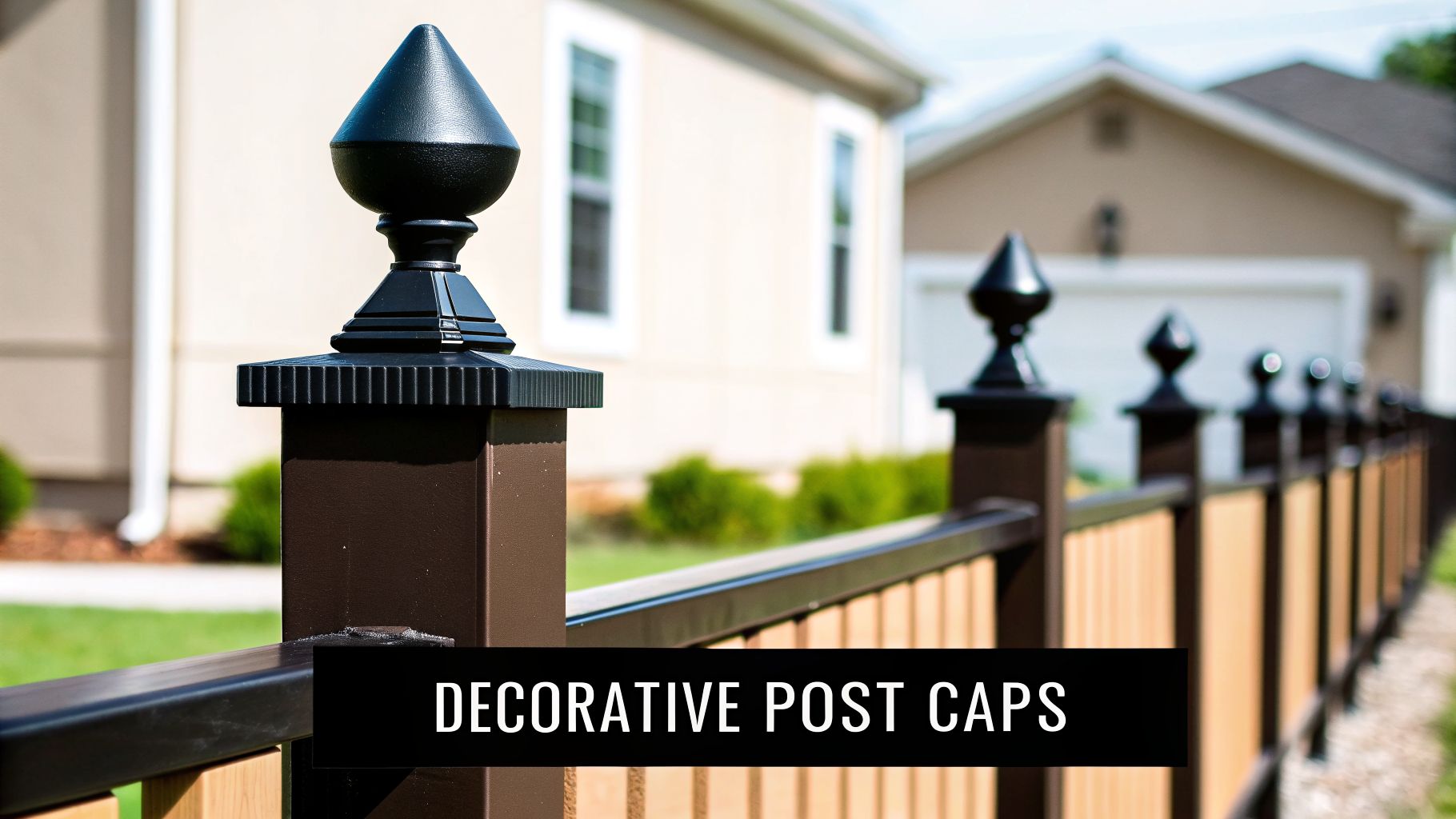
The selection of post caps and finials allows homeowners to personalize their white picket fence designs to match their home's specific style. Whether you choose a classic ball-top finial for a traditional look or a sleek, flat-top cap for a more modern feel, these details create a sense of completeness. For those looking to blend classic style with modern function, there are many options that complement both the fence and the property's overall design. You can explore a variety of ornamental fence and gate options to find the perfect match for your home.
Implementation and Best Practices
- Materials: For Connecticut's climate, vinyl post caps are an outstanding choice, offering excellent durability and resistance to moisture with no maintenance required. For wood fences, cedar caps should be sealed annually to prevent rot. Metal finials, often made of powder-coated aluminum, provide a sharp, durable accent.
- Dimensions & Spacing: The size of the cap should match the post; a 4×4 post typically uses a 4-inch cap. For a sense of rhythm, you can place finials on every other post. For a more formal, grand appearance, install a decorative cap on every post.
- Installation Tips: Make sure post caps fit snugly to prevent water from getting underneath. A small amount of exterior-grade adhesive can secure the cap and create a watertight seal. Solar-powered LED caps are a popular modern addition, offering soft lighting for pathways and increasing security without wiring.
Pro Tip: Coordinate the post cap style with the picket tops. A pointed picket looks excellent with a pointed or pyramid-style cap, while a scalloped fence line often pairs well with a rounded or decorative ball finial. This coordination creates a harmonious design.
5. Picket Fence with Horizontal Accent Rails or Bands
For homeowners looking for a modern twist on classic white picket fence designs, adding horizontal accent rails offers a striking look. This design breaks up the traditional vertical lines by adding one or more horizontal bands between the top and bottom rails. The result is a fence with geometric patterns and increased visual depth, creating a semi-private boundary that feels both modern and solid. It is an excellent choice for new communities and contemporary homes, often seen in modern suburban developments in New Haven County and mid-century modern properties in Middlesex County.
This style, made popular by modern landscape design, adds a custom, high-end feel. The horizontal bands not only look good but can also make the fence stronger. The design provides more screening than a standard picket fence without creating a solid wall, making it a perfect middle ground between openness and privacy.
Implementation and Best Practices
- Materials: Vinyl is the best material for this style, as it allows for clean lines and offers opportunities for color contrast, such as pairing white pickets with gray or charcoal accent bands. The non-porous surface of vinyl ensures the horizontal rails shed water effectively, preventing mold and mildew growth in Connecticut's humid summers. Wood can be used, but it requires precise construction and careful maintenance to protect horizontal surfaces from moisture.
- Dimensions & Spacing: To maintain a balanced look, horizontal bands are typically spaced 24 to 36 inches from the ground or top rail. Gaps between the vertical pickets should be kept at 1 to 2 inches to maintain a sense of flow and prevent the design from looking too heavy.
- Installation Tips: The success of this design depends entirely on precision. All posts must be perfectly straight and level to ensure the horizontal bands appear straight and parallel to the ground. If you plan to add lighting to the accent bands, make sure the wiring is planned for and installed during the initial post and rail installation.
Pro Tip: Think about where the accent bands are placed in relation to your property’s sightlines. Placing a band at eye level can create a strong focal point from your home or the street, significantly boosting curb appeal and giving the fence a designer touch.
6. Semi-Private Picket Fence with Graduated Opacity
The semi-private picket fence with changing picket spacing offers a clever solution for homeowners who need privacy in some areas but want to maintain an open, inviting look elsewhere. This strategic design combines different picket spacing on different sides of a property. Tighter spacing provides screening along a busy road or a neighbor's yard, while wider, more traditional spacing is used on the front-facing side to preserve curb appeal. This practical approach is one of the most functional white picket fence designs for modern living.
This design is particularly effective for corner properties in Hartford County neighborhoods, where two sides of the yard face the street, or for homes in Middlesex County that back up to commercial lots. By adjusting the picket gaps, you create a smooth transition from openness to privacy without installing two completely different fence styles. The result is a custom fence that perfectly balances appearance with practical privacy needs.
Implementation and Best Practices
- Materials: Vinyl is an outstanding choice for this style, as the consistent, manufactured sizes of vinyl pickets make it easy to achieve a precise, graduated spacing pattern. For those who prefer the classic look of wood, pressure-treated pine or cedar can be used, but it requires careful measurement and cutting to ensure a uniform appearance where the spacing changes.
- Dimensions & Spacing: The key is a gradual change in spacing. For example, the front of a property might feature standard 3-inch gaps. As the fence turns a corner, the spacing could narrow to 1.5 inches, and finally to a 1-inch gap or less along the back for maximum screening. The height typically remains a consistent 4 to 6 feet.
- Installation Tips: A successful graduated fence depends on careful planning. Map out where the spacing will change before installation to ensure it looks intentional and smooth, not sudden. For instance, you could decrease the gap by a half-inch every 8-foot section. Combining this fence style with strategic landscaping, like planting taller shrubs behind the tighter-spaced sections, can further boost privacy.
Pro Tip: For a truly integrated design, consult with a professional to create a custom spacing plan. An expert from Connecticut Fence Works can help design a transition that complements your property's unique layout and sightlines, ensuring the change is both functional and visually appealing.
7. Vinyl Picket Fence with Color Variations and Customization (Pool & Pet-Specific safety compliance included)
Vinyl represents the modern evolution of classic white picket fence designs, offering homeowners a low-maintenance, highly durable alternative to traditional wood. Made from PVC, these fences are designed to withstand Connecticut's freeze-thaw cycles, humidity, and coastal air without rotting, warping, or peeling. This makes them a popular choice in suburban developments throughout Hartford, Tolland, and Middlesex Counties, where homeowners value long-term performance and minimal upkeep. While "white picket fence" is in the name, vinyl opens up a world of color options, from classic white to almond, tan, and even gray, allowing for precise coordination with a home's siding, trim, or landscape.
Beyond looks, vinyl fences are exceptionally versatile for safety. They can be specifically set up to meet local pool codes, which often require a minimum height and limited spacing between pickets to prevent unauthorized access. The smooth surface is also ideal for pet owners, as it's easy to clean and doesn't splinter, ensuring a safe enclosure for dogs and other animals.
Implementation and Best practices
- Materials: For the best performance in our climate, choose high-quality virgin vinyl from reputable brands. These premium products offer better UV resistance, preventing fading and brittleness over their 20 to 30-year lifespan. You can explore the benefits of different vinyl fence systems to find one that fits your property's needs.
- Dimensions & Spacing: For pool enclosures, fences must typically be at least 4 feet high with less than 4 inches of space between pickets to comply with the "4-inch sphere rule." For pet containment, the picket spacing can be adjusted based on the size of your animal. A good fence can also contribute to pet safety. For owners considering additional pet containment, understanding how to choose the right kennel for your dog is helpful.
- Installation Tips: Professional installation is highly recommended for vinyl, as improper techniques can void warranties and weaken the structure. Posts must be set deep enough in concrete to resist ground movement from freezing. Gates, especially for pools, must be self-closing and self-latching to meet safety standards.
Pro Tip: When choosing a vinyl fence, ask your installer about the warranty's transferability. A lifetime transferable warranty can be a significant selling point and add real value to your home if you decide to move in the future.
7-Style White Picket Fence Comparison
| Style | 🔄 Implementation Complexity | ⚡ Resource & Time | 📊 Expected Outcomes | Ideal Use Cases | ⭐ Key Advantages / 💡 Tips |
|---|---|---|---|---|---|
| Classic Vertical Picket Fence (Dog‑Ear & Cat‑Face) | Low–Medium — standard panels; occasional picket replacement | Moderate materials & labor; wood needs ongoing maintenance; vinyl speeds upkeep | Timeless curb appeal, low privacy, visible landscaping integration | Traditional/cottage homes; suburban Connecticut yards | Recognizable aesthetic; choose vinyl for CT weather; maintain 2–3" spacing; space posts ~6' |
| Stepped / Contoured Picket Fence | High — custom cuts, precise site measurement | Higher cost and longer install time; skilled labor required | Consistent ground clearance, fewer base gaps, improved longevity on slopes | Sloped or hilly properties | Prevents gaps at grade; get professional site survey; use vinyl for low maintenance |
| Scalloped / Curved Picket Top Fence | Medium–High — precision cutting for uniform curves | Higher material and labor costs; limited off‑the‑shelf options | Softer, upscale look; stands out visually; modest risk of water pooling in recesses | Upscale, contemporary, or transitional homes | Distinctive curb appeal; prefer gentle waves; ensure plumb posts and professional install |
| Picket Fence with Decorative Post Caps & Finials | Low — add‑on to standard posts; moderate skill for installation | Low to moderate added cost ($15–40/post); small extra install time | Elevated architectural detail; better post protection | Historic, colonial, or refined residential properties | Affordable upgrade that protects posts; match finial style to home; vinyl caps for durability |
| Picket Fence with Horizontal Accent Rails | Medium — requires precise alignment and measurements | Higher materials & labor due to extra rails and finishes | Modern visual depth, increased partial privacy, reduced wind load | Modern or mid‑century homes; contemporary neighborhoods | Modernizes appearance; space bands 24–36" for balance; use contrasting colors carefully |
| Semi‑Private Picket Fence (Graduated Opacity) | High — custom layout and careful planning | Moderate–High cost; installation complexity increases with variation | Balances curb appeal and targeted privacy; effective for rear screening | Corner lots, pool areas, properties needing selective privacy | Cost‑effective privacy strategy; transition spacing gradually; combine with landscaping |
| Vinyl Picket Fence with Color Variations & Safety Options | Medium — heavy panels require professional install | Higher upfront cost ($25–40/ft); minimal long‑term maintenance; long warranties | Long‑lasting, low‑maintenance appearance; can meet pool/pet safety codes | Homeowners prioritizing low maintenance, pool safety, or consistent appearance | Zero painting and strong durability; choose premium brands; verify safety code compliance and warranty transferability |
Bringing Your Vision to Life with Expert Guidance
Selecting the perfect white picket fence design is an exciting first step in redefining your property's boundary and boosting its curb appeal. As we’ve explored, the options extend far beyond a single style. From the timeless appeal of a classic vertical picket fence to the elegant arc of a scalloped top or the modern touch of horizontal accent rails, each design offers a unique statement. The ideal fence is a personal choice, one that should reflect your home's architecture, meet your practical needs like pool safety or pet containment, and suit your specific Connecticut landscape.
The journey from a design on paper to a stunning physical structure, however, depends entirely on the quality of the installation. A beautiful concept can be ruined by poor installation, especially given Connecticut’s varied climate and terrain. This is where professional expertise becomes invaluable. A well-installed fence is not just about looks; it is about durability, safety, and a long lifespan. Proper installation accounts for crucial local factors:
- Soil Conditions: The dense, clay-rich soils in areas like Hartford County require different post-setting techniques than the rockier ground found in parts of Litchfield or Tolland Counties.
- Grade and Terrain: A stepped or contoured fence must be expertly planned to follow the natural slope of your property, ensuring consistent height and a seamless look.
- Coastal Exposure: For homes in New Haven or New London counties, choosing the right material (like high-grade vinyl) and hardware is critical to resist the corrosive effects of salt air.
- Code Compliance: Navigating local zoning regulations and ensuring your fence meets strict pool safety codes is a complex task that professionals handle with confidence.
Ultimately, the difference between a fence that lasts five years and one that lasts for decades lies in the details of the installation process. It's about setting posts perfectly straight, using the correct fasteners, ensuring proper spacing for both stability and visual appeal, and respecting property lines. Choosing a professional installer means you are investing not just in materials, but in the craftsmanship required to build a structure that will withstand New England winters and enhance your home's value for years to come. Your chosen design deserves an installation that brings its full potential to life, resulting in a beautiful, functional, and enduring addition to your property.
Ready to turn your chosen white picket fence design into a lasting feature of your home? As an owner-operated company serving Connecticut since 2014, Connecticut Fence Works, LLC specializes in translating vision into reality with expert installation and high-quality materials. Contact Connecticut Fence Works, LLC for a free estimate and let our team build the perfect, professionally installed fence for your property.